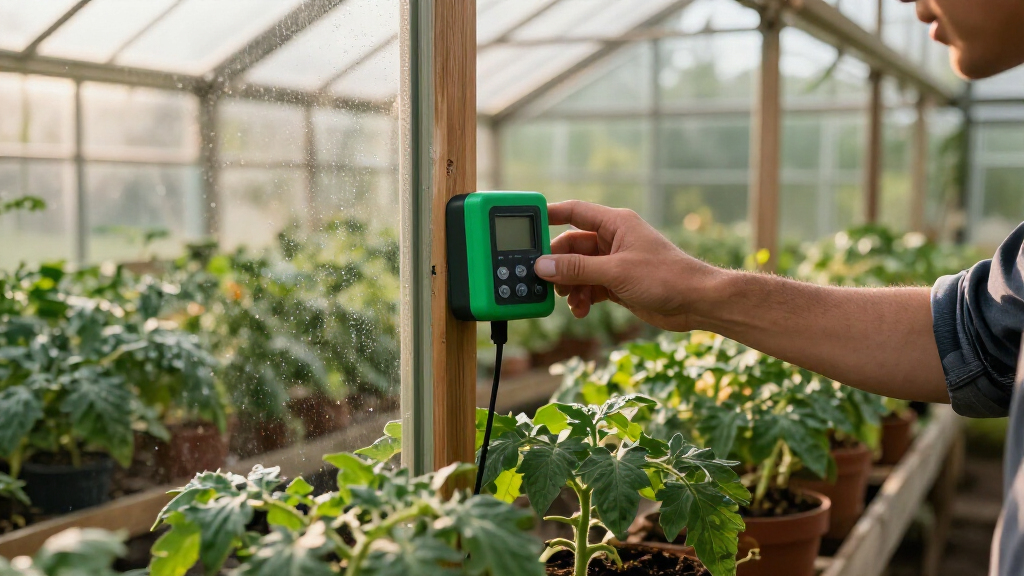
The best greenhouse temperature controllers balance dependable heating and cooling control with a probe and outlet setup that suit your greenhouse. My best overall pick is the Inkbird ITC-308 with heating and cooling outlets, a flexible choice for growers who need both functions from one controller. The Inkbird WiFi ITC-308 adds remote monitoring, while the INKTEM Digital Temperature Controller offers a simpler route for growers who want straightforward temperature control. The main tradeoffs are Wi-Fi and added features versus simpler operation, and one all-in-one controller versus separate controls for temperature and humidity. Read on for the full breakdown, selection criteria, and guidance on matching a controller to your plants and equipment.

Get garden gear delivered free with Prime
- Fast, free delivery on millions of items
- Prime Video, Amazon Music and more included
- Member-only deals all year
Complete the kit


Key Takeaways
- Heating and cooling control separates the most versatile picks. The Inkbird ITC-308 models have both heating and cooling outlets, while single-purpose controllers suit narrower setups.
- Remote access is a convenience, not a substitute for a sound setup. The Wi-Fi ITC-308 and DEWENWILS Smart Wi-Fi model appeal to growers who want to check conditions away from the greenhouse.
- Humidity needs a separate plan. The Inkbird ITC-308 and IHC-200 combination is the lineup’s clearest choice for growers managing both temperature and humidity.
- Water exposure should shape placement. The DIGITEN waterproof controller and the waterproof greenhouse thermostat stand out for buyers prioritizing protection around damp growing spaces, but electrical connections still need suitable protection.
- Power limits and equipment type matter more than feature count. Controllers in this roundup range from 10A and 1200W ratings to the DEWENWILS 15A model, so buyers should match the controller to the connected load rather than assume every outlet can run any heater or cooler.
| INKTEM Digital Temperature Controller for Heating and Cooling |  | Best Overall for Dual-Device Control | Model: TC01 | Input voltage: 120 VAC at 60 Hz or 230 VAC at 50 Hz | Maximum input current: 10 A | VIEW LATEST PRICE | See Our Full Breakdown |
| Luxbird Digital Temperature Controller LB-2SC Thermostat Outlet for Reptile Terrarium, Greenhouse & Grow Tent – Green |  | Best for Two Low-Wattage Zones | Model: LB-2SC | Voltage: 120 V | Operating temperature range: 32°F–113°F (0°C–45°C) | VIEW LATEST PRICE | See Our Full Breakdown |
| BN-LINK Digital Reptile Thermostat Temperature Controller, 40–108°F, 1000W |  | Best for Simple Heating Control | Model: T7(H) | Temperature range: 40°F–108°F | Maximum load: 1000 W, 8.3 A | VIEW LATEST PRICE | See Our Full Breakdown |
| Inkbird WiFi Temperature Controller ITC-308 (2‑Stage, 1100 W, 110 V) for Reptiles, Freezers & Greenhouses |  | Best for Remote Monitoring | Model: ITC-308-WIFI-LW | Voltage: 110 V | Control modes: Heating and cooling | VIEW LATEST PRICE | See Our Full Breakdown |
| KETOTEK KT3100 Digital Thermostat Outlet Plug |  | Best for Wide Temperature Range and Timers | Model: KT3100 | Input voltage: 100–250 V AC | Maximum output: 15 A at 120 V | VIEW LATEST PRICE | See Our Full Breakdown |
| Inkbird ITC-308 Temperature Controller and IHC-200 Humidity Controller |  | Best for Combined Temperature and Humidity Control | Brand: Inkbird | Included controllers: ITC-308 temperature controller and IHC-200 humidity controller | Number of items: 2 | VIEW LATEST PRICE | See Our Full Breakdown |
| DIGITEN DTC310 Waterproof Temperature Controller |  | Best for Wide Temperature Range | Brand: DIGITEN | Model: DTC-310 | Temperature range: -40°F to 248°F (-40°C to 120°C) | VIEW LATEST PRICE | See Our Full Breakdown |
| Greenhouse Temperature Controller Digital Waterproof Thermostat – 110V 10A 1100W |  | Best Plug-and-Play Waterproof Pick | Voltage: 110V / 220V | Power capacity: 1100W | Operating temperature range: -40°C to 120°C | VIEW LATEST PRICE | See Our Full Breakdown |
| BN-LINK Digital Cooling Thermostat Controller |  | Best for Cooling-Only Ventilation | Controller type: Push button | Temperature control: Cooling | Control range: 40–108°F | VIEW LATEST PRICE | See Our Full Breakdown |
| Inkbird WiFi ITC-308 Digital Temperature Controller Thermostat |  | Best for Remote Monitoring | Model: WiFi ITC-308-US | Temperature control: Heating and cooling | Connectivity: 2.4 GHz Wi-Fi | VIEW LATEST PRICE | See Our Full Breakdown |
| WILLHI WH2408 Digital Temperature Controller, 10A, 1200W |  | Best for Simple, Flexible Control | Temperature control range: -58°F to 230°F (-50°C to 110°C) | Controller ambient range: -4°F to 140°F (-20°C to 60°C) | Control resolution: 0.1°F | VIEW LATEST PRICE | See Our Full Breakdown |
| Diymore Plug-In Digital Thermostat Controller |  | Best for Plug-In Setup | Temperature range: -40°F to 248°F | Temperature accuracy: ±1°F | Maximum power: 1800W | VIEW LATEST PRICE | See Our Full Breakdown |
| Inkbird Temperature Controller – Electronic Heating Thermostat with Aquarium Probe |  | Best for Heating-Only Setups | Model: ITC306T | Heating outlets: 2 | Upper temperature range: 210°F | VIEW LATEST PRICE | See Our Full Breakdown |
| DEWENWILS Smart Wi-Fi Temperature Controller, 15A |  | Best for Remote Monitoring | Connectivity and control: Wi-Fi; app control | Voltage: 120V | Wattage: 1800W | VIEW LATEST PRICE | See Our Full Breakdown |
| Inkbird ITC-308 Digital Temperature Controller with Heating and Cooling Outlets |  | Best for Straightforward Two-Stage Control | Brand: Inkbird | Model: SYNCHKG084064 | Voltage: 110V, 240V | VIEW LATEST PRICE | See Our Full Breakdown |
| greenhouse temperature controller | Voltage | Model | Display |
|---|---|---|---|
| INKTEM Digital Temperature Con | — | TC01 | — |
| Luxbird Digital Temperature Co | 120 V | LB-2SC | LCD |
| BN-LINK Digital Reptile Thermo | 120 VAC, 60 Hz | T7(H) | — |
| Inkbird WiFi Temperature Contr | 110 V | ITC-308-WIFI-LW | LCD |
| KETOTEK KT3100 Digital Thermos | — | KT3100 | — |
| Inkbird ITC-308 Temperature Co | 120 volts | — | — |
| DIGITEN DTC310 Waterproof Temp | — | DTC-310 | Illuminated LED |
| Greenhouse Temperature Control | 110V / 220V | — | Glare-free LCD |
| BN-LINK Digital Cooling Thermo | 120 VAC, 60 Hz | — | LED with Fahrenheit and Celsius options |
| Inkbird WiFi ITC-308 Digital T | 110V | WiFi ITC-308-US | Digital, with Celsius and Fahrenheit options |
| WILLHI WH2408 Digital Temperat | — | — | — |
| Diymore Plug-In Digital Thermo | 220V | — | — |
| Inkbird Temperature Controller | — | ITC306T | LCD digital display |
| DEWENWILS Smart Wi-Fi Temperat | 120V | — | Backlit LCD |
| Inkbird ITC-308 Digital Temper | 110V, 240V | SYNCHKG084064 | LCD |
More Details on Our Top Picks
INKTEM Digital Temperature Controller for Heating and Cooling
The INKTEM is my strongest all-around pick for a greenhouse that needs both a heater and a cooling device controlled from one unit. Its two independently controlled outlets switch between heating and cooling, while the dual display keeps the measured and target temperatures visible together. That makes status checks more direct than with the BN-LINK T7(H), which is limited to heating. The 180-second compressor delay also adds a layer of protection for cooling equipment, and high/low alarms can call attention to temperature excursions. Its main tradeoff is that the rated output changes with input voltage: the supplied data lists 1200 W at 120 V and 2300 W at 230 V. I would also want a stated operating range and accuracy before relying on it for a tightly controlled crop environment; neither is provided.
Pros:- Two independently controlled outlets support heating and cooling setups.
- Shows current and target temperatures at the same time.
- Compressor delay helps protect connected cooling equipment.
- Audible high- and low-temperature alarms flag out-of-range conditions.
Cons:- Maximum output power varies by input voltage.
- No temperature accuracy or operating range is specified.
- Only the controller is listed as included, with no probe details in the supplied data.
Best for: Greenhouse growers who want one controller to manage separate heating and cooling devices and value visible temperature alarms.
Not ideal for: Growers who need documented temperature accuracy or operating limits, or who cannot verify that their equipment stays within the controller’s voltage-dependent power rating.
- Model:TC01
- Input voltage:120 VAC at 60 Hz or 230 VAC at 50 Hz
- Maximum input current:10 A
- Maximum output power:1200 W at 120 VAC; 2300 W at 230 VAC
- Outlets:2 independently controlled outlets
- Compressor delay:180 seconds
- Display and units:Dual digital display; Celsius and Fahrenheit
- Mounting and shell:Wall-mountable or tabletop; fire-resistant ABS
Our verdict“Choose the INKTEM if you want dual heating-and-cooling control with alarms, but skip it if published accuracy and temperature limits are essential.”
Luxbird Digital Temperature Controller LB-2SC Thermostat Outlet for Reptile Terrarium, Greenhouse & Grow Tent – Green
The Luxbird LB-2SC stands out when a grower wants to control two devices at separate temperature settings, rather than operate a single heater and cooler as a paired system. Its two probes and independent outlets suit a small greenhouse with distinct zones or a propagation area alongside a main growing space. The LCD shows current and target readings, while high/low alarms provide a warning when conditions move outside the desired band. Compared with the INKTEM, Luxbird gives more explicit support for separate setpoints and includes two probes, but its 250 W limit per outlet makes it a poor match for many full-size greenhouse heaters. The stated operating range is 32°F to 113°F, so it also does not cover the colder settings available on the KETOTEK KT3100. The hanging tab and angled sockets help keep a compact setup tidy, but do not offset its limited power capacity.
Pros:- Two independent outlets allow separate temperature settings.
- Includes two probes for monitoring distinct locations.
- LCD displays current and target temperatures and heating status.
- Hanging tab and angled sockets help organize connected wiring.
Cons:- Each outlet is limited to 250 W, which excludes many larger heaters.
- The stated operating range is 32°F–113°F.
- Limited to 120 V input.
Best for: Small-greenhouse and grow-tent owners who need independent control of two low-wattage devices or zones.
Not ideal for: Growers running high-wattage heaters, or those who need a controller with a wider documented operating range.
- Model:LB-2SC
- Voltage:120 V
- Operating temperature range:32°F–113°F (0°C–45°C)
- Outlets:2
- Maximum output per outlet:250 W
- Display:LCD
- Included components:Temperature controller, user manual, two temperature probes
- Material:ABS
Our verdict“Pick the Luxbird for two low-power greenhouse zones, not for controlling a substantial heater.”
BN-LINK Digital Reptile Thermostat Temperature Controller, 40–108°F, 1000W
The BN-LINK T7(H) is the straightforward choice when a greenhouse task calls for controlling a heater and nothing else. Its three-button setup, readable LED display, and Fahrenheit/Celsius selection avoid the added configuration of app-connected options such as the Inkbird ITC-308 WiFi. At up to 1000 W, it can serve many seedling mats or smaller heating devices, and the stated 40°F–108°F range covers common propagation and warmth-control needs. The tradeoff is clear: this is a heating-only controller, so it cannot manage a fan or cooling unit to counter rising greenhouse temperatures. Its temperature range is also narrower than the KETOTEK KT3100’s, and the supplied cord and probe lengths may constrain placement if the outlet and monitored area are far apart. ETL listing is a useful safety detail, but buyers should still match the load to their equipment.
Pros:- Simple three-button controls with Fahrenheit and Celsius settings.
- LED display and indicator lights are easy to read.
- Supports heating applications such as seedling mats and incubators.
- ETL listed.
Cons:- Controls heating devices only, with no cooling mode.
- Temperature range is limited to 40°F–108°F.
- Power cord and probe lengths may limit placement options.
Best for: Growers who need uncomplicated control of a seedling mat, heat lamp, or other single heating device up to 1000 W.
Not ideal for: Greenhouse owners who need automatic cooling, paired heater-and-cooler control, or temperatures outside 40°F–108°F.
- Model:T7(H)
- Temperature range:40°F–108°F
- Maximum load:1000 W, 8.3 A
- Voltage:120 VAC, 60 Hz
- Display and controls:LED display; push-button controls
- Power cord length:3.94 ft
- Temperature probe length:4.92 ft
- Safety listing:ETL listed
Our verdict“Choose the BN-LINK T7(H) for simple, single-device heating; choose the INKTEM or Inkbird ITC-308 when cooling control is also needed.”
Inkbird WiFi Temperature Controller ITC-308 (2‑Stage, 1100 W, 110 V) for Reptiles, Freezers & Greenhouses
The Inkbird ITC-308 makes the most sense when the greenhouse is away from the house or when growers want to check conditions without walking out to the controller. Its Wi-Fi app access supports remote monitoring and adjustment, while dual relays can control a heater and cooling device together. That gives it broader greenhouse utility than the heating-only BN-LINK T7(H), and it adds remote access that the INKTEM does not list. The app-dependent approach is also the key compromise: the controller requires a 2.4 GHz Wi-Fi network, and buyers should not expect a physical remote interface in place of the phone app. The listed package includes a controller and probe, with an LCD for local readings, but the supplied data does not specify an operating temperature range or output limit. I would verify those details against the intended equipment before choosing it for a larger system.
Pros:- Wi-Fi app supports remote monitoring and adjustment.
- Dual relay outputs support simultaneous heater and cooler control.
- High- and low-temperature alarms help flag extreme conditions.
- LCD display and temperature calibration support local monitoring.
Cons:- Requires a 2.4 GHz Wi-Fi network and does not support 5 GHz.
- Remote control depends on the smartphone app.
- The supplied product data does not state an operating temperature range or output limit.
Best for: Greenhouse owners who want to check and adjust heating and cooling remotely through a smartphone app.
Not ideal for: Growers without reliable 2.4 GHz Wi-Fi, or those who want fully local controls and clearly stated load limits before purchase.
- Model:ITC-308-WIFI-LW
- Voltage:110 V
- Control modes:Heating and cooling
- Connectivity:Wi-Fi; InkbirdSmart app for Android and iOS
- Display:LCD
- Mounting:Wall mount
- Dimensions:1.2 in D × 2.6 in W × 6.7 in H
- Included components:Temperature controller and probe
Our verdict“Choose the Inkbird ITC-308 WiFi if remote app access matters more than app-free control and you can confirm the load rating for your equipment.”
KETOTEK KT3100 Digital Thermostat Outlet Plug
The KETOTEK KT3100 is the most flexible pick here for growers who want a plug-in controller with a wide stated temperature range and built-in timing options. It supports heating and cooling, offers calibration, and includes a three-meter probe that can reach farther into a greenhouse than the BN-LINK T7(H)’s listed 4.92-foot probe. Its cycle and countdown timers add useful scheduling options for tasks beyond basic temperature switching. Compared with the INKTEM, the KT3100 specifies an accuracy of ±1°C/±2°F and a broad -40°C to 120°C range, but it does not offer the INKTEM’s two independently controlled outlets. There is also a functional limit: temperature control and timer functions cannot run at the same time. Its 15 A output is specified at 120 V, so buyers should confirm their device’s load and supply voltage before connecting it.
Pros:- Wide stated range from -40°C to 120°C.
- Supports heating, cooling, cycle timer, and countdown modes.
- Three-meter probe offers flexible sensor placement.
- Memory function retains settings after a power outage.
Cons:- Temperature control and timer functions cannot be used at the same time.
- Does not provide two independently controlled outlets.
- Maximum output is specified as 15 A at 120 V, so load compatibility needs checking.
Best for: Growers who need heating or cooling control across a broad temperature range, a longer probe, or timer functions for scheduled operation.
Not ideal for: Buyers who need temperature regulation and timer functions active simultaneously, or who need separate control of two devices.
- Model:KT3100
- Input voltage:100–250 V AC
- Maximum output:15 A at 120 V
- Temperature range:-40°C to 120°C (-40°F to 248°F)
- Control accuracy:±1°C / ±2°F
- Probe:3-meter NTC 10K temperature sensor
- Timer range:0–99 hours 59 minutes
- Modes:Heating, cooling, cycle timer, countdown
Our verdict“Choose the KT3100 for broad-range plug-in control and timing features, but pick a dual-outlet model if you need separate devices controlled at once.”
Inkbird ITC-308 Temperature Controller and IHC-200 Humidity Controller
This two-controller set is my pick for growers who need to manage temperature and humidity separately, rather than just switching a heater or fan. The ITC-308 and IHC-200 each have two outlets, giving a greenhouse setup separate control options for equipment such as heating, ventilation, humidification, and dehumidification. Adjustable high and low alarms and calibration add useful safeguards when conditions drift or a sensor needs correction. Compared with the WiFi Inkbird ITC-308, this set adds humidity control but lacks the listed remote app access; compared with the single-function DIGITEN DTC310, it covers more environmental tasks. The tradeoff is that the supplied data does not state operating temperature or humidity ranges, so I would verify compatibility with the plants and equipment before buying.
Pros:- Includes separate temperature and humidity controllers
- Two outlets on each controller support multiple types of environmental equipment
- Adjustable high and low temperature or humidity alarms
- Calibration is supported
Cons:- Product data does not specify operating temperature or humidity ranges
- No Wi-Fi or remote app control is listed
- Managing two controllers takes more setup space than using a single thermostat
Best for: Greenhouse growers who need dedicated control of both temperature and humidity and have separate heating, ventilation, or moisture-control equipment.
Not ideal for: Growers who only need a simple thermostat or require confirmed operating temperature and humidity ranges before choosing a controller.
- Brand:Inkbird
- Included controllers:ITC-308 temperature controller and IHC-200 humidity controller
- Number of items:2
- Voltage:120 volts
- Temperature controller outlets:2
- Humidity controller outlets:2
- Alarms:Adjustable high and low temperature or humidity alarms
- Calibration:Supported
Our verdict“Choose this set if greenhouse humidity needs its own controller alongside temperature; skip it if you need a single simple thermostat or clearly specified operating ranges.”
DIGITEN DTC310 Waterproof Temperature Controller
The DTC310 stands out for a greenhouse exposed to unusually cold or hot conditions: its stated control range runs from -40°F to 248°F, much wider than the 40–108°F range listed for the BN-LINK Digital Cooling Thermostat. Its waterproof probe and IP65-rated housing suit damp growing spaces better than a controller with no listed water protection, while the illuminated LED and high/low alarms make readings and temperature excursions easier to catch. It is a focused temperature controller, though, not a humidity manager like the Inkbird ITC-308 and IHC-200 set. The manufacturer recommends hanging the unit to improve waterproofing, so installation position matters; buyers should not treat the rating as a reason to leave it sitting where water can collect. The supplied data lists a 12-month warranty.
Pros:- Wide stated control range from -40°F to 248°F
- Waterproof sensor probe and IP65-rated housing
- Illuminated LED display for low-light visibility
- High and low temperature alarms
Cons:- Manufacturer recommends hanging the unit to improve waterproofing
- No humidity control or Wi-Fi access is listed
- Product data does not specify outlet count or maximum load
Best for: Greenhouse growers who need a broad temperature-control range, a waterproof probe, and a controller suited to damp conditions.
Not ideal for: Growers who want humidity control, remote monitoring, or a controller whose housing can be placed without following the hanging recommendation.
- Brand:DIGITEN
- Model:DTC-310
- Temperature range:-40°F to 248°F (-40°C to 120°C)
- Display:Illuminated LED
- Sensor:Waterproof probe
- Warranty:12 months
Our verdict“Pick the DTC310 for a broad operating range and moisture-conscious setup, but choose the Inkbird two-controller set if humidity regulation is also needed.”
Greenhouse Temperature Controller Digital Waterproof Thermostat – 110V 10A 1100W
This thermostat is aimed at growers who want a straightforward, weather-resistant temperature controller rather than app features or separate humidity management. Its IP65 rating, silicone sensor, and plug-and-play setup make it a practical fit for damp greenhouse conditions, while the glare-free LCD and selectable Celsius or Fahrenheit display help with routine checks. The listed -40°C to 120°C range is broader than the BN-LINK cooling thermostat’s 40–108°F range, and the 1100W capacity gives a clear limit for matching a load. Compared with the DIGITEN DTC310, it offers stated 110V/220V compatibility and a large LCD, but its data does not list alarms. It also needs a standard wall outlet and has no battery or remote operation.
Pros:- IP65-rated waterproof design for indoor or outdoor use
- Broad stated operating temperature range
- Plug-and-play setup with selectable Celsius and Fahrenheit display
- Glare-free LCD and stated 1100W capacity
Cons:- Requires a standard wall outlet and has no battery or remote operation
- No humidity control is listed
- Product data does not list temperature alarms
Best for: Growers seeking a plug-in thermostat for a damp greenhouse who want a broad stated range, readable screen, and clear load limit.
Not ideal for: Buyers who need app-based monitoring, battery operation, humidity control, or a controller with listed high and low alarms.
- Voltage:110V / 220V
- Power capacity:1100W
- Operating temperature range:-40°C to 120°C
- Display:Glare-free LCD
- Sensor:Silicone sensor
- Dimensions:5.39 × 2.56 × 1.10 inches
Our verdict“Choose this model for simple, outlet-powered temperature control in damp conditions, but choose the WiFi Inkbird if remote monitoring matters more than plug-and-play simplicity.”
BN-LINK Digital Cooling Thermostat Controller
The BN-LINK is a narrow-purpose choice for growers who want a fan or other cooling device to respond to greenhouse temperature without paying for heating control they will not use. Its 40–108°F cooling range, probe, and three-button interface keep operation simple, while status lights show when the connected equipment is active. The ETL listing and stated 8.3A, 1000W maximum load help buyers check compatibility with a fan before connecting it. This is less versatile than the dual-relay Inkbird WiFi ITC-308, which controls heating and cooling and adds remote access, but the BN-LINK avoids app setup. Its defining limitation is also clear: it controls cooling only, so growers who need a heater switched on as temperatures fall should choose a heating-and-cooling model instead.
Pros:- Simple three-button interface with LED display
- Temperature probe and power cord allow some placement flexibility
- Designed for cooling equipment such as ventilation fans
- ETL listed, with a stated 1000W maximum load
Cons:- Controls cooling devices only
- Control range is limited to 40–108°F
- No humidity control or remote connectivity is listed
Best for: Greenhouse owners who need a simple, corded controller for an exhaust or ventilation fan and do not need automatic heating.
Not ideal for: Growers who need one controller to switch both heating and cooling, or whose temperature targets fall outside 40–108°F.
- Controller type:Push button
- Temperature control:Cooling
- Control range:40–108°F
- Voltage:120 VAC, 60 Hz
- Maximum load:8.3A, 1000W
- Display:LED with Fahrenheit and Celsius options
- Certification:ETL listed
- Probe length:4.92 ft
Our verdict“Buy the BN-LINK for straightforward fan-based cooling, but choose the WiFi Inkbird ITC-308 if your greenhouse also needs heating control or remote access.”
Inkbird WiFi ITC-308 Digital Temperature Controller Thermostat
For growers who cannot check greenhouse conditions in person throughout the day, the WiFi ITC-308 adds remote monitoring and control through the INKBIRD app. Its dual relays handle heating and cooling equipment, making it more flexible than the cooling-only BN-LINK controller, while high and low alarms—including sensor-malfunction alerts—add a layer of oversight. Calibration and Celsius or Fahrenheit readings help adapt the display to a grower’s preferred setup. Compared with the non-Wi-Fi DIGITEN DTC310, this model prioritizes remote access over the DIGITEN’s stated waterproof housing and probe. Its main constraint is connectivity: it supports 2.4 GHz Wi-Fi only, and it still needs corded power. The listed 1100W output limit also means buyers should check their equipment’s load before connecting it.
Pros:- Remote temperature monitoring and control through the app
- Dual relays support heating and cooling equipment
- High and low alarms include sensor-malfunction alerts
- Supports calibration and Celsius or Fahrenheit display
Cons:- Wi-Fi connectivity supports 2.4 GHz only
- Maximum output is 1100W at 110V
- No waterproof rating or humidity control is listed
Best for: Greenhouse growers who want to check or adjust temperature remotely and need one controller for compatible heating and cooling equipment.
Not ideal for: Buyers without a 2.4 GHz Wi-Fi network, those seeking a waterproof-rated controller, or users whose connected equipment exceeds 1100W.
- Model:WiFi ITC-308-US
- Temperature control:Heating and cooling
- Connectivity:2.4 GHz Wi-Fi
- Voltage:110V
- Maximum output load:1100W at 110V
- Display:Digital, with Celsius and Fahrenheit options
- Included components:Control panel, socket, probe, and power cord
- Dimensions:1.2 × 2.6 × 6.7 inches
Our verdict“Choose the WiFi ITC-308 if remote access and heating-and-cooling control are priorities; pick the DIGITEN DTC310 if listed waterproof protection matters more.”
WILLHI WH2408 Digital Temperature Controller, 10A, 1200W
The WILLHI WH2408 suits greenhouse owners who want straightforward heating-and-cooling control without an app or a menu-heavy setup. Its two-knob adjustment is easier to approach than the push-button interface on the Diymore Plug-In Digital Thermostat Controller, while its 0.1°F resolution allows fine display adjustments. Settings remain stored after a power outage, which helps avoid re-entering a target temperature when power returns. The broad stated control range also makes it usable beyond typical greenhouse temperatures. The tradeoff is that the controller itself must stay dry, so it is less suited to exposed, damp locations than a purpose-built waterproof controller. I would also treat its 10A/1200W capacity as a firm limit and use separate thermal and overload protection for connected equipment.
Pros:- Controls heating or cooling equipment
- Two-knob adjustment avoids complicated menus
- Retains settings after power outages
- Displays temperature in Fahrenheit or Celsius with 0.1°F resolution
Cons:- Non-waterproof housing must be kept dry
- 10A and 1200W capacity limits the equipment it can control
- Connected equipment needs separate thermal and overload protection
Best for: Greenhouse growers who want a simple, knob-operated controller for compatible heating or cooling equipment in a dry, sheltered location.
Not ideal for: Growers who need a weatherproof controller, app-based remote access, or a unit that can directly provide independent equipment safety protection.
- Temperature control range:-58°F to 230°F (-50°C to 110°C)
- Controller ambient range:-4°F to 140°F (-20°C to 60°C)
- Control resolution:0.1°F
- Modes:Heating and cooling
- Temperature units:Fahrenheit and Celsius
- Probe:Waterproof food-grade sensor probe
- Housing:Fire-retardant ABS; not waterproof
- Capacity:10A, 1200W
Our verdict“Choose the WILLHI WH2408 for simple, fine-adjustment heating or cooling control when you can keep the controller dry and stay within its load rating.”
Diymore Plug-In Digital Thermostat Controller
The Diymore Plug-In Digital Thermostat Controller is a practical fit for growers who want to connect compatible equipment without wiring a separate control system. Its six-foot sensor cord gives some flexibility in positioning the probe, while the five modes and timer can suit setups that need more than a basic on/off temperature trigger. Compared with the WILLHI WH2408, Diymore offers a higher stated maximum load and a timer, but its push-button controls may take more attention than the WILLHI’s two knobs. The stated accuracy is ±1°F, so buyers seeking finer display increments may prefer the WILLHI or Inkbird ITC-308. This is a plug-in convenience pick, not a high-capacity greenhouse control panel: check your equipment’s voltage and wattage before connecting it.
Pros:- Plug-in design avoids separate wiring
- Supports heating and cooling equipment
- Five control modes and a timer of up to 99 hours
- Retains settings during power outages
Cons:- Maximum power is limited to 1800W
- Push-button interface may be less direct than knob controls
- Specified voltage is 220V, so buyers must confirm equipment compatibility
Best for: Small greenhouse owners who want a plug-in controller with a timer and multiple modes for compatible heating or cooling equipment.
Not ideal for: Growers running equipment above 1800W, or those who prefer a simple knob interface or remote app control.
- Temperature range:-40°F to 248°F
- Temperature accuracy:±1°F
- Maximum power:1800W
- Voltage:220V
- Sensor cord:6 feet
- Control modes:5
- Timer:Up to 99 hours
- Display and controls:LED display; push-button control
Our verdict“Pick Diymore if a plug-in setup, timer, and multiple modes matter more to you than finer temperature resolution or app control.”
Inkbird Temperature Controller – Electronic Heating Thermostat with Aquarium Probe
For a greenhouse that needs managed heat but no active cooling, the Inkbird ITC306T brings useful scheduling and alarm features that simpler plug-in controllers do not match. Its day/night cycles can support different temperature targets across the growing day, and the over-temperature and sensor-fault alarms add a layer of warning when a probe or heating setup behaves unexpectedly. It has two heating outlets, but it cannot control cooling; that makes it a narrower choice than the Inkbird ITC-308, which is designed for both heating and cooling. The immersed probe and robust ABS housing broaden its use in humid setups, though the 6.56-foot immersion limit and corded format still constrain placement. I’d choose this only when heating is the clear priority.
Pros:- Two heating outlets
- Programmable day/night temperature cycles
- Over-temperature and sensor-fault alarms
- 0.1°F resolution with calibration and Fahrenheit/Celsius selection
Cons:- Heating only, with no cooling function
- Corded design limits where the controller can be placed
- Probe immersion depth is limited to 6.56 feet
Best for: Growers with a heating-only greenhouse or propagation area who want day/night scheduling, two heating outlets, and sensor alarms.
Not ideal for: Greenhouse owners who need active cooling, app control, or flexible placement away from a corded outlet.
- Model:ITC306T
- Heating outlets:2
- Upper temperature range:210°F
- Resolution:0.1°F
- Probe immersion depth:Up to 6.56 feet
- Display:LCD digital display
- Response time:500 milliseconds
- Housing material:ABS
Our verdict“Choose the ITC306T for a heating-focused greenhouse that benefits from day/night schedules and alarms, but pick the Inkbird ITC-308 if cooling control is needed.”
DEWENWILS Smart Wi-Fi Temperature Controller, 15A
The DEWENWILS Smart Wi-Fi Temperature Controller is the lineup’s clearest choice for growers who want to check or adjust greenhouse control remotely. Its app-based operation and six heating, cooling, and timer modes give it more remote flexibility than the locally operated Diymore or WILLHI WH2408. Scheduling and outage memory can also reduce the need to reset a routine after a brief power interruption. The listed 0.1°F accuracy supports precise monitoring, while the backlit LCD provides a local readout. The main compromise is dependence on Wi-Fi and the app for remote access; growers who want a controller that works without a network should choose a non-smart option instead. Its 1800W rating also calls for checking the connected equipment’s load.
Pros:- App-based remote monitoring and control over Wi-Fi
- Six modes cover heating, cooling, timers, and off
- Auto-scheduling and memory after power outages
- Backlit LCD and stated 0.1°F accuracy
Cons:- Remote control depends on Wi-Fi and app connectivity
- Maximum listed wattage is 1800W
- Plastic construction may be less suited to rough handling than a more rugged installation
Best for: Greenhouse growers who want app-based temperature monitoring and control, scheduled operation, and both heating and cooling modes.
Not ideal for: Buyers who need remote control without Wi-Fi, prefer a fully offline setup, or run equipment exceeding the 1800W rating.
- Connectivity and control:Wi-Fi; app control
- Voltage:120V
- Wattage:1800W
- Temperature range:-40°F to 240°F
- Temperature accuracy:0.1°F
- Control modes:Cooling + Timer, Heating + Timer, Cooling, Heating, Timer, Off
- Display:Backlit LCD
- Warranty:1 year manufacturer warranty
Our verdict“Choose DEWENWILS if you want to monitor and adjust greenhouse heating or cooling remotely and have reliable Wi-Fi at the installation site.”
Inkbird ITC-308 Digital Temperature Controller with Heating and Cooling Outlets
The Inkbird ITC-308 makes the most sense when greenhouse temperatures need both heating and cooling, but remote access and elaborate scheduling are not priorities. Separate outlets let it switch the appropriate equipment as conditions change, giving it a more direct fit for year-round temperature management than the heating-only Inkbird ITC306T. Its LCD, Celsius/Fahrenheit display, and calibration support practical monitoring without adding the app dependence found on the DEWENWILS Smart Wi-Fi Controller. The tradeoff is a comparatively modest listed 1200W maximum, so it may not suit larger heaters or cooling equipment. The supplied data also does not state a temperature-control range or probe details, making it harder to confirm suitability for unusual setpoints or installation needs before purchase.
Pros:- Separate heating and cooling outlets
- LCD display with Fahrenheit and Celsius support
- Temperature calibration is available
- Suitable for greenhouse use as well as fermentation and kegerator setups
Cons:- Listed maximum power is 1200W
- No Wi-Fi or app control is specified
- Product data does not specify the control range or probe details
Best for: Greenhouse owners who need simple heating-and-cooling control through separate outlets and can keep connected equipment within the 1200W limit.
Not ideal for: Growers who need remote app access, a high-capacity controller, or clearly specified probe and temperature-range details before choosing.
- Brand:Inkbird
- Model:SYNCHKG084064
- Voltage:110V, 240V
- Maximum power:1200W
- Display:LCD
- Operating temperature:75°C
- Dimensions:1.65 × 0.94 × 3.35 inches
- Weight:14.4 ounces
Our verdict“Choose the Inkbird ITC-308 for straightforward two-stage greenhouse control if its 1200W capacity fits your equipment and remote access is unnecessary.”
How We Picked
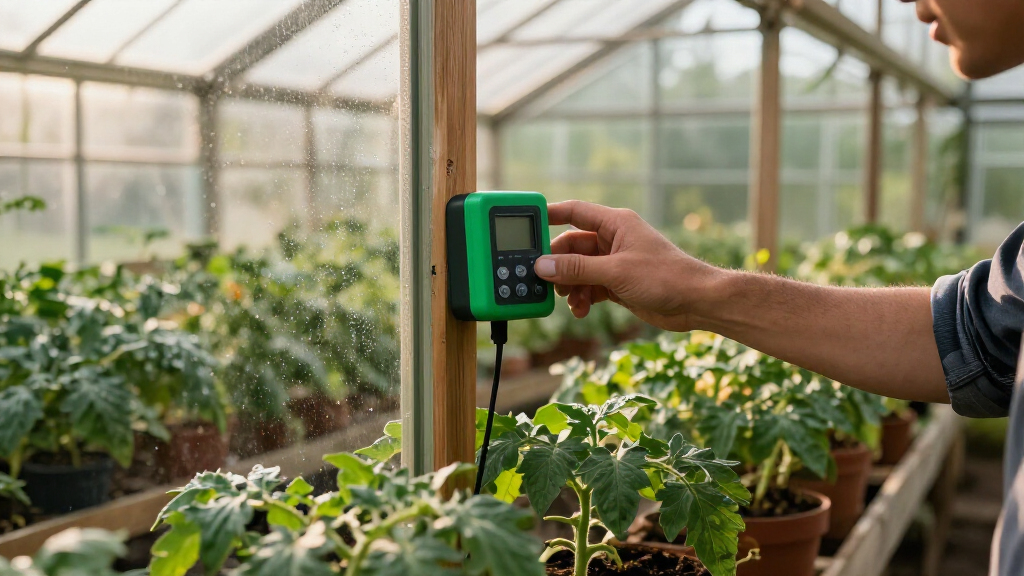
I compared these controllers by the greenhouse jobs they can perform: heating, cooling, both temperature functions, remote access, and humidity control. I also weighed stated electrical capacity, probe and environmental protection, setup complexity, and whether the control arrangement fits a greenhouse rather than only a small terrarium or aquarium. Those details affect daily use: a two-stage unit can manage heating and cooling through one device, while a simpler outlet controller may be easier to set up but less adaptable.
The ranking favors flexible temperature control and a clear greenhouse use case, then separates options by useful strengths such as Wi-Fi, humidity management, waterproof construction, or simpler operation. A higher stated power rating does not automatically place a product higher; buyers still need to confirm the load and electrical requirements of their own equipment. Several products share similar functions, so the distinction is fit: pick a single-function or basic outlet model for a limited task, and skip it if your greenhouse needs coordinated heating and cooling or remote monitoring.
Factors to Consider When Choosing Best Greenhouse Temperature Controllers
Before choosing a controller, I would map the greenhouse’s actual climate-control tasks rather than shop by feature count. The biggest sources of mismatch are buying for the wrong equipment load, placing a sensor where it reads an unrepresentative temperature, or expecting a temperature controller to manage humidity too. These factors help narrow the field before comparing individual models.
Match the controller to your heating and cooling plan
Decide whether you need heat control, cooling control, or both before looking at extra features. A two-stage controller can switch heating and cooling equipment based on temperature, which reduces the need to juggle separate devices as conditions change. A single-purpose controller may be simpler and more direct if you only run a heater or fan. Do not assume that a controller with two outlets can safely operate every pair of devices at once; check how its outlets are assigned and what the rating applies to. Also think about whether your cooling equipment is meant to lower greenhouse air temperature or simply circulate it. Choose for the equipment you actually plan to connect, not a future setup that may never arrive.
Check electrical load and startup demands
Compare the controller’s voltage, amperage, and wattage limits with the label on every connected device. Add the loads that may run together, and pay attention to equipment with motors, since startup demand can differ from ordinary running demand. A higher listed rating, such as the 15A DEWENWILS model, may suit some heavier loads better than a 10A unit, but the number alone does not confirm compatibility. Avoid relying on extension cords or adapters to make an undersized connection work. If the load is close to the controller’s limit, ask a qualified electrician about a suitable switching arrangement. This check can matter more for safe operation than Wi-Fi or display features.
Place the temperature probe where plants experience the climate
A controller can only react to the temperature its probe measures, so probe placement shapes the result. Mount it near representative plant height, away from direct sun, heater airflow, cold glazing, and doors that open often. A probe that sits beside a heater may stop heating before the rest of the greenhouse warms, while direct sunlight can produce a misleadingly high reading. Consider cable reach and how the probe will be secured before choosing a plug-in design. In a larger structure, one sensor may not reflect conditions at every bench or corner. If your plants occupy distinct zones, separate controllers or additional monitoring may be more useful than one feature-rich unit.
Treat humidity as a separate control job
Temperature control does not automatically manage relative humidity, condensation, or ventilation. If your growing plan depends on humidity targets, budget for a dedicated humidity controller or a combined system with separate temperature and humidity functions. The Inkbird ITC-308 and IHC-200 pairing illustrates that division: temperature and humidity can be handled by separate controllers rather than assumed to be one task. More equipment adds outlets, probes, and setup steps, so it is not worthwhile for every greenhouse. First identify whether you need a humidity reading, active humidity control, or both. This distinction helps prevent buying a temperature thermostat and expecting it to solve moisture problems on its own.
Decide whether Wi-Fi is worth the setup
Wi-Fi can help when the greenhouse is distant from the house or when you want to check readings without walking outside. It does not replace a correctly positioned probe, suitable equipment, or a response plan if temperatures move beyond safe limits. Confirm that the controller’s app and network requirements work at the greenhouse location, where signal strength may be weaker than indoors. If the connection drops, consider what local display or manual controls remain available. A non-Wi-Fi thermostat can be the better fit for a nearby greenhouse or a grower who prefers fewer connected devices. Pay for remote access when it solves a real monitoring problem, not simply because it is available.
Plan for moisture, mounting, and maintenance
Greenhouses expose equipment to humidity, splashes, dust, and temperature swings, so controller placement deserves as much attention as its listed protection. Waterproof labeling can be helpful, but it does not mean every plug, outlet, or connected appliance is safe to leave exposed to water. Keep mains connections protected, mount the controller where it can be read and reached, and route probe cables so they cannot be snagged or submerged. Check whether the sensor and cable can be replaced if damaged, and whether the display remains visible from its installed position. A simpler unit may be easier to maintain, while extra probes, connectivity, or paired controllers add parts to check. Choose the level of protection and complexity that matches the greenhouse environment you can actually provide.
Frequently Asked Questions
Do I need a controller with both heating and cooling outlets?
Choose both functions if your greenhouse uses a heater and a cooling device that need to respond to the same temperature reading. A two-stage controller can simplify switching between those tasks, but it does not mean the connected devices can run together without limits. Check the outlet behavior and total electrical rating before connecting equipment. If you only use a heater and do not plan to add cooling, a single-function controller may be simpler. Think about seasonal changes too: a controller that can handle both may save you from replacing a one-purpose unit later.
Can a temperature controller manage a greenhouse heater and fan at the same time?
It depends on whether the controller has separate heating and cooling outputs and whether your fan is intended to control temperature. A circulation fan may improve airflow without lowering the greenhouse temperature, so switching it as a cooling device may not deliver the result you expect. Confirm how each outlet responds to the set temperature and verify the electrical load of both devices. A two-stage controller is a closer fit for a heater and active cooling equipment than a basic single-outlet thermostat. For ventilation based on humidity or other conditions, a separate control plan may be needed.
Is a Wi-Fi controller useful if my greenhouse is near my house?
It can be useful if you want remote alerts or want to check readings without entering the greenhouse, but proximity alone does not guarantee a strong connection. Test the network signal where the controller will sit before relying on app access. If you can check the display easily and do not need off-site monitoring, a non-Wi-Fi model may be simpler. Wi-Fi should be an added convenience rather than the only way to see or adjust conditions. Consider what happens if the internet connection or app is unavailable.
Can I use one of these controllers to manage humidity as well as temperature?
A temperature thermostat by itself generally controls equipment based on temperature, not humidity. The Inkbird ITC-308 and IHC-200 pairing is the lineup’s distinct route for controlling both, with separate temperature and humidity functions. Before buying, decide whether you need to measure humidity, switch a humidifier or dehumidifier, or coordinate humidity with ventilation. Those are different jobs and may call for different equipment. Adding a humidity controller also means checking the connected device’s load and deciding where its sensor should sit.
What should I do if my heater is close to the controller’s power limit?
Compare the heater’s electrical label with the controller’s voltage, amperage, and wattage limits, and account for any other device that may run at the same time. Do not treat a controller’s maximum rating as a target for routine operation without checking the equipment specifications. Heaters can draw substantial power, and motor-driven equipment may have startup demands beyond normal running load. If the numbers are close or unclear, ask a qualified electrician to review the setup rather than relying on an adapter or extension cord. In this roundup, the 10A, 1200W, and 15A ratings are not interchangeable; the correct choice depends on the actual connected load.
Conclusion
For most growers who want one controller for both temperature directions, I recommend the Inkbird ITC-308 with heating and cooling outlets as the best overall fit. For a more accessible, straightforward setup, the INKTEM Digital Temperature Controller is my best value direction, while buyers new to greenhouse controls may prefer a simpler plug-in model such as the Diymore Plug-In Digital Thermostat as the best for beginners. If remote checks matter, choose the Inkbird WiFi ITC-308 for the best premium connected option; growers prioritizing a higher stated capacity can look at the DEWENWILS Smart Wi-Fi 15A, after confirming their equipment’s load. For specific needs, the Inkbird ITC-308 and IHC-200 pairing makes sense when humidity control matters, while the DIGITEN Waterproof Temperature Controller is aimed at buyers seeking a waterproof-design option. Match the controller to your equipment, probe placement, and greenhouse conditions before choosing extra features.