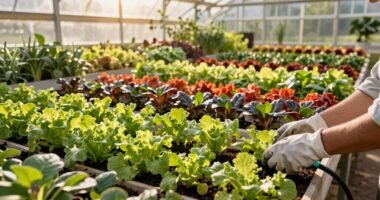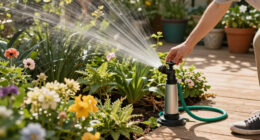
To adjust nutrients throughout the year, test your soil regularly and modify fertilization based on seasonal needs. In spring, focus on nitrogen-rich fertilizers to promote new growth, while summer treatments should guarantee consistent, slow-release nutrients during hot periods. In fall, incorporate organic amendments to build soil fertility, and in winter, offer light feeding if plants are still active. Mastering these shifts helps maintain healthy soil and vibrant plants year-round—continue exploring to improve your seasonal fertilization skills.

Get garden gear delivered free — and shop member deals
- Fast, free delivery on millions of items
- Access to Prime Big Deal Days deals on October 6–7
- Prime Video, Amazon Music and more included
Key Takeaways
- Adjust fertilization timing and type based on seasonal plant growth stages and environmental conditions.
- Use organic amendments in early spring to rebuild soil fertility and support year-round nutrient release.
- Increase nitrogen-rich fertilizers in spring to promote lush, leafy growth during active plant development.
- Apply slow-release fertilizers during summer to maintain consistent nutrients and prevent leaching in hot, dry weather.
- Focus on soil health in fall and winter with organic matter additions, preparing the soil for next season’s growth.
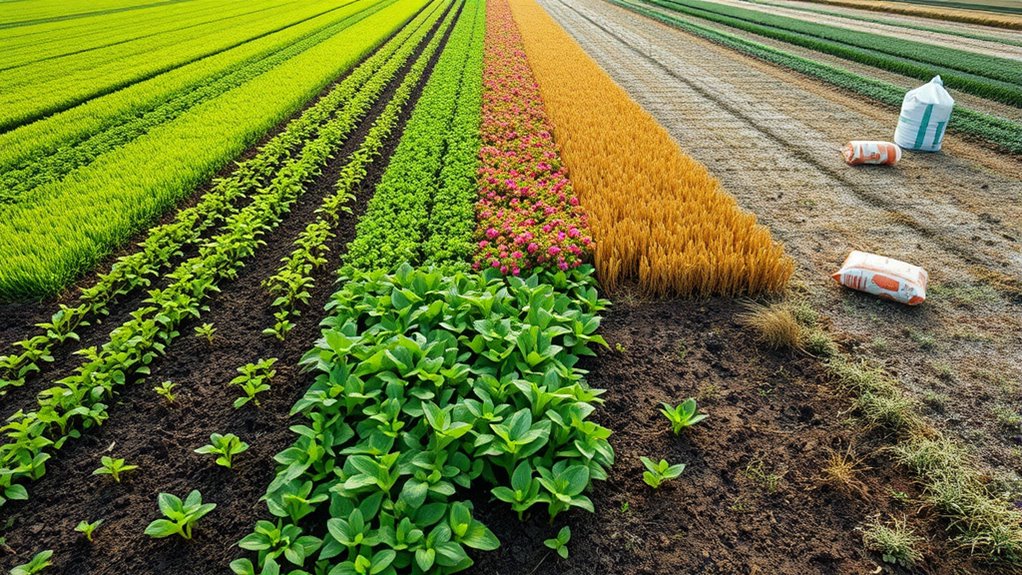
Understanding when to fertilize your plants throughout the year is essential for healthy growth and ideal yields. One of the first things you need to consider is the soil pH, which influences how plants absorb nutrients. If your soil is too acidic or alkaline, your plants might struggle to access vital elements, regardless of how much fertilizer you apply. Testing your soil regularly helps you identify its pH level, so you can adjust fertilization strategies accordingly. For example, if your soil is too acidic, adding lime can raise the pH, making nutrients more available. Conversely, if it’s too alkaline, sulfur or organic amendments like peat moss can help lower the pH. Maintaining an optimal soil pH ensures your plants get the most out of any fertilizer you add and prevents nutrient deficiencies.
Organic amendments play a crucial role in seasonal fertilization because they improve soil health naturally. These amendments, such as compost, manure, and plant-based mulches, release nutrients slowly over time, creating a steady supply that supports plant growth throughout different seasons. Applying organic amendments in early spring helps rebuild soil fertility after winter and prepares your garden for vigorous growth. During peak growing seasons, supplementing with compost or organic matter consistently provides essential nutrients like nitrogen, phosphorus, and potassium. Organic amendments also enhance soil structure, increasing aeration and water retention, which are vital during dry or hot seasons. They help create a balanced environment for beneficial microorganisms that assist in nutrient cycling, making your fertilizer efforts more efficient.
Timing your fertilization with the seasons ensures your plants receive nutrients when they need them most. In spring, as plants break dormancy and start growing actively, it’s ideal to apply a balanced fertilizer or organic amendments rich in nitrogen to promote lush, leafy growth. Summer requires careful attention, especially during hot, dry periods; slow-release organic fertilizers can provide a consistent nutrient supply without risking leaching. In fall, you can focus on applying organic amendments that build soil organic matter, preparing your garden for winter and the next planting cycle. During winter, in regions with mild climates, light fertilization can support root health and soil microbial activity, but many plants enter dormancy and require less attention.
organic fertilizer for seasonal gardening
As an affiliate, we earn on qualifying purchases.
As an affiliate, we earn on qualifying purchases.
Frequently Asked Questions
How Do Soil Types Influence Seasonal Fertilization Choices?
Soil types greatly influence your seasonal fertilization choices because soil composition affects nutrient availability. For example, sandy soils drain quickly and may need frequent, light fertilizations, while clay soils hold nutrients longer but can cause deficiencies if not managed properly. You should tailor your fertilization schedule based on these soil characteristics to optimize nutrient uptake, ensuring your plants get what they need at the right time throughout the year.
Can Over-Fertilizing Harm Plants During Specific Seasons?
Yes, over-fertilizing can harm your plants during specific seasons. fertilizer overuse often leads to nutrient imbalances, which can cause seasonal plant stress, especially in winter or hot summer months. Too much fertilizer encourages rapid growth that plants can’t support, making them vulnerable to diseases and environmental stressors. To avoid these issues, always follow recommended application rates and adjust your fertilization schedule based on seasonal needs.
Are Organic Fertilizers Effective Across All Seasons?
Organic fertilizers are effective across all seasons because they improve soil health and provide essential nutrients gradually. Their seasonal adaptability means you can use them year-round, but timing matters—apply in spring for growth, in summer for flowering, and in fall to prepare for winter. You might notice slower results compared to synthetic options, but their long-term benefits make them a reliable choice regardless of the season.
How Does Climate Change Affect Seasonal Fertilization Schedules?
Climate change increases climate variability and weather unpredictability, making seasonal fertilization schedules harder to plan and more uncertain. You might find that traditional timing no longer aligns with plant needs, leading to either nutrient deficiencies or excesses. To adapt, you should monitor local weather patterns closely and adjust fertilization timing accordingly, ensuring plants get nutrients when they need them most despite unpredictable conditions.
What Are Signs of Nutrient Deficiencies in Different Seasons?
Think of your plants as a car needing the right fuel at the right time. Signs of nutrient deficiencies vary by season: yellowing leaves in spring may signal nitrogen shortage, while poor fruiting in summer hints at potassium deficiency. Use soil nutrient testing and plant symptom identification to catch issues early. By staying alert, you guarantee your garden receives the balanced nutrients it needs, no matter the season.
Conclusion
By adjusting your fertilization schedule throughout the year, you’re like a skilled conductor, guiding your plants’ growth in harmony with the seasons. This approach guarantees they receive the right nutrients at the right time, boosting health and yield. Remember, consistency and timing are key—think of it as watering a delicate plant. When you tailor your fertilization to seasonal changes, you set the stage for a thriving, vibrant garden all year round.
Fall Picks
fall essentials
As an affiliate, we earn on qualifying purchases.