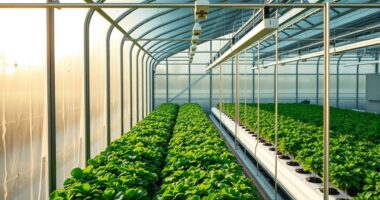
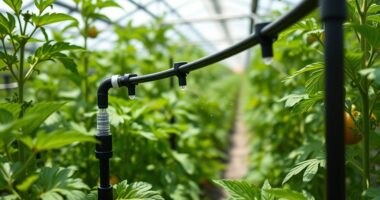
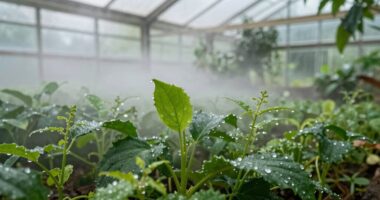
Augmented reality helps you manage your greenhouse by overlaying real-time data directly onto your plants and environment. You can quickly spot pest signs, monitor plant health, and assess moisture or nutrient levels visually. AR guides you on precise pest treatments and suggests proactive adjustments to irrigation or fertilization. It streamlines data collection and analysis, making plant care easier and more efficient. Stay with us to discover how AR can transform your greenhouse operations even further.
Key Takeaways
- AR overlays real-time plant data, such as moisture and nutrient levels, directly onto crops for immediate assessment.
- It enhances pest detection by highlighting signs and guiding targeted, minimal chemical interventions.
- AR consolidates sensor data and diagnostics, enabling proactive plant health monitoring and early stress detection.
- The platform allows recording observations, annotating images, and creating problem maps for better management.
- Overall, AR accelerates decision-making, improves crop health, and increases operational efficiency in greenhouses.

Augmented reality (AR) is transforming how greenhouse managers monitor and care for their crops. With AR, you can overlay critical information directly onto your physical environment, making it easier to assess plant health and identify pest issues quickly. Instead of relying solely on traditional methods like visual inspections or manual record-keeping, AR provides real-time insights that enhance your decision-making process. When you wear AR glasses or use an AR-enabled device, you can see detailed data about each plant’s condition, such as moisture levels, nutrient status, or signs of disease, superimposed right onto the crop. This immediate access helps you prioritize actions and allocate resources more efficiently.
AR overlays real-time plant data onto your view, streamlining health assessments and pest detection for more efficient greenhouse management.
One of the biggest advantages of AR in greenhouse management is its ability to improve pest detection. Instead of waiting for visible damage to become obvious or relying on guesswork, AR systems can highlight pest presence based on subtle signs like discoloration, deformations, or movement. By integrating AI algorithms with AR, you can receive alerts when pests are detected, even at early stages. This early detection allows you to act swiftly, preventing infestations from spreading and reducing reliance on chemical treatments. AR’s visual overlays can also guide you through precise application points for pesticides or biological controls, minimizing waste and environmental impact.
Maintaining ideal plant health becomes more manageable with AR because it consolidates multiple data streams into a single, easy-to-understand interface. You can see real-time sensor data, historical trends, and diagnostic suggestions superimposed onto your view of the greenhouse. This complete overview helps you identify stress signals in plants that might not be obvious to the naked eye. For example, AR might reveal areas where plants show signs of water stress or nutrient deficiency, guiding you to adjust irrigation or fertilization accordingly. This proactive approach minimizes crop loss and boosts overall productivity. Additionally, integrating AI-driven analytics can further enhance the accuracy of these assessments by providing predictive insights based on historical data.
Furthermore, AR enhances your ability to document and analyze your efforts. You can record observations, annotate images, and create maps of problem areas, all within the AR platform. This data becomes valuable for future planning, reporting, and optimizing your management strategies. As you become more familiar with AR tools, you’ll find that maintaining plant health and detecting pests becomes more intuitive and less time-consuming. You’ll spend less time troubleshooting and more time focusing on improving crop yields and quality.
In short, AR empowers you to be a more effective greenhouse manager by providing immediate, actionable insights into plant health and pest detection. It simplifies complex data, accelerates responses to issues, and ultimately leads to healthier plants and more efficient operations.
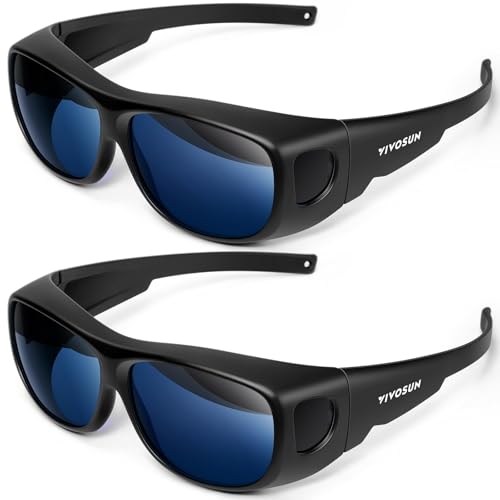
VIVOSUN Grow Room Glasses, Indoor Hydroponics LED Grow Light Glasses, Anti-UV Glasse for Visual Eye Protection, 2pcs
- Eye Protection from UV Rays: Shields eyes from UVA/UVB rays and glare
- Full Coverage Design: Wraparound frame for safer visibility
- Clear Plant Viewing: Distortion-free, true color clarity for plant care
As an affiliate, we earn on qualifying purchases.
As an affiliate, we earn on qualifying purchases.
Frequently Asked Questions
What ARe the Initial Costs of Implementing AR in Greenhouses?
The initial costs of implementing AR in greenhouses vary based on your equipment investment and your specific needs. You should conduct a cost analysis to estimate expenses, which typically include AR devices like smart glasses or tablets, software development or licensing, and integration with existing systems. While the upfront investment can be significant, it often leads to long-term savings through improved efficiency and crop management.
How Does AR Improve Pest and Disease Detection Accuracy?
AR enhances pest and disease detection by providing you with precise visual detection tools. It overlays real-time images and data onto your view, making disease diagnosis quicker and more accurate. You can identify symptoms early, even before they’re visible to the naked eye, reducing the risk of spread. This technology streamlines decision-making, helping you target treatments effectively and maintain healthier plants with less guesswork.
Can AR Systems Be Integrated With Existing Greenhouse Management Tools?
Yes, AR systems can be integrated seamlessly with your existing greenhouse management tools by ensuring compatibility and system interoperability. You might find that using standardized APIs and data formats helps streamline this process. As a result, you get a cohesive system that enhances decision-making, monitors conditions, and optimizes operations. This integration creates a smoother workflow, allowing you to leverage AR’s benefits without disrupting your current setup.
What Training Is Required for Staff to Use AR Technology Effectively?
You’ll need to participate in staff training programs focused on AR user proficiency to use this technology effectively. These programs cover basic device operation, troubleshooting, and how to interpret AR data for greenhouse tasks. Hands-on practice helps you become comfortable with the tools, ensuring you can leverage AR features to improve plant care, monitoring, and maintenance. With proper training, you’ll confidently incorporate AR into your daily greenhouse management routines.
How Secure Is Data Collected Through AR Applications in Greenhouses?
Data collected through AR applications in greenhouses is generally secure if you implement strong data encryption and user authentication measures. Encryption protects your sensitive information during transmission and storage, while user authentication ensures only authorized staff access the data. Keep software updated, use secure passwords, and regularly review security protocols to minimize risks. This way, you can confidently leverage AR technology without compromising your greenhouse’s data security.
Conclusion
As you step into the greenhouse, the augmented reality system reveals hidden data like dew points and nutrient levels, almost as if the plants themselves are whispering secrets. You notice how effortlessly your tasks align with the digital overlays, creating a seamless dance between technology and nature. It’s as if the future of greenhouse management was waiting quietly in this very moment, ready to bloom alongside your crops—just like the unexpected bloom in your own backyard tonight.