To propagate by cuttings in a greenhouse, start with healthy, disease-free plants and use sharp, sterilized tools to make clean cuts. Remove flowers and excess leaves, then dip the cut ends into rooting hormone if needed. Insert the cuttings into moist, well-draining media and cover them with plastic to maintain humidity. Keep the environment warm and indirect light, and regularly check for roots or new growth. For detailed steps, continue exploring the process.
Key Takeaways
- Select healthy, disease-free plants and make clean, sharp cuts to prepare cuttings promptly.
- Dip cut ends in rooting hormone and insert into well-draining, moist media like perlite or vermiculite.
- Cover cuttings with plastic to maintain high humidity, vent periodically to prevent mold.
- Monitor regularly for root development, removing rotting or moldy cuttings immediately.
- Once roots establish, gradually reduce humidity and transplant into larger pots or garden beds.
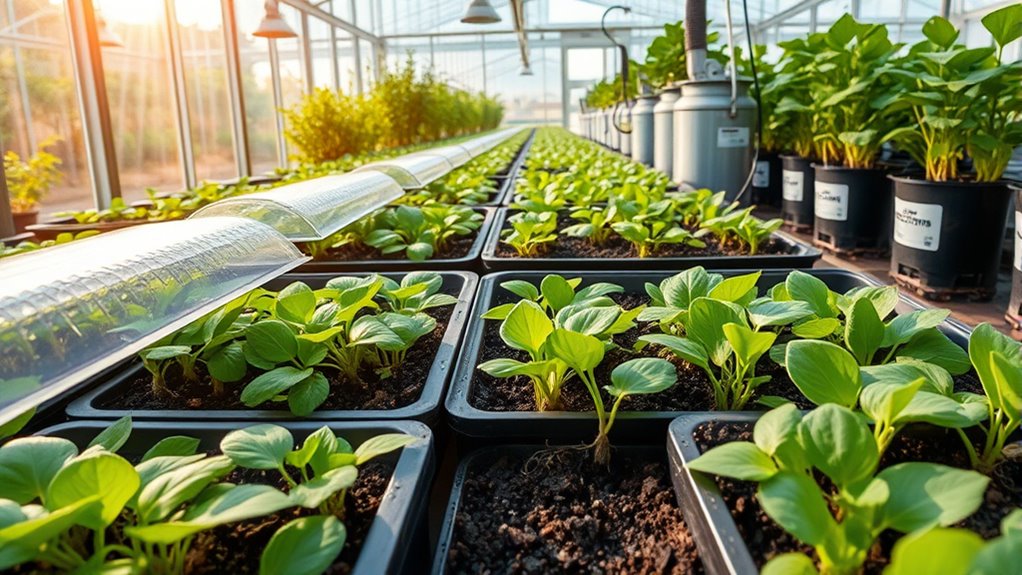
Propagation by cuttings is a popular and straightforward method for growing new plants from existing ones. When you want to create clones of your favorite plants, taking cuttings allows you to replicate their growth habits and characteristics efficiently. To maximize your success, you should start with healthy, disease-free plants. Use sharp, sterilized tools to make clean cuts, which helps prevent infections that could hinder root development.
Propagating plants via cuttings is simple; start with healthy, disease-free plants and use sterilized tools for best results.
Before planting your cuttings, consider applying rooting hormones. These substances contain plant growth regulators that stimulate root formation and improve the chances of successful propagation. Dip the cut end of each cutting into the rooting hormone powder or gel, ensuring an even coat. This step is especially beneficial for woody or slow-rooting species, as it encourages rapid root development and strengthens the cutting’s chances of survival.
Pruning techniques also play a pivotal role in propagation. When taking cuttings, make sure to remove any flowers or flower buds to redirect energy toward root growth. Trim the lower leaves or foliage that could rot in the soil or medium, leaving only a few leaves at the top to minimize moisture loss. Proper pruning ensures the cutting remains healthy and reduces the risk of disease during rooting.
Once prepared, insert the cuttings into a well-draining rooting medium, such as perlite, vermiculite, or a mix of peat and sand. Keep the medium moist but not soggy, as excessive moisture can lead to rot. Covering your cuttings with a plastic dome or plastic wrap creates a humid environment that promotes root formation. Make sure to vent the cover occasionally to prevent mold and fungal growth, and maintain consistent temperature and indirect light to support healthy development.
Throughout the rooting process, monitor your cuttings regularly. Check for signs of new growth or roots emerging from the base, which indicates successful propagation. If you notice any rotting or mold, remove the affected cuttings immediately to prevent spread. If roots are slow to develop, you might consider reapplying rooting hormones or adjusting environmental conditions like humidity and light. Incorporating seed starting techniques can also enhance overall propagation success, especially if you are combining cuttings with other methods.
Patience is key; some plants root quickly, while others may take several weeks. Once roots are established and the plant shows new growth, you can gradually acclimate it to less humid conditions and prepare it for transplanting into larger pots or your garden. By combining effective pruning techniques, the use of rooting hormones, and attentive care, you’ll improve your chances of successfully propagating healthy, vigorous new plants from cuttings.
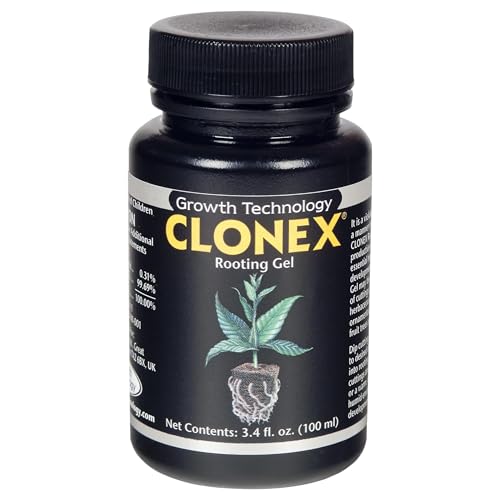
Clonex Rooting Gel – High-Performance Rooting Compound for Plant Cuttings, Contains IBA, Promotes Root Initiation & Development – 100ml
HIGH-PERFORMANCE ROOTING GEL – Clonex Rooting Gel is a water-based formula with the ideal level of IBA. Trusted…
As an affiliate, we earn on qualifying purchases.
As an affiliate, we earn on qualifying purchases.
Frequently Asked Questions
Which Plants Are Best Suited for Propagation by Cuttings?
You should choose herbaceous perennials and woody shrubs for propagation by cuttings. Herbaceous perennials like lavender, sedum, and salvia root easily from cuttings, making them ideal. Woody shrubs such as hydrangeas, roses, and lilacs also propagate well. By selecting these plants, you’ll have a higher success rate and quicker growth, allowing you to expand your garden efficiently. Always guarantee proper cutting techniques and conditions for best results.
How Long Does It Take for Cuttings to Root Successfully?
It usually takes a few weeks for cuttings to root successfully. To speed up the process, you should apply a rooting hormone to encourage root development and maintain high humidity levels through humidity control. Keep the environment warm and consistently moist, and check regularly. With proper care, you can expect roots to form within three to six weeks, depending on the plant species.
What Are Common Mistakes to Avoid During Propagation?
You should avoid overwatering, which can cause rot and hinder rooting, and improper pruning, like cutting too close or at the wrong spot, which weakens cuttings. Keep soil moist but not soggy, and prune correctly to encourage healthy growth. Also, steer clear of using dull tools or handling cuttings roughly, as these mistakes reduce your chances of successful propagation. Proper care helps your cuttings root faster and stronger.
How Should I Care for Cuttings in a Greenhouse Environment?
You should keep humidity high around your cuttings to prevent them from drying out, but avoid excess moisture that can cause rot. Use humidity control tools like misting systems or plastic covers. Regularly check for pests and take preventive measures to avoid infestations. Guarantee good air circulation to reduce disease risk, and keep your greenhouse clean. Proper care promotes healthy rooting and successful propagation.
Can Propagation by Cuttings Be Done Year-Round Indoors?
Yes, you can do indoor propagation year-round, making it perfect for year-round gardening. With proper lighting, temperature control, and humidity, you create ideal conditions for cuttings to root indoors. Keep the environment consistent, avoid drafts, and guarantee your cuttings have adequate moisture. This way, you can enjoy continuous propagation regardless of the season, expanding your plant collection and enhancing your gardening skills throughout the year.

6 Mil Plastic Sheeting, 12×25 FT, Greenhouse Plastic, Heavy Duty, Polyethylene Film, UV Resistant, Tear-Proof, for Garden, Agriculture, Painting Floor Protection
6Mil Clear Plastic Sheeting: Engineered from 100% new industrial-grade Low Density Polyethylene (LDPE), this heavy-duty plastic sheeting offers…
As an affiliate, we earn on qualifying purchases.
As an affiliate, we earn on qualifying purchases.
Conclusion
Now that you’ve learned the art of propagation by cuttings, you’re like a gardener wielding a magic wand, turning tiny stems into thriving plants. With patience and care, you’ll watch new life sprout from your hands, transforming your greenhouse into a lush oasis. Remember, each cutting is a promise of growth, a whisper of nature’s resilience. Keep nurturing your green dreams, and soon, your garden will bloom with beauty born from your gentle touch.

The Ultimate Guide to Houseplant Propagation: Step-by-Step Techniques for Making More Houseplants . . . for Free!
As an affiliate, we earn on qualifying purchases.
As an affiliate, we earn on qualifying purchases.

DECERK® 8.5" Professional Pruning Shears – Cuts 4X Easier with Ultra Sharp Japanese Steel Titanium Blade, Arthritis Friendly Garden Scissors & Plant Clippers, Effortlessly Prunes 3/4" Branches
Unbreakable sharpness! Japanese SK5 steel blade with titanium coating endures 100,000 cuts. Built for lifelong clean cuts
As an affiliate, we earn on qualifying purchases.
As an affiliate, we earn on qualifying purchases.