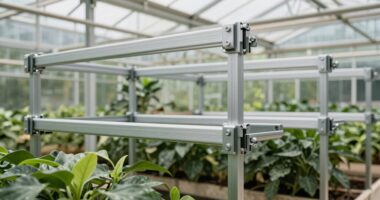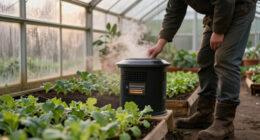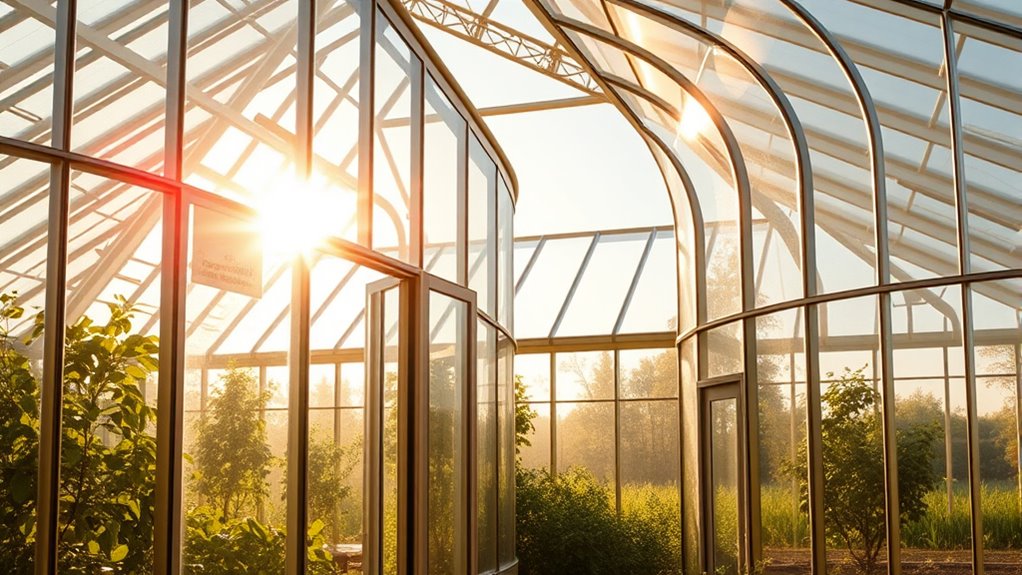

To build a solar greenhouse with an attached sunspace, orient your structure for maximum winter sunlight, with large south-facing windows and transparent walls. Incorporate thermal mass materials like concrete or water barrels inside to absorb and slowly release heat. Use overhangs or shading devices to prevent summer overheating. The sunspace acts as a pre-warming zone, improving overall warmth and stability. When you continue, you’ll find proven strategies to optimize passive heating and temperature control.

Get garden gear delivered free with Prime
- Fast, free delivery on millions of items
- Prime Video, Amazon Music and more included
- Member-only deals all year
Key Takeaways
- Orient the greenhouse and sunspace to maximize southern exposure for optimal sunlight capture.
- Incorporate thermal mass materials like concrete or water barrels inside both structures to store and release heat.
- Design the sunspace with large windows and proper insulation to pre-warm incoming air and stabilize temperatures.
- Use overhangs or shading devices to prevent overheating during summer months.
- Place thermal mass strategically in the sunspace to enhance passive heating efficiency and temperature regulation.
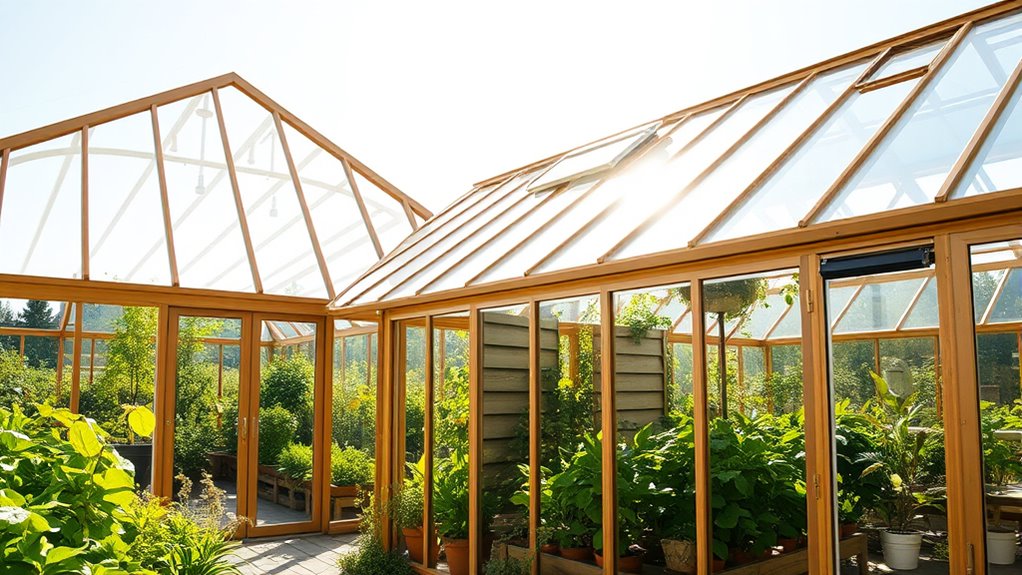
Building a solar greenhouse is an effective way to extend your growing season and reduce energy costs by harnessing the sun’s natural warmth. One of the key principles behind an efficient solar greenhouse is passive heating, which relies on design and materials to capture and store heat without the need for active systems like fans or heaters. By incorporating passive heating strategies, you can keep your greenhouse warm during colder months while minimizing energy consumption. A central element of passive heating is thermal mass, which refers to materials that absorb, store, and gradually release heat, helping to maintain a stable indoor temperature.
When building your greenhouse, think about integrating thermal mass into the structure. Materials such as concrete, brick, water barrels, or even large stones work well because they absorb heat during sunny days and release it slowly when the sun goes down. Position these thermal mass elements inside the greenhouse, ideally on the south-facing side, to maximize their exposure to sunlight. During the day, they soak up heat, and at night, they emit that stored warmth, reducing temperature fluctuations and creating a more stable environment for your plants.
Design plays a pivotal role in optimizing passive heating. You should orient the greenhouse to maximize sunlight exposure, especially during winter months. Large south-facing windows and transparent walls allow sunlight to penetrate deeply, warming the thermal mass and the interior space. Overhangs or shading devices can prevent overheating during summer, ensuring your greenhouse stays comfortable year-round. Adding insulation along the walls and roof further reduces heat loss, making passive heating more effective. Additionally, incorporating noise reduction technology can help minimize disturbances from external sources, creating a more tranquil environment for your plants and yourself.
The attached sunspace acts as a pre-warming zone, where sunlight heats the air before it enters the main growing area. This space can be designed with large windows or glass walls that let in ample sunlight, warming the air naturally. As the sun heats the sunspace, the warm air can circulate into the main greenhouse, boosting overall temperatures without extra energy. The thermal mass placed in the sunspace also helps stabilize temperature swings, making the environment more consistent for your plants.
As an affiliate, we earn on qualifying purchases.
Frequently Asked Questions
What Are the Best Plants for a Solar Greenhouse?
You should choose plants that thrive with ample light and warmth, making them ideal for a solar greenhouse. Select vegetables like tomatoes, peppers, and cucumbers, which need high light requirements. Herbs such as basil, cilantro, and parsley also flourish here. For best plant selection, consider each plant’s light needs and temperature tolerance. By doing so, you’ll create a thriving environment that maximizes your greenhouse’s solar potential.
How Much Does a Solar Greenhouse Typically Cost?
A solar greenhouse typically costs between $5,000 and $25,000, depending on size, materials, and features. This range is a rough estimate, so you’ll want to do careful budget planning to match your goals. Keep in mind, investing in a solar greenhouse can be a game-changer—it’s like planting a tiny sun inside! To save, consider DIY options or scaling your project gradually.
What Maintenance Is Required for an Attached Sunspace?
You’ll need to regularly check your attached sunspace’s glazing for cracks or dirt, ensuring ideal sunlight transmission. Ventilation maintenance is essential; clean and inspect vents and fans to prevent mold and regulate airflow. Periodically, inspect seals and hinges to keep everything airtight and functional. By staying on top of ventilation maintenance and glazing inspection, you’ll keep your sunspace efficient, prolong its lifespan, and enjoy healthy, thriving plants year-round.
Can a Solar Greenhouse Be Used Year-Round?
A solar greenhouse is like a warm hug, so yes, you can use it year-round. With proper solar panel integration and effective greenhouse insulation options, it captures solar energy even in winter. You’ll need to manage airflow and temperature, but it’s entirely feasible. By optimizing these features, your greenhouse becomes a cozy, sustainable haven no matter the season, giving you fresh produce all year long.
How Do I Maximize Solar Gain in My Greenhouse?
To maximize solar gain in your greenhouse, focus on proper ventilation strategies to control temperature and humidity, ensuring ideal plant growth. Use insulation techniques like double-pane glazing and thermal curtains to retain heat during colder months. Position your greenhouse to maximize sun exposure, especially on south-facing walls. Additionally, consider adding thermal mass materials such as water barrels or stone to store and release heat, improving overall efficiency and warmth year-round.
Conclusion
By building your beautiful, breezy solar greenhouse with a sunny sunspace, you create a sustainable space that saves energy and supports growth. With straightforward steps and smart strategies, you’ll seamlessly step into a more self-sufficient, solar-powered sanctuary. So, start your sustainable journey today, and watch your sunny sanctuary sprout, shine, and sustain, turning your green dreams into a glorious, glowing reality. Embrace the effort, enjoy the results, and revel in your radiant, renewable retreat.
Fall yard work Picks
leaf blowers
As an affiliate, we earn on qualifying purchases.