
If you’re choosing between soilless and soil-based growing, consider your goals and resources. Soilless systems offer precise nutrient control, faster growth, and are great for indoor setups, but need regular maintenance and technical know-how. Soil-based gardening is more forgiving, eco-friendly, and ideal for beginners, though it demands more labor and space. To make the best choice for your needs, you’ll find helpful insights if you explore further.
Key Takeaways
- Soilless growing offers precise nutrient control and faster growth but requires technical knowledge and regular system monitoring.
- Soil-based methods utilize organic amendments, promoting microbial activity and being more forgiving for beginners.
- Soilless systems are space-efficient and ideal for controlled environments, whereas soil-based growing can be more labor-intensive.
- Soil-based cultivation provides natural buffering and sustainability but may result in longer maturation times.
- The choice depends on resource availability, expertise, and desired control over growing conditions.
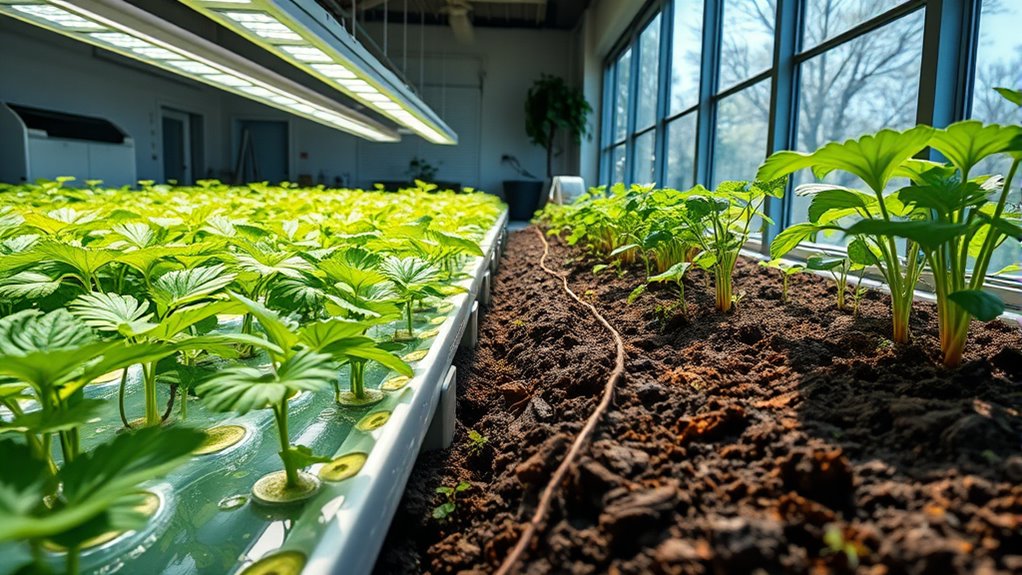
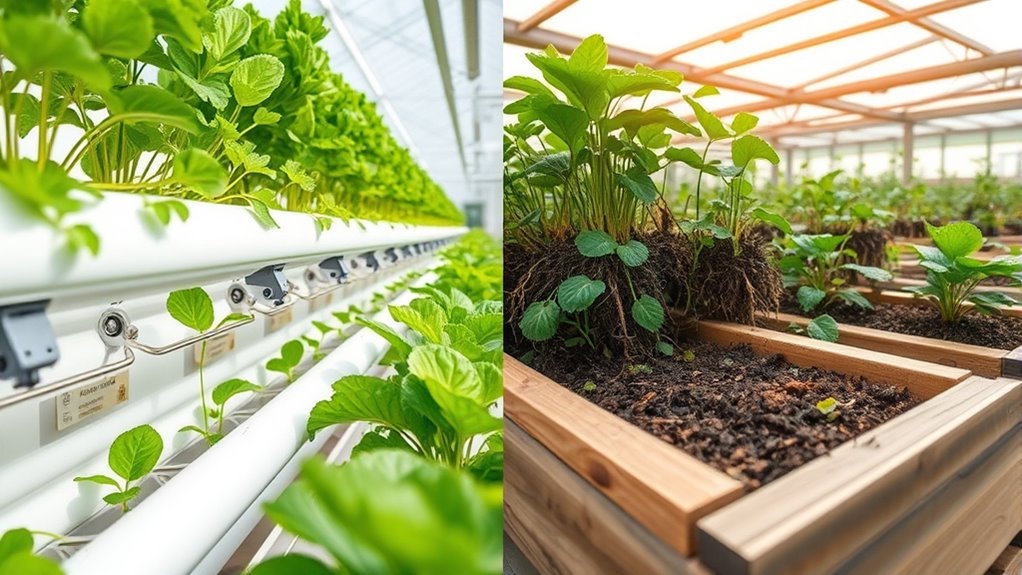
Have you ever wondered whether soilless or soil-based growing methods are better for cultivating healthy plants? The choice often comes down to understanding the specific advantages and challenges of each approach. Soilless growing, especially through hydroponic techniques, involves growing plants in nutrient-rich water solutions rather than traditional soil. This method allows you to precisely control the nutrients your plants receive, leading to faster growth rates and potentially higher yields. Hydroponic systems can be set up indoors or in controlled environments, making them ideal for urban gardening or areas with poor soil quality. However, they require a good understanding of nutrient management, pH balancing, and system maintenance. If you’re not careful, plants can quickly suffer from deficiencies or diseases, which can spread rapidly in a soilless setup.
Soilless growing offers precise nutrient control but requires careful system management.
On the other hand, soil-based growing relies on organic soil amendments to improve soil quality and provide essential nutrients. Using organic amendments like compost, manure, or worm castings enriches the soil naturally, encouraging beneficial microbial activity that supports healthy plant roots. This method often feels more familiar and sustainable, especially if you prefer gardening with minimal synthetic inputs. Plus, soil can act as a buffer, helping to stabilize nutrient levels and moisture content, reducing the risk of sudden deficiencies. Growing in soil also allows for a wider variety of plant types and is generally more forgiving for beginners. However, soil-based methods can be more labor-intensive, requiring regular amendments and soil management to prevent pests, diseases, and nutrient imbalances.
When it comes to resource use, hydroponic techniques often use less water since the system recycles the nutrient solution. They can be more space-efficient and faster in producing results, but they demand a higher initial investment and technical know-how. Conversely, soil-based growing can be more cost-effective, especially if you have access to quality organic soil amendments, but it might take longer for plants to reach maturity. Both methods have their merits, but your decision may hinge on your available space, budget, and level of expertise. Additionally, understanding the nutrient balance in each method can significantly impact plant health and growth outcomes.
Ultimately, whether you prefer hydroponic techniques or organic soil amendments depends on your goals and circumstances. If you’re seeking quick, controlled growth and have the resources to manage a hydroponic system, soilless growing could be the way to go. If you value sustainability, natural methods, and a more hands-on approach, soil-based cultivation might suit you better. Either way, understanding these methods helps you make informed decisions to nurture healthy, thriving plants.

Ahopegarden Indoor Garden Hydroponics Growing System: 10 Pods Kit with LED
- High Planting Efficiency: Faster, healthier growth with hydroponic system
- 10 Pods & Water Level Window: Includes 10 planting stations and water indicator
- Dual Growing Modes: Switch between vegetable and flower/fruit lighting
As an affiliate, we earn on qualifying purchases.
As an affiliate, we earn on qualifying purchases.
Frequently Asked Questions
Which Method Yields Faster Plant Growth?
Hydroponic systems generally yield faster plant growth because of their high efficiency, delivering nutrients directly to the roots. This method maximizes hydroponic efficiency, allowing plants to absorb nutrients quickly and thrive. In contrast, soil fertility varies, and nutrient availability can slow growth. So, if speed is your goal, you should consider hydroponics, as it provides a controlled environment that accelerates plant development compared to soil-based methods.
How Do Costs Compare Over the Long Term?
Over the long term, your costs are like a tightrope walk—soilless systems often demand higher initial investments but save money through better resource efficiency. Soil-based growing may be cheaper upfront but can incur ongoing expenses due to water and nutrient use. For sustainable resource management and cost efficiency, many growers find soilless methods more economical over time, helping your operation stay balanced and environmentally friendly.
Are There Specific Crops Better Suited for Each Method?
You’ll find that crop suitability varies between methods. For example, leafy greens and herbs thrive in soilless systems thanks to their quick growth cycles and controlled environments, aligning with your growing preferences for efficiency. Conversely, root vegetables and larger fruits often do better in soil-based setups, where the natural environment supports their development. Understanding these differences helps you choose the best method for each crop’s specific needs.
What Are Common Pests or Diseases for Each System?
Pests and diseases can wreak havoc, threatening your entire crop like a relentless storm. In soilless systems, watch out for root rot and fungal infections, while soil-based grows face issues like nematodes and soil-borne bacteria. Effective pest management and disease prevention are vital in both methods. Regular monitoring, maintaining hygiene, and using organic or chemical controls help protect your plants from these destructive threats, ensuring healthy, bountiful harvests.
How Do Environmental Impacts Differ Between the Two?
You’ll find that soilless systems often have a lower water consumption because they recycle nutrient solutions efficiently, reducing waste. They also tend to have a smaller carbon footprint due to less land use and shorter transportation distances. In contrast, soil-based growing can require more water and may contribute to soil degradation and higher emissions through land clearing. Your choice impacts sustainability, so consider these environmental impacts carefully.
Conclusion
Imagine your garden as a bustling city—soilless growing is like building skyscrapers with sleek, modern materials, offering flexibility and precision. Soil-based growing, on the other hand, is a lush, ancient forest, rich with history and natural nutrients. Both paths have their charm; it’s up to you to choose which landscape suits your vision. Whether you prefer the cutting-edge skyline or the timeless woods, each method can help your plants flourish in their own unique way.