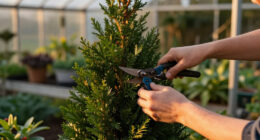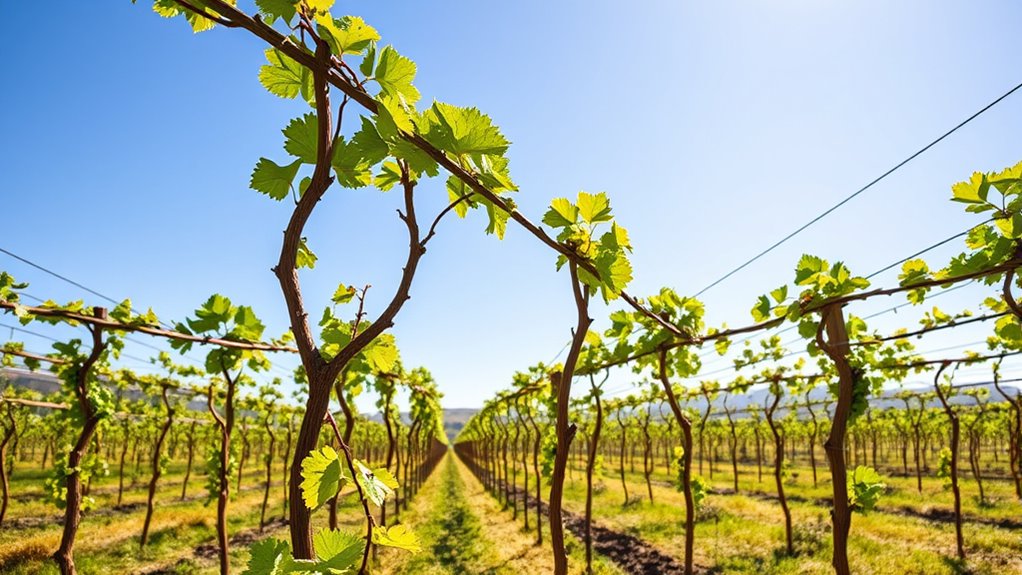

To prune and train vines in vertical systems, you should start by establishing a solid framework early in the season, selecting healthy canes, and training them along supports or wires. Regularly remove weak or unproductive shoots, thin dense foliage to improve airflow, and maintain the desired shape with techniques like spur pruning. This approach guarantees ideal sunlight exposure and air circulation, boosting fruit quality and vine health. Keep exploring to discover how proper management can lead to a thriving system.
Key Takeaways
- Develop a structured training system by selecting main trunks and guiding shoots along trellis wires for uniform canopy.
- Prune to remove weak, damaged, or unproductive shoots, maintaining vine vigor and fruit quality.
- Thin dense foliage to improve sunlight penetration and airflow, reducing disease risk.
- Adjust pruning and training practices throughout the season to optimize canopy shape and vine health.
- Use trellis design to support shoot positioning, facilitate maintenance, and promote even fruit exposure.
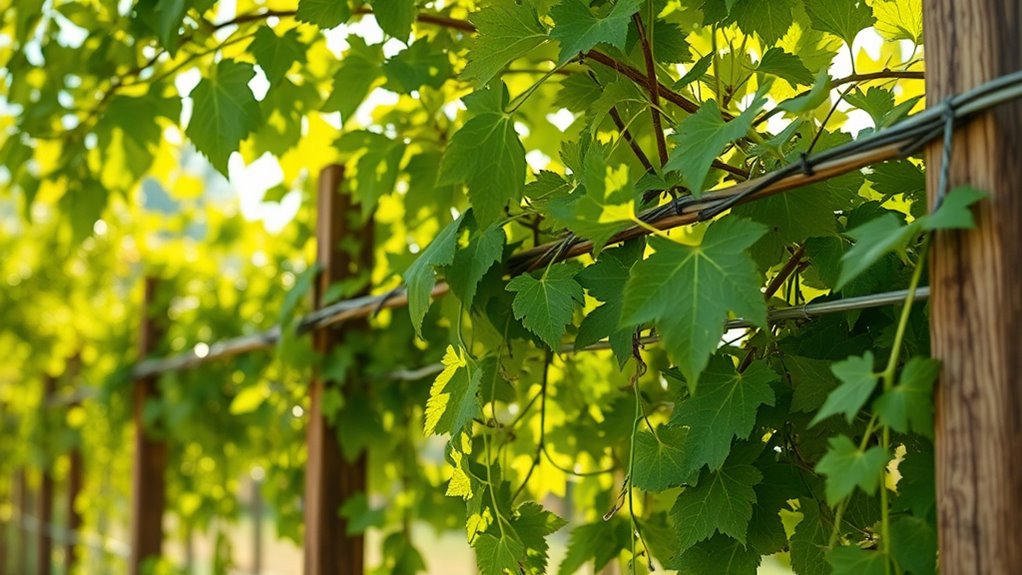
Pruning and training vines are essential practices that guarantee healthy growth and maximize fruit production. When you focus on canopy management, you’re controlling how the vine’s leaves and shoots develop, ensuring that sunlight reaches all parts of the plant and that air circulates freely. Proper canopy management involves selectively removing excess foliage and adjusting the vine’s structure to prevent overcrowding. This not only enhances photosynthesis but also reduces disease risks, resulting in healthier vines and better fruit quality.
Effective canopy management improves vine health, boosts fruit quality, and reduces disease by controlling foliage and shoot growth.
Your trellis design plays a vital role in how effectively you can implement these practices. A well-designed trellis provides support and guidance for your vine’s growth, making pruning and training more straightforward. It influences the shape of the canopy, dictating how the vine’s shoots are arranged and how much sunlight they receive. For example, a vertical trellis system encourages upward growth, exposing more leaves to sunlight and improving air circulation. This setup simplifies pruning, as you can easily access the fruiting zones and remove unnecessary or crossing shoots.
When training your vines, you want to develop a structure that promotes consistent fruiting and minimizes disease. Begin by selecting the main trunk and training shoots along the trellis wires, ensuring they are evenly spaced. This creates a balanced canopy where light can penetrate uniformly. As the vine grows, prune back excess shoots to focus the plant’s energy on the main fruiting zones. Training methods like cordon or spur pruning work well with trellis systems, helping you maintain a manageable size and shape.
Consistent canopy management involves adjusting your pruning and training techniques throughout the growing season. Early in the season, focus on establishing a good framework by selecting healthy canes and training them along the trellis. Later, prune to remove weak, damaged, or unproductive shoots, and thin out dense foliage to prevent shading. This ongoing process ensures your vine’s energy is directed toward producing high-quality fruit rather than excessive vegetative growth.
In essence, your success in pruning and training vines hinges on integrating effective canopy management with a solid trellis design. By thoughtfully shaping the vine’s structure, you optimize sunlight exposure, improve airflow, and facilitate maintenance tasks. This combination leads to healthier vines, higher yields, and superior fruit quality. Regularly evaluating and adjusting your approach based on the vine’s growth patterns and environmental conditions will keep your vertical system productive and sustainable over time.
As an affiliate, we earn on qualifying purchases.
Frequently Asked Questions
Which Vine Varieties Are Best Suited for Vertical Training?
You should choose vigorous vine varieties like Cabernet Sauvignon, Merlot, or Chardonnay for vertical training. These grapes respond well to trellis design, which supports their growth and maximizes sunlight exposure. Varieties with moderate to high vine vigor thrive with proper pruning and training, ensuring good airflow and fruit quality. Selecting suitable varieties and designing your trellis system will help optimize yield and ease of vineyard management.
How Often Should I Prune My Vines Annually?
You should prune your vines annually, typically during dormancy in late winter or early spring. Use seasonal pruning techniques to remove dead or overcrowded canes, encouraging healthy growth. Regular pruning helps maintain the desired shape and prevents overgrowth, ensuring better airflow and fruit production. Keep in mind that the exact timing and method may vary depending on your vine variety, so observe your plants and adjust your pruning schedule accordingly.
What Tools Are Essential for Pruning Vertical Vines?
Think of your tools as the gardener’s trusted companions. You’ll need sharp pruning shears for clean cuts, sturdy vine cutters to handle thicker stems, and precise training knives for shaping. Trellis wire acts like the vine’s guiding hand, supporting growth. With these essentials, you nurture healthy vines, ensuring they thrive along their vertical path. Keep your tools sharp and ready, and your vineyard will flourish beautifully.
Can Pruning Improve Fruit Quality in Vertical Systems?
Yes, pruning can improve fruit quality in vertical systems. By using proper pruning techniques, you remove excess growth and focus the plant’s energy on developing high-quality fruit. Techniques like thinning and heading cuts help enhance fruit size, flavor, and overall appearance. Regular pruning encourages better air circulation and sunlight penetration, which further supports fruit enhancement. Consistent pruning guarantees healthier vines and more abundant, better-quality harvests over time.
How Do I Prevent Disease During Pruning and Training?
Preventing disease during pruning and training is like locking a door before trouble enters. You should use clean, sharp pruning tools and disinfect them between cuts to avoid spreading pathogens. Apply proper pruning techniques, such as making clean cuts and avoiding damage to the plant. Also, prune during dry weather and ensure good airflow around the vines, which helps with disease prevention and keeps your plants healthy.
Conclusion
By mastering pruning and training, you shape your vines into graceful, fruit-bearing sculptures. Picture your vineyard alive with slender canes reaching skyward, leaves whispering with each breeze, and clusters of grapes ripening under warm sun. With careful hands and attentive eye, you guide nature’s artistry, transforming wild growth into a harmonious tapestry. Your efforts nurture a vibrant, thriving vineyard—where each vine tells a story of patience, skill, and the promise of bountiful harvests ahead.