
To identify if leaf spots are caused by bacteria, fungi, or nutrients, look closely at their appearance. Fungal spots are usually round, well-defined, and may have fuzzy textures. Bacterial spots tend to be irregular, greasy, and may ooze fluids. Nutrient deficiencies cause more uniform, pale, or yellowing spots without clear borders. Carefully examining these signs helps determine the cause, and exploring further will give you more ways to address the issue effectively.

Get garden gear delivered free — and shop member deals
- Fast, free delivery on millions of items
- Access to Prime Big Deal Days deals on October 6–7
- Prime Video, Amazon Music and more included
Key Takeaways
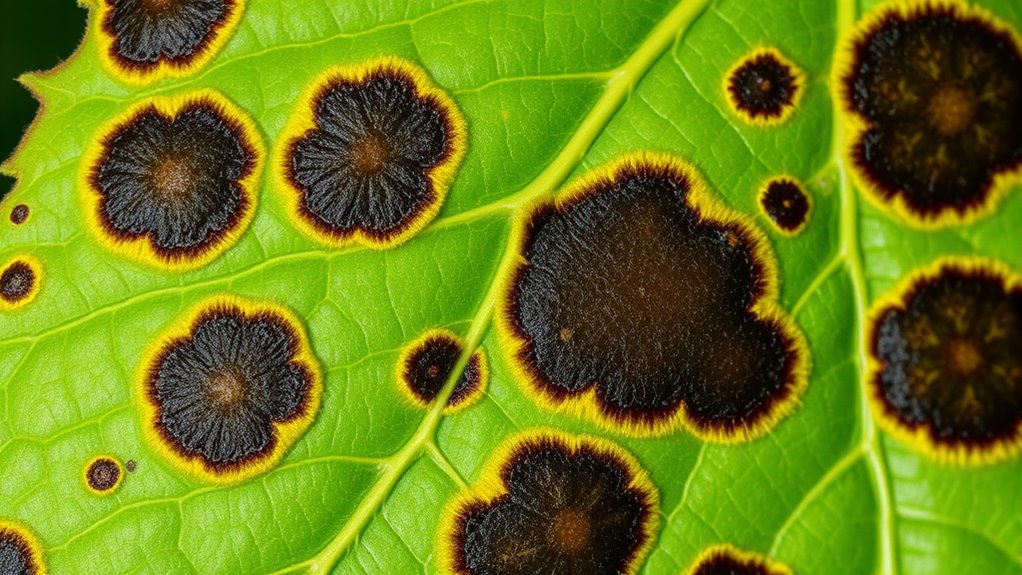
- Fungal spots are usually round, well-defined, and may have fuzzy textures, often with colors like brown or black.
- Bacterial spots tend to be irregular, greasy-looking, with water-soaked edges and sometimes produce a yellow halo.
- Nutrient deficiency symptoms present as small, pale, or yellow spots that are uniformly distributed without clear borders.
- Humid conditions promote rapid spread of fungal and bacterial spots, while nutrient deficiencies develop gradually.
- Proper diagnosis involves examining spot shape, texture, color, and distribution, along with environmental conditions.
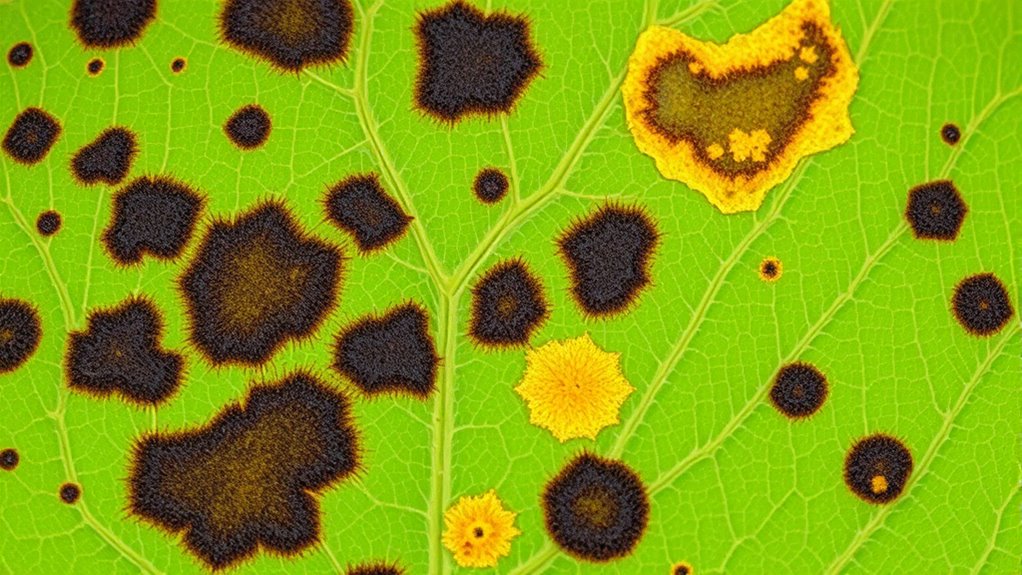
Have you ever noticed unsightly spots on your plant’s leaves and wondered what caused them? Recognizing the source of leaf spots is essential for effective plant disease identification and ensuring your plant stays healthy. These spots can be caused by a variety of factors, including bacteria, fungi, or nutrient deficiencies, and each has distinct signs that can help you determine the culprit. Understanding these differences is the first step toward proper diagnosis and treatment.
When you’re trying to identify leaf spots, look closely at their appearance. Fungal infections often produce round, well-defined spots with a characteristic color—ranging from brown and black to yellow or white. These spots may have a fuzzy or powdery texture due to the presence of mold or spores. Bacterial leaf spots, on the other hand, tend to be more irregular in shape, often with water-soaked edges that may look greasy or shiny. They might ooze or produce a yellow halo around the lesion, signaling bacterial activity. Nutrient deficiencies usually cause smaller, pale, or yellowing spots that occur uniformly across the leaf, often without the distinct borders seen in fungal or bacterial infections.
To accurately diagnose your plant’s issues, observe the pattern and progression of the spots. Fungal and bacterial infections often spread rapidly under humid conditions and can cause spots to merge, creating larger dead areas. Nutrient-related spots tend to develop gradually and can be linked to specific deficiencies, such as nitrogen, potassium, or magnesium. Knowing these subtle differences helps you avoid unnecessary treatments and target the cause effectively.
Prevention plays a vital role in keeping leaf spots at bay. Implementing leaf spot prevention techniques like proper watering—avoiding wetting the foliage—promotes plant health and reduces fungal and bacterial growth. Ensuring good air circulation around your plants can also decrease humidity levels that favor disease development. Regularly removing affected leaves prevents the spread of pathogens and keeps your plant healthier. Additionally, using resistant plant varieties and applying organic fungicides or bactericides when necessary can help protect your plants from future infections.
As an affiliate, we earn on qualifying purchases.
Frequently Asked Questions
Can Weather Changes Influence Leaf Spot Development?
Weather changes definitely influence leaf spot development by impacting disease spread and the weather impact on plants. Warm, wet conditions create an ideal environment for fungi and bacteria to thrive, increasing the chances of disease spread. Sudden temperature shifts can weaken plant defenses, making them more susceptible. You should monitor weather patterns closely, as humidity and rainfall directly contribute to how quickly and severely leaf spots develop on your plants.
Are Leaf Spots Contagious Between Plants?
Yes, leaf spots can be contagious between plants. You should be aware that disease transmission often occurs through water, tools, or contact, especially if plant immunity is weak. To prevent spreading, sanitize your tools and avoid handling infected plants. Maintaining strong plant health boosts their resistance, reducing the risk of infection. Regular monitoring helps catch issues early, limiting disease transmission and keeping your plants healthier.
How Long Does It Take to See Results After Treatment?
You can typically see treatment effectiveness within a week to ten days, but the full recovery timeline varies. If your treatment works, leaf spots should stop spreading, and new growth will look healthier. Keep monitoring your plants closely, and if you don’t notice improvement after this period, consider adjusting your approach or consulting a specialist. Patience is key, as some treatments take longer to fully restore your plant’s health.
Can Soil Testing Help Identify Nutrient Deficiencies?
Yes, soil testing can help identify nutrient deficiencies. For example, a gardener notices yellowing leaves and conducts a soil analysis, revealing low nitrogen levels. This insight allows you to adjust your nutrient management plan effectively. Soil testing provides precise data, helping you address deficiencies early and prevent further plant stress. By understanding your soil’s nutrient profile, you can optimize fertilization and promote healthier, more vigorous plants.
Are Some Plant Varieties More Resistant to Leaf Spots?
Yes, some plant varieties are more resistant to leaf spots. When you choose your plants, focus on variety selection that emphasizes plant resistance. Resistant varieties have been bred to withstand common pathogens, reducing the likelihood of leaf spots. By selecting these varieties, you can minimize disease problems and promote healthier plants. Always check labels or consult local nurseries for recommendations on resistant plant varieties suited to your climate and garden conditions.
Conclusion
Now that you’ve seen the clues—whether it’s the telltale spots, color changes, or pattern—you’re closer to uncovering the culprit. But don’t jump to conclusions just yet. Imagine peeling back the layers of your plant’s mystery, revealing a hidden story beneath those spots. Is it bacteria lurking unseen, fungi creeping in, or a nutrient imbalance whispering its secrets? The answer awaits, just beyond the surface—ready to transform your plant care journey into a detective adventure.
Fall yard work Picks
leaf blowers
As an affiliate, we earn on qualifying purchases.