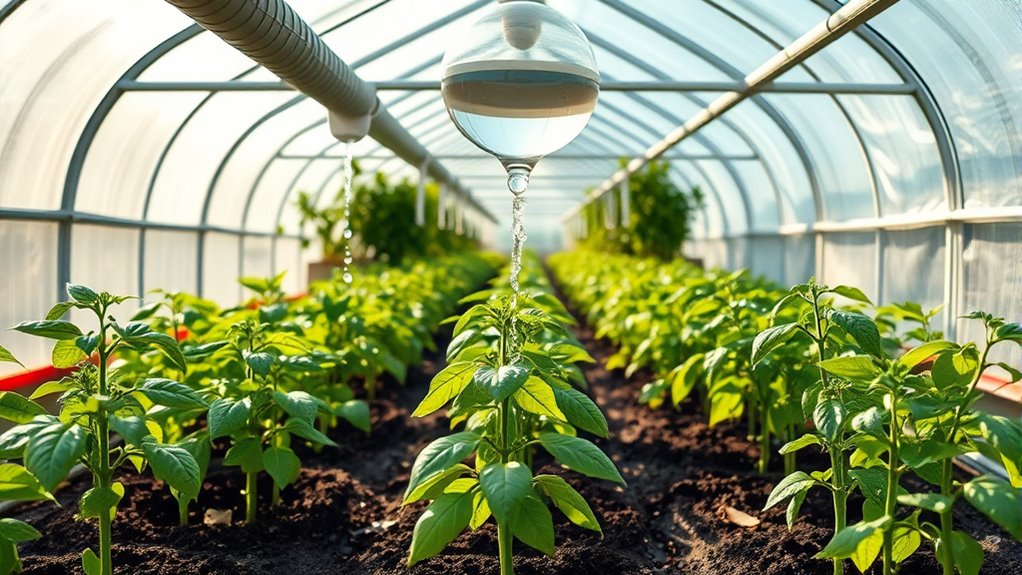

Using greywater for greenhouse irrigation can save you fresh water and promote sustainable gardening, but it is crucial to treat it properly first. Make sure to filter out contaminants, soaps, and detergents to protect your plants and soil. Use efficient irrigation systems like drip lines and keep everything well-maintained. Be aware of local regulations to ensure safe use. If you want to learn more on how to implement and manage greywater systems effectively, keep exploring these guidelines.

Get garden gear delivered free — and shop member deals
- Fast, free delivery on millions of items
- Access to Prime Big Deal Days deals on October 6–7
- Prime Video, Amazon Music and more included
Key Takeaways
- Properly treat greywater to remove contaminants before use in greenhouse irrigation.
- Use efficient irrigation systems like drip or closed-loop setups to deliver greywater directly to plant roots.
- Select plant species tolerant to greywater salts and chemicals to prevent damage.
- Regularly maintain filters and monitor water quality to ensure system safety and longevity.
- Comply with local regulations and safety standards for greywater reuse in agricultural settings.
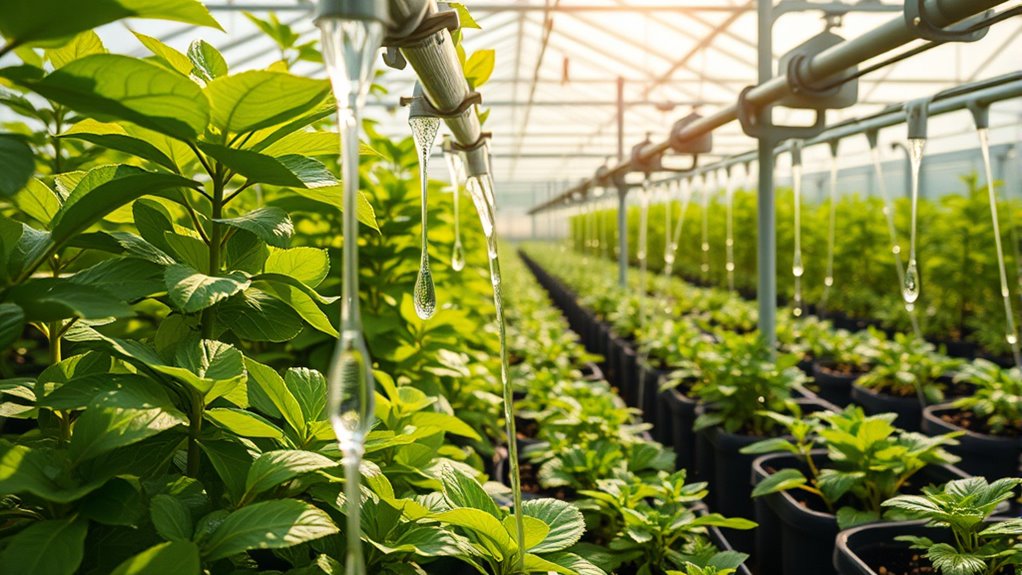
Greywater offers a sustainable solution for greenhouse irrigation by reusing wastewater from household activities. By recycling water from sinks, showers, and washing machines, you can reduce your reliance on fresh water sources and lower your overall water footprint. However, to make the most of greywater in your greenhouse, you need to understand the importance of proper greywater treatment and thoughtful irrigation system design.
Start by focusing on greywater treatment. Not all wastewater is suitable for direct use, so you must ensure it’s adequately treated to remove contaminants, soaps, and detergents that could harm your plants or soil. Simple filtration can remove large particles, but you’ll likely need more advanced treatment methods, such as biological filters or UV sterilization, to prevent pathogen buildup. Proper greywater treatment ensures that the water you supply to your plants is safe, healthy, and free of substances that might cause plant stress or soil contamination. Additionally, understanding the importance of emotional support can help you stay motivated and patient during the process of establishing your greywater system.
Ensure greywater is properly treated to safeguard plants and soil health.
Next, consider your irrigation system design. Efficient design is key to maximizing the benefits of greywater and minimizing potential issues. You’ll want to create a closed-loop or drip irrigation system that delivers treated greywater directly to the roots of your plants, reducing evaporation and runoff. Installing separate pipelines for greywater and potable water can prevent cross-contamination and make maintenance easier. Incorporate valves and filters into your system to control flow and remove any remaining debris or impurities before water reaches your plants.
It’s also essential to establish a regular maintenance routine for your greywater system. Cleaning filters, checking for leaks, and monitoring water quality will keep your system running smoothly and prevent blockages or buildup. Additionally, consider the types of plants in your greenhouse; some species tolerate greywater better than others. Selecting suitable plants and avoiding those sensitive to salts or chemicals in greywater will enhance your success.
Lastly, educate yourself on local regulations and guidelines related to greywater reuse. Properly designed and treated greywater systems are often permitted, but regulations vary by location. Following these rules guarantees you’re operating legally and safely, protecting your plants, soil, and the environment.
greywater filtration system for greenhouse
As an affiliate, we earn on qualifying purchases.
As an affiliate, we earn on qualifying purchases.
Frequently Asked Questions
How Does Greywater Affect Greenhouse Plant Nutrient Levels?
Greywater can positively affect your greenhouse plants by enhancing nutrient balance and soil enrichment. As you use greywater, it supplies essential nutrients like nitrogen and potassium, supporting healthy growth. However, you should monitor for potential buildup of salts or contaminants that could disrupt nutrient levels. Proper filtration and regular soil testing help maintain ideal conditions, ensuring your plants thrive while benefiting from the natural nutrients in greywater.
Can Greywater Be Used for All Types of Greenhouse Plants?
You might think greywater suits all greenhouse plants, but its suitability depends on plant compatibility. Not every species tolerates the chemicals or contaminants in greywater, so you need to assess each plant’s needs carefully. While some thrive with greywater, others could suffer. Always test and monitor, because what seems like a good fit on the surface might hide deeper issues. Remember, adaptability is key to sustainable irrigation.
What Are the Long-Term Effects of Greywater on Soil Health?
Long-term use of greywater can affect your soil health by disrupting soil microbial balance and causing chemical buildup. Over time, these changes might reduce soil fertility and lead to plant stress. To prevent this, you should regularly monitor soil conditions, avoid excessive greywater application, and consider incorporating organic matter. Proper management helps maintain healthy soil, supporting sustainable greenhouse operations and ensuring your plants thrive.
Are There Specific Greywater Filtration Methods Suitable for Greenhouses?
Imagine your greenhouse flourishing with vibrant plants, thanks to effective Greywater recycling. You should opt for filtration systems like sand filters, activated carbon, or membrane filters, which gently purify greywater, making it suitable for irrigation. These systems remove sediments and contaminants while maintaining essential nutrients. By choosing the right filtration methods, you guarantee your plants thrive, your soil stays healthy, and your eco-friendly efforts flourish beautifully.
How Does Greywater Usage Impact Greenhouse Pest Management Strategies?
Greywater use can influence your pest management by potentially reducing pest habitat and pest resistance issues. When managed properly, greywater minimizes standing water and damp areas that pests thrive in, lowering infestation risks. However, if not filtered well, it might introduce pests or disease vectors, complicating pest control. Consequently, consistent monitoring and proper filtration help you maintain an effective pest management strategy while benefiting from greywater irrigation.
Conclusion
By now, you see how greywater can be a sustainable solution for greenhouse irrigation, saving water and reducing costs. Imagine your greenhouse thriving with healthy plants, all while conserving precious resources. Isn’t it rewarding to think you’re making a difference for the environment with every drop? Embrace greywater use and turn your greenhouse into a lush, eco-friendly oasis—because every small step counts toward a greener future.
Evergreen bestsellers Picks
bestsellers
As an affiliate, we earn on qualifying purchases.