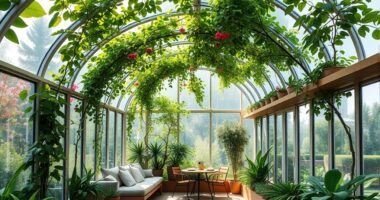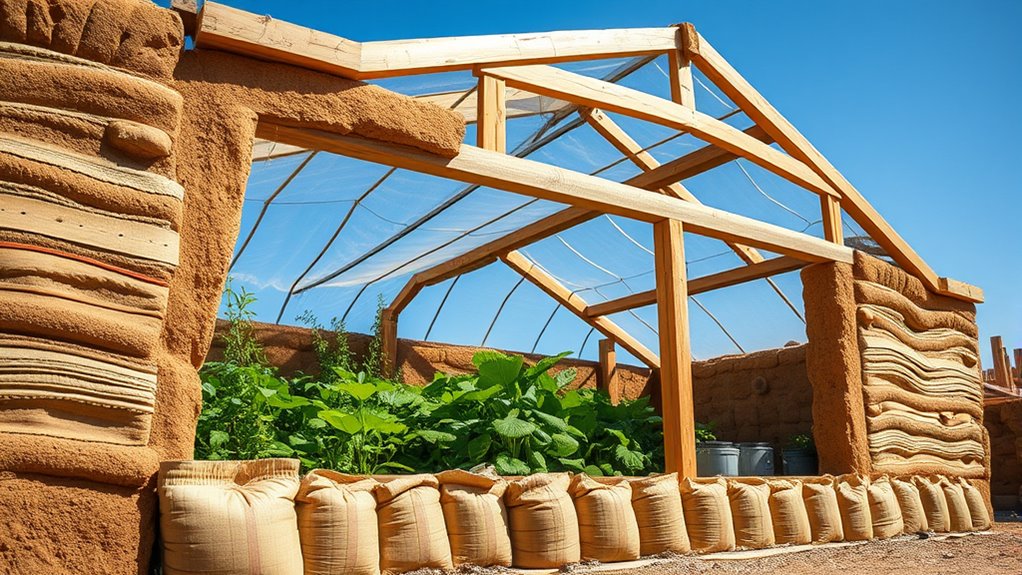
Building a greenhouse with natural materials like cob and earthbags is a sustainable choice that combines eco-friendly construction with efficient climate control. You can integrate composting systems directly into the structure, using natural materials to help maintain temperature and moisture levels. This approach reduces reliance on energy-intensive supplies and promotes a self-sufficient ecosystem. Keep exploring to discover how passive ventilation and continuous soil enrichment can create a healthier, greener environment for your plants.
Key Takeaways
- Use natural, sustainable materials like cob and earthbags to construct eco-friendly, durable greenhouse structures.
- Incorporate composting areas within the greenhouse using natural materials to recycle waste and enrich soil.
- Seamlessly integrate composting solutions into the natural material framework for continuous nutrient cycling.
- Employ passive ventilation techniques alongside natural materials to regulate temperature and reduce energy consumption.
- Design for soil and plant health by utilizing composting to provide nutrient-rich soil, enhancing plant growth sustainably.
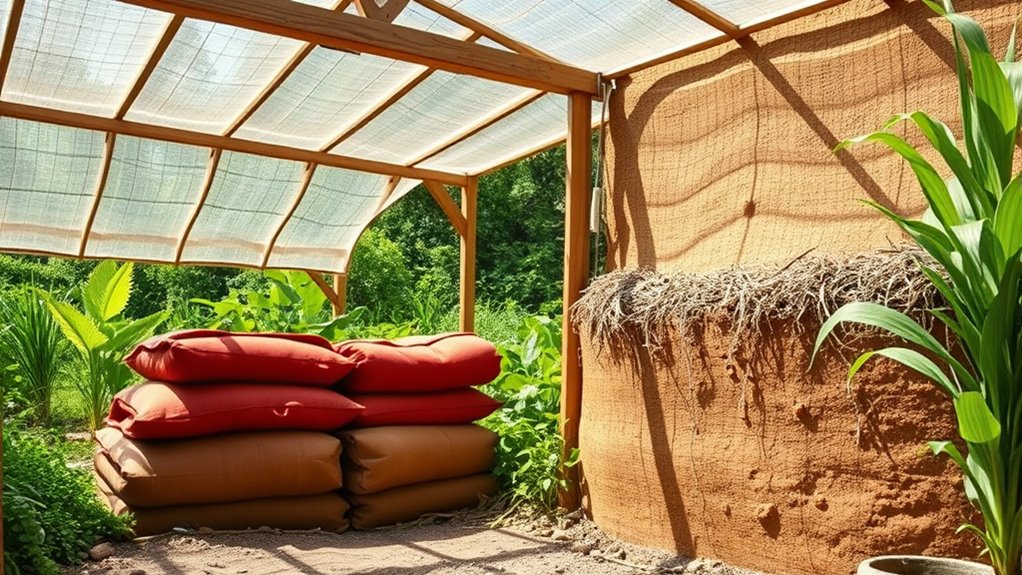
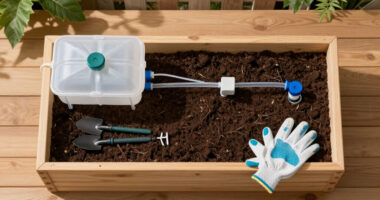
Creating a greenhouse with natural materials is an eco-friendly way to grow plants sustainably. When designing your structure, you’ll want to think about how to make it both functional and environmentally conscious. One essential aspect is integrating effective composting techniques inside your greenhouse. Composting allows you to recycle organic waste, enrich your soil, and reduce your ecological footprint. Using natural materials like cob or earthbags, you can create compost bins or designated composting areas that blend seamlessly into the structure. These materials are excellent at maintaining the right temperature and moisture levels, which speeds up composting and keeps it odor-free. Additionally, employing passive ventilation techniques helps maintain a healthy environment and reduces energy consumption. By incorporating composting solutions directly into your greenhouse design, you ensure a continuous supply of nutrient-rich soil, boosting your plants’ health and growth.
As an affiliate, we earn on qualifying purchases.
Frequently Asked Questions
How Long Does a Cob and Earthbag Greenhouse Typically Last?
A cob and earthbag greenhouse can last 50 to 100 years, depending on durability factors like climate, maintenance, and construction quality. You’ll want to regularly inspect for cracks or erosion and repair promptly to guarantee longevity. Properly built and maintained, these natural materials offer impressive longevity estimates, making your greenhouse a sustainable investment that can serve you for decades. With care, it can stand strong through many seasons.
What Are the Best Locations for Natural Material Greenhouses?
You should choose site selection and climate considerations carefully when building your natural material greenhouse. Look for a location with good sunlight exposure, ideally on the south side to maximize warmth. Protect it from harsh winds and heavy rain, and avoid frost pockets. A sheltered spot with well-draining soil helps your greenhouse last longer and stay healthy. So, consider these factors to guarantee your natural materials thrive and provide a productive growing space.
Can Cob and Earthbag Greenhouses Withstand Extreme Weather?
Yes, cob and earthbag greenhouses can withstand extreme weather when properly designed. They excel in thermal insulation, keeping heat in during cold spells and out during heatwaves, and offer moisture resistance, preventing leaks and damage. You should focus on thick walls, proper drainage, and protective roofing to enhance durability. With careful construction, your natural-material greenhouse will remain resilient, protecting your plants regardless of harsh weather conditions.
What Maintenance Is Required for These Natural Greenhouses?
You’ll want to regularly inspect your natural greenhouse for cracks or damage and perform natural cleaning with gentle, eco-friendly solutions to keep it in good shape. Pest control is essential; use organic methods like neem oil or companion planting to manage pests effectively. Also, guarantee proper drainage and ventilation to prevent mold. These simple maintenance steps help your cob and earthbag greenhouse stay durable and productive over time.
Are There Any Specific Permits Needed for Building With Natural Materials?
Like a seed breaking through soil, your natural greenhouse must meet certain standards. You’ll need to check local building codes and zoning regulations to guarantee compliance. Permits are often required for structures using natural materials, especially if they’re large or permanent. Contact your local planning office early to understand specific requirements. This step helps your project grow smoothly and stay protected within the community’s framework.
Conclusion
Building your greenhouse with natural materials like cob and earthbags isn’t just eco-friendly, it’s incredibly durable too. Did you know that earthbag structures can last over 1,000 years with proper maintenance? By choosing sustainable materials, you create a healthy environment for your plants and reduce your carbon footprint. Plus, you get the satisfaction of constructing something that’s both beautiful and resilient. Start today, and watch your green space flourish naturally and sustainably!