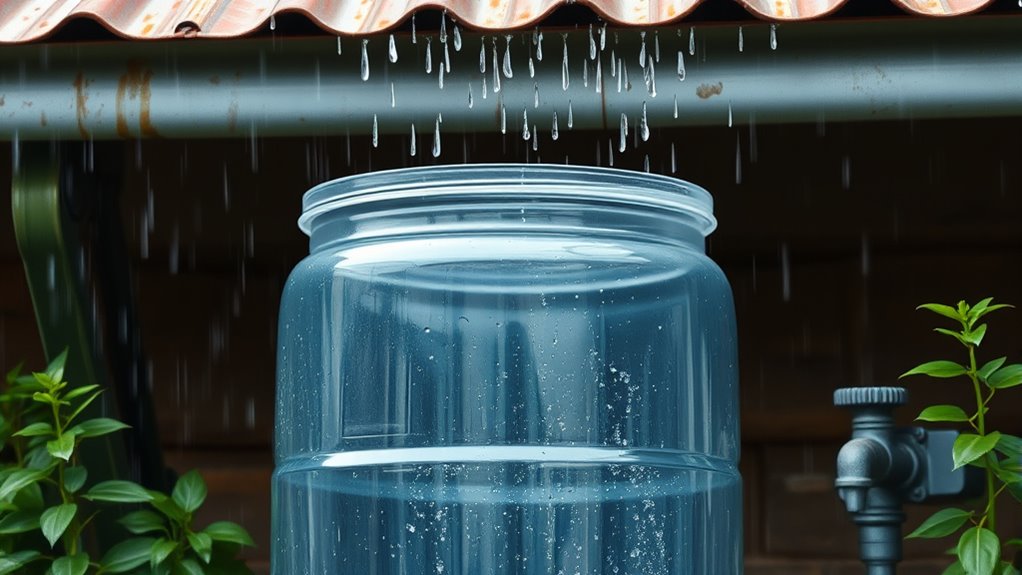

Capturing and storing rainwater for household use allows you to reduce reliance on municipal water and promote sustainability. To do this effectively, install gutters and filters to direct rainwater into clean storage tanks, ensuring water quality through regular testing for contaminants like bacteria and metals. Proper filtration and treatment are essential for safe domestic use, especially for drinking or cooking. Continue exploring tips and techniques to make your rainwater harvesting system safer and more efficient.
Listen free for 30 days with Audible
Thousands of audiobooks and originals — cancel anytime.
As an affiliate, we earn on qualifying purchases.
Key Takeaways
- Install a proper rainwater harvesting system with gutters and a storage tank to collect and store rainwater efficiently.
- Use first-flush diverters to prevent initial contaminants from entering the storage tank.
- Cover storage tanks to prevent debris, insects, and animals from contaminating the water.
- Regularly clean and maintain the collection system and storage tanks to ensure water quality.
- Test stored rainwater periodically for bacteria, heavy metals, and pollutants before household use.
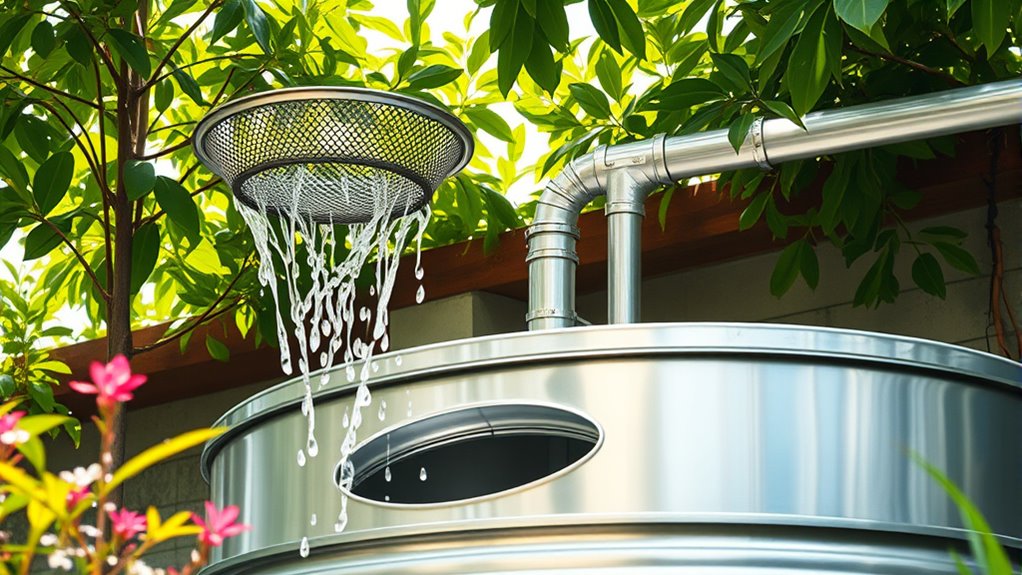
Once you’ve set up your collection system, it’s essential to ensure the water’s quality before using it for household chores, irrigation, or even drinking. Water quality testing becomes an indispensable step to identify any contaminants or pollutants that might have entered your storage tank. Testing can reveal the presence of bacteria, heavy metals, or other harmful substances, guiding you on necessary filtration or treatment methods. Regular water quality testing not only protects your household’s health but also guarantees that your rainwater remains a safe resource, especially if you plan to use it for drinking or cooking. It’s a simple yet critical measure that guarantees you get the most benefit from your harvesting system without compromising safety. **Understanding Water quality testing** is vital to ensure the safety and usability of your stored rainwater, especially when considering drinking or cooking applications.
rainwater harvesting system with gutters and filters
As an affiliate, we earn on qualifying purchases.
As an affiliate, we earn on qualifying purchases.
Frequently Asked Questions
How Much Rainwater Can I Realistically Collect Annually?
You can realistically collect several thousand gallons of rainwater annually, depending on your roof size, rainfall amount, and storage capacity. For example, a 1,000-square-foot roof with 30 inches of rain can yield about 18,750 gallons a year. Ensuring good rainwater quality and choosing the right storage capacity helps maximize your collection. Proper maintenance prevents contamination, so you get safe, reliable water for household use.
What Are the Initial Costs of Setting up a Rainwater Harvesting System?
The initial costs of setting up a rainwater harvesting system vary based on size and complexity. You should do a cost estimation that includes equipment expenses like gutters, filters, storage tanks, and pumps. Expect to spend anywhere from a few hundred to several thousand dollars. Larger systems or premium materials increase costs, but investing upfront guarantees you get a reliable, efficient setup that saves money over time.
Are There Legal Restrictions on Rainwater Collection in My Area?
Think of rainwater collection as dancing with local laws. You need to check if legal permits are required in your area, as rules can vary. Property restrictions might also limit where or how you set up your system. Before you start, contact your local authorities or water agency to make sure you’re compliant. Ignoring these restrictions could lead to fines or having to dismantle your setup, so stay informed.
How Often Should I Clean and Maintain My Rainwater Storage Tanks?
You should clean and maintain your rainwater storage tanks at least twice a year. Regular tank cleaning helps prevent algae, sediment, and mosquito breeding. Follow a maintenance schedule that includes inspecting for leaks, checking filters, and making sure covers are secure. After heavy storms or debris, do an additional clean. Consistent maintenance keeps your rainwater safe and ensures your system works efficiently, saving you money and protecting your health.
Can Rainwater Harvesting Reduce My Household Water Bills Significantly?
Yes, rainwater harvesting can markedly reduce your household water bills through cost savings and water conservation. When you use collected rainwater for tasks like gardening, laundry, or flushing toilets, you cut down on municipal water usage. This not only lowers your bills but also promotes eco-friendly practices. With proper setup and maintenance, you’ll enjoy consistent savings while contributing to water conservation efforts in your community.
Conclusion
By capturing and storing rainwater, you can reduce your reliance on municipal supplies and save money. Did you know that a typical household roof can collect up to 600 gallons of rainwater from just one inch of rainfall? Imagine the impact if every homeowner adopted rainwater harvesting—less strain on local resources and a more sustainable future. Start small today, and contribute to conserving our precious water supplies for generations to come.
Flea & tick season Picks
flea and tick prevention
As an affiliate, we earn on qualifying purchases.