
To pick the right greenhouse size for tomatoes, herbs, and seedlings, start by measuring your available garden space and setting clear goals for what you want to grow. Consider plant needs, airflow, and accessibility to make sure your setup promotes healthy growth and easy maintenance. Keep your budget in mind, and think about future expansion options. If you keep these factors in mind, you’ll find the perfect size — and there’s more to uncover if you continue exploring.
Key Takeaways
- Assess your available space, sunlight, and accessibility to determine a suitable greenhouse footprint.
- Identify the specific needs of tomatoes, herbs, and seedlings to estimate necessary growing area.
- Consider climate control, pest management, and ventilation requirements for optimal plant health.
- Balance budget constraints with future expansion plans and maintenance capabilities.
- Ensure adequate aisle width, material durability, and layout flexibility for easy access and growth.
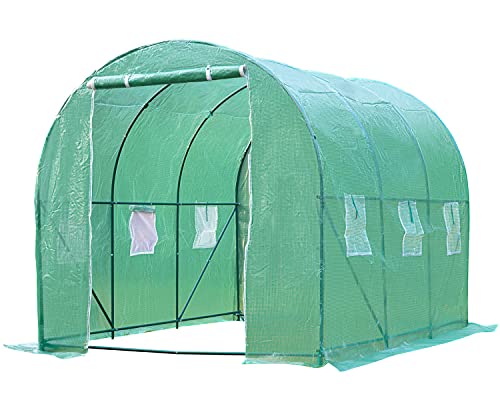
Greenhouse for Outdoors Greenhouse Walk-in Green House L10'xW7'xH7' Plastic Mini Greenhouse Kit Indoor Portable Greenhouse Plant Shelves Tomato Herb Canopy for Patio
【GOOD QUALITY】Greenhouse made of powder-coated heavy-duty, powder-coated, steel frame that is resistant to rust. Outdoor portable plant outdoor…
As an affiliate, we earn on qualifying purchases.
As an affiliate, we earn on qualifying purchases.
How to Assess Your Garden Space and Set Your Growing Goals
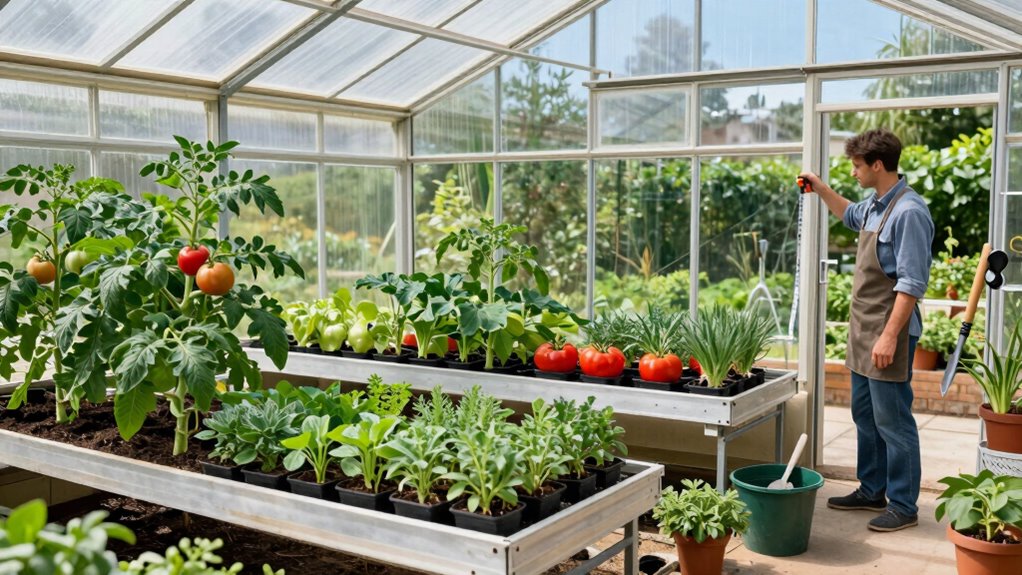
Before choosing a greenhouse size, you need to evaluate your available garden space and clearly define your growing goals. Measure the area carefully, considering sunlight exposure and accessibility. Think about what you want to grow—tomatoes, herbs, or seedlings—and how much you need. This helps determine the necessary size and layout. As you plan, focus on soil preparation; healthy soil is essential for strong plants. Decide how you’ll manage pests to protect your crops effectively. Incorporate pest management strategies into your space planning, ensuring there’s room for beneficial insects or physical barriers. Clear goals will guide your decisions, helping you balance space constraints with your gardening ambitions. Ultimately, a well-assessed space and defined goals streamline your greenhouse selection process.

Bonviee 5-Pack Seed Starter Tray Seedling Kits,Plant Starter Kit with Adjustable Humidity Dome and Base Indoor Greenhouse Mini Propagator for Seeds Growing Starting (12 Cells per Tray,Black)
Monitor Your Plants Easily: The high-quality, clear plastic of these cell trays lets you observe your plants without…
As an affiliate, we earn on qualifying purchases.
As an affiliate, we earn on qualifying purchases.
What Factors Determine the Perfect Greenhouse Size for Your Garden
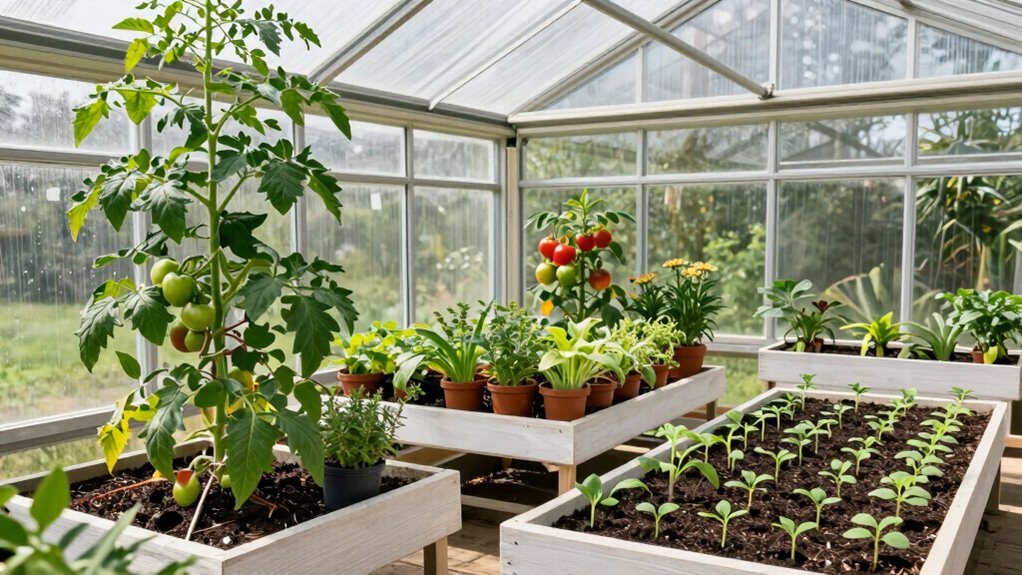
Once you’ve assessed your garden space and set your growing goals, the next step is to take into account the key factors that will influence the ideal greenhouse size. Climate control plays a vital role; a larger greenhouse offers better temperature regulation and ventilation, reducing stress on your plants. Pest management is another important factor—smaller structures are easier to keep pest-free, but larger greenhouses may require more extensive control measures. Consider the types of plants you want to grow and their space needs, as overcrowding can hinder growth and complicate pest control. Your available space, future expansion plans, and the level of automation you desire will also impact the size decision. Understanding greenhouse design principles can help you optimize space and climate, ensuring your plants thrive. Proper ventilation strategies are essential in maintaining optimal growing conditions and preventing issues like mold or disease. Balancing these factors ensures you select a greenhouse that promotes healthy growth and efficient management. Additionally, understanding must-see destinations and travel tips can inspire your garden design and outdoor setup. When planning, it’s helpful to consider digital content formats and how they can provide guidance and inspiration throughout your gardening journey.

SUNGIFT Walk-in Greenhouse for Outdoors, 57x61x80 Inch Large Greenhouse, 3 Tiers 10 Shelves Mini Green House Kit with Observation Windows Roll-up Door Zipper, Plant Garden Hot House for Herbs, Flowers
Large space: Overall size of greenhouse is 57 x 61x 80 Inch. Indoor greenhouse constructed with 10 sturdy…
As an affiliate, we earn on qualifying purchases.
As an affiliate, we earn on qualifying purchases.
Choosing the Right Greenhouse Size Based on Your Budget and Maintenance
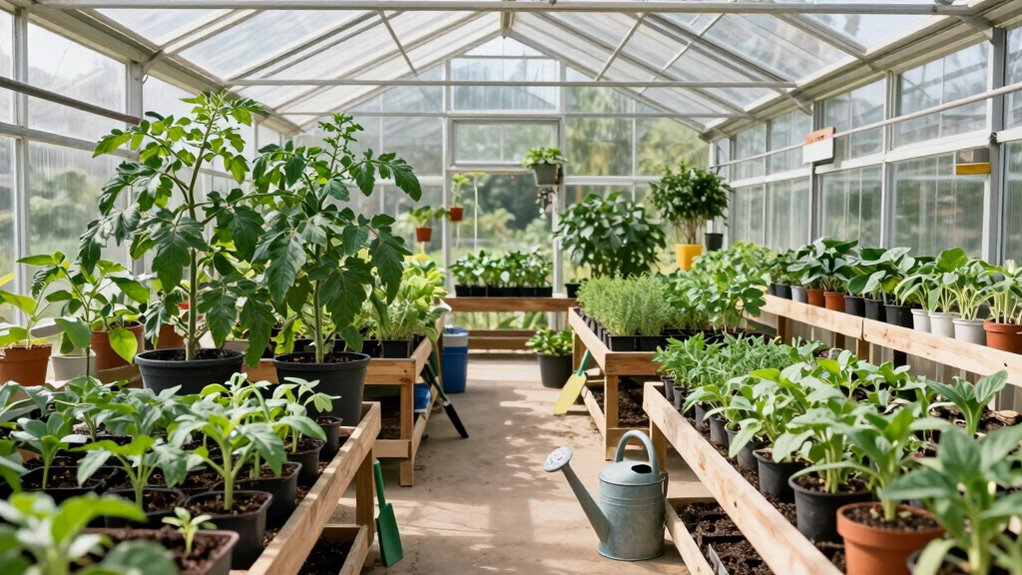
Your budget and the maintenance requirements should play a significant role in determining the right greenhouse size for your needs. To keep costs manageable, consider cost-effective options like smaller structures or DIY kits, which reduce upfront investment and ongoing expenses. Larger greenhouses may offer more growing space but come with higher maintenance and utility costs. Additionally, think about aesthetic considerations—your greenhouse should complement your garden’s style without overwhelming it. Balancing size with your financial limits ensures you won’t feel overwhelmed by upkeep or expenses. Incorporating cost management strategies can further help in maintaining your greenhouse within your means. Moreover, understanding the efficacy of different vacuum models can assist you in choosing tools that minimize cleaning time and effort, making maintenance easier over the long term. Additionally, understanding the resilience of certain jobs in the face of AI advancements can help you plan for long-term stability in your career or business ventures related to gardening and technology. Recognizing how AI trends impact gardening tools might also influence your choice of equipment to ensure you stay current with innovative solutions. Investing in indoor air quality gear can also help maintain a healthy environment for your plants and yourself, especially when managing humidity levels in your greenhouse.

Mini Greenhouse with Grow Light & Timer & Hygrothermograph, 30"x16"x20" Indoor/Outdoor Tabletop Greenhouse with 96 LEDs Dimmable Full-Spectrum Lights (3 Colors), for Houseplants,Seedlings, Outside
🌼【Spacious 2026 Mini Greenhouse with Climate Monitor】 Upgraded dimensions of 30" x 15.7" x 19.6" feature a built-in…
As an affiliate, we earn on qualifying purchases.
As an affiliate, we earn on qualifying purchases.
Designing Greenhouse Dimensions for Healthy Plants and Easy Access
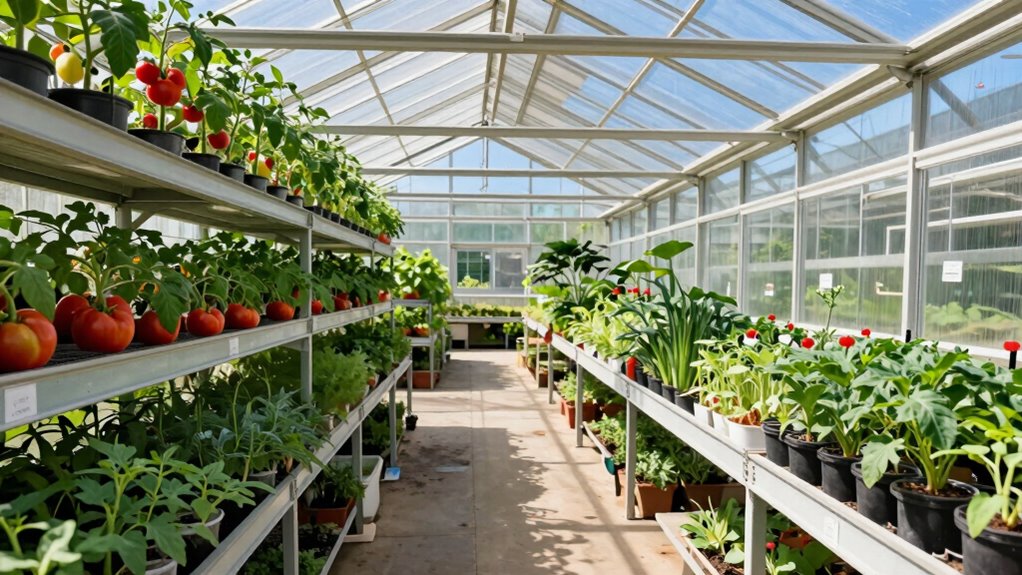
Designing your greenhouse with proper dimensions guarantees your plants stay healthy and your space remains functional. Focus on ventilation planning to ensure adequate airflow, which prevents diseases and maintains ideal temperature and humidity. When selecting materials, choose durable, lightweight options that facilitate good insulation and light transmission. Proper dimensions should allow easy access for watering, pruning, and harvesting without overcrowding. Consider aisle widths that give you comfortable movement and maximize space efficiency. A well-planned layout enhances plant health and simplifies maintenance. Additionally, incorporating remote monitoring systems can help you better manage environmental conditions efficiently. Paying attention to greenhouse size ensures your setup is tailored to your gardening needs and available space, especially for cultivating support breakfast options like herbs and seedlings.
Planning Your Greenhouse Size for Future Expansion
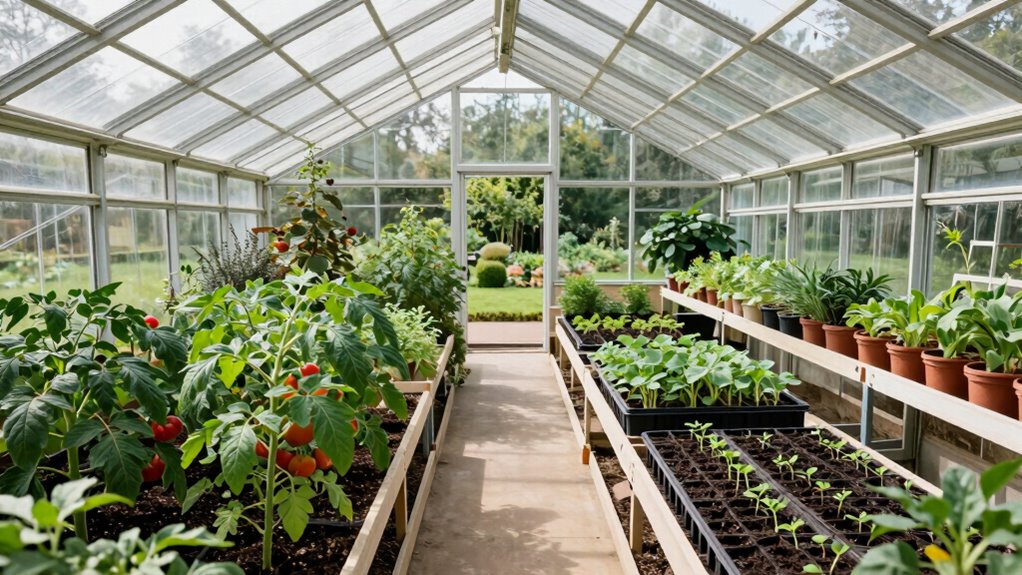
Planning your greenhouse size with future expansion in mind guarantees that you can grow without constantly rebuilding or relocating. Consider how climate control systems will adapt as your space increases, ensuring consistent temperature and humidity levels across larger areas. Proper planning also helps streamline pest management, making it easier to implement integrated strategies that protect your plants as they grow. Think about leaving room for shelving, walkways, and additional equipment, so you won’t have to overhaul your setup later. A larger initial size might seem costly, but it pays off by reducing future disruptions. Keep growth goals in mind, and design with flexibility, ensuring your greenhouse can expand smoothly while maintaining effective climate control and pest management. Incorporating all-terrain features can also be beneficial if you plan to access outdoor areas or rugged terrain for your gardening activities.
Frequently Asked Questions
What Are Common Mistakes to Avoid When Selecting Greenhouse Size?
When selecting greenhouse size, avoid common mistakes like ignoring ventilation strategies, which can lead to poor airflow and plant health issues. Don’t overlook cost considerations—bigger isn’t always better if it exceeds your budget or maintenance capacity. Make certain the space suits your plant needs without overestimating your capabilities. Careful planning helps prevent overcrowding and ensures effective climate control, making your greenhouse efficient and sustainable.
How Does Climate Influence Greenhouse Size Requirements?
Climate heavily influences your greenhouse size needs. In colder climate zones, you’ll want a larger structure with better insulation to retain heat, while warmer zones may require less space but prioritize ventilation needs to prevent overheating. You should consider your local climate zone and how it affects temperature regulation, ensuring your greenhouse size accommodates adequate ventilation and heating systems. This way, your plants stay healthy year-round, regardless of climate fluctuations.
Can a Small Greenhouse Be Suitable for Year-Round Growing?
A small greenhouse can be suitable for year-round growing if you optimize your space with indoor gardening techniques and vertical farming. You’ll need to manage temperature, humidity, and lighting carefully to maintain plant health throughout the seasons. Focus on high-yield, space-efficient crops, and use vertical structures to maximize your growing area. With proper planning and equipment, even a compact greenhouse can support continuous growth and harvests year-round.
What Are the Best Materials for Different Greenhouse Sizes?
You’d think choosing materials is as simple as picking shiny or clear, but no—greenhouse insulation and ventilation systems make all the difference. For small setups, lightweight polycarbonate or glass offers great insulation, while larger structures benefit from sturdy, insulated panels. Ventilation systems, whether automated or manual, guarantee airflow, preventing overheating. Remember, the right materials keep your plants happy, healthy, and thriving—no matter your greenhouse size or the weather outside.
How Do I Determine the Optimal Height for My Greenhouse?
You determine your greenhouse’s ideal height by considering ventilation planning and lighting considerations. Aim for at least 7-8 feet to guarantee good airflow and prevent overheating, especially if you plan to grow taller plants. Taller structures help maximize natural light exposure and improve air circulation. Adjust height based on your plant types and local climate, making certain of sufficient space for healthy growth and effective ventilation.
Conclusion
Choosing the right greenhouse size is key to successful gardening. Remember, a well-sized greenhouse can boost your plant yield by up to 30%, according to industry estimates. By evaluating your space, goals, and budget, you can design a setup that’s both efficient and sustainable. Keep future expansion in mind—your garden’s growth potential is worth planning for now. With the right size, you’ll enjoy thriving tomatoes, herbs, and seedlings all season long.