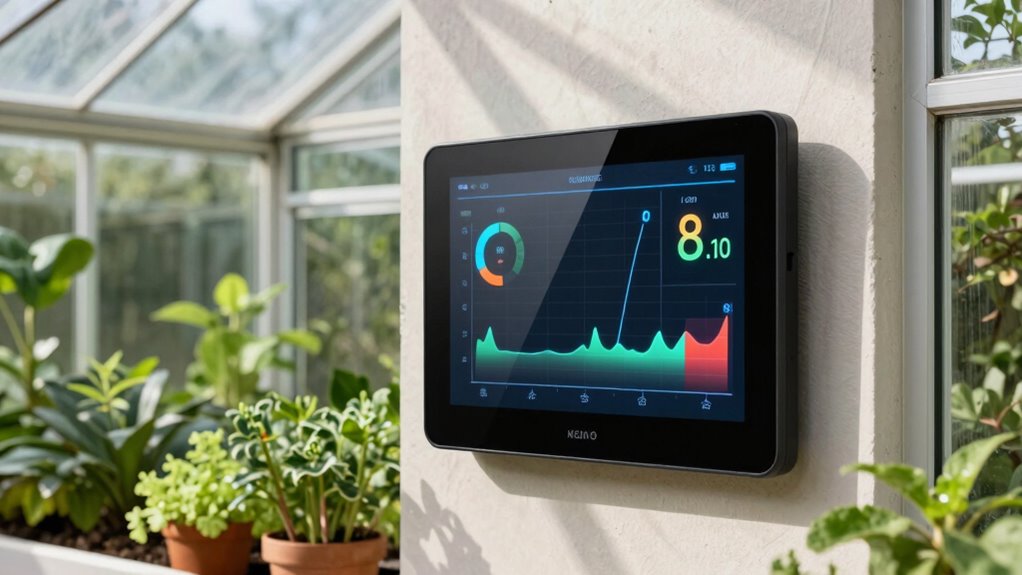
To build a monitoring dashboard for your backyard greenhouse, start by selecting accurate, durable sensors for temperature, humidity, light, and plant health. Choose a user-friendly platform with customizable displays that supports wireless or wired connections. Properly connect and calibrate your sensors, then design an intuitive interface to view key metrics like temperature and soil moisture. Automate alerts for critical conditions and plan for expanding your system with additional sensors as needed. Keep improving your setup for better plant health and efficiency—more details come next.
Key Takeaways
- Select user-friendly dashboard platforms with customizable layouts and data visualization capabilities compatible with your sensors.
- Identify and install essential sensors for temperature, humidity, light, and plant health, ensuring proper calibration and placement.
- Connect sensors wirelessly or wired to the dashboard platform, verifying data accuracy and system stability.
- Customize data displays to highlight critical metrics, using visual cues and interactive elements for easy monitoring.
- Automate environmental controls based on sensor data to maintain optimal greenhouse conditions efficiently.

Govee Digital Hygrometer Indoor Thermometer Room H5075, Bluetooth Temperature Humidity Meter with 164ft Remote App Control, Notification Alerts, 2 Years Data Storage Export for Bedroom, Wine Cellar
Smart Features: The Govee Wireless Thermometer Hygrometer supports all basic functions as well as smart functions such as…
As an affiliate, we earn on qualifying purchases.
As an affiliate, we earn on qualifying purchases.
What Are the Main Parts of a Greenhouse Monitoring System?
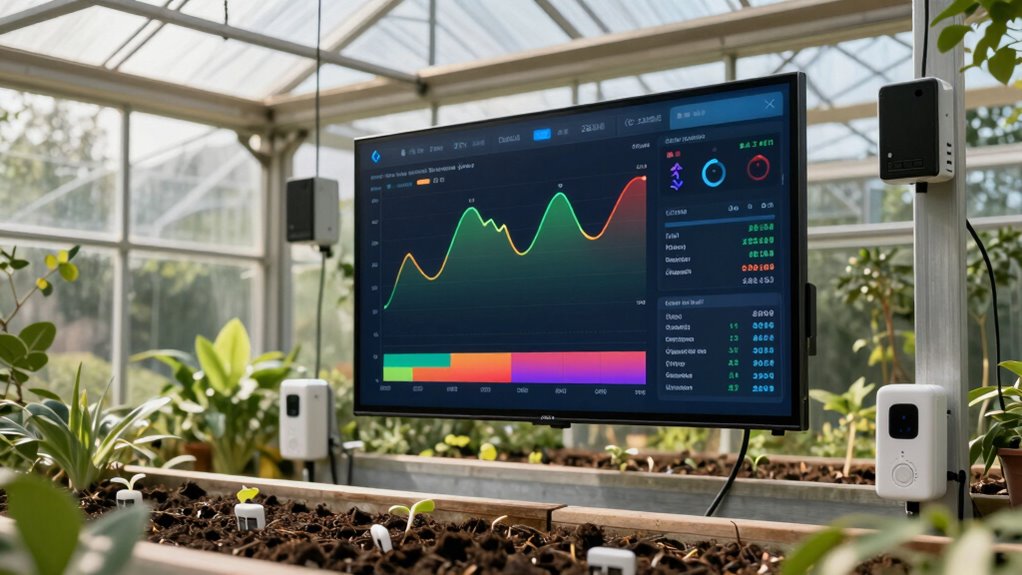
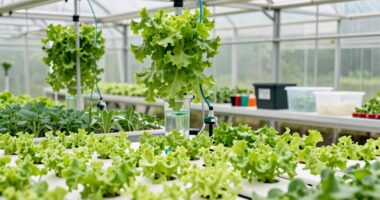
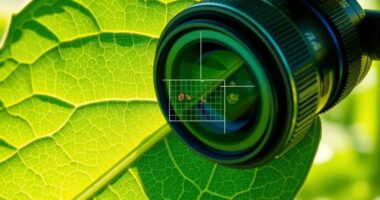
A greenhouse monitoring system typically consists of several key components that work together to guarantee ideal growing conditions. You’ll need sensors to track temperature, humidity, and light, ensuring your plants stay healthy. To monitor plant health, imaging devices or specialized sensors can detect signs of stress or disease early. Pest detection is also essential; cameras or pest traps integrated into the system help identify infestations quickly, preventing widespread damage. Data loggers collect this information continuously, providing real-time insights. A central control unit processes all data, alerting you to issues like temperature swings or pest activity. Digital integration allows for seamless control and remote monitoring, enhancing system efficiency. Incorporating automated alerts can notify you immediately when conditions go outside optimal ranges, helping you take prompt action. By combining these parts, you create an all-encompassing system that maintains ideal conditions, promotes healthy plant growth, and helps you spot problems before they escalate.
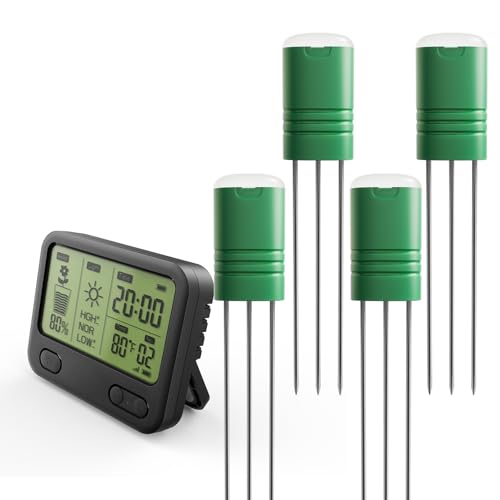
Nexuslab Wireless Soil Moisture Meter with LCD Receiver – 3‑Probe 3‑in‑1 Sensor (Moisture, Temperature, Light), 230 ft RF Range, Waterproof, Long Battery Life for Indoor/Outdoor Plants and Gardens
【EXPANDABLE 12-ZONE MONITORING SYSTEM】Monitor your entire garden from one convenient indoor screen. Starts with 2 included wireless sensors,…
As an affiliate, we earn on qualifying purchases.
As an affiliate, we earn on qualifying purchases.
How to Choose the Best Sensors for Your Greenhouse

Choosing the right sensors for your greenhouse is essential because they directly impact your ability to monitor and maintain ideal growing conditions. Accurate sensors guarantee you can rely on data logging to track temperature, humidity, and soil moisture. Proper sensor calibration prevents errors that could jeopardize plant health. When selecting sensors, prioritize durability and precision, especially for critical parameters. Additionally, understanding the urban traffic confidence can help you select sensors that withstand environmental factors common in urban settings. Selecting sensors designed for harsh environmental conditions ensures longevity and consistent performance in variable climates. A comprehensive understanding of sensor technology can further optimize your greenhouse monitoring system for accuracy and reliability. Being aware of environmental resilience can guide you toward choosing sensors that perform well despite fluctuating weather patterns and pollution. Recognizing the importance of sensor placement can also significantly enhance the accuracy of your data collection in complex outdoor environments.
greenhouse monitoring dashboard platform
As an affiliate, we earn on qualifying purchases.
As an affiliate, we earn on qualifying purchases.
Which Platform Is Right for Your Greenhouse Dashboard?
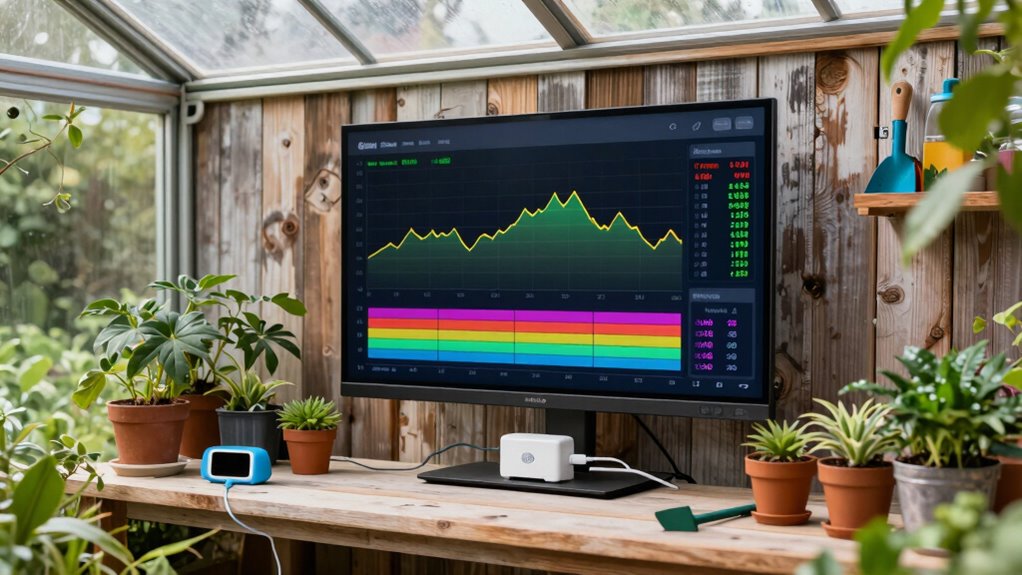
Selecting the right platform for your greenhouse dashboard is essential because it determines how effectively you can visualize and manage your data. When doing platform comparisons, consider the user interface—some platforms offer simple, intuitive designs, while others have more complex features. If you prefer quick setup and easy customization, look for platforms with drag-and-drop tools and clear dashboards. For more advanced control, choose platforms with extensive integrations and data analysis capabilities. Compatibility with your devices and sensors is also key, ensuring smooth data flow. Evaluate your technical skills, budget, and specific monitoring needs. The right platform will make it easier to interpret your greenhouse data and respond promptly, keeping your plants healthy and thriving. Additionally, reviewing best monitoring products for specific needs can help you select tools that complement your chosen platform effectively. Staying aware of user interface options can also help you find a platform that suits your comfort level and improves overall usability. Moreover, understanding the data analysis capabilities of each platform can significantly enhance your ability to make informed decisions about your greenhouse environment.
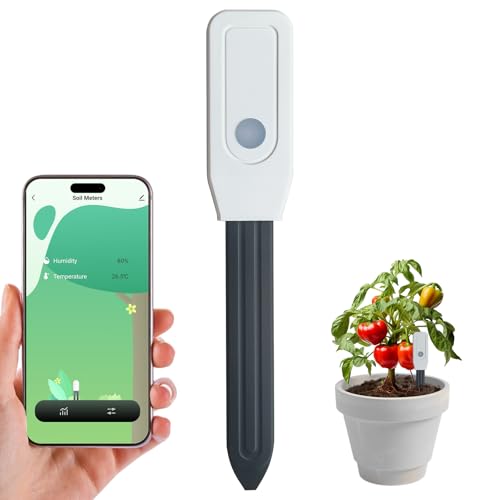
Drusine Smart WiFi Soil Moisture Meter for Plants, 2-in-1 Sensor with App Alerts | Monitor Moisture & Temperature Remotely, Real-Time Data for Indoor/Outdoor Gardening, Houseplants Care
1. WiFi Smart Dual Monitoring – Accurately Measure Soil Moisture & Temperature Say goodbye to guesswork and overwatering!…
As an affiliate, we earn on qualifying purchases.
As an affiliate, we earn on qualifying purchases.
Planning Your Greenhouse Monitoring Dashboard
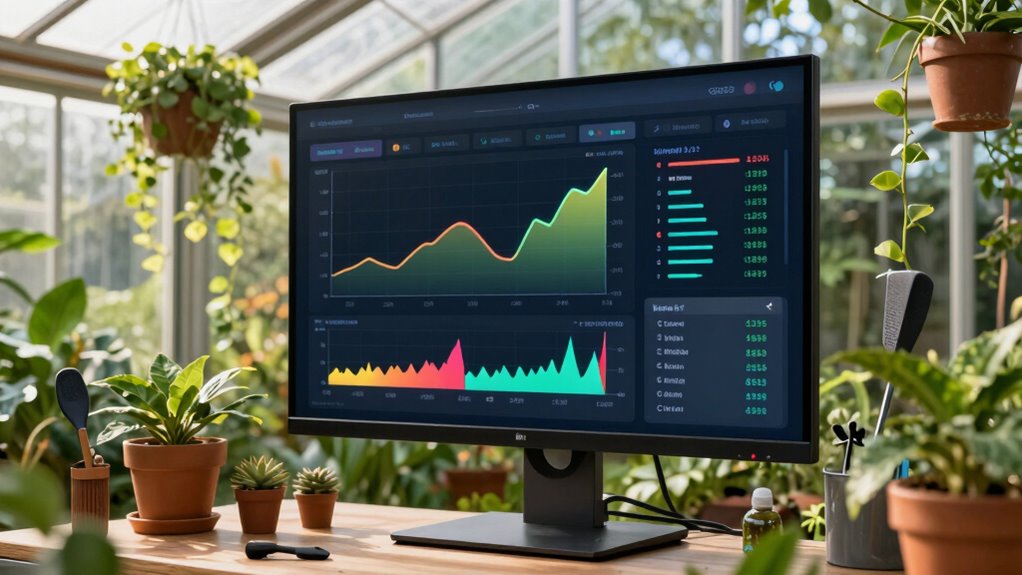
Before building your greenhouse monitoring dashboard, it’s essential to plan carefully to guarantee it meets your needs. Start by identifying your primary goals, such as maintaining ideal temperature and humidity levels for plant health. Consider how the dashboard can enhance garden aesthetics by integrating visually appealing data displays. Pest management is also vital; include sensors or indicators that help you detect early signs of pests or diseases. Think about the layout, making sure it’s intuitive and easy to navigate. Decide which metrics are most important and how you want to visualize them. Planning ahead helps you select the right tools and features, making your dashboard effective and user-friendly. Proper planning ensures your greenhouse remains productive, healthy, and visually pleasing, especially when incorporating smart home technology that can automate and monitor various environmental factors.
How to Connect Sensors to Your Monitoring Platform
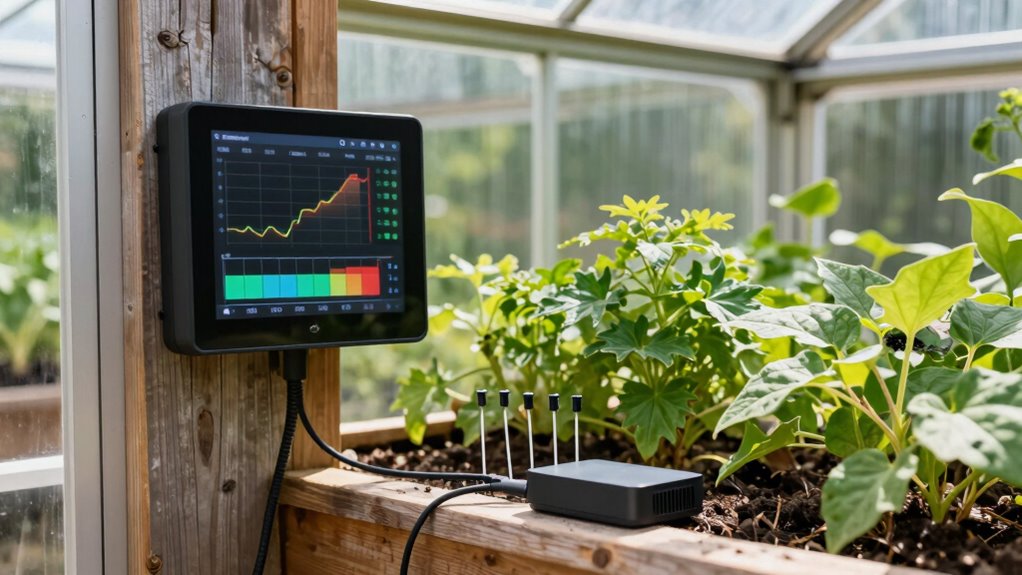
Connecting sensors to your monitoring platform is an essential step that requires careful attention to guarantee accurate data collection. First, determine if your sensors support wireless integration—this simplifies setup and reduces cable clutter. For wireless sensors, follow the manufacturer’s instructions to connect them via Wi-Fi, Bluetooth, or LoRa. Once connected, sensor calibration is critical; ensure each sensor provides precise readings by comparing its output to known standards and adjusting settings accordingly. Regular calibration maintains data accuracy over time. For wired sensors, connect them securely to your data hub, ensuring proper power and signal connections. Keep firmware updated and test each sensor’s output to confirm proper functionality. Accurate sensor integration and calibration lay the foundation for reliable monitoring and insightful greenhouse management. Additionally, understanding Free Floating concepts can help optimize sensor placement and enhance overall system performance. Considering battery capacity and power sources can also improve long-term sensor reliability and reduce maintenance needs. To further enhance performance, periodically reviewing sensor placement can help identify optimal locations for accurate data collection. Properly managing power consumption is also crucial to ensure sensors operate efficiently over extended periods.
Designing a Clear, Real-Time Greenhouse Dashboard
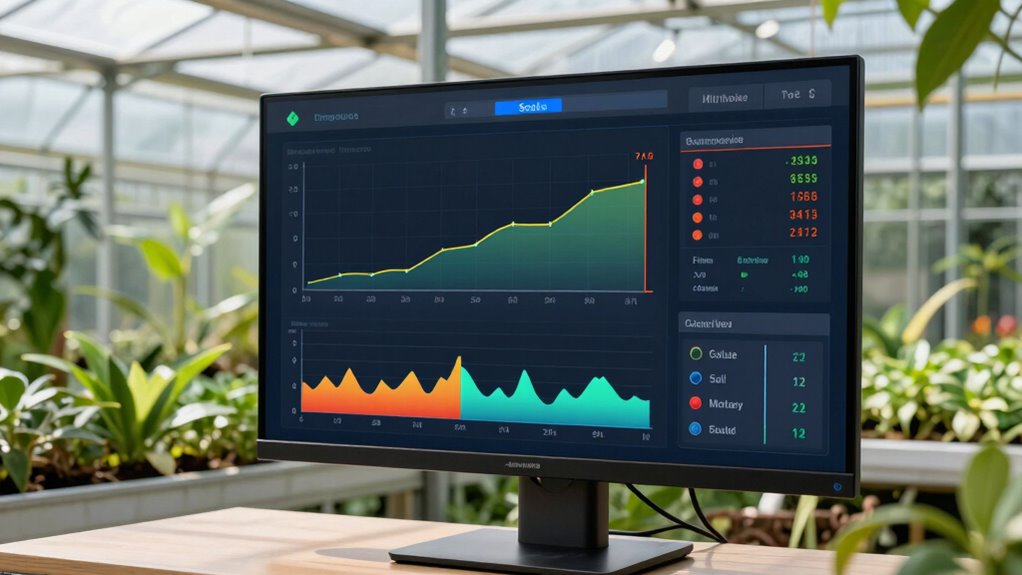
Once your sensors are properly connected and calibrated, the next step is to create a dashboard that presents data clearly and in real-time. Focus on aesthetic considerations to make the interface visually appealing, which helps you quickly interpret information. Keep the layout simple, grouping related data like temperature, humidity, and soil moisture for easy reading. Use contrasting colors and intuitive icons to enhance readability and reduce confusion. Prioritize user interface design by minimizing clutter and avoiding unnecessary elements. Guarantee real-time updates are smooth and responsive, so you’re always aware of current conditions. A clean, well-organized dashboard makes monitoring your greenhouse efficient and stress-free, allowing you to respond swiftly to any changes.
Automating Alerts for Critical Greenhouse Conditions
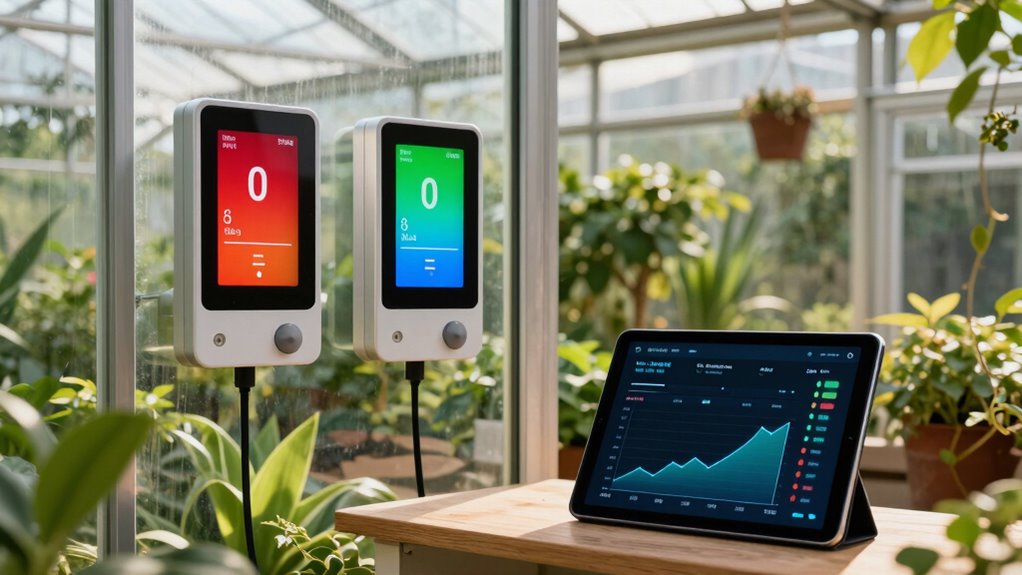
Automating alerts for critical greenhouse conditions guarantees you’re immediately informed when environmental parameters fall outside safe ranges. To guarantee alerts are reliable, regularly calibrate your sensors, so the data stays accurate. Set clear alert thresholds based on ideal growing conditions for your plants—these act as triggers for notifications. When a sensor detects a reading beyond these thresholds, your system can send instant alerts via email, SMS, or app notifications. This proactive approach helps you respond quickly to issues like temperature spikes, low humidity, or water levels, preventing damage. By fine-tuning sensor calibration and alert thresholds consistently, you’ll maintain a stable environment, reduce risks, and keep your greenhouse thriving without constant manual monitoring. Understanding environmental factors helps you create effective thresholds that support healthy plant growth. Regularly monitoring and adjusting your settings ensures your system remains responsive to seasonal changes and plant needs, enhancing overall efficiency.
Tips for Expanding and Customizing Your Greenhouse Monitor
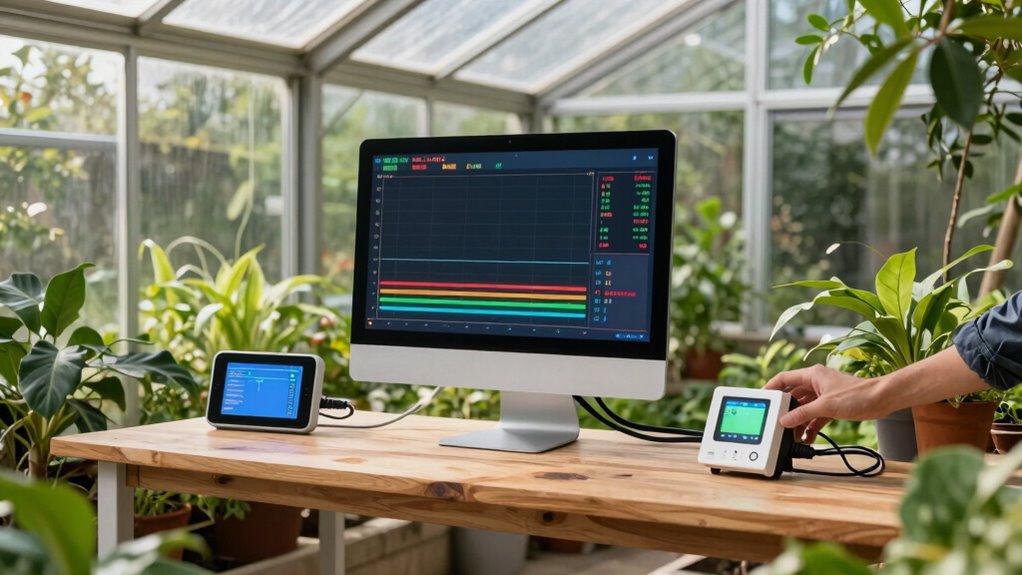
To make your greenhouse monitor more effective, consider integrating additional sensors to track specific conditions. You can also customize data displays to focus on the metrics most important to you. Automating environmental controls further streamlines maintenance and keeps your greenhouse running smoothly.
Integrate Additional Sensors
Thinking about expanding your greenhouse monitor? Adding more sensors can give you a deeper understanding of your environment. When integrating new sensors, guarantee proper sensor calibration so readings stay accurate over time. This step is vital for reliable data collection and effective decision-making. Additionally, consider how the new sensors will improve your data logging capabilities—more sensors mean more detailed insights into temperature, humidity, soil moisture, or light levels. Be mindful of your existing setup’s power and connectivity limits, and plan accordingly. Installing and testing each sensor thoroughly helps prevent errors down the line. By expanding thoughtfully, you’ll create a more complete monitoring system that helps optimize plant health and growth conditions effortlessly.
Customize Data Displays
As you expand your greenhouse monitoring system with additional sensors, customizing your data displays becomes increasingly important. You want your visual data to be clear and easily digestible, so consider adjusting layouts to highlight key metrics like temperature, humidity, and soil moisture. Use interactive elements such as clickable graphs or filters that let you drill down into specific timeframes or sensor data. Customization allows you to prioritize essential information and avoid clutter, making it easier to identify issues at a glance. Incorporate color coding to quickly distinguish between normal and alert states. By tailoring your dashboard’s visual data and interactive elements, you create a more intuitive and efficient tool that helps you maintain ideal greenhouse conditions.
Automate Environmental Controls
Automating environmental controls is a crucial step in expanding your greenhouse monitoring system, allowing you to maintain ideal conditions with minimal manual intervention. By integrating automated systems, you can respond quickly to issues like plant disease or soil testing results, ensuring your plants stay healthy. Consider using sensors to adjust temperature, humidity, and watering based on real-time data. To visualize this, here’s a simple overview:
| Control Type | Trigger Condition | Action |
|---|---|---|
| Humidity Control | Humidity too high/low | Turn on/off humidifier or dehumidifier |
| Temperature Control | Temperature outside range | Activate heater or fan |
| Soil Moisture | Soil too dry/wet | Adjust irrigation system |
This setup helps you expand your setup effectively and keeps your greenhouse essential for plant growth. Additionally, incorporating burnout prevention strategies can help you maintain a balanced approach while managing your greenhouse responsibilities.
Frequently Asked Questions
How Much Does It Cost to Build a Greenhouse Monitoring Dashboard?
Building a greenhouse monitoring dashboard costs around $50 to $200, depending on your setup. You’ll need sensors for temperature, humidity, and soil moisture, which may require calibration for accuracy. Data visualization tools, like free open-source software or affordable platforms, help you interpret this data easily. Keep in mind, investing in quality sensors and calibration can improve your dashboard’s reliability, making your greenhouse management more effective and cost-efficient.
Can I Use DIY Components for My Greenhouse Monitoring System?
You can definitely use DIY components for your greenhouse monitoring system. Remember, “A chain is only as strong as its weakest link,” so focus on proper sensor calibration and reliable wireless connectivity. Use affordable sensors and microcontrollers like Arduino or Raspberry Pi, and make sure they are calibrated for accurate readings. With some patience and tinkering, you’ll have a robust system that keeps your greenhouse thriving without breaking the bank.
What Are Common Troubleshooting Issues With Greenhouse Sensors?
You might face troubleshooting issues with your greenhouse sensors, especially related to sensor calibration and environmental interference. Calibration errors can cause inaccurate readings, so regularly check and recalibrate sensors as needed. Environmental interference, like extreme temperatures, humidity, or electromagnetic noise, can also disrupt sensor accuracy. Ensuring proper placement and shielding of sensors helps reduce interference. Consistently monitoring sensor performance and performing routine maintenance keeps your greenhouse data reliable.
How Secure Is My Data on the Monitoring Platform?
Think of your monitoring platform as a fortress protecting your greenhouse secrets. Your data is highly secure thanks to robust data encryption, which scrambles your information from prying eyes. Additionally, strict user authentication ensures only you or authorized users access the system. These layers of security create a safe harbor, so you can focus on nurturing your plants, confident your data remains private and shielded from cyber threats.
What Maintenance Is Required for Long-Term Sensor Accuracy?
You need to regularly perform sensor calibration to guarantee long-term accuracy. Check your sensors periodically, following manufacturer guidelines, and recalibrate as needed to maintain data reliability. Keep sensors clean and protected from dirt, moisture, and extreme temperatures, which can affect their performance. Additionally, monitor data trends for inconsistencies that might indicate calibration drift. Consistent maintenance helps your sensors provide precise, trustworthy data for ideal greenhouse conditions.
Conclusion
With your monitoring dashboard in place, you’ll watch your greenhouse thrive like a lush, vibrant oasis. Every sensor reading becomes a whisper of health, guiding you to nurture your plants with confidence. As you customize and expand your system, imagine a thriving paradise where your green thumb feels empowered and your garden blooms in perfect harmony. Your green sanctuary is now alive, responsive, and beautifully yours—ready to flourish under your watchful eye.