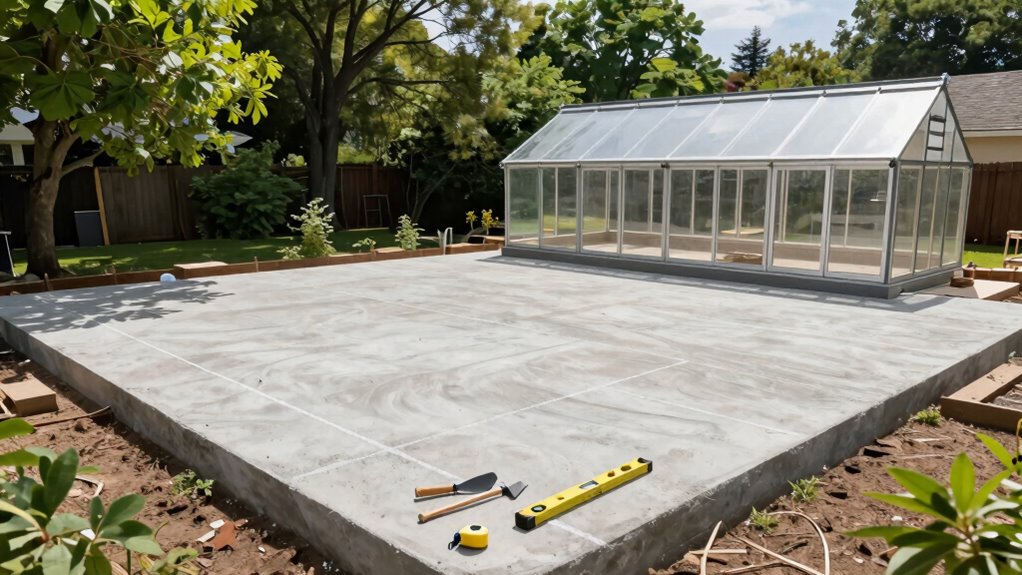

Planning your greenhouse base before the kit arrives helps you create a solid, level foundation that minimizes future problems like shifting or settling. By evaluating soil quality, choosing the right materials, and prepping the site in advance, you’ll guarantee stability and durability. Proper planning also makes assembly easier and faster, saving you time and effort. Plus, addressing climate and soil stability now helps protect your investment long-term. Keep going to discover essential tips for a successful start.
Key Takeaways
- Proper planning ensures the foundation is ready, reducing delays during assembly.
- It allows for accurate site measurements and soil preparation tailored to your greenhouse.
- Pre-planning helps select the best foundation material based on climate and soil conditions.
- It prevents structural issues caused by uneven or unstable bases during installation.
- Early groundwork facilitates a stable, level platform that enhances the greenhouse’s durability and longevity.
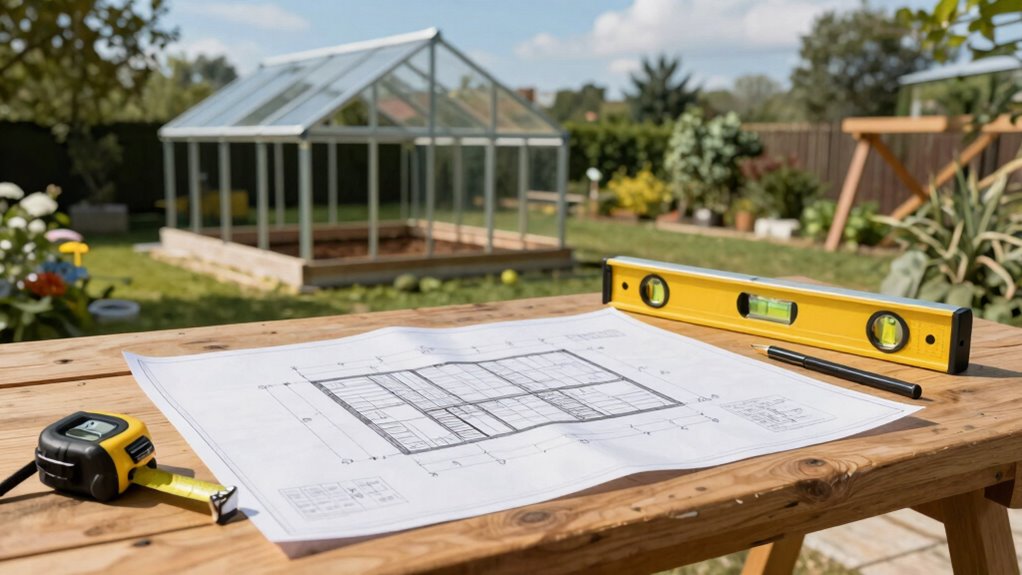
Are you ready to build a sturdy foundation for your greenhouse? Proper planning before your kit arrives is essential to ensure your structure stands strong for years to come. The first step is understanding that a solid base begins with thorough soil preparation. You’ll want to evaluate your site’s soil quality—checking for compaction, drainage, and nutrient content. If your soil is heavy clay or overly sandy, it might need amendments like organic matter or gravel to improve stability and drainage. Proper soil preparation involves leveling the ground, removing weeds, and ensuring the surface is even. This creates a reliable base that prevents shifting or settling once your greenhouse is assembled. Additionally, understanding your soil’s composition and drainage capacity helps you select the most suitable foundation materials. Choosing the right foundation materials is equally critical. Depending on your greenhouse size, climate, and personal preferences, options include concrete slabs, gravel beds, or pressure-treated wood. Concrete offers durability and stability, especially for larger structures. Gravel beds provide excellent drainage and are easier to install, making them a popular choice for smaller greenhouses. Wooden foundations are lightweight and flexible, but they require treated lumber to withstand moisture and pests. As you plan, consider how each foundation material interacts with your soil type and local weather conditions. Being aware of local climate factors can help you select a foundation that resists shifting or damage caused by weather variations. Recognizing the importance of soil stability can prevent costly repairs by ensuring your foundation remains secure over time. Proper planning also involves considering the potential for soil erosion in your area, which can undermine your foundation if not addressed. It’s also beneficial to assess the future growth of your garden to ensure your foundation can accommodate any expansion or additional structures. This foresight prevents future issues like uneven settling or water damage. Planning your greenhouse base before the kit arrives means you won’t be caught off guard when it’s time to assemble. You can allocate enough time for site work, ensuring soil is properly prepared and foundation materials are ready to go. By doing so, you avoid delays that can come from rushing through these crucial steps at the last minute. It also allows you to double-check measurements and confirm that your chosen foundation aligns with your greenhouse kit specifications. Proper planning reduces the risk of structural problems down the line, saving you money and effort on repairs or adjustments. In addition, when you plan ahead, you can tailor your foundation to fit your specific needs—whether that’s anchoring your greenhouse in a windy area or ensuring proper drainage in a rainy climate. This proactive approach guarantees a level, stable platform, which is vital for the longevity and functionality of your greenhouse. Ultimately, investing time in soil preparation and selecting appropriate foundation materials before your kit arrives ensures a smooth assembly process and a resilient, long-lasting greenhouse. It’s a step that sets the stage for a successful gardening experience, giving you peace of mind that your investment will stand firm against the elements.

Palram – Canopia EcoGrow 6' x 12' Base Kit
- Product Dimensions: 6' x 12' x 5"
- Assembly Method: Push-Fit Design
- Quick Setup: Snaps Together Quickly
As an affiliate, we earn on qualifying purchases.
As an affiliate, we earn on qualifying purchases.
Frequently Asked Questions
How Do I Choose the Best Location for My Greenhouse Base?
You should choose a location with ample sunlight exposure and well-draining soil. Clear the area of debris and prepare the soil by adding compost or amendments to improve fertility and drainage. Pick a spot that’s level to guarantee stability. Avoid shaded areas or spots prone to strong winds. Proper soil preparation and sunlight exposure are essential to create a healthy environment for your greenhouse, maximizing plant growth and longevity.
What Materials Are Most Durable for a Greenhouse Foundation?
For a durable greenhouse foundation, opt for concrete for strength, gravel for drainage, or treated wood for affordability. Foundation types like concrete slabs, footings, and pier blocks each offer resilience, but material comparisons highlight concrete’s longevity, gravel’s flexibility, and wood’s ease of installation. You want a foundation that withstands weather, resists decay, and supports your greenhouse long-term. Choose wisely to guarantee stability and durability for your growing space.
How Deep Should My Greenhouse Base Be Dug?
You should dig your greenhouse base about 6 to 12 inches deep, depending on your soil type and foundation choice. Proper soil preparation is key to guarantee stability and drainage. For foundation types like concrete or gravel, follow specific depth guidelines to prevent shifting or shifting. Always check local building codes and consider your climate, as these factors influence the ideal depth and foundation material for your greenhouse.
Can I Build a Greenhouse on Uneven Ground?
Yes, you can build a greenhouse on uneven ground, but it’s best to start with soil testing to assess stability and drainage. Use appropriate foundation materials like concrete blocks or a level gravel bed to create a flat, sturdy base. You might need to level the ground first or build a raised foundation, ensuring your greenhouse remains stable and secure, regardless of the initial terrain.
What Permits or Regulations Should I Consider Before Construction?
Think of the permitting process as your green light to start building. Before you begin, check local regulations and zoning laws, as they set the boundaries for your project. You’ll likely need permits for construction, especially if your greenhouse exceeds size limits or impacts drainage. Contact your local building department early to guarantee you’re compliant, so your project doesn’t hit any unexpected red lights down the road.
Conclusion
When you’ve carefully planned your greenhouse base, it’s like laying a strong foundation for a garden of possibilities. Imagine the moment you open your kit, and everything fits perfectly—no surprises or adjustments needed. The soil is ready, the frame aligns smoothly, and your plants thrive from day one. By preparing ahead, you turn a simple structure into a lush, productive oasis. It’s a coincidence you’ll thank yourself for every time you see your thriving greenhouse come to life.