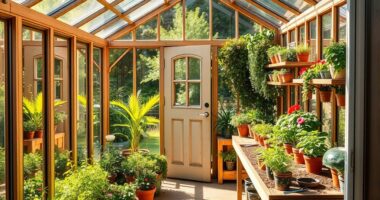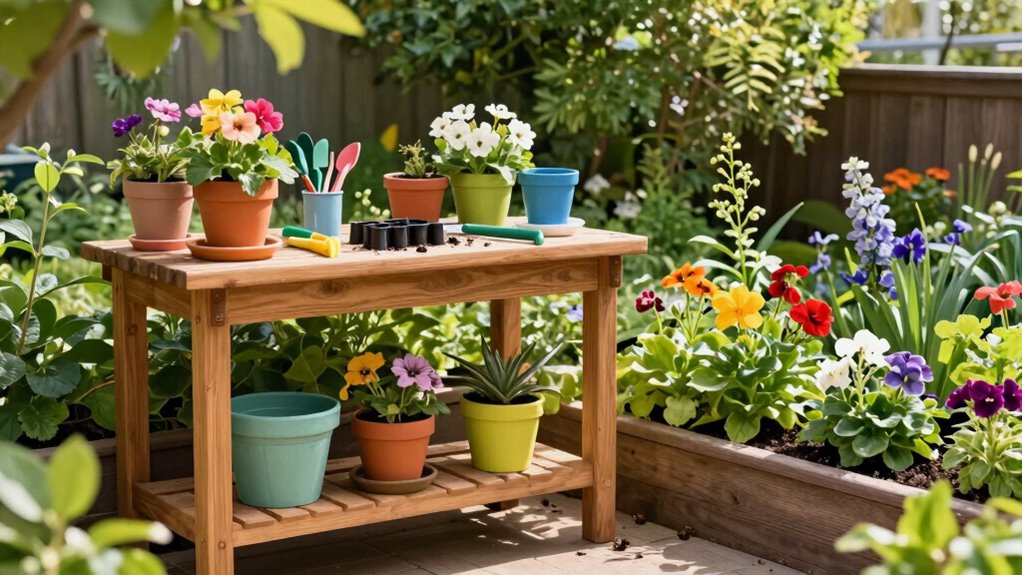

To create a potting area with room to grow, choose a location near your garden beds that provides good lighting and flat surface space. Organize tools on hooks or shelves to keep the workspace tidy and leave some open areas for larger projects. Incorporate vertical storage to maximize space and reassess regularly, adjusting as your garden expands. If you keep these tips in mind, you’ll find it easier to grow your garden while staying organized for future plans.
Key Takeaways
- Choose a compact, well-organized setup that maximizes storage without overcrowding the workspace.
- Incorporate vertical storage solutions to free up horizontal space for growth.
- Leave open areas for larger projects and future plantings.
- Regularly reassess and reorganize to accommodate evolving gardening needs.
- Design with flexibility to expand tools, supplies, and plant varieties over time.
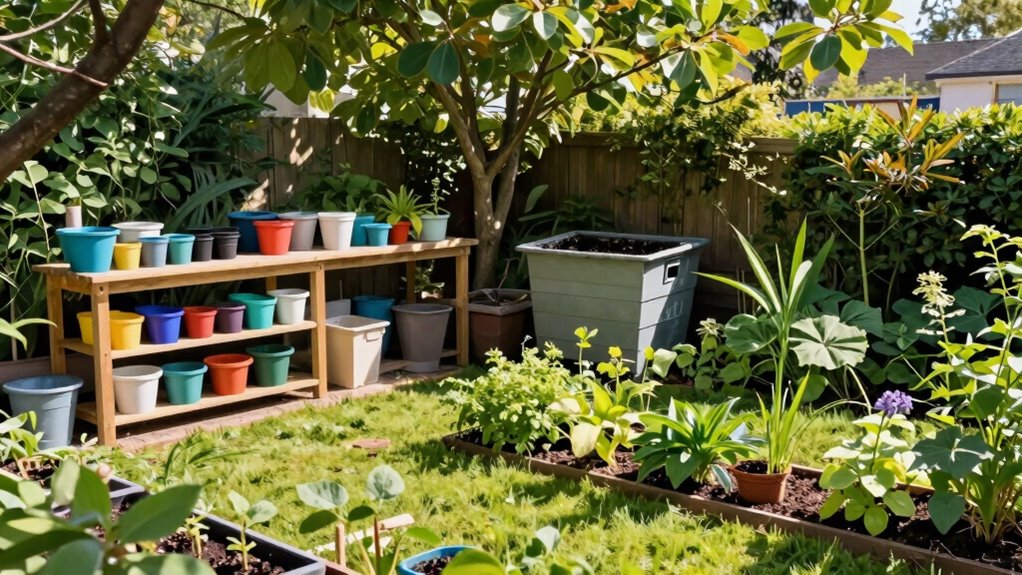
Creating a dedicated potting area is essential if you want to nurture healthy plants and make gardening more efficient. When you set up a space specifically for potting, you streamline your workflow, reduce clutter, and keep your garden organized. Proper garden organization means everything you need—pots, soil, fertilizers, and tools—has a designated spot, so you’re not wasting time searching for supplies. It also helps prevent clutter from spreading into other parts of your garden, keeping your outdoor space tidy and functional.
A dedicated potting area streamlines gardening, reduces clutter, and keeps your tools and supplies organized for easier, more enjoyable planting.
A well-planned potting area doesn’t have to be large; it just needs to be thoughtfully organized. Start by choosing a spot that’s convenient, ideally close to your main garden beds. This way, you can easily move from planting to potting without lugging supplies across your yard. Once you’ve picked the right location, focus on creating a tidy workspace with good lighting and a flat surface. A sturdy table or workbench is ideal, providing enough room for you to comfortably handle pots, soil bags, and seedlings.
Tool storage is a critical aspect of a successful potting area. You want your tools—trowels, gloves, pruning shears, watering cans—organized and within reach. Invest in wall-mounted pegboards or shelving units to keep your tools visible and accessible. Hanging tools on hooks prevents clutter and makes it easy to grab what you need without rummaging through a toolbox. Consider adding small containers or bins for items like plant labels, seed packets, or fertilizers, so everything stays sorted and easy to find. Keeping your storage solutions organized and accessible ensures a smoother gardening experience.
To leave room to grow, avoid overcrowding your potting space. Leave open areas on your work surface for larger projects, like repotting or mixing soil. Incorporate vertical storage options to maximize space—wall-mounted racks or hanging baskets can hold supplies without taking up precious table space. Keep frequently used tools and supplies close, but store seasonal or less-used items elsewhere to free up room when you’re actively gardening. Regularly reassessing your setup will help ensure your workspace remains functional and adaptable to your evolving gardening needs. Additionally, considering future expansion can help you plan for larger projects or increased storage needs as your garden develops. This proactive approach supports the ongoing biodiversity of your garden ecosystem by allowing space for new plants and diverse species.
Balancing organization with space to grow means constantly reassessing your setup. As your gardening needs evolve, you might add new storage solutions or reorganize your supplies. Remember, the goal is to create a functional, clutter-free zone that boosts your productivity while still leaving enough room for larger projects. By carefully planning your garden organization and tool storage, you ensure your potting area remains a space you enjoy working in—and one that grows with your gardening ambitions.

Feasto Outdoor Potting Bench Table with Storage Cabinet, Black
- Durable Stainless Steel Worktop: Resists damage and easy to clean
- Raised-Edge Design: Prevents tools and accessories from falling
- Large Storage Cabinet: Offers 50 gallons of organized storage
As an affiliate, we earn on qualifying purchases.
As an affiliate, we earn on qualifying purchases.
Frequently Asked Questions
What Materials Are Best for Building a Potting Bench?
You should choose durable materials like cedar, cypress, or weather-resistant plywood for your potting bench, as they withstand the elements well. Using sturdy, easy-to-clean surfaces helps maximize workspace efficiency and keeps your area functional. Incorporate shelves and drawers for organized storage, and consider a sloped top for easy cleanup. These choices guarantee your potting bench remains sturdy, functional, and efficient, even with frequent use and outdoor exposure.
How Do I Organize Tools Efficiently in a Small Space?
You should organize your tools efficiently by using wall-mounted storage or pegboards to keep your plant containers, hand tools, and watering station within easy reach. Allocate a specific spot for your watering station to prevent messes, and store frequently used tools in containers or labeled bins. Keep your plant containers organized on shelves or hooks, so everything is accessible without cluttering your small space, leaving room to grow.
What Drainage Options Are Ideal for a Potting Area?
Think of your potting area as a well-drained garden oasis. Opt for raised beds or gravel bases to keep water flowing freely, avoiding soggy roots. Incorporate composting essentials like organic matter to improve drainage naturally. Use watering solutions such as drip trays or saucers under pots to prevent puddles. These choices help your plants thrive, ensuring your space remains a lively hub of growth without waterlogging.
How Can I Protect Plants From Pests in a Potting Zone?
To protect your plants from pests in a potting zone, you should use companion planting by pairing plants that naturally repel pests with your vulnerable ones. Incorporate natural repellents like marigolds or basil into your garden to deter insects. Regularly inspect plants for signs of pests, and encourage beneficial insects like ladybugs. These methods create a pest-resistant environment, helping your plants thrive without harsh chemicals.
What Lighting Is Suitable for a Covered Potting Area?
For your covered potting area, you should use indoor grow lights to supplement natural sunlight, ensuring your plants get enough light even on cloudy days or during winter. Choose full-spectrum LED or fluorescent grow lights that mimic natural sunlight, providing the necessary wavelengths for healthy growth. Position the lights about 12-24 inches above the plants and keep them on for 12-16 hours daily to promote ideal development.
Conclusion
So, you’ve carved out a cozy potting area, leaving space for your plants to flourish. Ironically, in trying to make room for growth, you might find yourself growing just as much in your love for gardening. Before long, your once-spacious spot could become a lush jungle, proving that sometimes, the best way to leave room to grow is to embrace the chaos. Happy planting—your garden’s about to get a little more crowded, and a lot more beautiful.