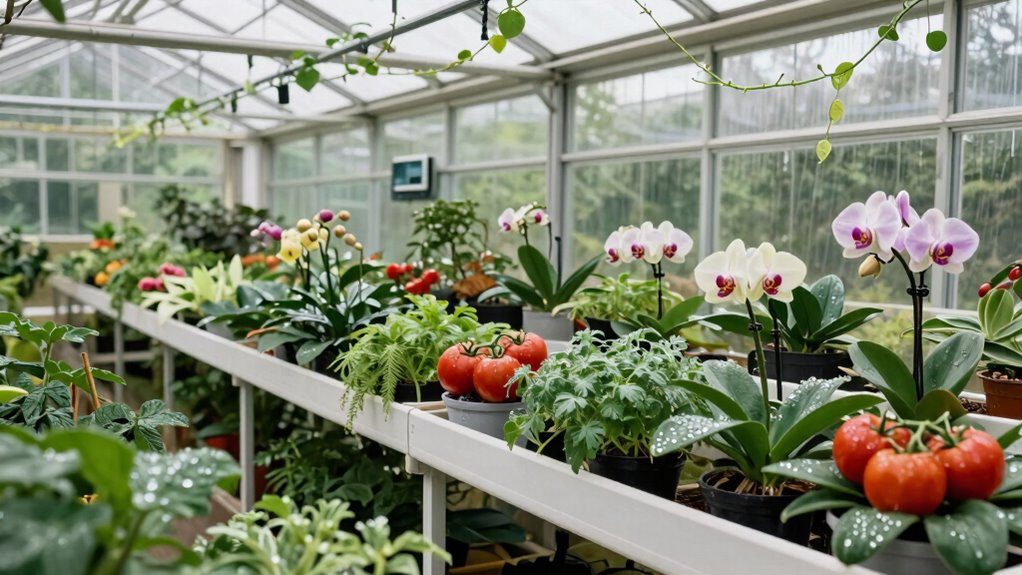

A greenhouse supports more than food production by creating a protected environment that encourages biodiversity and ecosystem health. It allows you to grow a variety of plants, attract pollinators, and support beneficial insects. You can use renewable energy sources, reduce chemical reliance, and promote resilient gardening practices. This helps sustain local ecosystems and fosters a self-sufficient lifestyle. If you want to discover how greenhouses can enhance your gardening and environmental efforts further, there’s more to explore.

Get garden gear delivered free with Prime
- Fast, free delivery on millions of items
- Prime Video, Amazon Music and more included
- Member-only deals all year
Key Takeaways
- Greenhouses promote biodiversity by attracting pollinators and beneficial insects, supporting ecosystem health beyond just food production.
- They enable year-round cultivation of various plants, enhancing ornamental and medicinal gardening practices.
- Greenhouses facilitate sustainable energy use, reducing environmental impact and supporting eco-friendly landscaping.
- They provide a controlled environment for experimenting with native, heirloom, or resilient plant varieties.
- Greenhouses help create habitats for wildlife, supporting local ecosystems and promoting ecological balance.
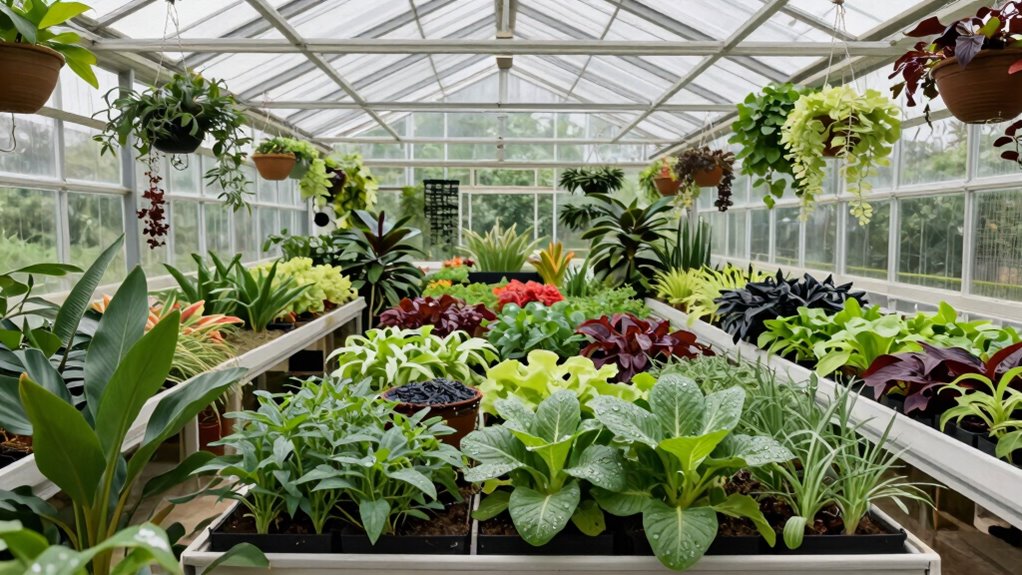
Have you ever wondered how a greenhouse can boost your gardening success? Beyond simply growing more food, a greenhouse creates a controlled environment that offers numerous benefits for your entire outdoor space. One of the key advantages is its ability to support sustainable energy use. Modern greenhouses can incorporate solar panels or other renewable energy sources, reducing reliance on fossil fuels and lowering your overall carbon footprint. By harnessing sustainable energy, you make your gardening efforts more eco-friendly and cost-effective over time. Additionally, a greenhouse helps regulate temperature and humidity, which minimizes energy waste and allows you to extend your growing season without excessive heating or cooling costs. This integration of renewable energy sources further enhances the environmental benefits of your greenhouse.
A greenhouse supports sustainable energy, reduces costs, and extends your growing season efficiently.
Beyond energy efficiency, a greenhouse provides a natural advantage for pest control. When you contain your plants within a protected structure, it becomes easier to manage pests without resorting to chemical pesticides. You can implement integrated pest management techniques, such as introducing beneficial insects or using physical barriers, with greater precision. This controlled setting reduces the likelihood of pest invasions spreading to your outdoor garden, safeguarding your plants’ health and yield. With fewer pests attacking your crops, you spend less time and money on chemical treatments, making your gardening more sustainable and healthier for both you and the environment. A greenhouse also allows for controlled environment agriculture, which can optimize conditions for plant growth and pest management. Creating a microclimate within your greenhouse can further improve plant health and resilience.
A greenhouse also supports biodiversity and ecosystem health. You can cultivate a variety of plants, including those that attract pollinators like bees and butterflies, which are vital for healthy pollination both inside and outside the greenhouse. By creating a habitat that encourages beneficial insects and wildlife, you contribute to a more balanced local ecosystem. This diversity benefits your garden by naturally suppressing pests and supporting plant growth, reducing your dependence on chemical inputs.
Furthermore, a greenhouse can serve as a space for experimenting with different plant varieties, including native or heirloom species that thrive in your local climate. This experimentation promotes sustainable gardening practices by encouraging the growth of resilient plants that require fewer resources and less intervention. You also have the flexibility to grow herbs, flowers, and vegetables year-round, enriching your outdoor environment with vibrant colors and fresh produce, while fostering a more sustainable and self-sufficient lifestyle.
In essence, a greenhouse is more than just a tool for food production. It’s a versatile structure that enhances energy efficiency, supports natural pest control, encourages biodiversity, and promotes sustainable gardening practices. By investing in a greenhouse, you’re creating a space that benefits not only your harvest but also the health of your local environment and your long-term gardening success.
Products Worth Considering

EGO POWER+ 20-Inch Cordless Chainsaw with 56V 6.0Ah Battery and Charger (CS2005)

EGO POWER+ CS1613 16-Inch Cordless Chainsaw with 56V 4.0Ah Battery and Charger

Sinimaka 10-Pack Twin-Wall Polycarbonate Greenhouse Panels, 8 × 4 ft
As an affiliate, we earn on qualifying purchases.
Frequently Asked Questions
Can Greenhouses Support Renewable Energy Initiatives?
Yes, greenhouses can support renewable energy initiatives through solar integration. You can install solar panels on the roof or nearby structures to generate clean energy, reducing reliance on traditional power sources. By embracing renewable innovations, you maximize energy efficiency and sustainability. This integration not only lowers operational costs but also demonstrates your commitment to environmental responsibility, making greenhouses more than just food producers—they become models of renewable energy adoption.
How Do Greenhouses Impact Local Biodiversity?
Greenhouses can impact local biodiversity by offering a controlled environment that supports native species and habitat preservation. You can design them to include native plants, which attract local pollinators and help maintain regional ecosystems. By minimizing habitat disruption and fostering native biodiversity, greenhouses contribute positively to local ecosystems. They serve as refuges for native species, helping preserve the natural balance and preventing the decline of local biodiversity.
Are Greenhouses Suitable for Educational Purposes?
Greenhouses are perfect for educational purposes because they provide a controlled environment for plant research and student experiments. You might worry about space, but imagine students observing plants grow faster and healthier, learning firsthand about photosynthesis and ecosystems. With adjustable conditions, greenhouses offer hands-on experiences that deepen understanding and spark curiosity. They’re ideal for inspiring future scientists, making complex biological concepts tangible and engaging right in your community.
Can Greenhouses Help With Urban Water Management?
Yes, greenhouses can help with urban water management. You can use rainwater harvesting to collect and recycle water, reducing runoff and conserving resources. Additionally, greenhouses promote urban cooling by lowering local temperatures through evapotranspiration and shading. This dual function helps manage water more efficiently and mitigates the urban heat island effect, making greenhouses valuable tools for sustainable city environments.
Do Greenhouses Contribute to Climate Change Mitigation?
Greenhouses are quiet warriors in the fight against climate change, actively contributing to mitigation efforts. They enhance carbon sequestration by capturing CO₂, acting like sponges soaking up greenhouse gases. Additionally, greenhouses bolster climate resilience, helping crops withstand extreme weather. When you invest in such structures, you’re not just growing plants; you’re creating a sustainable shield that mitigates climate impacts, making our environment more stable for future generations.
Conclusion
A greenhouse is like a nurturing cradle, providing more than just food; it fosters community, education, and innovation. By controlling the environment, you reveal possibilities beyond crops, turning your space into a hub of sustainability and growth. Embrace this versatile tool, and watch your impact blossom like a well-tended garden. In doing so, you’ll discover that a greenhouse’s true harvest is the countless ways it enriches lives, not just with produce but with purpose.