
To balance heat, humidity, and airflow indoors, you need to optimize each element simultaneously. Use smart thermostats to control temperature, humidifiers or dehumidifiers to maintain ideal humidity levels, and fans or vents to promote proper airflow. Regularly monitor these factors with sensors and adjust settings as needed. Maintaining insulation and proper ventilation guarantees everything stays balanced. Keep going, and you’ll discover how to create a cozy, healthy indoor environment effortlessly.

Get garden gear delivered free with Prime
- Fast, free delivery on millions of items
- Prime Video, Amazon Music and more included
- Member-only deals all year
Key Takeaways
- Achieve harmony by regulating heat, humidity, and airflow simultaneously for a comfortable indoor environment.
- Use smart thermostats, humidifiers/dehumidifiers, and fans to dynamically adjust each factor based on real-time data.
- Proper insulation and sealing prevent heat loss and control humidity levels efficiently.
- Ensure consistent airflow with strategically placed vents and exhaust fans to distribute heat and moisture evenly.
- Regular monitoring with sensors helps identify imbalances, enabling precise adjustments for optimal indoor climate.
smart thermostat for indoor climate control
As an affiliate, we earn on qualifying purchases.
As an affiliate, we earn on qualifying purchases.
How Do Heat, Humidity, and Airflow Work Together Indoors?
Have you ever wondered how heat, humidity, and airflow interact indoors to affect comfort? Smart thermostats play a key role by adjusting temperature settings based on your preferences and real-time data. They help maintain consistent heat levels, preventing stuffiness or cold spots. Humidity influences how warm or cool you feel; high humidity can make a room feel hotter, while low humidity can cause dryness. Proper airflow ensures fresh air circulates, reducing stale air and enhancing air quality. When airflow is optimized, it helps control humidity levels and distributes heat evenly. Additionally, using DIY tools can help you troubleshoot and optimize your HVAC system for better climate control. Understanding indoor climate dynamics can further empower you to create a comfortable environment. Recognizing the importance of air circulation can significantly improve overall comfort and energy efficiency. When heat, humidity, and airflow are balanced, it can also lead to energy savings and lower utility bills. Maintaining a balanced indoor climate requires awareness of thermal comfort and how these elements interact. Together, these elements create a balanced indoor environment. Using smart thermostats and paying attention to air quality allows you to fine-tune heat, humidity, and airflow, making your space more comfortable and healthier.
Understanding the Basics of Indoor Climate Balance
Achieving a comfortable indoor environment requires understanding how heat, humidity, and airflow work together to create a balanced climate. When these elements are in harmony, your space feels cozy and healthy. For example, placing an indoor plant can help with air purification, improving air quality naturally. Proper airflow ensures fresh air circulates, preventing stuffiness and reducing pollutants. Managing humidity prevents mold growth and keeps the air comfortable for both humans and plants. You’ll want to maintain a consistent temperature while balancing moisture levels and airflow. You can also optimize air circulation through the strategic placement of fans and vents, which plays a crucial role in maintaining a healthy indoor environment. Recognizing how these factors influence each other helps you create a stable environment. Understanding the principles of indoor climate control is essential for effective regulation. This understanding forms the foundation for effective climate regulation, ensuring your indoor space remains inviting, clean, and comfortable. Additionally, implementing climate regulation techniques can optimize the overall environment for health and comfort. Being aware of air quality management strategies can further enhance indoor comfort and safety. Incorporating smart technology can provide real-time adjustments to maintain ideal conditions efficiently.
Essential Tools for Monitoring and Adjusting Your Indoor Climate
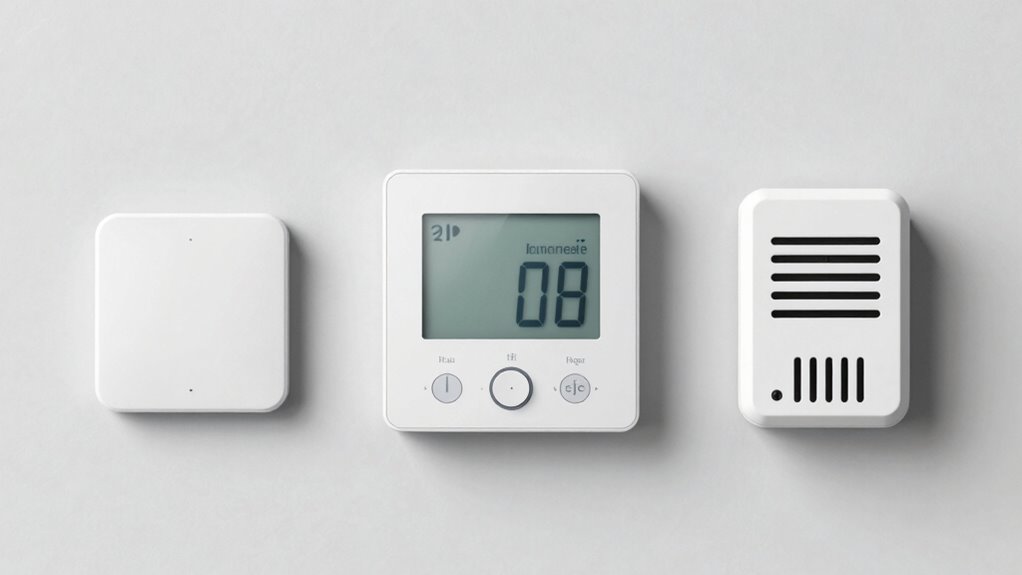
To effectively maintain a balanced indoor climate, you need the right tools to monitor and make adjustments as needed. Smart thermostats are essential—they allow you to control temperature precisely and respond automatically to changing conditions. These devices learn your preferences, helping you optimize comfort and save energy. Air quality monitors are equally important, giving real-time data on pollutants, humidity levels, and airborne particles. By keeping an eye on air quality, you can take steps to improve ventilation or add purifiers, ensuring healthier indoor air. Incorporating natural elements such as plants can also help improve indoor air quality and promote a more balanced climate. Additionally, understanding digital literacy in managing smart devices can enhance your ability to customize and troubleshoot your climate control system effectively. Regularly updating your protocols and device settings ensures your system adapts to seasonal changes and evolving home conditions. Incorporating digital monitoring tools enhances your ability to manage temperature, humidity, and airflow more effectively. This setup enables you to fine-tune heat, humidity, and airflow, creating a comfortable, safe, and energy-efficient indoor environment.
Common Mistakes That Disrupt Indoor Climate Stability
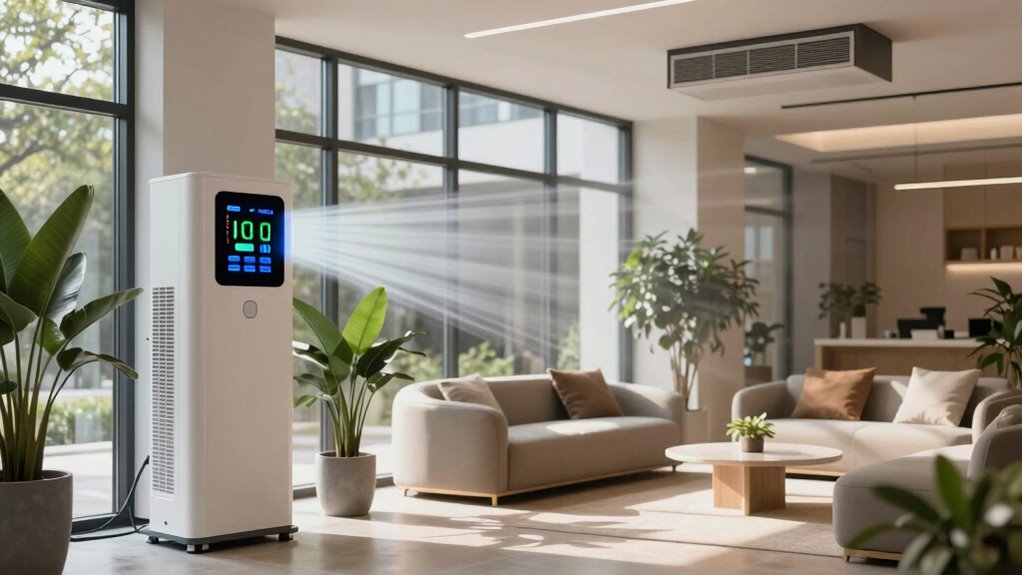
Ignoring humidity levels can make your indoor environment uncomfortable and even cause damage. Failing to address ventilation needs allows stale air and pollutants to build up, disrupting stability. Neglecting regular maintenance of your HVAC system can lead to inefficiency and unexpected issues that throw off the climate balance. Additionally, overlooking airflow management can result in uneven temperature distribution and reduced system effectiveness.
Overlooking Humidity Levels
Many homeowners overlook humidity levels when trying to maintain a stable indoor climate, but doing so can lead to discomfort and health issues. Without proper humidity awareness, you might experience dry skin, mold growth, or respiratory problems. Moisture management is essential for comfort and safety.
To highlight this, consider the ideal indoor humidity range, typically between 30-50%. Here’s a quick comparison:
| Humidity Level | Effects on Comfort | Potential Risks |
|---|---|---|
| Below 30% | Dry skin, static electricity | Respiratory irritation |
| 30-50% | Comfortable, healthy environment | Mold growth, allergies |
| Above 50% | Dampness, mold risk | Dust mites, mildew |
Maintaining this balance ensures your indoor environment remains healthy and comfortable.
Ignoring Ventilation Needs
Neglecting proper ventilation can quickly undo the benefits of controlling humidity, leading to stale air and poor indoor air quality. Without adequate airflow, pollutants and allergens linger, making your space uncomfortable and unhealthy. Poor ventilation also reduces your ability to manage pests, as stale, moist air attracts insects and rodents. When airflow isn’t prioritized, humidity levels can spike in hidden corners, creating ideal conditions for mold and pests. This imbalance can also lead to air circulation issues, further compromising indoor air quality and pest control efforts. Proper ventilation ensures fresh air circulates, removing indoor pollutants and discouraging pest infestations. Overlooking this step disrupts your climate control efforts, leading to a less healthy, less comfortable indoor environment. Prioritize ventilation to maintain air quality and keep pests at bay.
Neglecting Regular Maintenance
Regular maintenance is essential for keeping your indoor climate stable, yet it’s often overlooked until problems arise. Neglecting routine checks can worsen the impact of seasonal climate shifts and outdoor environmental impact. Failing to service your system allows dust buildup, reduces efficiency, and causes uneven airflow. Here are four common mistakes:
- Ignoring filter replacements, which hampers airflow and air quality.
- Skipping duct inspections, trapping debris and mold.
- Overlooking outdoor unit cleaning, leading to debris buildup impacting performance.
- Forgetting to calibrate thermostats for seasonal changes, causing temperature inconsistencies.
- Neglecting the importance of household safety products like bath mats, which can prevent slips and falls, especially when maintaining climate control equipment. Additionally, understanding indoor air quality can help you identify when your system needs professional attention. Regularly checking your system’s components ensures it remains responsive to seasonal shifts and outdoor environmental changes, maintaining optimal comfort and efficiency. Being aware of potential sources of microplastics in dust can further improve your indoor air quality and health. These oversights disrupt the balance of heat, humidity, and airflow, making your system work harder and less effectively. Regular maintenance guarantees your climate control system adapts smoothly to seasonal shifts and outdoor influences.
How to Measure Temperature, Humidity, and Airflow at Home
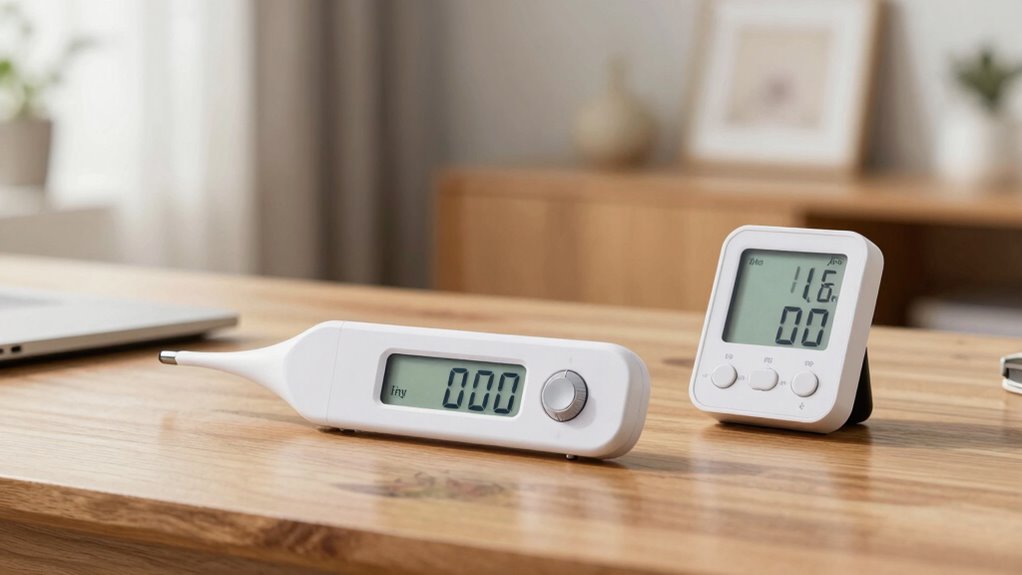
Measuring temperature, humidity, and airflow at home is essential for maintaining a comfortable and healthy environment. Smart sensors make this easy by providing real-time data on these factors. You can place temperature and humidity sensors in different rooms to monitor variations and identify problem areas. Airflow can be measured using an anemometer or smart ventilation systems that track air movement. These sensors often connect to data analytics platforms, allowing you to analyze trends and make informed adjustments. Regularly checking this data helps you understand how your home’s climate changes throughout the day or season. By using advanced tools, you gain precise insights, enabling you to optimize your climate control system effectively and guarantee a consistent, comfortable indoor environment. Indoor air quality sensors further enhance your ability to maintain a healthy home, especially when considering air circulation and its impact on overall comfort.
Tips for Adjusting Settings to Achieve Comfort
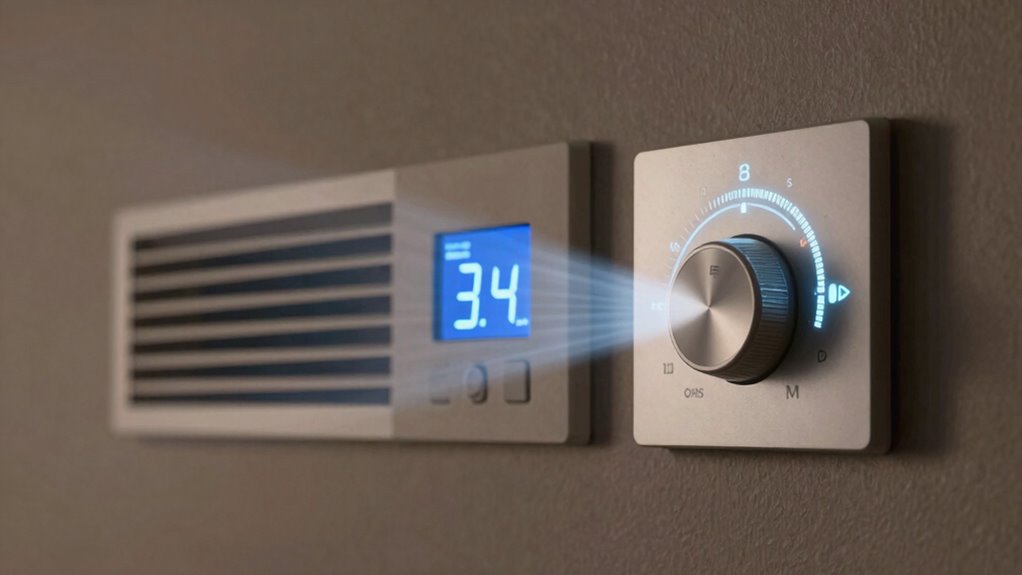
To stay comfortable, start by fine-tuning your temperature settings to match your needs. Next, adjust the humidity levels to prevent dryness or excess moisture. Small changes in these areas can make a big difference in your overall comfort. Considering ventilation efficiency can also help maintain optimal air quality and moisture control. Incorporating smart HVAC controls can further optimize your system’s performance and energy use. Additionally, understanding the importance of airflow management can ensure consistent temperature and humidity distribution throughout your space.
Fine-Tune Temperature Settings
Adjusting your thermostat settings thoughtfully can make a big difference in achieving the perfect comfort level. Start with temperature calibration to guarantee your thermostat reads accurately, preventing unnecessary heating or cooling. Next, consider thermal zoning—dividing your space into zones allows you to set different temperatures for each area, maximizing comfort and efficiency. Here are four tips to fine-tune your temperature:
- Regularly calibrate your thermostat for precise readings.
- Use thermal zoning to target specific areas needing different temperatures.
- Adjust settings gradually to avoid sudden temperature swings.
- Monitor your comfort levels and tweak zones accordingly.
Optimize Humidity Levels
Controlling humidity levels is just as important as setting the right temperature for ideal comfort. Proper humidity regulation helps prevent the air from feeling too dry or too damp. To improve moisture control, consider adjusting your humidifier or dehumidifier settings based on the current environment. If the air feels sticky or you notice condensation, lower the humidity level. Conversely, if your skin feels dry or you experience static electricity, increase moisture regulation. Use a hygrometer to monitor indoor humidity, aiming for around 40-50%. Regularly maintaining and calibrating your devices ensures consistent results. Balancing humidity levels not only enhances comfort but also protects your home from mold and dust mites. Fine-tuning these settings ultimately creates a more comfortable, healthier living space.
The Role of Insulation and Ventilation in Climate Control

Have you ever wondered how your home stays comfortable year-round? The secret lies in effective insulation and ventilation strategies. Proper insulation efficiency keeps heat in during winter and out in summer, reducing energy costs. Ventilation ensures fresh air circulation, preventing moisture buildup and maintaining air quality. Here are four key points to take into account:
- Choose high-quality insulation materials for better thermal performance.
- Seal gaps and leaks to boost insulation efficiency.
- Implement controlled ventilation systems to optimize airflow.
- Use exhaust fans and open vents strategically to manage humidity and temperature.
Together, insulation and ventilation work to create a balanced environment, keeping your home cozy without sacrificing air quality or energy efficiency. Proper setup makes all the difference in maintaining a stable indoor climate.
Troubleshooting Common Indoor Climate Issues
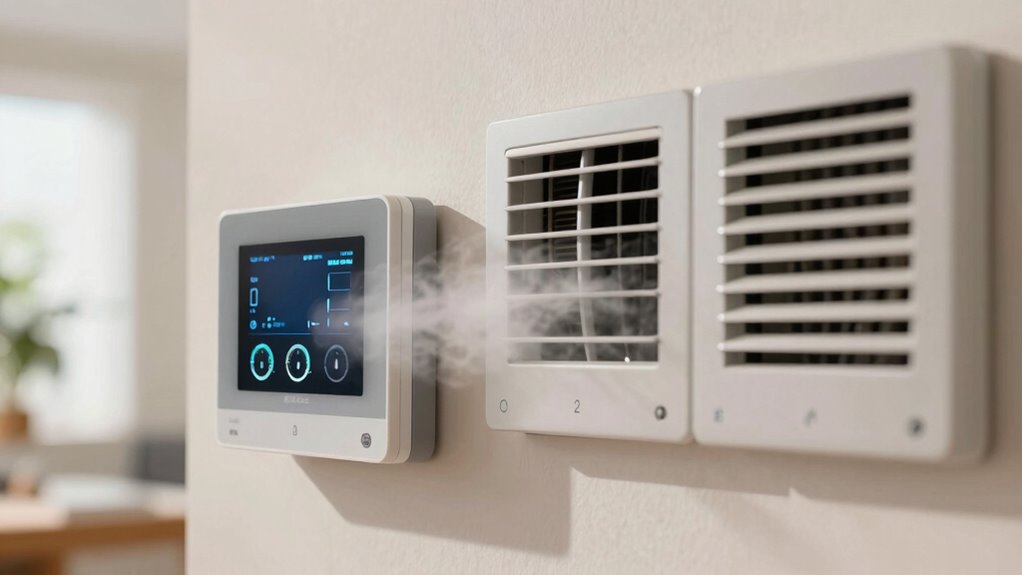
When indoor climate issues arise, identifying the root cause quickly can save you time and frustration. Poor indoor air quality often results from inadequate ventilation, airborne pollutants, or excess humidity. Check your air filters and verify vents are unobstructed. If you notice uneven temperatures or drafts, it might be an insulation or airflow problem. Thermal comfort depends on consistent heat distribution and humidity levels; if these are off, your space feels uncomfortable. Humidity too high can cause mold and musty odors, while too low can lead to dry skin and sore throats. Regularly inspecting your HVAC system, sealing leaks, and maintaining proper ventilation can resolve many common issues. Staying proactive helps maintain ideal indoor air quality and ensures your space remains comfortable year-round.
Building a Long-Term Routine for Consistent Indoor Comfort
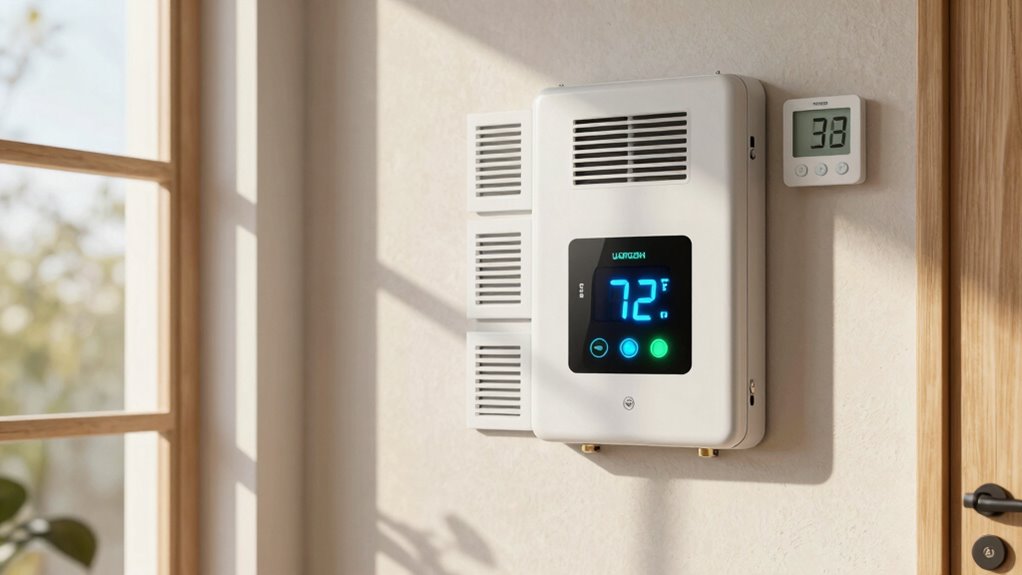
Establishing a long-term routine guarantees your indoor environment stays comfortable and healthy over time. To achieve this, focus on consistency and strategic actions. Consider these steps:
- Schedule regular maintenance for your HVAC system to maximize energy efficiency and prevent costly repairs.
- Use smart thermostats to fine-tune temperature settings, balancing comfort with energy savings.
- Incorporate aesthetic design elements that promote airflow, like vents and vents covers, maintaining visual appeal.
- Track indoor humidity levels consistently to adjust dehumidifiers or humidifiers as needed, ensuring ideal comfort.
Frequently Asked Questions
How Does Outdoor Weather Affect Indoor Climate Control?
Outdoor weather directly impacts your indoor climate control. When outdoor temperature rises or falls, your heating or cooling system works harder to maintain comfort. Weather patterns like high humidity or rain can also affect indoor humidity levels and air quality. You need to adjust your thermostat, humidifier, or dehumidifier accordingly, ensuring your indoor environment stays balanced despite changing outdoor conditions. Staying attentive helps you keep a comfortable, stable indoor climate.
What Are the Best Smart Devices for Climate Management?
Did you know that smart thermostats can reduce energy bills by up to 12%? For ideal climate management, invest in smart thermostats and humidity sensors. These devices learn your preferences, automatically adjusting temperature and humidity levels for comfort and efficiency. With real-time data, you stay in control, preventing mold or dryness. They’re perfect for maintaining a balanced indoor environment, even with unpredictable outdoor weather.
Can Indoor Plants Improve Air Quality and Humidity?
Indoor plants can indeed improve air quality and humidity. They naturally boost indoor air purification by filtering pollutants and releasing oxygen. Plus, plants help with humidity regulation techniques, adding moisture to dry air through transpiration. By selecting the right plants, you create a healthier environment, reduce dryness, and enhance overall comfort. Regular care guarantees these benefits, making your space more pleasant and balanced for you.
How Often Should I Calibrate My Climate Monitoring Tools?
You should calibrate your climate monitoring tools at least once every six months to guarantee sensor accuracy. If you notice inconsistent readings or drastic environmental changes, consider calibrating more frequently. Proper calibration maintains the precision needed for balancing heat, humidity, and airflow effectively. Regular calibration helps you catch sensor drift early, ensuring your climate control system operates efficiently and keeps indoor conditions comfortable and stable.
What Are Eco-Friendly Options for Balancing Indoor Climate?
Imagine a gentle breeze flowing through your home, balancing warmth and coolness effortlessly. You can achieve this with eco-friendly options like sustainable insulation that keeps heat in during winter and out during summer. Pair it with renewable energy sources such as solar panels to power fans and humidifiers, reducing your carbon footprint. These choices create a comfortable, sustainable indoor climate while protecting the environment.
Conclusion
Mastering your indoor climate is like conducting a delicate symphony, where heat, humidity, and airflow each play essential notes. When these elements harmonize, your space becomes a sanctuary of comfort, a sanctuary where every breath feels just right. Keep tuning your tools, adjusting settings, and understanding the rhythm of your environment. With patience and care, you’ll craft a living masterpiece—an oasis of perfect balance amid life’s chaos.
Halloween Picks
halloween
As an affiliate, we earn on qualifying purchases.