Robotic weeders and cultivators in controlled environments help you achieve precise planting, targeted weed removal, and ideal soil management. They use advanced sensors, cameras, and machine learning to navigate narrow spaces, adapt to environmental changes, and reduce manual effort. These robots improve crop uniformity, reduce chemical use, and enhance resource application. By incorporating automation and data collection, they boost efficiency and crop quality—learning more about these innovative tools can help you maximize your controlled environment agriculture.
Key Takeaways
- Robotic weeders use machine learning and sensors for precise weed detection and targeted removal, minimizing crop damage.
- Cultivators employ autonomous systems for soil aeration and bed preparation, optimizing soil health with minimal disturbance.
- Robots navigate narrow aisles and adapt to environmental changes via advanced mapping and obstacle detection technologies.
- Data collection features enable remote monitoring of plant growth, soil conditions, and pest presence, supporting informed decisions.
- These robotic systems increase efficiency, reduce labor costs, and promote sustainable practices in controlled environment agriculture.
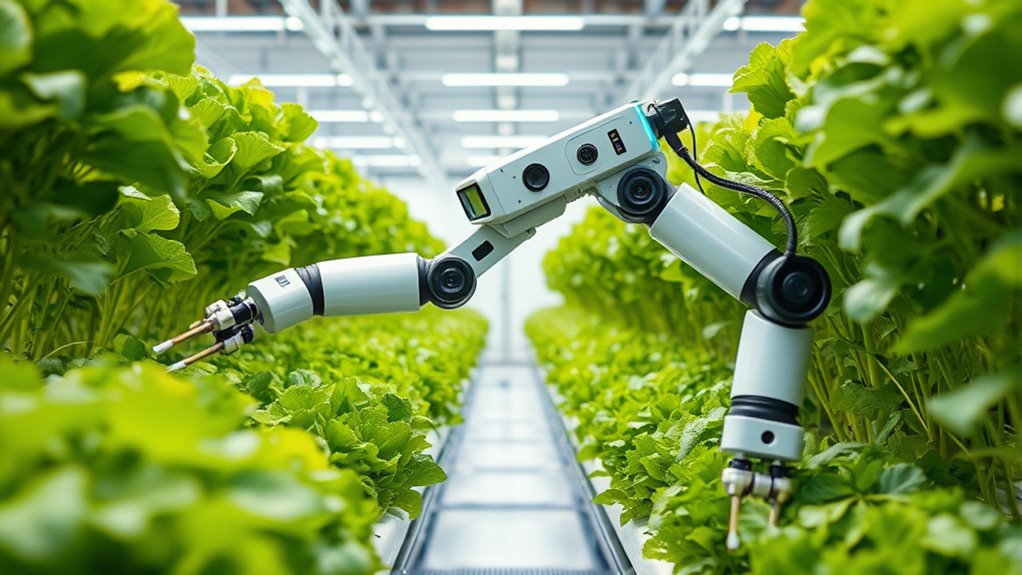
Robotic weeders and cultivators are transforming modern agriculture by making pest and crop management more precise and efficient. In controlled environments, like greenhouses or indoor farms, these machines excel at executing tasks with exceptional accuracy, enabling you to optimize yields and reduce chemical use. One of the key advantages is their ability to perform precision planting, ensuring seeds are sown at exact depths and spacing. This not only improves germination rates but also promotes uniform growth, which is vital in confined settings where space is limited. With robotic systems, you can program specific planting patterns, adjusting them on the fly based on real-time data, leading to more consistent crop production.
Autonomous navigation is at the core of these robotic tools, allowing them to operate seamlessly within controlled environments without constant human oversight. Using advanced sensors, cameras, and mapping technologies, the robots can detect obstacles, navigate narrow aisles, and adapt to changes in the environment. This capability is especially beneficial in indoor farms where space is constrained and precision is essential. You can set the robots to follow pre-defined routes or allow them to make real-time decisions, which minimizes disturbances and maximizes operational efficiency. As a result, you spend less time on manual labor and more on strategic planning or crop management.
Autonomous navigation enables precise, efficient operation within constrained controlled environments.
Furthermore, robotic weeders and cultivators in controlled environments are designed to target weeds with pinpoint accuracy. They can distinguish between crops and unwanted plants using machine learning algorithms, reducing the need for herbicides and manual removal. This selective approach prevents crop damage and promotes a healthier, more sustainable growing environment. The robots also perform soil cultivation tasks, such as aeration or bed preparation, with minimal disturbance to plant roots. Their ability to operate continuously and precisely means you can maintain ideal soil conditions, improving overall plant health and productivity. Additionally, these systems leverage precision technology to enhance operational accuracy and resource efficiency.
In addition, these robotic systems are equipped with data collection features that provide valuable insights into plant growth, soil conditions, and pest presence. You can monitor these parameters remotely, making informed decisions that enhance crop quality and yield. The integration of automation and data analytics helps you fine-tune your practices, ensuring resources like water, nutrients, and energy are used efficiently. Overall, robotic weeders and cultivators, with their emphasis on precision planting and autonomous navigation, are revolutionizing controlled environment agriculture by increasing accuracy, reducing labor costs, and fostering sustainable practices.
Frequently Asked Questions
What Are the Maintenance Costs for Robotic Weeders?
You can expect maintenance costs for robotic weeders to vary, with a typical cost breakdown including routine inspections, replacement parts, and software updates. Repair expenses may arise from sensor malfunctions or mechanical issues, which could be costly depending on the problem. On average, you might spend a few hundred dollars annually, but proactive maintenance can help reduce unexpected repair expenses and keep your robotic weeder running efficiently.
How Do Robotic Cultivators Handle Unexpected Obstacles?
Robotic cultivators handle unexpected obstacles through advanced sensor calibration and obstacle detection systems. When an obstacle appears, your robot quickly identifies it via sensors, recalibrates its path if needed, and navigates around it seamlessly. You should regularly check and update the sensor calibration to guarantee peak obstacle detection. This proactive approach helps prevent damage and keeps your cultivation process smooth and efficient, even in unpredictable environments.
Are Robotic Weeders Suitable for Organic Farming?
Yes, robotic weeders are suitable for organic farming, offering innovative organic weed control. Imagine reducing herbicide use while increasing efficiency—robotic farming benefits become clear. These machines precisely target weeds without damaging crops, making them ideal for organic methods. As you explore robotic weeders, you’ll discover how they help you maintain eco-friendly practices, improve yields, and stay ahead in sustainable agriculture. The future of organic weed control is here, and it’s robotic.
What Is the Energy Consumption of These Robots?
You’ll find that the energy consumption of these robots varies based on their design and power sources. They’re generally quite energy-efficient, utilizing rechargeable batteries or solar power to reduce overall energy use. By optimizing power sources and incorporating energy-efficient components, they minimize their environmental impact. This focus on energy efficiency helps confirm they operate effectively while conserving resources, making them a sustainable choice for controlled environment farming.
How Long Is the Typical Lifespan of a Robotic Cultivator?
A robotic cultivator typically lasts about 5 to 10 years, much like a reliable car that keeps rolling. You’ll find its durability depends on quality and maintenance, just like any high-tech machine. The component lifespan varies, but regular servicing extends its longevity. Keep the robot well-maintained, and it’ll serve you well through many growing seasons, ensuring your cultivation efforts stay efficient and productive over time.
Conclusion
As you explore the future of agriculture with robotic weeders and cultivators, one thing becomes clear: the potential is enormous. But what if these machines evolve beyond our expectations? Will they seamlessly integrate into every controlled environment, or will unforeseen challenges arise? The journey is just beginning, and the next breakthrough could change everything. Stay tuned—what’s coming next might surprise you, shaping the future of farming in ways you never imagined.