To implement virtual fencing for automated animal integration, you’ll need GPS collars or tracking devices on your livestock that define virtual boundaries. These systems respond to auditory or electronic cues to keep animals within designated areas, reducing the need for physical fences and manual supervision. Proper training helps animals respond predictably over time, leading to efficient grazing. If you explore further, you’ll discover how to optimize system design for smoother operation and better animal welfare.
Key Takeaways
- Select reliable GPS tracking devices compatible with livestock and virtual fencing systems.
- Train animals with consistent auditory or electronic cues to establish boundary awareness.
- Integrate real-time GPS data to monitor animal locations and detect behavioral changes.
- Adjust cue frequency and virtual boundary parameters based on animal response and grazing needs.
- Continuously evaluate system performance to optimize pasture use, animal welfare, and automation efficiency.
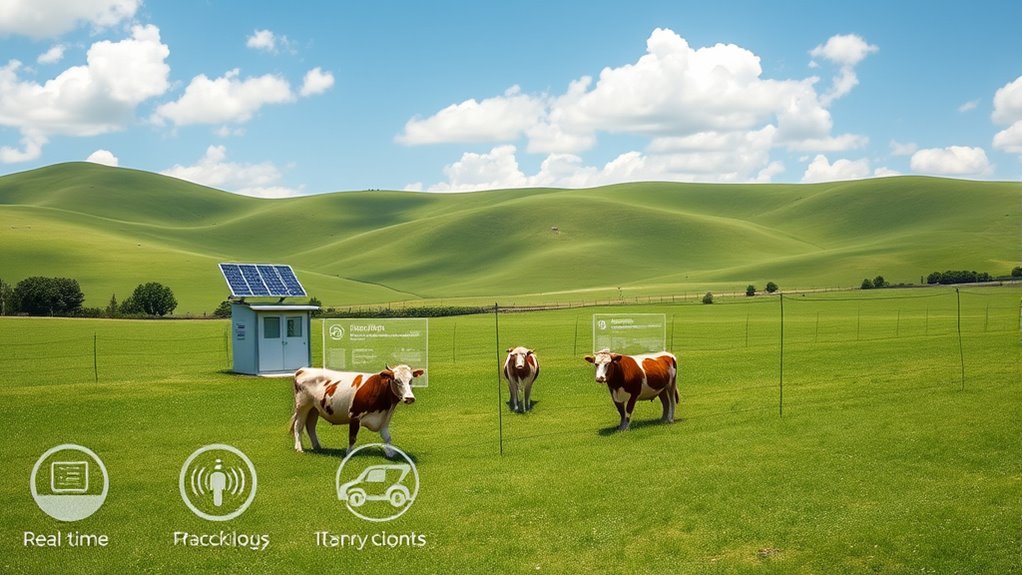
Virtual fencing is transforming how landowners manage their pastures and livestock by replacing traditional physical barriers with digital technology. Instead of relying on fences, you use GPS tracking devices to monitor your animals and define virtual boundaries. This technology allows you to control where your animals graze without the need for physical fencing, which can be costly and time-consuming to install and maintain. With GPS tracking, you can set precise zones that your livestock can access, giving you greater flexibility and control over grazing patterns. When animals approach these virtual boundaries, they receive auditory or electronic cues that encourage them to stay within designated areas. This method minimizes stress for the animals and reduces the risk of escape, making pasture management more efficient.
Virtual fencing replaces physical barriers with GPS technology, enabling flexible, stress-free pasture management for healthier livestock.
Understanding animal behavior is vital when implementing virtual fencing. Livestock naturally respond to cues, so you need to design your system to work with their instincts rather than against them. Properly trained animals quickly learn to associate certain sounds or signals with boundaries, enabling smooth transitions between grazing zones. You’ll want to observe how your animals respond to initial cues and adjust the system accordingly. Some animals might need more frequent cues initially, but as they learn, they’ll respond predictably, reducing the number of prompts needed over time. This behavior-based approach ensures that your livestock stay within safe areas while still allowing them the freedom to graze naturally.
Integrating GPS tracking with an understanding of animal behavior means you can optimize grazing management and improve animal welfare. You’ll receive real-time data on each animal’s location, enabling you to monitor movement patterns and intervene if necessary. This technology also helps you identify animals that might be exhibiting unusual behavior, such as wandering outside the designated zones, which could indicate health issues or stress. By analyzing these patterns, you can adapt your virtual fencing system to better suit your herd’s needs, creating a more sustainable and humane grazing environment. Additionally, using vetted technology ensures reliable performance and better compliance with safety standards.
Implementing virtual fencing isn’t just about technology; it’s about working with your animals’ natural tendencies. You’ll find that combining GPS tracking with behavioral insights allows for more precise control, less physical infrastructure, and a better overall management experience. As you become familiar with how your livestock respond to cues, you’ll be able to fine-tune the system for maximum efficiency. This innovative approach not only saves you time and money but also promotes healthier, happier animals grazing in a more flexible, controlled landscape.
Frequently Asked Questions
What Are the Costs Associated With Virtual Fencing Systems?
Virtual fencing systems typically cost between $1,000 and $3,000 per unit, depending on features and size. Your cost analysis should include initial setup, device costs, and installation fees. Maintenance expenses are usually low but include battery replacements and software updates. Keep in mind that ongoing costs may vary based on system complexity and usage frequency, so budgeting for these expenses guarantees smooth operation and long-term efficiency.
How Do Animals Adapt to Virtual Fencing Over Time?
Think of animals as quick learners, like sailors adjusting to shifting winds. Over time, they adapt to virtual fencing through learning adaptation, recognizing the boundary cues and behavioral changes. At first, they might hesitate or test the limits, but soon, they navigate confidently, respecting the virtual boundaries. This process transforms initial uncertainty into seamless movement, as animals internalize the signals and adjust their habits effortlessly.
Are There Specific Breeds That Respond Better to Virtual Fencing?
Some breeds respond better to virtual fencing because of breed responsiveness influenced by genetic factors. You’ll find that cattle breeds like Angus and Hereford adapt more quickly due to their trainability and temperament. Understanding these genetic traits helps you select animals that are more receptive, making the virtual fencing system more effective. By focusing on breed responsiveness, you can optimize your management practices and improve overall compliance with the virtual boundaries.
What Training Is Required for Farm Staff to Manage Virtual Fences?
A stitch in time saves nine, and proper staff training is essential for managing virtual fences. You’ll need to learn virtual fence maintenance, including troubleshooting system issues and updating software. Staff should also understand animal behavior and safety protocols. Training sessions, hands-on demos, and documentation help guarantee your team confidently manages the system, minimizing errors and maximizing the fence’s effectiveness. Proper preparation keeps your operation running smoothly.
How Does Virtual Fencing Impact Animal Welfare and Behavior?
You’ll find that virtual fencing can positively impact animal welfare by reducing stress associated with physical barriers. Ethical considerations emphasize humane treatment, and behavioral modifications often include natural grazing patterns. However, it’s essential to monitor animals closely, ensuring they adapt comfortably. When managed well, virtual fencing supports healthier, less confined animals, aligning with ethical standards while promoting natural behaviors and minimizing discomfort or behavioral issues.
Conclusion
As you weave virtual fencing into your system, you’re planting seeds for a future where animals roam freely yet stay safely within boundaries. This technology acts like an invisible tether, guiding your herd like a gentle hand in the dark. With innovation as your compass, you’ll cultivate harmony between nature and automation, transforming pastures into limitless landscapes. Embrace this digital frontier, and watch your farm blossom into a sanctuary of smart, seamless coexistence.