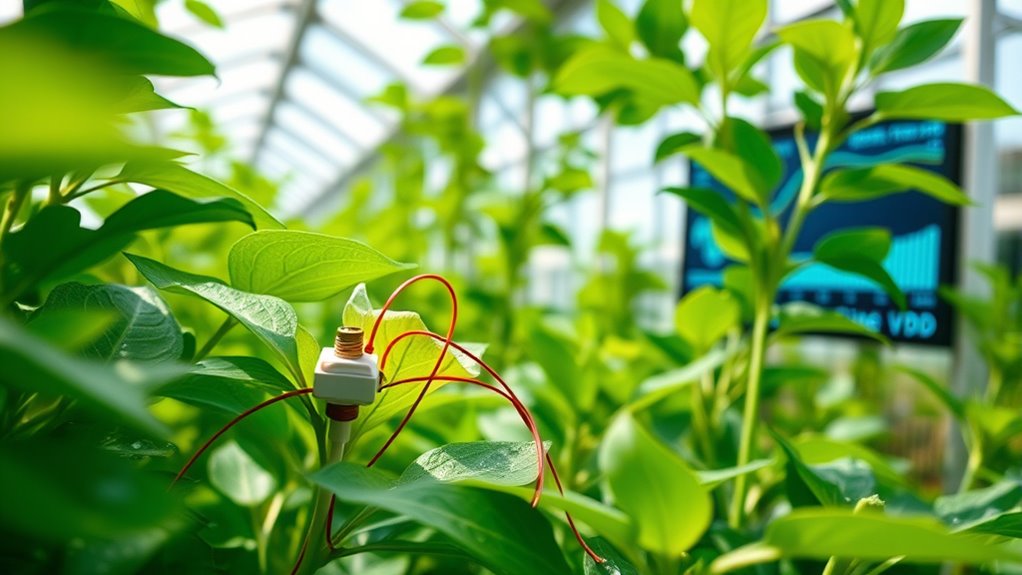
Using sensors to manage VPD in greenhouses helps you maintain ideal humidity and temperature levels for healthy plant growth. By calibrating these sensors regularly, you guarantee accurate data collection, which is essential for making precise adjustments. Integrating data from multiple sensors gives you a complete picture of your environment, allowing automated controls that stabilize conditions. Continuing to explore these practices can help you refine your greenhouse for better yields and healthier crops.
Key Takeaways
- Sensors provide real-time temperature and humidity data critical for accurate VPD calculation.
- Regular sensor calibration ensures measurement accuracy and reliable VPD management.
- Data integration from multiple sensors creates a comprehensive environmental overview for better control.
- Automated adjustments based on sensor data maintain optimal VPD, promoting healthy plant growth.
- Continual monitoring and data analysis help fine-tune environmental conditions, enhancing crop yield and quality.
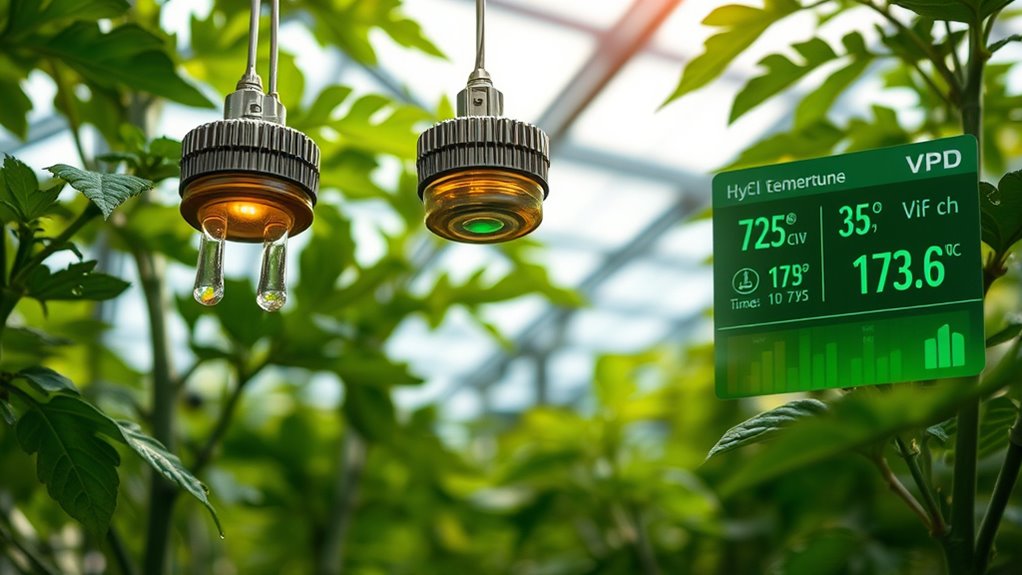
Managing vapor pressure deficit (VPD) efficiently is essential for healthy plant growth in greenhouses, and sensors have become invaluable tools for this purpose. When you use sensors to monitor environmental conditions, you gain real-time insights into temperature and humidity levels, which directly influence VPD. However, to guarantee these readings are accurate and reliable, proper sensor calibration is crucial. Regular calibration involves comparing sensor outputs against known reference standards and adjusting their settings as needed. This process minimizes measurement errors caused by sensor drift or environmental factors, ensuring that the data you collect truly reflects the greenhouse conditions. Accurate calibration forms the foundation for effective VPD management, preventing issues like over- or under-watering, which can stress plants or hinder growth.
Once your sensors are properly calibrated, integrating their data into your greenhouse management system becomes the next essential step. Data integration allows you to combine information from multiple sensors, creating a comprehensive picture of the environment. By centralizing data streams, you can monitor temperature, humidity, and VPD simultaneously, making it easier to identify patterns and respond promptly to fluctuations. Advanced data integration platforms often enable automated adjustments, such as activating humidifiers or ventilation systems, based on real-time sensor inputs. This dynamic approach helps you maintain optimal VPD levels consistently, fostering healthier plants and more efficient resource use.
Additionally, effective data integration supports historical analysis, allowing you to track trends over time. When you review this data regularly, you can fine-tune your environmental controls, set more precise thresholds, and anticipate potential issues before they impact plant health. Combining sensor calibration with robust data integration creates a feedback loop—accurate measurements inform better decision-making, leading to more stable and controlled greenhouse conditions. This synergy reduces manual interventions, saves time, and enhances overall crop productivity. Incorporating sensor calibration as part of your routine ensures measurement accuracy is maintained over time, which is crucial for long-term success.
In practice, managing VPD with sensors involves a continuous cycle: calibrate sensors regularly, integrate their data seamlessly, and adjust environmental controls based on the insights gained. This proactive approach ensures that your plants experience a stable, optimal environment, promoting vigorous growth and high yields. By paying attention to calibration and data integration, you can leverage sensor technology to optimize VPD management effectively, reducing the risks associated with fluctuating humidity and temperature. Ultimately, this leads to healthier plants, improved crop quality, and more efficient greenhouse operations.
Frequently Asked Questions
How Do Sensor Calibration Errors Affect VPD Readings?
Sensor calibration errors can considerably impact your VPD readings, leading to inaccurate humidity and temperature data. If your sensors experience drift over time, your measurements become unreliable, causing you to make incorrect adjustments. Regular calibration frequency helps catch drift early, ensuring accurate readings. Without proper calibration, you risk mismanaging environmental conditions, which can harm plant health. Keep a consistent calibration schedule to maintain trustworthy data and optimize your greenhouse environment.
What Are the Best Sensor Types for Greenhouse VPD Monitoring?
You should choose humidity and temperature sensors like capacitive or resistive types for greenhouse VPD monitoring. Proper sensor placement is crucial—position them where airflow and environmental conditions are stable. Data integration with your control system guarantees real-time accuracy, but beware—poor placement or incompatible sensors can mislead your decisions. Trust reliable, well-placed sensors, and your VPD management becomes precise, enabling healthier plants and higher yields.
Can Sensors Detect Rapid Changes in Environmental Conditions Accurately?
Yes, sensors can detect rapid changes in environmental conditions accurately if they have a fast response time. You should choose sensors with high sensitivity and quick sensor response to environmental fluctuations, ensuring real-time data collection. Proper calibration and placement also help improve detection precision. This way, you can respond promptly to changes, maintaining ideal VPD levels and creating a stable environment for your plants.
How Often Should Sensor Maintenance Be Performed?
You might think sensors last forever, but in reality, regular maintenance is key. You should check sensors every 3 to 6 months to guarantee accurate readings, optimizing your maintenance scheduling. Ignoring this can shorten sensor lifespan and cause costly errors. Keep a routine, clean them properly, and recalibrate as needed—because neglecting maintenance isn’t just ironic, it’s a surefire way to compromise your greenhouse environment.
Are There Cost-Effective Sensor Options for Small-Scale Greenhouses?
Yes, you can find affordable sensor options for small-scale greenhouses. Look for basic humidity and temperature sensors that offer reliable data without breaking the bank. Conduct a sensor cost analysis to compare prices and features, ensuring you get the best value. Brands like SensorPush or Inkbird provide cost-effective solutions. Investing in these sensors helps you optimize VPD management, improving plant health while keeping expenses manageable.
Conclusion
By using sensors to monitor VPD, you can optimize your greenhouse conditions and boost plant health. Imagine a grower who notices humidity fluctuations; with real-time data, they adjust ventilation and watering, preventing stress and disease. This proactive approach guarantees healthier plants and higher yields. Embrace sensor technology today, and transform your greenhouse management into a precise, efficient system that keeps your plants thriving regardless of changing weather conditions.