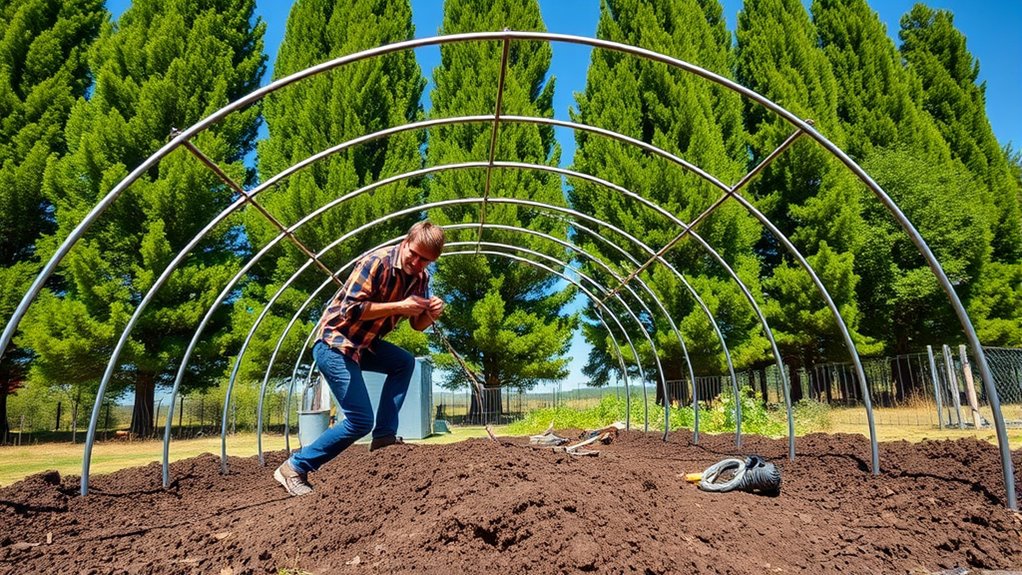

To build a hoop house from scratch, start by designing a sturdy frame with long, durable pipes like PVC or metal, ensuring a gentle arch for stability. Secure the frame into the ground with stakes or anchors, then drape heavy-duty plastic sheeting over it, sealing edges tightly with clips or weights. Add ventilation options and door flaps to control climate, and inspect regularly to keep pests out. Keep exploring for detailed steps to create an effective, long-lasting hoop house.

Get garden gear delivered free with Prime
- Fast, free delivery on millions of items
- Prime Video, Amazon Music and more included
- Member-only deals all year
Key Takeaways
- Measure and plan your garden space to determine the appropriate size and shape for the hoop house frame.
- Construct the frame using long, sturdy metal or PVC pipes shaped into gentle arches for stability.
- Secure the frame to the ground with stakes or anchors to withstand wind and environmental stresses.
- Drape durable plastic sheeting over the frame, ensuring it is taut and sealed with clips or weights to prevent sagging.
- Incorporate ventilation options like small doors or vents to maintain proper airflow and temperature control inside the hoop house.

Have you ever wondered how to extend your growing season and protect your plants from harsh weather? Building a hoop house from scratch is an excellent way to do just that. It allows you to create a controlled environment that keeps your plants safe from cold temperatures, wind, and heavy rain. Plus, it’s a manageable project that can be tailored to fit your garden space and needs. When you focus on season extension, you’re giving your plants a longer window to grow, harvest, and thrive. This means you can start planting earlier in spring and continue harvesting well into fall or even winter. A key benefit is that a hoop house acts as a barrier against pests, reducing the need for chemical pest control. By controlling the environment, you minimize pest intrusion, making it easier to keep your plants healthy and productive.
To begin, gather your materials—long, sturdy metal or PVC pipes for the frame, durable plastic sheeting for the cover, and sturdy stakes or anchors to secure everything in place. Measure your garden area carefully, then cut your pipes to the desired length. You’ll want a gentle arch for your hoop house, so plan your measurements accordingly. Once the frame is assembled, secure it into the ground using stakes or anchors, ensuring it’s stable and resistant to strong winds. Drape the plastic sheeting over the frame, making sure it’s taut to prevent sagging and water pooling. Use clips or clips and weights to hold the plastic securely in place, sealing the edges well to maintain temperature and humidity levels inside. Additionally, understanding remote work productivity strategies can help you efficiently manage your gardening schedule alongside other responsibilities.
When it comes to season extension, think about adding a small door or flap to access your plants easily while maintaining the internal climate. Ventilation is also crucial; you can create small vents or leave gaps that can be opened during warmer days to prevent overheating. This way, you keep the environment suitable for plant growth and reduce the risk of mold or mildew. As for pest control, a well-sealed hoop house acts as a physical barrier, keeping out insects and larger pests. You can further protect your crops by installing insect netting or screening around ventilation points. Regularly inspecting your structure ensures it remains secure and effective. With proper setup, your homemade hoop house becomes a reliable tool for extending your growing season, boosting your harvest, and reducing pest problems, all while giving you greater control over your garden’s environment.
As an affiliate, we earn on qualifying purchases.
Frequently Asked Questions
What Materials Are Best for Hoop House Framing?
You should choose sturdy, lightweight hoop house materials for framing options, like galvanized steel or PVC pipes. Galvanized steel offers durability and strength, perfect for long-term use, while PVC pipes are affordable and easy to work with, ideal for smaller or temporary structures. Both options are widely used as hoop house framing materials, providing the necessary support and flexibility to create a successful greenhouse environment.
How Do I Ensure Proper Ventilation Inside the Hoop House?
Think of proper ventilation like a gentle breeze that keeps things fresh. You should install adjustable vents at both the peak and sides of your hoop house to promote good air circulation. Use ventilation systems like exhaust fans or passive vents to control humidity and temperature. Regularly open vents during warm days, ensuring fresh air flows in and stale air escapes, keeping your plants healthy and thriving inside.
What Is the Ideal Location for Building a Hoop House?
You should choose a location with excellent soil drainage and maximum sunlight exposure. Look for a spot on your property that slopes slightly to avoid water pooling and guarantee the soil isn’t too compacted. Aim for an area that receives full sun for most of the day, which helps your plants thrive. Avoid shaded or low-lying areas prone to flooding, as these conditions can hinder plant growth inside your hoop house.
How Do I Protect the Hoop House From Wind Damage?
To safeguard your hoop house from wind damage, you should install wind braces on the sides to provide stability. Use anchoring techniques like stakes or concrete footings to secure the structure firmly into the ground. Regularly check and tighten these anchors, especially after storms. Proper reinforcement with wind braces and reliable anchoring techniques ensures your hoop house withstands strong gusts and keeps your plants safe.
What Are the Common Mistakes to Avoid During Construction?
You should avoid common mistakes like neglecting proper foundation issues and poor material selection. Guarantee your foundation is solid and level to prevent future structural problems. Choose durable, weather-resistant materials suited for your climate to maximize longevity. Don’t rush the construction process or skip planning for ventilation and anchoring. Paying attention to these details helps your hoop house withstand weather challenges and lasts longer, saving you time and money.
Conclusion
Now that you’ve built your hoop house from scratch, you’re ready to nurture your plants and enjoy fresh harvests all year round. Remember, this isn’t just a structure — it’s your personal Eden, a proof to your hard work and vision. As you step inside, think of the pioneers who paved the way for innovation, and cherish this modern miracle you’ve created. With patience and care, your garden will flourish, proving that dreams really do grow under your own roof.
Fall yard work Picks
leaf blowers
As an affiliate, we earn on qualifying purchases.