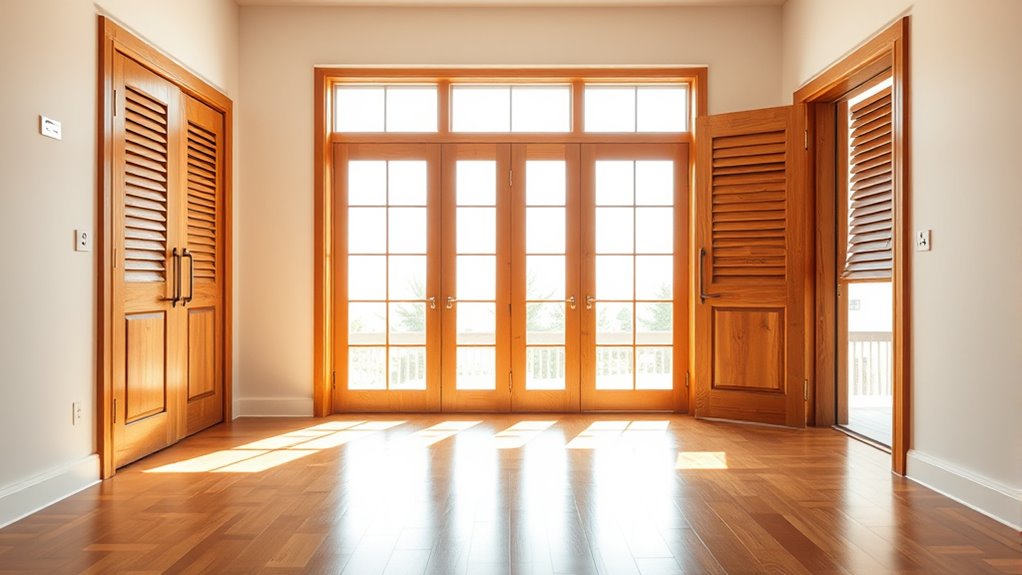

Adding doors and ventilation windows can considerably improve your space by enhancing airflow, natural light, and accessibility. Proper installation ensures they fit well, seal tightly, and prevent drafts or leaks. Different window types, like casement or sliding, offer various advantages for ventilation and style. Focus on detail during setup to boost energy efficiency and create a more inviting atmosphere. Keep exploring to discover tips on selecting the best options for your needs.
Key Takeaways
- Properly measure and select quality materials for door frame installation to ensure a seamless fit and long-lasting performance.
- Choose the appropriate ventilation window type—fixed, casement, awning, or sliding—based on airflow, light, and aesthetic needs.
- Ensure precise framing and sealing during installation to enhance energy efficiency and prevent drafts or leaks.
- Strategically place doors and ventilation windows to optimize natural light, airflow, and accessibility within the space.
- Consulting professionals can help determine the best window and door options for your climate, layout, and style preferences.
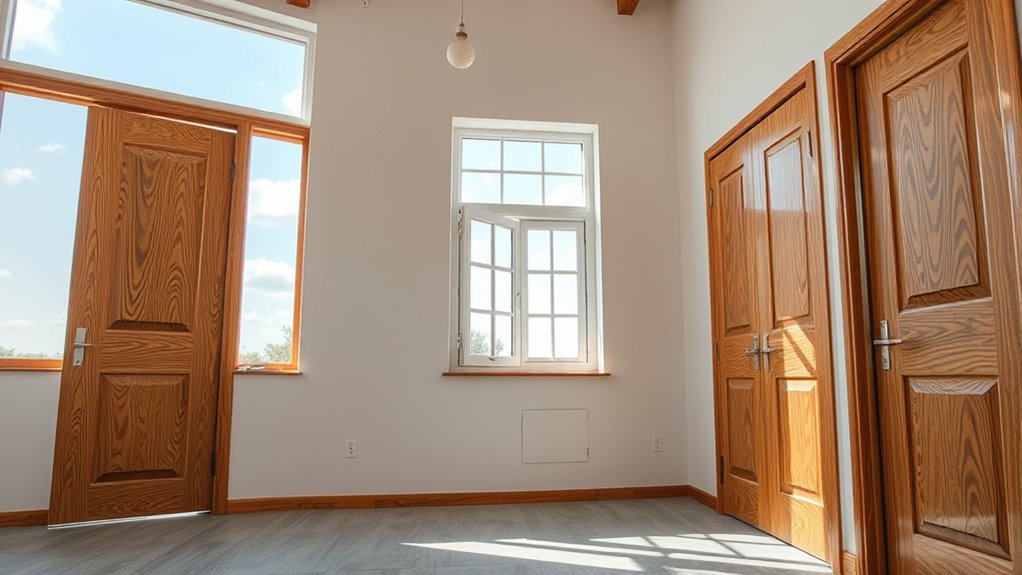
Are you looking to improve airflow and accessibility in your space? Adding doors and ventilation windows is a smart way to achieve better ventilation, enhance natural light, and make your environment more comfortable. When you’re considering these upgrades, start with a clear plan for door frame installation. Properly installing the door frame is vital because it ensures the door fits seamlessly, operates smoothly, and provides a secure seal. Measure carefully, and choose quality materials that match your interior or exterior style. Whether you’re installing a new door or replacing an old one, attention to detail during door frame installation can prevent future issues like drafts or misalignment.
Start with a precise door frame installation for seamless fit and long-lasting performance.
As for ventilation windows, understanding the different ventilation window types can help you select the best option for your needs. Fixed windows are great if you want to maximize light but don’t need airflow. However, if you’re aiming to improve ventilation, consider operable window types like casement, awning, or sliding windows. Casement windows swing open outward, allowing for full airflow, and are easy to operate with a crank handle. Awning windows hinge at the top and open outward, which is excellent for rainy climates since they can stay open without letting water inside. Sliding windows move horizontally and are simple to operate, making them an efficient choice for larger openings. Each ventilation window type offers specific benefits depending on your space’s layout and your ventilation goals.
When installing ventilation windows, guarantee the framing is precise to prevent air leaks and ensure smooth operation. Proper sealing around the window frame is essential to maximize energy efficiency and prevent drafts. Additionally, consider the placement of these windows to optimize airflow and natural light. Positioning them strategically can help cross-ventilate your space and reduce reliance on artificial cooling systems. If you’re unsure about which ventilation window type suits your needs, consult with a professional to evaluate your space, climate, and aesthetic preferences. Ensuring proper installation techniques makes a difference in their performance, durability, and your overall satisfaction.
Ultimately, adding doors and ventilation windows isn’t just about function; it’s about creating a space that feels open, fresh, and comfortable. From selecting the right window types to ensuring flawless door frame installation, every step matters. By paying attention to details and making informed choices, you can improve your space’s airflow, accessibility, and aesthetic appeal for years to come.
Frequently Asked Questions
What Materials Are Best for Durable Doors and Ventilation Windows?
For durable doors and ventilation windows, you should choose materials like steel, aluminum, or fiberglass. These options excel in durability factors such as strength, corrosion resistance, and low maintenance. Steel offers high security and longevity, while aluminum is lightweight and weather-resistant. Fiberglass combines durability with insulation benefits. Your material selection should prioritize these durability factors to guarantee your doors and windows withstand daily wear and environmental conditions effectively.
How Do I Ensure Proper Insulation With New Doors and Vents?
To guarantee proper insulation with your new doors and vents, you should focus on sealing gaps around the frames with weatherstripping or caulk. Additionally, choose doors and vents with insulating frames to prevent heat loss. Regularly check and maintain these seals, especially after installation, to keep drafts out and improve energy efficiency. Proper sealing and insulating frames make a significant difference in maintaining indoor temperature and reducing energy costs.
Are There Safety Considerations for Installing Ventilation Windows?
Sure, ventilation windows are great for airflow, but don’t forget fire safety and security concerns. You want to make sure they’re installed with secure locks and safety screens, or you might be unintentionally inviting trouble. Ironically, the very feature meant to improve comfort could become a security risk or fire hazard if overlooked. Always check local codes and consider safety precautions to keep your home both ventilated and protected.
Can I Install Doors and Vents Myself or Need Professional Help?
You can attempt DIY installation of doors and vents if you’re confident in your skills and have the right tools. However, for safety, proper sealing, and code compliance, it’s often best to seek professional assistance. Professionals ensure the work is done properly, reducing risks like air leaks or structural issues. If you’re unsure or new to such projects, hiring experts saves time and guarantees a safe, effective installation.
What Are the Best Locations for Ventilation Windows in a Building?
Imagine your building as a living organism, needing perfect airflow to thrive. You should place ventilation windows across from each other, ideally near the roofline and at the opposite ends of rooms, to optimize airflow. Focus on window placement where it catches prevailing breezes, such as facing prevailing winds or shaded areas, to boost natural ventilation. Proper placement enhances airflow optimization, keeps your space fresh, and reduces reliance on mechanical cooling.
Conclusion
Adding doors and ventilation windows can greatly improve your home’s comfort and airflow. You might worry about the cost or disruption, but the benefits outweigh these concerns. With proper planning, the installation process is smooth, and you’ll soon enjoy better air quality and easier access. Don’t let hesitation hold you back—embrace these upgrades to create a more comfortable, healthier living space for you and your family.