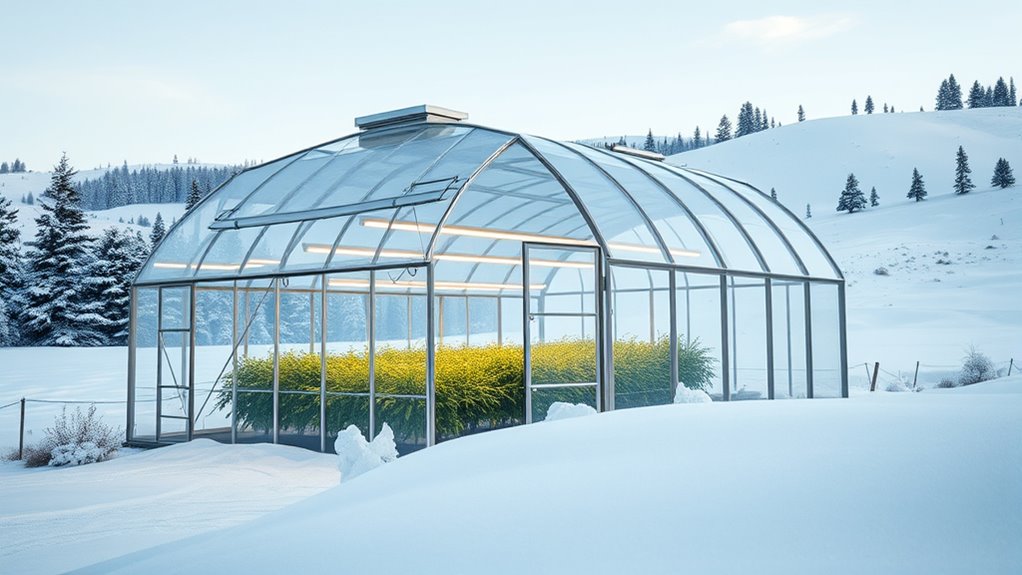
To build a greenhouse for extreme winter conditions, you need to focus on strong insulation, such as double-layered glazing or insulated panels, and reinforce the structure to support heavy snow loads. Install reliable heating systems like electric or hydronic heaters, and incorporate thermal mass and passive solar design to retain warmth. Seal all gaps and add weatherstripping to minimize heat loss. For more detailed tips, keep exploring how to create a durable, efficient winter-proof greenhouse.
Key Takeaways
- Insulate with double-glazed panels, seal all gaps, and insulate the foundation to minimize heat loss.
- Use reliable heating systems like electric, propane, or hydronic heaters with thermostats for consistent warmth.
- Reinforce the roof and walls to support heavy snow loads and prevent structural damage.
- Maximize passive solar gain with south-facing windows and incorporate thermal mass for temperature stability.
- Regularly clear snow from the roof and maintain environmental controls to ensure durability and optimal conditions.

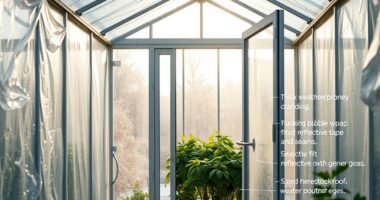
When winter brings extreme cold and heavy snowfall, building a greenhouse that can withstand these conditions is indispensable for year-round gardening. You need to focus on effective insulation techniques to keep the interior warm and prevent heat loss. Thick, insulated panels or double-layered glazing can create a barrier against the freezing temperatures outside. Using materials like polycarbonate or tempered glass with insulating properties enhances thermal retention. Additionally, sealing all gaps, vents, and joints is essential to prevent drafts that could sap heat from inside. Weatherstripping around doors and windows further minimizes heat escape, ensuring your greenhouse stays warm even during the coldest days.
Along with insulation techniques, installing a reliable heating system is critical. You have several options, each suited to different budgets and needs. Electric heaters are straightforward and easy to control, providing consistent warmth. Propane or natural gas heaters can offer higher heat outputs, especially for larger greenhouses, but require proper ventilation and safety precautions. For sustainable heating, consider integrating a hot water or hydronic system, which uses heated water circulated through pipes to evenly distribute warmth across the space. Combining these systems with thermostats allows you to maintain a stable temperature, preventing the interior from becoming too cold or overheating.
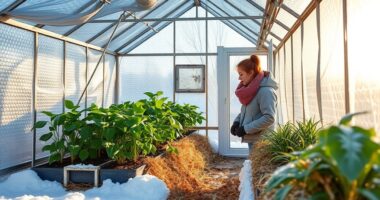
Installing a reliable heating system with thermostats ensures a stable, warm environment during harsh winter conditions.
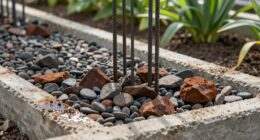
To maximize efficiency, insulate the foundation and floor as well. Use foam boards or insulated mats beneath raised beds or along the perimeter to reduce heat loss through the ground. Reflective insulation on the ceiling can bounce heat back into the growing area, further boosting warmth. When snow accumulates outside, ensure the structure’s roof and walls are reinforced to support the weight without sagging or damage, preventing cold spots caused by compromised integrity. Incorporating thermal mass such as water barrels or stone can also help stabilize temperature fluctuations during extended cold periods.
You should also consider passive solar heating techniques to supplement your active systems. Positioning your greenhouse to maximize sunlight exposure, especially during the winter months, helps naturally raise the temperature inside. Installing large south-facing windows or adding thermal mass elements like water barrels or stone can absorb and slowly release heat throughout the day and night, reducing your reliance on active heating systems.
Frequently Asked Questions
What Are the Most Cost-Effective Insulation Options for Winter Greenhouses?
You should consider using bubble wrap or polyethylene film as insulation materials, as they’re among the most cost-effective options. Bubble wrap provides excellent thermal insulation at a low price, making it ideal for winter greenhouses. When doing a cost comparison, these materials are affordable and easy to install, helping you save money while maintaining warmth. They’re perfect for protecting your plants during harsh winter conditions without breaking the bank.
How Can I Prevent Ice Buildup Inside the Greenhouse?
To prevent ice buildup inside your greenhouse, you should improve drainage solutions to prevent excess water, which can freeze and cause ice. Additionally, choose frost-resistant plants that tolerate cold, reducing the need for excessive heating and moisture. Ventilate properly to limit humidity and condensation. Regularly remove any ice or snow buildup on the structure, and consider installing heating mats or dehumidifiers to maintain a consistent, warmer environment.
What Heating Systems Are Safest for Extreme Cold Conditions?
You should consider electric heating for safety and reliability, especially in extreme cold. Pair it with solar warming to maximize energy efficiency and reduce costs. Electric heaters are easy to control and pose minimal fire risk when properly maintained. Solar warming helps naturally maintain stable temperatures, reducing your dependence on electric power. This combination creates a safer, more sustainable heating system suited for harsh winter conditions.
How Do I Ensure Proper Ventilation Without Losing Heat?
You can guarantee proper ventilation without losing heat by using ventilation strategies like adjustable vents and exhaust fans with thermostatic controls. Incorporate heat retention techniques such as insulating panels and thermal curtains to minimize heat loss. Additionally, consider passive ventilation methods like ridge vents, which allow airflow while keeping warm air inside. By balancing airflow and insulation, you’ll maintain a healthy environment for your plants without compromising warmth.
What Materials Withstand Heavy Snow Loads Best?
You should opt for heavy-duty materials like tempered glass or polycarbonate panels, which withstand heavy snow loads better than traditional glass. Guarantee your greenhouse has a strong, reinforced frame, and incorporate proper water drainage systems to prevent snow accumulation. Consider installing solar panels on the roof to generate power efficiently, but make sure they are angled correctly to shed snow and allow water runoff, keeping your greenhouse safe and functional during winter storms.
Conclusion
Now that you know how to build a greenhouse for extreme winter conditions, you’re ready to turn your garden into a fortress of warmth. With careful planning and sturdy materials, you’ll create a haven that can brave even the harshest storms. Think of your greenhouse as a cozy cocoon, protecting your plants from winter’s icy grip. Embrace the challenge, and watch your garden flourish despite the cold, like a flame that refuses to be snuffed out.