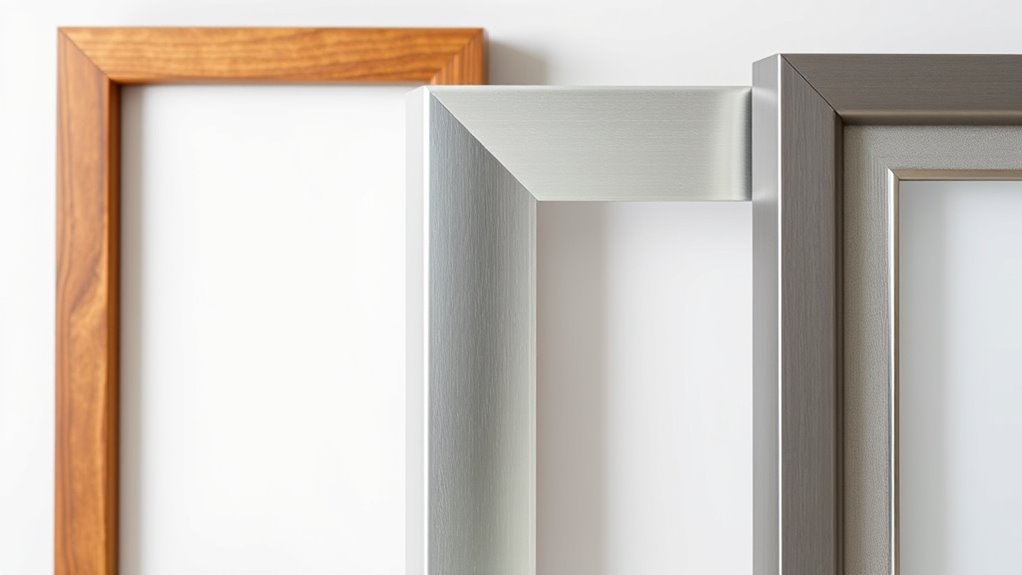

When choosing between wood, aluminum, and steel frames, think about your style, lifestyle, and durability needs. Wood offers a natural look and eco-friendly appeal but requires regular care. Aluminum is lightweight, affordable, and modern, making it great for everyday wear. Steel provides strength and long-lasting durability, perfect if you’re active. Consider what matters most—style, cost, or resilience—as understanding these differences helps you pick the best fit for you. Keep exploring to find out which material suits your needs best.
Key Takeaways
- Consider durability: steel offers high resilience, aluminum is lightweight and strong, while wood requires maintenance but provides a natural look.
- Budget matters: wood tends to be more expensive, aluminum is affordable, and steel offers a mid-range option with good longevity.
- Style preference: wood frames provide a natural, eco-friendly aesthetic; aluminum gives a modern, minimalist appearance; steel offers a classic, sturdy look.
- Lifestyle compatibility: steel and aluminum suit active or demanding environments; wood suits those prioritizing style and willing to care for their frames.
- Long-term use: steel and aluminum are durable for everyday wear; wood frames are stylish but may need more upkeep over time.
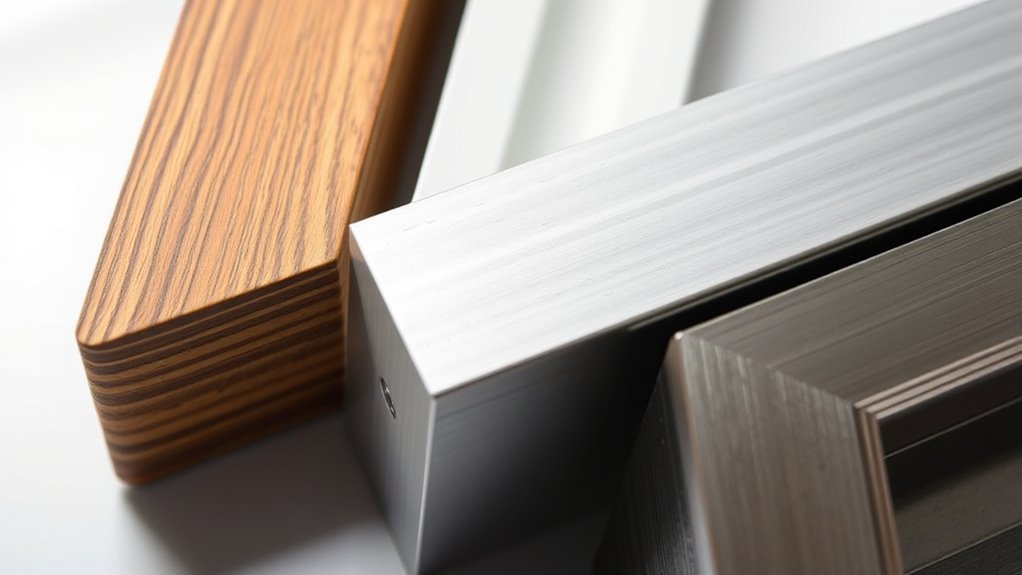
When selecting the right frame material for your glasses or eyewear, understanding the key differences can help you make an informed decision that suits your lifestyle and style preferences. One of the most important factors to weigh is frame durability. Wood frames, for example, offer a unique aesthetic and are reasonably durable if properly maintained, but they can be more prone to cracking or warping over time, especially if exposed to moisture or extreme temperature changes. Aluminum frames are lightweight yet strong, making them resistant to bending or breaking, which translates into excellent durability for everyday use. Steel frames, on the other hand, tend to be the most resilient, known for their strength and longevity, often lasting for years without significant wear. They’re less likely to deform under pressure, making them a solid choice if you need a sturdy, long-lasting option.
Cost considerations also play a crucial role in your decision. Generally, wood frames tend to be more expensive because of their craftsmanship and the natural material’s aesthetic appeal. They often require more meticulous manufacturing processes, which can add to their cost. Aluminum frames are typically more affordable than wood, offering a good balance of durability and cost-effectiveness. Steel frames usually fall into a mid-range price point, providing durability at a reasonable price. However, premium steel frames with special finishes or designer branding can sometimes push the cost higher. When comparing these options, think about how much you’re willing to invest upfront and how long you expect your frames to last. If you’re looking for something with a unique look and aren’t as concerned about minor scratches or dents, wood might be worth the extra investment. If you want lightweight comfort and durability at a moderate cost, aluminum could be the best fit. For those prioritizing strength and long-term wear, steel frames provide excellent value despite a slightly higher initial price.
Ultimately, balancing frame durability and cost considerations helps you choose a material that not only looks great but also stands up to your daily routine. If you lead an active lifestyle or work in environments where your glasses might take a beating, opting for steel or aluminum makes sense. On the other hand, if you’re after a distinctive style and don’t mind taking extra care of your frames, wood offers a unique, eco-friendly option. By understanding these key differences, you can select a frame material that aligns with your needs, budget, and personal style, ensuring your eyewear remains comfortable, durable, and stylish for years to come.
Frequently Asked Questions
Which Frame Material Is Most Eco-Friendly?
You’ll find wood to be the most eco-friendly frame material because of its sustainable sourcing and natural renewability. It has recyclability advantages, especially when sourced responsibly, reducing environmental impact. Aluminum is also recyclable, but its production consumes more energy. Steel, while durable, can be less sustainable due to resource extraction. Overall, choosing responsibly sourced wood helps minimize your ecological footprint and supports sustainable practices.
How Does Frame Material Affect Maintenance Requirements?
Your choice of frame material considerably impacts maintenance needs. Aluminum frames require less upkeep because they resist corrosion and maintain paint durability better over time. Steel frames, especially if untreated, can rust, leading to increased maintenance to prevent corrosion. Wooden frames need regular painting or sealing to preserve paint durability and prevent rot. Overall, aluminum offers the lowest maintenance, while steel and wood demand more frequent attention to maintain their appearance and integrity.
Are There Specific Climate Conditions Suited for Each Material?
You should consider climate suitability and environmental resilience when choosing your frame material. Wood works well in dry, moderate climates but can warp or rot in humid or rainy conditions. Aluminum offers excellent corrosion resistance, making it ideal for coastal or humid environments. Steel provides strength and durability but may require protective coatings in wet or salty conditions. Match each material’s environmental resilience to your local climate for the best long-term performance.
Can Different Frame Materials Be Combined in One Design?
Yes, you can combine different frame materials in a mixed material design, and it often enhances aesthetic versatility. By blending wood, aluminum, and steel, you create a unique look that balances strength, warmth, and modern appeal. This approach allows you to tailor your design to specific climate conditions and functional needs while achieving a striking visual contrast. Experimenting with mixed materials can truly elevate your project’s overall style and durability.
How Do Cost Differences Impact Long-Term Durability?
Cost differences markedly impact long-term durability, as cheaper materials may seem cost-efficient initially but often require more maintenance or replacement later. You might save money upfront, but durability trade-offs could lead to higher expenses over time. Aluminum offers a good balance of cost efficiency and durability, while steel provides strength but can be more costly and prone to corrosion. Consider your long-term needs to make the best choice for lasting quality.
Conclusion
Ultimately, selecting the right frame material is like choosing the perfect foundation for a house—you want durability, style, and reliability. I once saw a friend’s aluminum bike withstand rough trails while a steel one struggled, proving the importance of knowing your needs. Remember, your choice impacts comfort and longevity, so consider how each material aligns with your riding style. Make an informed decision, and you’ll enjoy the ride for miles to come.