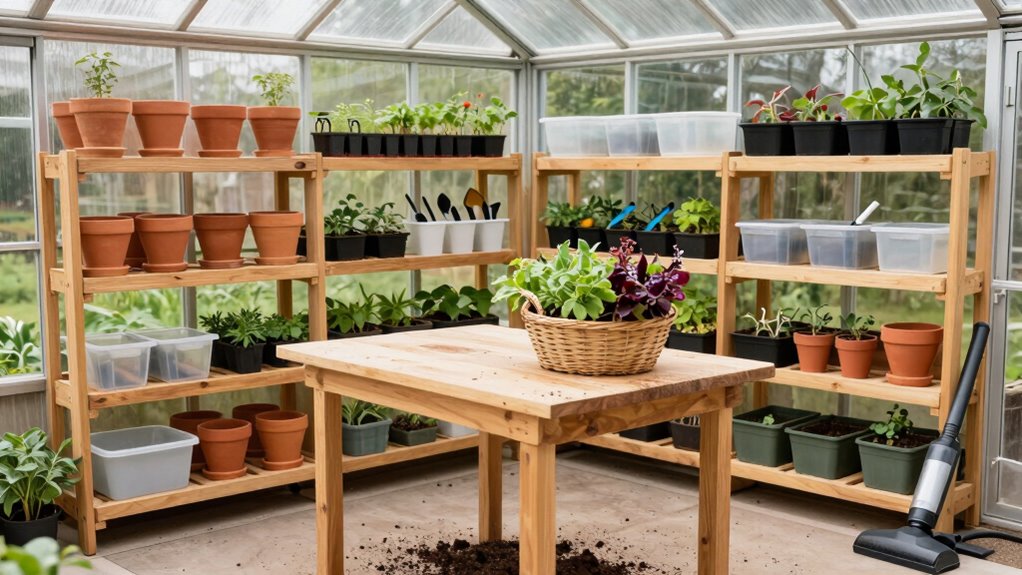

To keep your greenhouse potting zone cleaner longer, select well-draining, organic-rich soil and use containers with drainage features. Organize tools and supplies on a sturdy, waterproof surface, and add a drop cloth or mat to catch spills. Regularly clean tools and wipe down work areas to prevent buildup. Design your space for easy access and maintenance, and incorporate mulches or surface covers to reduce soil splashes. Keep your workspace tidy with these tips to maintain cleanliness and efficiency. If you keep these ideas in mind, you’ll find it easier to maintain a pristine potting zone.

Get garden gear delivered free with Prime
- Fast, free delivery on millions of items
- Prime Video, Amazon Music and more included
- Member-only deals all year
Key Takeaways
- Use a sturdy, waterproof work surface with protective mats to contain spills and facilitate easy cleaning.
- Choose containers with proper drainage and uniform sizes for easier handling and reduced soil spillage.
- Keep tools organized in designated storage to minimize clutter and prevent dirt transfer.
- Incorporate mulch or surface covers to prevent soil splash during watering and maintain cleanliness.
- Develop a regular cleaning routine, including rinsing tools and wiping down surfaces, to prolong cleanliness.

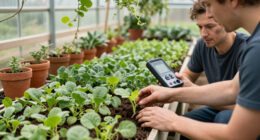
Creating a dedicated greenhouse potting zone can markedly improve your gardening efficiency and organization. When you set up a specific space for potting, you reduce mess, save time, and make the entire process more enjoyable. To start, focus on soil preparation, which is fundamental for successful planting and minimizing cleanup. Use high-quality, well-draining soil tailored for container gardening. You want a mix that retains moisture but also drains excess water effectively to prevent root rot and soil spillage. Incorporate compost or organic matter to enrich the soil, ensuring your plants get the nutrients they need. Preparing the soil properly means less loose material spilling onto your work surface, keeping your zone cleaner longer. Consider the importance of soil drainage, which helps prevent water accumulation and keeps your workspace dry. Additionally, choosing soil with optimal moisture retention properties can further reduce the frequency of spills and help maintain a tidy area. Regularly testing your soil’s moisture levels can also help you adjust watering habits and prevent over-saturation, contributing to a cleaner workspace. Incorporating mulch or a surface cover can also help prevent soil from splashing onto tools and surfaces during watering or potting, further aiding in keeping your zone clean.
Creating a dedicated potting zone improves efficiency, reduces mess, and makes gardening more enjoyable through proper soil prep and organization.
Container selection plays a crucial role in maintaining a tidy potting area. Choose containers that are easy to handle and designed for drainage to avoid excess soil leakage. Opt for pots with saucers or trays underneath to catch any spills and keep your workspace dry. When selecting containers, consider sizes that match your typical planting needs to avoid overcrowding, which can lead to soil spills and difficulty in managing the workspace. Using uniform containers also simplifies cleaning and stacking storage when you’re not working. Additionally, selecting containers made from materials like plastic or resin can make cleanup easier because they are less porous and easier to wipe down than clay or ceramic pots.
Design your potting zone to include a sturdy work surface that’s resistant to soil and water. A bench with a smooth, non-porous top makes cleaning simple and prevents soil from sticking. Keep tools and supplies organized in bins or shelves nearby, but ensure they don’t clutter the workspace, which can cause unnecessary mess. Use a drop cloth or a waterproof mat underneath your work area to catch soil spills and water runoff, making cleanup quicker and preventing soil from spreading into other parts of your greenhouse. Regularly inspecting and maintaining your work surfaces can also prevent the buildup of dirt and prolong their usability. Adding a dedicated tool storage area can further streamline your workflow and reduce clutter, helping maintain a cleaner environment.
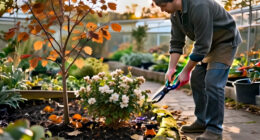
Finally, develop a routine for maintaining cleanliness. After each session, clear away excess soil, rinse your tools, and wipe down the work surface. This habit prevents buildup of dirt and keeps your potting zone inviting and functional. With thoughtful soil preparation, careful container selection, and a well-organized setup, your greenhouse potting zone stays cleaner longer, making your gardening experience more efficient and less frustrating.
greenhouse potting bench with waterproof surface
As an affiliate, we earn on qualifying purchases.
As an affiliate, we earn on qualifying purchases.
Frequently Asked Questions
What Are the Best Materials for a Long-Lasting Greenhouse Potting Zone?
You should choose durable materials like concrete or heavy-duty rubber for your greenhouse potting zone. These materials offer excellent surface durability and resist wear over time. Opt for surfaces with good soil drainage to prevent water pooling and reduce mess. Consider sealed concrete for longevity and easy cleaning, or rubber mats that provide cushioning and prevent soil from sticking, keeping your potting area cleaner longer.
How Often Should I Disinfect My Greenhouse Potting Area?
Did you know that bacteria can double every 20 minutes in moist environments? You should disinfect your greenhouse potting area at least once a month to prevent disease buildup. Use soil sterilization techniques or disinfectant options like a bleach solution or commercial disinfectants. Regular cleaning reduces pathogens, keeps your plants healthy, and maintains a cleaner, more efficient workspace. Stay proactive to avoid costly plant losses and guarantee ideal growth conditions.
Can I Use Recycled Materials for My Potting Zone?
Yes, you can definitely use recycled materials for your potting zone. Recycling containers, like old buckets or bins, make great storage solutions. For sustainable flooring, consider repurposing materials like rubber mats or reclaimed wood to keep your space eco-friendly. Just guarantee the recycled items are clean and safe for plants. Using these materials helps reduce waste and creates an environmentally conscious, functional potting zone that stays cleaner longer.
What Is the Ideal Height for a Greenhouse Potting Bench?
The ideal height for a greenhouse potting bench is around 36 to 40 inches. This range creates an ergonomic workspace, reducing strain on your back and shoulders during potting. Adjust the height based on your height for maximum comfort. A well-designed potting bench height helps you work efficiently and stay organized, making your greenhouse activities more enjoyable and less tiring.
How Do I Prevent Pests From Contaminating My Potting Zone?
To prevent pests from contaminating your potting zone, you should use natural pest barriers like fine mesh screens on vents and doorways. Keep your workspace clean and remove plant debris regularly. Incorporate organic pest control methods, such as neem oil or beneficial insects, to manage pests without chemicals. Also, quarantine new plants before introducing them to your zone, ensuring pests don’t hitch a ride.
Conclusion
By following these simple steps, you’ll transform your greenhouse potting zone into a pristine paradise that stays clean longer than you ever thought possible. Keep your workspace organized, use the right tools, and maintain a regular cleaning routine. With a little effort, you’ll create a haven so immaculate it could make a spotless surgeon jealous. Soon, you’ll be able to focus on your gardening passion without the chaos, turning your greenhouse into a sanctuary of serenity and productivity.
Fall Picks
fall essentials
As an affiliate, we earn on qualifying purchases.