To quickly plan a greenhouse that fits your yard, start by measuring your available space and checking sunlight throughout the day. Clear the area of weeds and rocks, then test your soil to see if it needs amendments. Choose a spot with good drainage and at least six hours of sunlight. Decide on a style and size that suits your yard and budget, focusing on essential features. Keep exploring to learn more about making your greenhouse a perfect fit.

Get garden gear delivered free with Prime
- Fast, free delivery on millions of items
- Prime Video, Amazon Music and more included
- Member-only deals all year
Key Takeaways
- Measure your yard space and sunlight exposure to identify the best location quickly.
- Choose a greenhouse style and size that fit your available area and light conditions.
- Select durable, cost-effective materials suited for your climate to streamline decisions.
- Prioritize essential features like ventilation and shelving to avoid overcomplicating the plan.
- Use digital tools and templates to rapidly visualize and finalize your greenhouse layout.
As an affiliate, we earn on qualifying purchases.
Assess Your Yard’s Space and Light Conditions
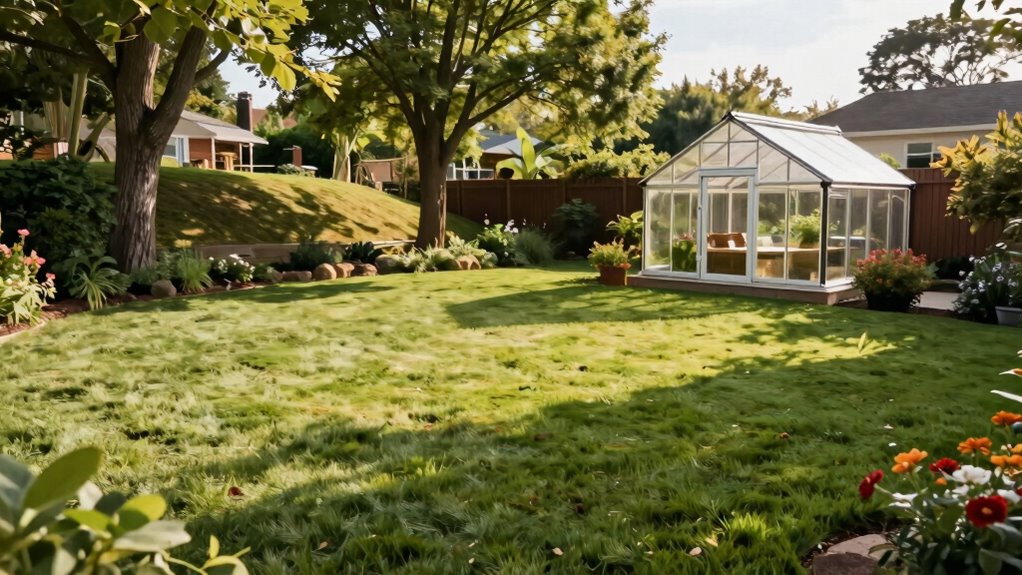
Before planning your greenhouse, you need to evaluate your yard’s space and light conditions. Measure the available area, ensuring enough room for your chosen greenhouse size without crowding other features. Check the sunlight throughout the day to identify spots with consistent, adequate light, avoiding shaded areas. Conduct soil testing to understand its composition, drainage, and nutrient levels. This step helps determine if your soil supports the plants you want to grow or if amendments are needed. Consider plant compatibility with your environment—some plants thrive in full sun, while others prefer shade or specific soil conditions. Understanding these factors upfront helps you select the best location, ensuring your greenhouse fits comfortably and functions efficiently in your yard’s unique light and soil conditions. Additionally, examining digital concepts can aid in visualizing the layout and optimizing space for your greenhouse. To make informed decisions, reviewing soil testing results can provide valuable insights into your yard’s suitability for various plants. Incorporating light measurements can also help pinpoint ideal spots with optimal sunlight exposure for your greenhouse needs. Being aware of electric bike horsepower can be useful if you plan to include eco-friendly energy solutions like bike generators to power your greenhouse accessories.
Find the Best Spot for Your Greenhouse
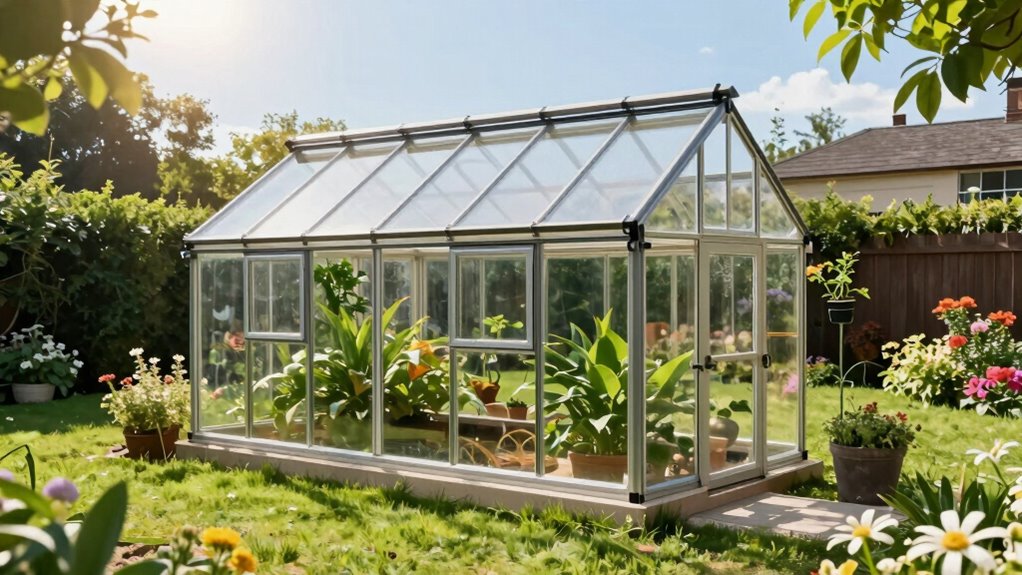
Choosing the right spot for your greenhouse is essential to guarantee it functions efficiently and remains a convenient part of your yard. Look for an area with good drainage to prevent water pooling and soil that’s easy to prepare. Clear away weeds and rocks, then improve the soil with compost or organic matter to support healthy plant growth. Position your greenhouse where it receives ample sunlight, ideally six hours or more daily, but avoid spots shaded by trees or structures. Consider pest prevention by choosing a location away from tall grasses or dense vegetation that can harbor pests. Keep the area accessible for maintenance and watering. Proper site selection minimizes soil issues and pest problems, making your greenhouse more productive and easier to care for long-term. Additionally, selecting a site with adequate sunlight exposure can significantly enhance plant growth and greenhouse efficiency. Ensuring your site aligns with user privacy and cookies preferences can also improve your overall experience during setup and ongoing maintenance.
Choose the Right Greenhouse Style and Size
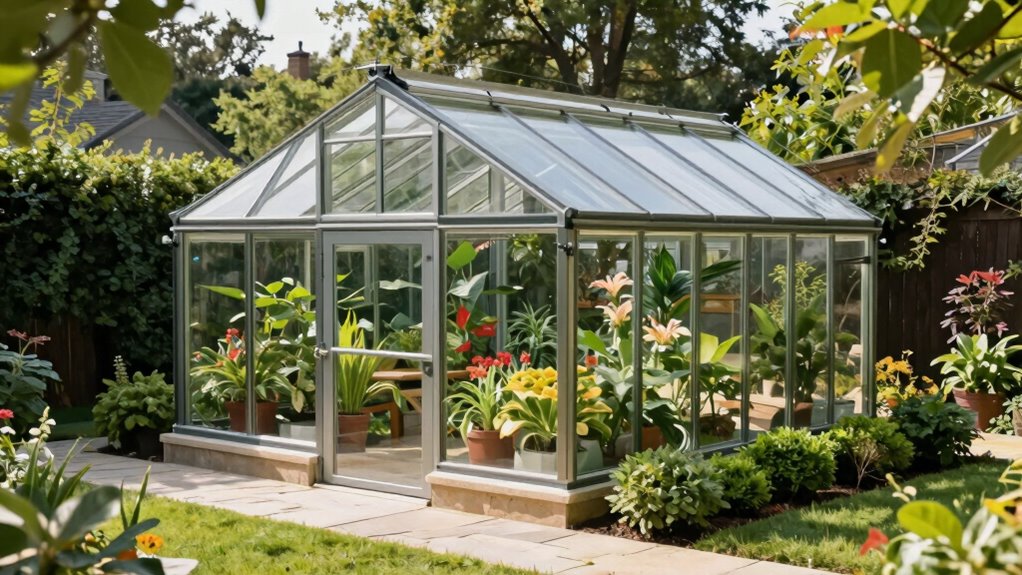
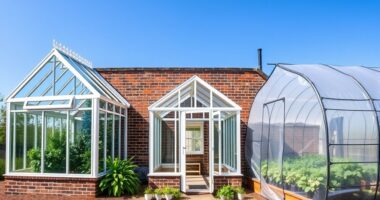
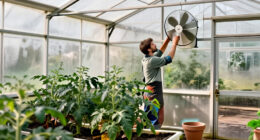
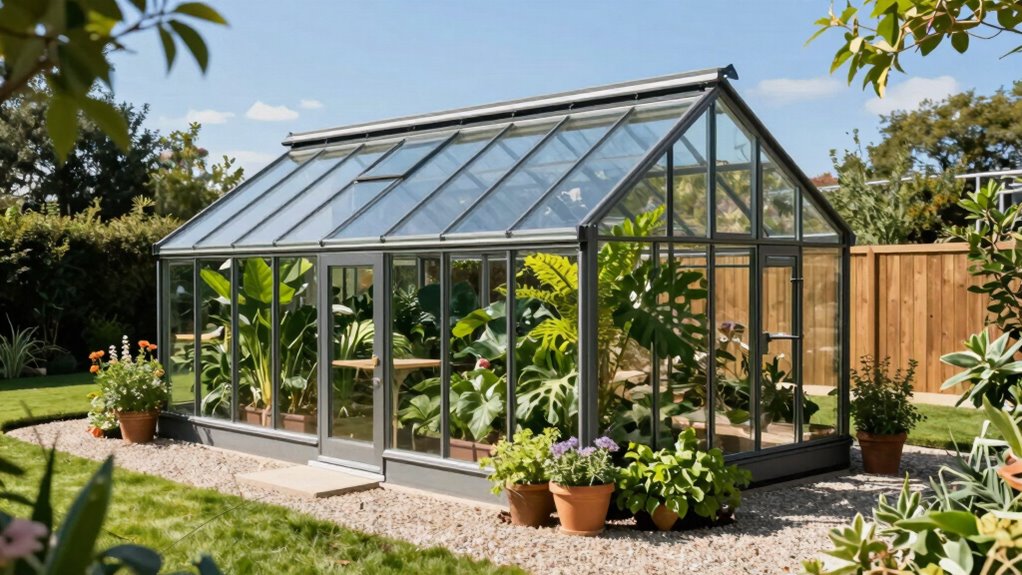
Once you’ve identified the ideal location, it’s time to decide on the greenhouse style and size that best fit your yard and gardening goals. Consider material options like glass, polycarbonate, or polyethylene, which influence durability, insulation, and light transmission. The style you choose, such as a lean-to, freestanding, or hoop house, impacts space and aesthetics. To maximize efficiency, focus on ventilation strategies—proper vents, exhaust fans, or adjustable windows—to regulate temperature and humidity. Implementing cookie preferences can also help tailor your website experience to better assist your planning process. Additionally, understanding greenhouse materials can guide you in selecting the most suitable construction options for climate and budget. Proper planning of greenhouse design can also improve overall energy efficiency and plant health.
Budget and Pick Features That Fit Your Needs
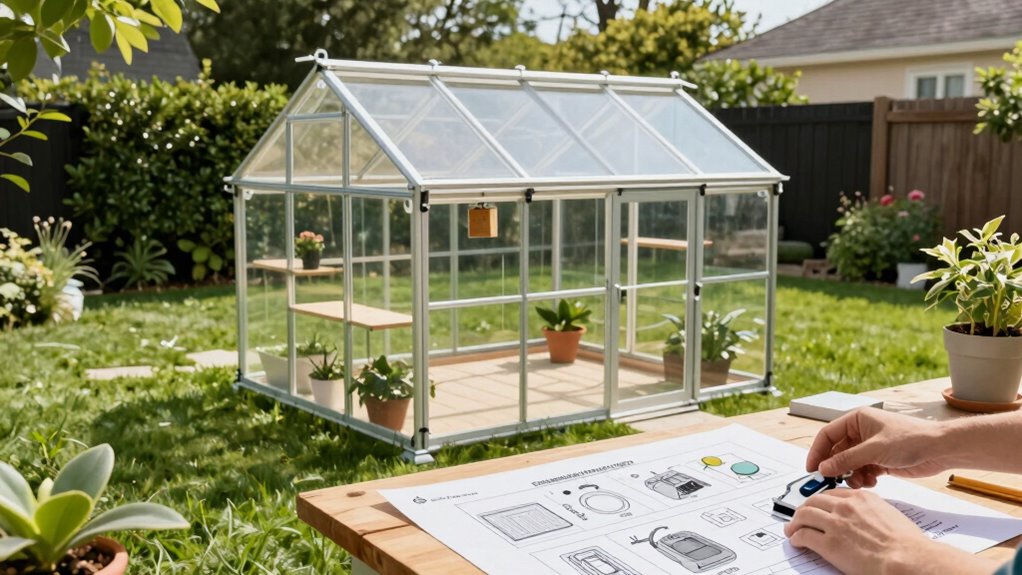
Setting a realistic budget is essential to guarantee your greenhouse project stays on track without sacrificing key features. Start by identifying cost-effective options that meet your needs, balancing quality and affordability. Consider durable materials that reduce long-term maintenance costs and look for features that enhance functionality without overspending. Custom feature selection allows you to prioritize what matters most, whether it’s automatic vents, shelving, or climate controls. Avoid overbuilding with unnecessary extras; instead, focus on essentials that improve your gardening experience. Research different suppliers and compare prices to find options that fit your financial limits. Staying within your budget ensures you can complete your project without stress, while still creating a functional, efficient greenhouse tailored to your yard’s space. Incorporating enterprise governance principles can help you plan and manage your project more effectively, ensuring compliance and security throughout the process.
Next Steps: Designing, Building, and Caring for Your Greenhouse
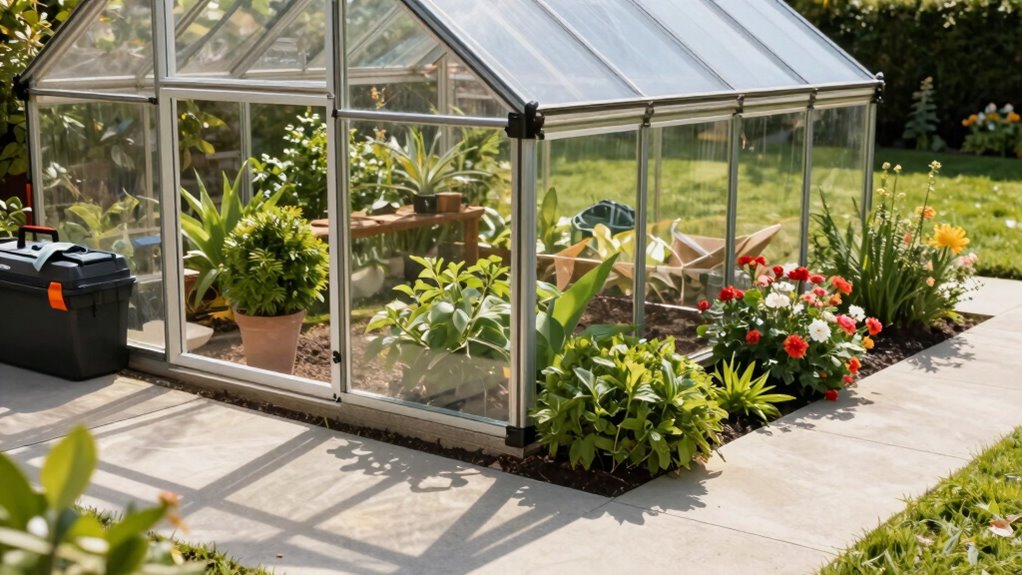
After finalizing your design, the next step is to gather the necessary materials and tools to begin construction, ensuring you follow your plans carefully. Pay close attention to climate considerations, selecting materials suited for your environment’s temperature and humidity. Durability is key; choose sturdy materials like galvanized steel or treated wood that withstand weather changes and last over time. Incorporating high-quality projectors can also enhance your setup, especially if you plan to include a home theater component. To proceed efficiently:
- Verify that all materials meet your climate needs and durability standards.
- Prepare your tools, including drills, screws, and sealing supplies.
- Follow your blueprint step-by-step, making adjustments for any unexpected climate challenges.
Frequently Asked Questions
How Do I Prevent Pests From Entering My Greenhouse?
To prevent pests from entering your greenhouse, install pest barriers like fine mesh screens on vents and openings. Keep the area clean and remove plant debris regularly. Use natural repellents such as neem oil or garlic spray around the greenhouse perimeter. You can also introduce beneficial insects like ladybugs to control pests naturally. Combining these methods creates an effective defense, ensuring your plants stay healthy and pest-free.
What Permits or Regulations Do I Need to Consider?
You need to check local building permits and zoning regulations before building your greenhouse. Skipping this step can lead to fines or needing to dismantle your structure later. Contact your city or county office to find out what permits are required, especially if your greenhouse exceeds size limits or is in a protected zone. Staying compliant guarantees your project moves smoothly and avoids costly setbacks.
How Can I Maximize Space Efficiency Inside the Greenhouse?
To maximize space efficiency inside your greenhouse, incorporate vertical gardening to make the most of limited floor space. Use wall-mounted shelves and hanging planters for herbs and small plants. Pair this with automated watering systems to keep everything hydrated without cluttering your workspace. This setup allows you to grow more plants vertically and efficiently, saving space while maintaining healthy, thriving greenery.
What Maintenance Is Required to Keep the Greenhouse in Top Condition?
To keep your greenhouse in top condition, you should regularly inspect your garden layout and guarantee plants are spaced well for airflow. Maintain proper ventilation options to prevent mold and overheating, and clean vents and fans frequently. Check for any structural damage or leaks, and clean glass or plastic panels to maximize light. Regularly monitor and adjust watering and temperature to promote healthy growth, keeping your greenhouse efficient and productive.
How Do I Choose Eco-Friendly Materials for My Greenhouse?
Choosing eco-friendly materials for your greenhouse is like planting seeds for a greener future. Start with sustainable sourcing for framing, like bamboo or recycled metal, to reduce environmental impact. Opt for eco-friendly insulation options, such as recycled denim or cellulose, to keep your space efficient without harming the planet. Prioritize materials that are non-toxic and locally sourced whenever possible, ensuring your greenhouse nurtures both plants and the environment.
Conclusion
By following these steps, you can quickly plan a greenhouse that fits perfectly in your yard and meets your gardening needs. Remember, a well-placed greenhouse can boost your growing season by up to 50%, making it a smart investment. With careful assessment and thoughtful choices, you’ll enjoy lush, healthy plants year-round. So, take action today—your green thumb will thank you, and your yard will flourish with vibrant life.
Fall yard work Picks
leaf blowers
As an affiliate, we earn on qualifying purchases.