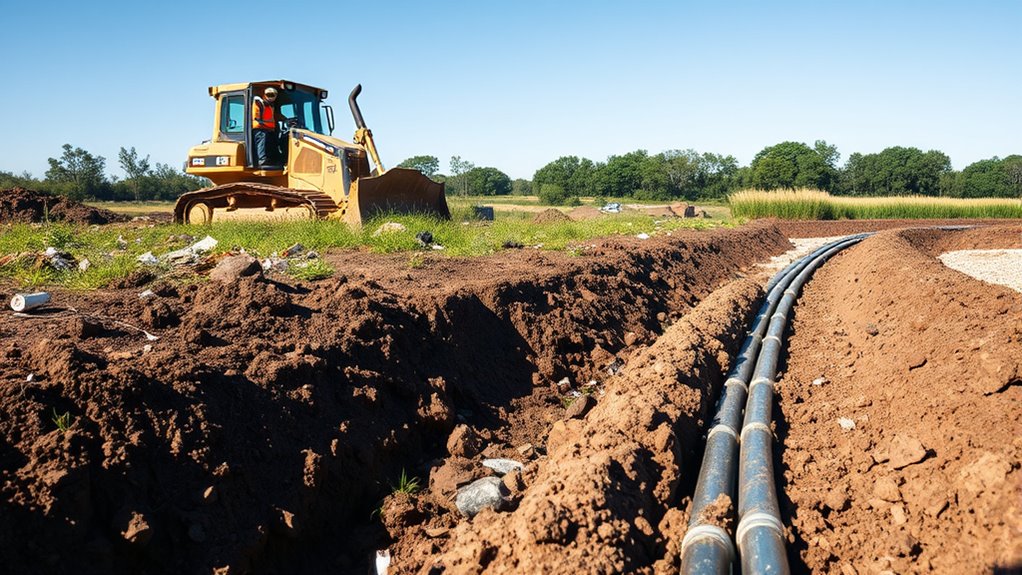

To prepare your site, start by clearing away trees, brush, rocks, and debris while respecting environmental regulations and protected species. Next, use heavy machinery to level the ground, ensuring slopes are correct for proper drainage and stability. Then, install drainage systems like pipes or trenches to direct water away from the foundation, preventing future water issues. If you’re curious about fine-tuning these steps, you’ll find useful details as you explore further.

Get garden gear delivered free with Prime
- Fast, free delivery on millions of items
- Prime Video, Amazon Music and more included
- Member-only deals all year
Key Takeaways
- Conduct soil testing and environmental assessments to identify land conditions and plan appropriate clearing and drainage strategies.
- Remove vegetation, debris, and obstructions responsibly, ensuring permits are obtained for protected species or areas.
- Use heavy machinery like graders or bulldozers for precise leveling, paying attention to slopes for proper drainage.
- Design and install effective drainage systems, such as trenches or French drains, based on soil and site conditions.
- Reassess soil and environmental data regularly to ensure long-term site stability and prevent future water or erosion issues.
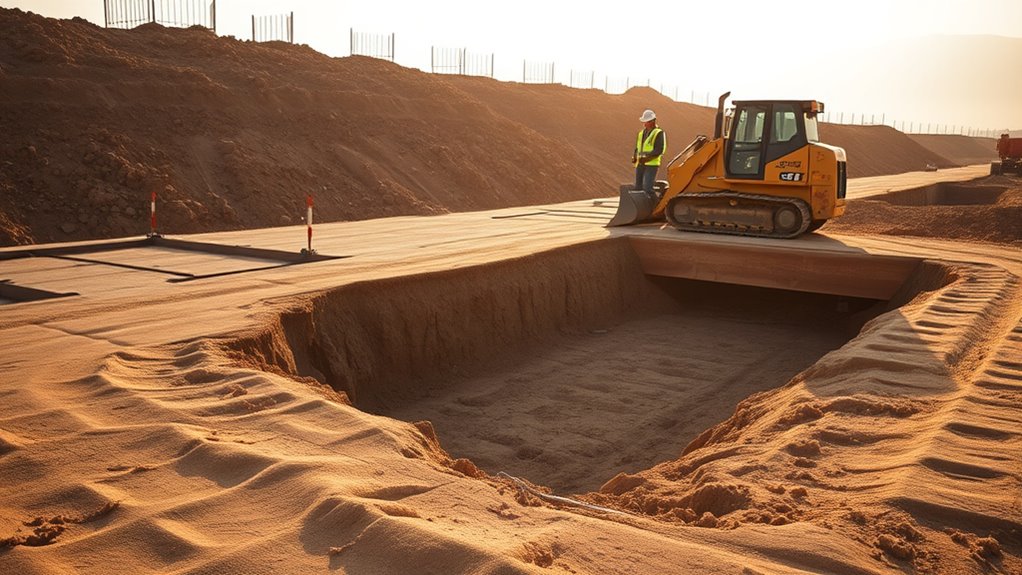
Have you ever wondered what it takes to lay a solid foundation for your project? It all begins with preparing the site properly. The first essential step is understanding the land you’re about to build on. Soil testing is fundamental here; it helps determine the soil’s composition, stability, and load-bearing capacity. By analyzing samples from different parts of your site, you can identify potential issues like poor drainage, compaction problems, or contamination that might compromise your construction. Conducting a thorough environmental assessment is equally important. This process evaluates the land’s current state, including any environmental hazards, protected species, or sensitive ecosystems nearby. It guarantees your project complies with regulations and minimizes ecological disruption. Taking these preliminary steps saves you from costly surprises down the line and provides a clear picture of what the land needs.
Once you understand the soil and environmental conditions, you can move on to clearing the site. This involves removing trees, brush, rocks, and debris that could interfere with construction. Be cautious during this phase; sometimes, trees and vegetation play a critical role in preventing erosion or maintaining local biodiversity. Depending on your location, you might need permits or specific procedures to handle protected flora or fauna responsibly. After clearing, leveling the ground is your next focus. Proper leveling ensures a flat, stable surface for your foundation and helps prevent uneven settling over time. Use heavy machinery like graders or bulldozers to achieve a consistent grade, checking frequently with levels and measurements. Pay attention to slopes and contours—drainage is essential here, as improper grading can lead to water pooling or erosion problems. Incorporating drainage planning into your site prep is crucial for long-term stability and safety.
Drainage planning is a key component of site preparation. You need to design a system that directs water away from your foundation, preventing flooding and moisture damage. This often involves installing drainage pipes, trenches, or swales, especially in areas prone to heavy rainfall or poor natural drainage. Incorporate features like French drains or underground piping to ensure excess water is effectively channeled away from your project. As you work through these steps, keep revisiting your soil testing and environmental assessment data. Adjust your plan based on new insights, making sure the site’s conditions support long-term stability and safety. Proper site preparation isn’t just about clearing space; it’s about creating a resilient foundation that will support your project for years to come. The effort you put into soil testing, environmental assessment, clearing, leveling, and drainage now will pay dividends later by reducing risks and guaranteeing smooth progress during construction.
French drain system for drainage
As an affiliate, we earn on qualifying purchases.
As an affiliate, we earn on qualifying purchases.
Frequently Asked Questions
What Safety Gear Should I Wear During Site Preparation?
You should wear personal protective equipment like a hard hat, safety goggles, gloves, and sturdy boots to protect yourself during site preparation. Hearing protection is essential if you’re using loud machinery, and a dust mask can prevent inhaling debris. Always prioritize machinery safety by staying alert and following proper procedures. Wearing the right gear helps prevent injuries, ensuring you stay safe while clearing, leveling, and managing drainage on the site.
How Do I Identify Underground Utilities Before Clearing?
To identify underground utilities before clearing, you should perform utility detection using specialized tools like ground-penetrating radar or electromagnetic sensors. Contact local utility companies to mark underground hazards and request utility maps. Always assume utilities are present until confirmed safe. Clearly mark detected lines on the site, and proceed with caution to prevent accidental damage or injury. This proactive approach keeps your project safe and avoids costly utility strikes.
What Are Eco-Friendly Methods for Clearing Vegetation?
You can use eco-friendly methods for clearing vegetation by applying sustainable weed control options, like organic mulches or manual removal, which minimize environmental impact. Additionally, biodegradable clearing agents are effective for weed suppression without harming the soil or surrounding plants. These methods reduce chemical runoff and promote healthy ecosystems, making your site preparation more sustainable and environmentally responsible. Always follow manufacturer instructions for safe, effective use.
How Long Does Site Clearing and Leveling Typically Take?
Site clearing and leveling can take anywhere from a day to several weeks, depending on the project’s size and complexity. You might think it’s a quick task, but it’s often the backbone of your entire construction timeline. Good project planning guarantees you allocate enough time, avoiding surprises. Rushing these steps can cause delays later, so give yourself ample time for thorough work, especially if the site’s challenging or overgrown.
Can I Prepare the Site Myself or Should I Hire Professionals?
You can prepare the site yourself with DIY tips like renting the right equipment and researching proper techniques, but hiring professional services guarantees the job’s done efficiently and correctly. If you’re confident, tackling clearing and leveling can save money, but for large or tricky terrains, professionals provide expertise and save time. Consider your experience, project scope, and budget to decide whether to DIY or hire experts.
Conclusion
Think of your site as a blank canvas awaiting your masterpiece. Clearing, leveling, and drainage are like laying a strong foundation for a house—you build from the ground up to guarantee everything else stands tall. When you prepare your site carefully, you’re planting the roots for a thriving project. With each step, you’re shaping a solid base, much like a gardener tending to soil before planting. Your effort today paves the way for a beautiful, lasting creation tomorrow.
Fall yard work Picks
leaf blowers
As an affiliate, we earn on qualifying purchases.