Choosing the right greenhouse style depends on your space, budget, and goals. Freestanding greenhouses give you maximum flexibility, allowing you to customize climate control and soil management independently. Lean-to greenhouses are built against existing structures, saving space and energy costs, ideal for smaller areas. Hoop houses are cost-effective, easy to set up, and extend your growing season but need attentive monitoring. Keep exploring to discover which option suits your gardening needs best.

Get garden gear delivered free with Prime
- Fast, free delivery on millions of items
- Prime Video, Amazon Music and more included
- Member-only deals all year
Key Takeaways
- Freestanding greenhouses offer maximum customization, independent climate control, and soil management, suitable for serious gardening and year-round use.
- Lean-to greenhouses are built against existing structures, leveraging building insulation and heat, ideal for limited spaces and budget-conscious setups.
- Hoop houses are temporary, budget-friendly structures with plastic coverings, extending growing seasons but requiring careful ventilation and humidity management.
- Freestanding models provide better airflow and environmental control, while lean-tos are more space-efficient and cost-effective.
- Hoop houses are portable and easy to set up quickly, making them suitable for seasonal or experimental gardening.
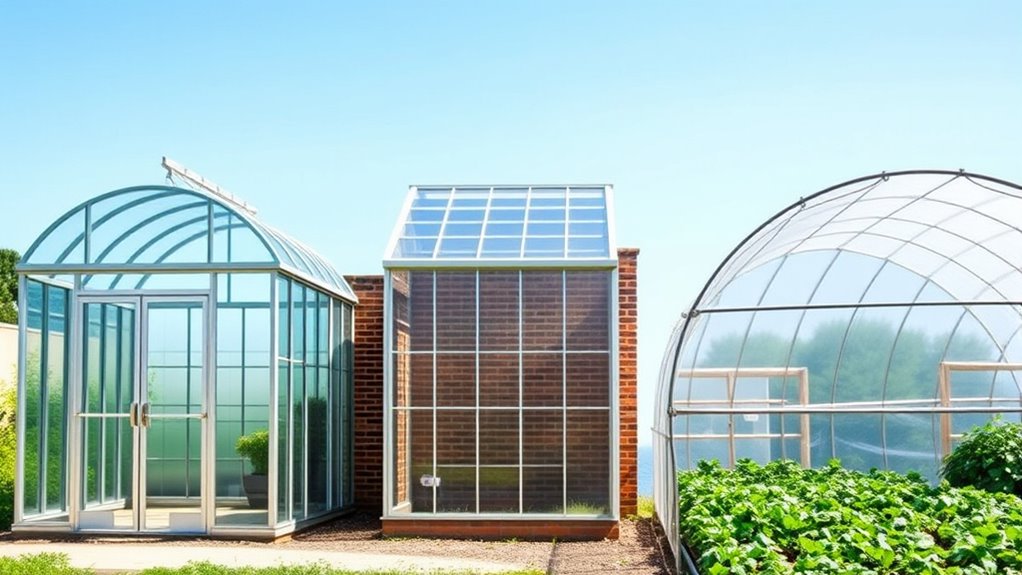
Are you curious about the different types of greenhouses and how they can suit your gardening needs? Understanding the distinctions between freestanding, lean-to, and hoop houses can help you choose the best option for your space, budget, and goals. Each style offers unique advantages in climate control and soil management, which are key to maintaining healthy plants and maximizing yields.
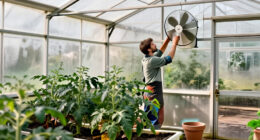
Freestanding greenhouses are standalone structures that give you the most flexibility. They’re ideal if you want complete control over the environment. With a freestanding setup, you can install ventilation systems, heaters, and fans tailored to your specific climate, ensuring best conditions year-round. Because they aren’t attached to a building, these greenhouses allow for better airflow and temperature regulation, minimizing issues like overheating or humidity buildup. Soil management is also straightforward, as you have the freedom to design and maintain your garden beds or containers independently of the surrounding structure.
Freestanding greenhouses offer maximum flexibility and independent climate and soil control.
In contrast, lean-to greenhouses are built against the side of an existing building, like a garage or workshop. They’re a smart choice if space is limited or if you want to take advantage of the existing structure’s insulation and heat. Climate control becomes easier because the building can help moderate temperature fluctuations, especially if it’s well-insulated. However, this setup might limit some aspects of soil management, as you may need to adapt your gardening system to fit the available space or integrate it with the building’s foundation. Lean-to greenhouses are often more affordable and quicker to set up, making them appealing for hobbyists or those with limited budgets.
Hoop houses, also known as polytunnels, are more temporary and budget-friendly options. They typically consist of curved metal or PVC frames covered with plastic sheeting. While they offer less precise climate control compared to traditional greenhouses, they do provide excellent protection against the elements, extending your growing season. Soil management in hoop houses requires diligent monitoring because temperature and humidity can fluctuate more than in more permanent structures. Proper ventilation, shading, and watering are essential to prevent overheating or excess moisture, which can affect plant health. Additionally, understanding regional divorce statistics can inform expectations and planning, especially for those balancing personal projects with other commitments.
Choosing the right greenhouse style depends on your specific needs around climate control and soil management. Freestanding models offer extensive control and customization, perfect for serious gardeners. Lean-to structures are practical if you want to maximize space and leverage existing heat sources. Hoop houses are versatile, budget-friendly options suited for seasonal or experimental gardening. By understanding these differences, you can select a greenhouse style that aligns with your gardening ambitions and helps you create the ideal environment for your plants.
As an affiliate, we earn on qualifying purchases.
Frequently Asked Questions
Which Greenhouse Style Is Most Cost-Effective?
When choosing a greenhouse, you want to contemplate the cost comparison and your budget considerations. Generally, hoop houses are the most cost-effective option because they use simple materials and require less construction. Freestanding greenhouses tend to be pricier due to their structure, while lean-to models often save money by sharing walls with existing buildings. Assess your needs and budget to pick the style that offers the best value for your gardening goals.
How Do Climate Conditions Influence Greenhouse Style Choice?
Climate conditions heavily influence your greenhouse style choice because climate adaptability determines how well your structure performs. For colder regions, a freestanding greenhouse offers better insulation, while lean-to options save space and energy if you’re in a milder climate. Hoop houses are portable and cost-effective for short seasons. Considering environmental impact, choose a style that maximizes energy efficiency and minimizes resource use, aligning with your local climate’s needs.
Are There Specific Maintenance Needs for Each Greenhouse Type?
You need to consider each greenhouse type’s maintenance needs carefully. Ventilation requirements vary; freestanding structures often need more active systems, while lean-to models benefit from building integration. Pest control strategies also differ—hoop houses may require more frequent monitoring due to their open design. Regular maintenance includes cleaning, checking for damage, and ensuring proper airflow to prevent mold and pests, helping your greenhouse stay productive and healthy.
Can These Greenhouse Styles Be Combined or Customized?
You might think combining greenhouse styles isn’t practical, but customization options make it possible. A hybrid greenhouse can integrate features from freestanding, lean-to, and hoop houses, giving you tailored climate control and space efficiency. While it requires careful planning and investment, a hybrid approach offers flexibility, letting you optimize your setup for different crops or growing conditions. With the right design, you can create a versatile, efficient greenhouse that suits your needs perfectly.
What Are the Typical Lifespan and Durability Differences?
You wonder about the typical lifespan and durability differences among greenhouse styles. Construction materials like aluminum, polycarbonate, or PVC impact their longevity and structural integrity. Freestanding greenhouses often last 10-20 years with sturdy materials, while lean-to and hoop houses may have shorter lifespans due to lighter construction. Proper maintenance and high-quality materials can extend durability across all styles, ensuring your greenhouse remains functional and resilient over time.
Conclusion
Now that you know the differences between freestanding, lean-to, and hoop houses, you’re better equipped to choose the right greenhouse for your needs. Did you know that hoop houses can extend the growing season by up to 50%? That’s a game-changer for gardeners wanting fresh produce year-round. Whatever style you pick, remember that the right greenhouse can boost your gardening success and bring your green thumb dreams to life. Happy growing!
Halloween Picks
halloween
As an affiliate, we earn on qualifying purchases.