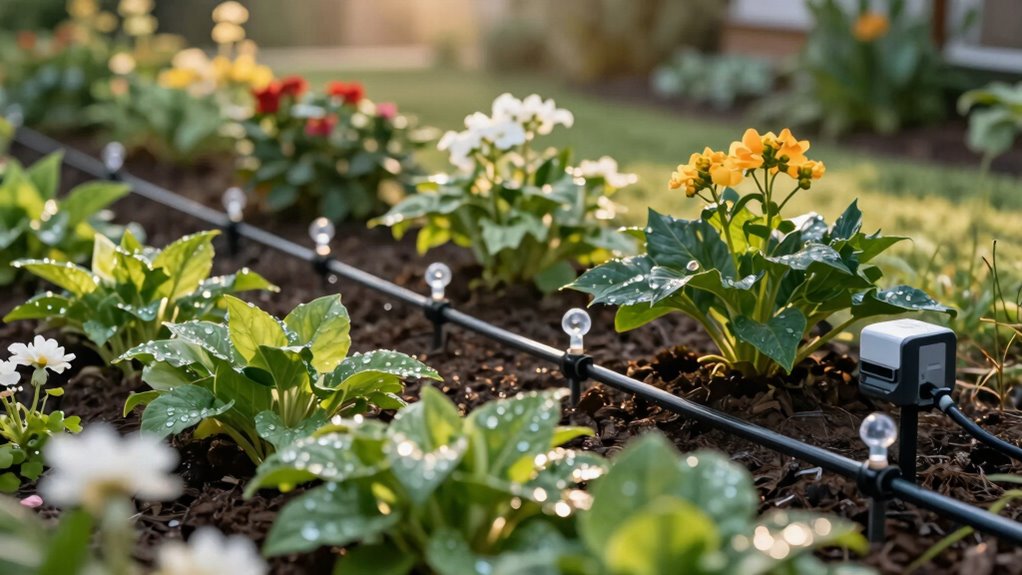

To build a watering system that works when you’re away, you should set up automated controls with programmable timers and connect them to smart controllers via Wi-Fi. Incorporate soil moisture sensors at the root zone to guarantee water is only delivered when needed. Add weather-based sensors or forecasts to adjust watering schedules dynamically and skip unnecessary watering during rain. For more tips on creating a reliable system that keeps your garden healthy, keep exploring.

Get garden gear delivered free with Prime
- Fast, free delivery on millions of items
- Prime Video, Amazon Music and more included
- Member-only deals all year
Key Takeaways
- Install automated drip irrigation or soaker hoses connected to programmable controllers for scheduled watering.
- Incorporate moisture sensors in the soil to trigger watering based on real-time moisture levels.
- Use Wi-Fi-enabled controllers for remote monitoring and adjustments from anywhere.
- Integrate weather-based sensors or forecasts to skip watering during rain or unfavorable conditions.
- Set up a centralized smart irrigation system for seamless management and reliable operation when away.
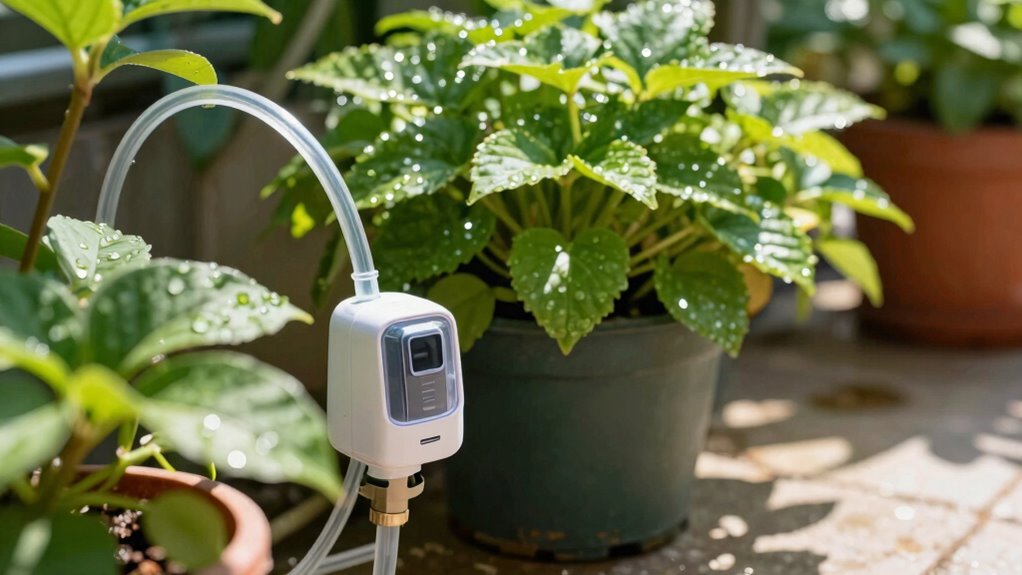
When you’re away, keeping your plants watered can feel like a challenge, but with a well-designed watering system, you can guarantee they stay healthy without constant attention. The key is integrating garden automation with reliable moisture sensors. These tools work together to monitor your soil’s moisture levels and activate watering only when needed, ensuring your plants don’t drown or dry out, even if you’re gone for days.
Start by choosing a suitable watering method, such as a drip irrigation system or soaker hoses, which deliver water directly to the roots efficiently. Connect this setup to a controller that can be programmed to water at specific times or triggered by moisture sensors. This way, you avoid overwatering or underwatering, maintaining ideal soil conditions without manual intervention.
Choose drip or soaker hoses connected to programmable controllers for efficient, hands-free watering.
Moisture sensors are the backbone of an automated watering system. They continuously measure the soil’s moisture content and send signals to the controller. When the sensors detect that the soil is dry beyond a set threshold, they activate the watering system. Once the soil reaches the desired moisture level, the sensors turn the watering off, conserving water and preventing plant stress. This real-time feedback loop offers peace of mind, knowing your plants are being cared for even when you’re not around. Proper sensor placement is essential for accurate readings and effective watering.
To set this system up, you need a compatible moisture sensor that can be buried in your soil at the root zone, along with a controller or smart irrigation hub that manages watering schedules based on sensor data. Many modern systems connect via Wi-Fi, allowing you to monitor and adjust settings remotely through your smartphone. This kind of garden automation simplifies plant care, making it possible to leave town or focus on other priorities without worrying about your garden’s hydration needs. Additionally, some smart irrigation systems offer weather forecasting features, further optimizing watering schedules based on upcoming weather patterns.
Additionally, consider installing rain sensors or weather-based controllers that account for local weather conditions. If rain is forecasted, these systems can skip scheduled watering, saving water and preventing overwatering. Combining moisture sensors with weather data creates a thorough watering solution that adapts dynamically to environmental changes. Using weather-based controls effectively can significantly reduce water waste and enhance plant health.
Incorporating smart irrigation technology into your garden setup can further enhance efficiency and convenience, ensuring your plants receive optimal watering even when you’re away. Implementing a comprehensive system can also provide real-time monitoring, which allows you to keep track of your garden’s hydration levels remotely and make adjustments as needed.
As an affiliate, we earn on qualifying purchases.
Frequently Asked Questions
Can I Automate the Watering Schedule Easily?
Yes, you can automate your watering schedule easily. You just need a system with remote control access, so you can manage it from anywhere. Incorporate watering sensors to monitor soil moisture levels, ensuring your plants get the right amount of water. These sensors automatically trigger watering when needed, and remote control features let you adjust schedules on the go. It’s a simple, effective way to keep your garden healthy even when you’re away.
What Is the Average Cost of Building Such a System?
The average cost to build an automated watering system is around $100 to $300, depending on your setup. About 60% of homeowners find DIY projects more budget-friendly than hiring pros, making cost estimation and budget planning essential. You can save by choosing simple components like timers and drip lines. Keep in mind, investing in quality parts guarantees reliability, especially when you’re away.
How Often Should I Check the System for Maintenance?
You should check your watering system weekly to guarantee ideal soil moisture and water pressure. Regular inspections help you catch leaks, clogs, or pressure drops early, preventing plant stress or damage. During each check, verify that the soil moisture is appropriate for your plants, and confirm the water pressure remains consistent. Adjust timers or emitters if you notice any issues, keeping your system efficient and your plants healthy even when you’re away.
Is This System Suitable for All Types of Plants?
Think of your watering system as a universal key, fitting most plants, but not every lock. While it works well for native plants and indoor gardens, some delicate or exotic species might need tailored care. For example, succulents prefer less frequent watering. So, check plant needs regularly and modify the system accordingly. This way, you guarantee your diverse collection stays healthy, whether native or exotic.
What Backup Options Are Available if the System Fails?
If your watering system fails, you have backup options like an emergency shutoff valve to prevent overwatering or leaks. Regularly check water quality to avoid clogs and plant stress. You can also set up manual watering as a backup, or install a sensor system that alerts you when issues arise. These measures guarantee your plants stay healthy, even if the automated system encounters problems.
Conclusion
By building a reliable watering system, you guarantee your plants are always cared for, your garden stays lush, and your peace of mind remains intact. When your system is simple to set up, easy to maintain, and automated to operate, you eliminate worries, prevent neglect, and promote growth. With the right tools, clear instructions, and a little effort, you create a system that works for you, even when you’re away. Ultimately, you enjoy a thriving garden, effortless watering, and stress-free days.
Halloween Picks
halloween
As an affiliate, we earn on qualifying purchases.