To plan your greenhouse effectively, start by clarifying your purpose—whether for personal enjoyment or commercial use—and assess your available space to determine an appropriate size. Establish a realistic budget that covers materials, ventilation, and ongoing costs like heating and soil maintenance. Consider factors like sunlight, climate, and layout to optimize functionality. Focusing on these key aspects guarantees your greenhouse meets your goals; exploring further will help you get every detail just right.
Key Takeaways
- Define your primary goals and select suitable crops to determine the necessary greenhouse size.
- Assess available space and sunlight exposure to optimize layout and orientation for maximum efficiency.
- Establish a clear budget, including initial construction, equipment, and ongoing operational costs.
- Choose appropriate materials and ventilation systems based on climate and size to ensure proper temperature and airflow.
- Plan pathways, shelving, and access points to facilitate maintenance and align with your overall purpose.
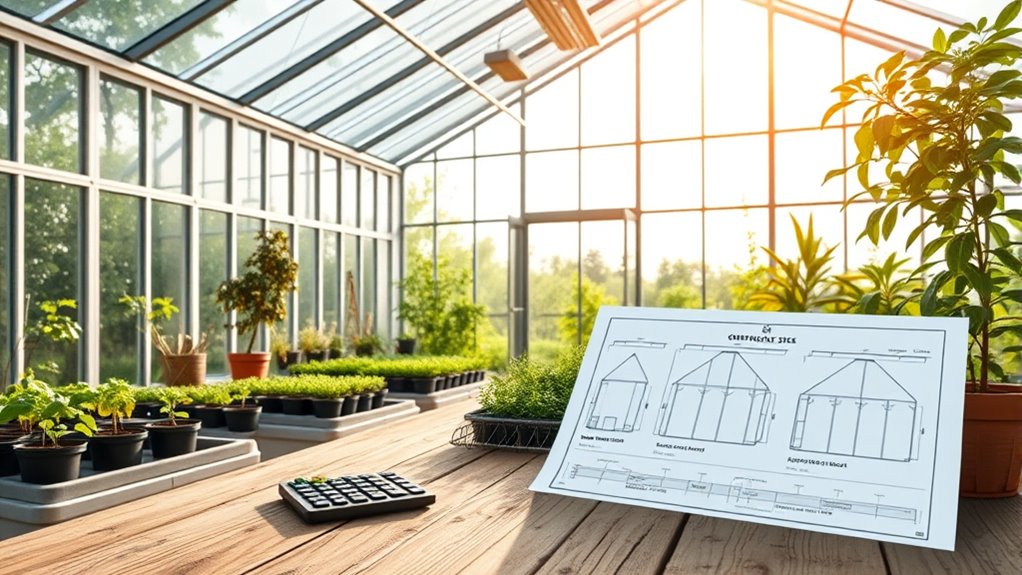
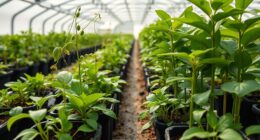
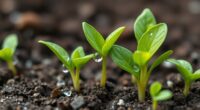
Planning a greenhouse begins with understanding your goals and space. You need to determine what you want to grow, how much space you have available, and your overall vision for the project. Once you have a clear idea of your purpose, you can start considering the practical aspects, such as soil preparation and ventilation systems, which are essential for creating a healthy environment for your plants. Proper soil preparation ensures your plants get the nutrients they need while minimizing issues like root rot or poor growth. If your site has existing soil, test it to identify deficiencies or imbalances, then amend it accordingly with compost, organic matter, or fertilizers. If the soil isn’t suitable, consider raised beds or installing new soil to meet your plants’ needs. Good soil foundation supports healthy growth and reduces future problems, making it a fundamental first step. Additionally, understanding project planning helps you organize your steps and allocate resources effectively.
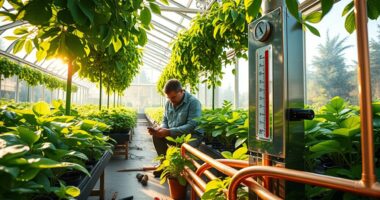
Ventilation systems are equally significant because they regulate temperature, humidity, and air circulation—factors that directly influence plant health. When planning ventilation, think about how you’ll introduce fresh air and how to exhaust excess heat or humidity. Passive systems, like vents and roll-up sides, work well if your climate permits, but mechanical systems such as exhaust fans and intake vents offer more control, especially in warmer or more humid environments. Proper ventilation prevents overheating, reduces the risk of fungal diseases, and ensures a steady supply of CO2, which plants need for photosynthesis. You should also consider whether to install exhaust fans with thermostats or humidity sensors for automatic operation.
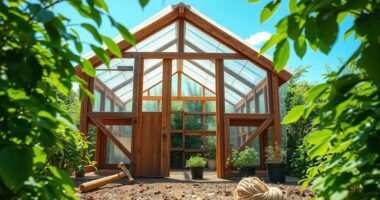
Size and layout are your next considerations. The scale of your greenhouse should align with your goals—whether you’re growing for personal use or commercial purposes—and your available space. Keep in mind that larger structures require more planning in terms of soil preparation, ventilation, and climate control. A well-thought-out design includes sufficient pathways, shelving, and access points for maintenance. Also, think about the orientation of the greenhouse to maximize sunlight exposure, which can influence your choice of materials and ventilation setup.
Budget planning is essential to guarantee your project stays on track. Besides the initial costs of building materials and equipment, factor in ongoing expenses like heating, cooling, and maintaining soil health and ventilation systems. Investing in quality materials initially, like durable glazing and reliable fans, can save money over time by reducing repairs or upgrades. Remember, a successful greenhouse balances your goals, available space, and budget, with a firm foundation in soil preparation and effective ventilation. This careful planning helps create a productive environment where your plants can thrive year-round.
Frequently Asked Questions
What Permits Are Required for Building a Greenhouse?
You need to check local building codes and zoning regulations before building your greenhouse. Permits are often required to guarantee your structure meets safety standards and zoning laws. Contact your city or county planning department to find out specific requirements, which may include building permits, environmental reviews, or setbacks. Failing to obtain proper permits can lead to fines or having to dismantle your greenhouse, so stay compliant from the start.
How Do I Choose the Best Location for My Greenhouse?
You should focus on site selection that offers ideal sunlight exposure, ideally with at least 6 hours of direct sunlight daily. Choose a location with good drainage and protection from strong winds to prevent damage. Avoid shaded areas or spots near trees that may block sunlight. Consider accessibility for maintenance and proximity to utilities. By prioritizing sunlight optimization and practical site features, you’ll set a strong foundation for a successful greenhouse.
What Are the Common Materials Used for Greenhouse Glazing?
Think of your greenhouse as a window to growth; choosing the right glazing material is essential. Common materials include glass, which offers clarity and durability, and polycarbonate, a lightweight, impact-resistant plastic. Types of plastic like acrylic or polycarbonate are popular for their insulation and affordability. Glass provides excellent light but can be fragile, whereas polycarbonate balances strength and cost, making it ideal for a sturdy, efficient greenhouse.
How Can I Ensure Proper Ventilation and Airflow?
You can guarantee proper ventilation and airflow by installing effective ventilation systems like exhaust fans and roof vents. Regularly open adjustable vents to promote airflow optimization, which helps regulate temperature and humidity. Position intake vents lower and exhaust vents higher to create a natural airflow cycle. Consider using circulation fans to evenly distribute air inside. Proper ventilation reduces disease risk and keeps your plants healthy, so monitor and adjust systems regularly.
What Are Cost-Effective Ways to Heat a Greenhouse?
Heating your greenhouse is like wrapping it in a cozy blanket. You can save costs by using solar heating, capturing sunlight to warm the space naturally. Combine this with insulation techniques like bubble wrap or thermal curtains to retain heat effectively. These methods are budget-friendly and eco-conscious, helping you maintain *best* temperatures without high energy bills. Embracing natural warmth makes your greenhouse more sustainable and easier to manage.
Conclusion
Now that you’ve mapped out your greenhouse’s size, budget, and purpose, you’re almost ready to bring your vision to life. But remember, the key to a thriving greenhouse isn’t just in the planning—it’s in the surprises along the way. Will your initial plans withstand unexpected challenges? As you step closer to construction, every decision could shape your success or setbacks. Stay prepared, stay flexible, and your green oasis may just become the garden of your dreams—and maybe more.