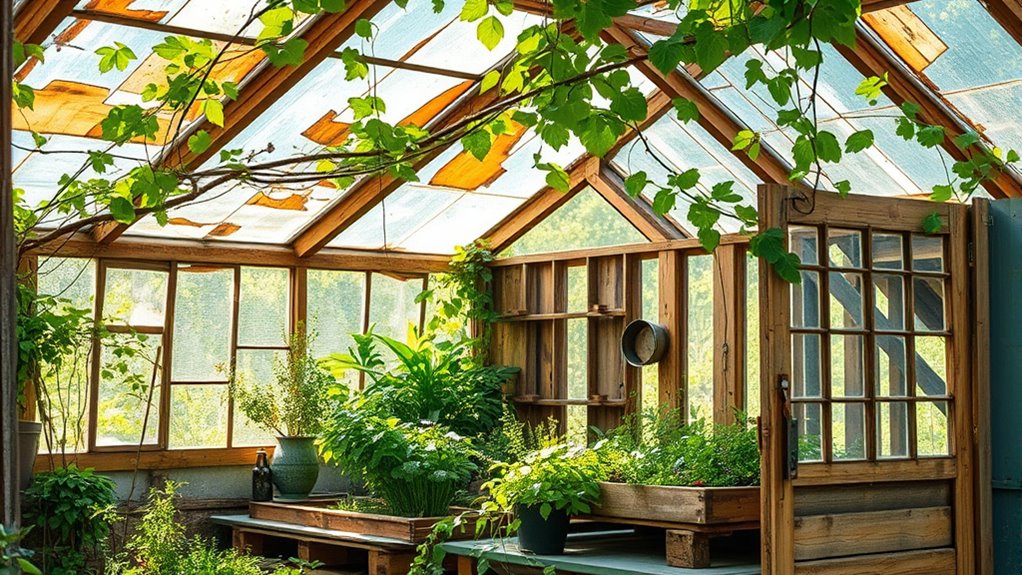

Using salvaged materials to build a greenhouse is an eco-friendly, cost-effective choice that reduces waste and minimizes your environmental impact. You can repurpose old doors, windows, reclaimed wood, and discarded metal parts to create a sturdy, unique structure. Incorporating sustainable design principles like maximizing natural light and rainwater harvesting further boosts efficiency. With careful planning and creativity, you’ll support healthy plants and demonstrate environmentally conscious building. Keep exploring to discover how to turn these ideas into your own green haven.
Key Takeaways
- Source materials from demolition sites, salvage yards, and thrift stores to repurpose for greenhouse construction.
- Incorporate reclaimed wood, old windows, and metal parts to enhance sustainability and character.
- Design for natural light and passive solar gain to reduce energy use and improve plant growth.
- Ensure salvaged components are weatherproofed and reinforced for durability and longevity.
- Use recycled fasteners and seal gaps to improve insulation and structural integrity.
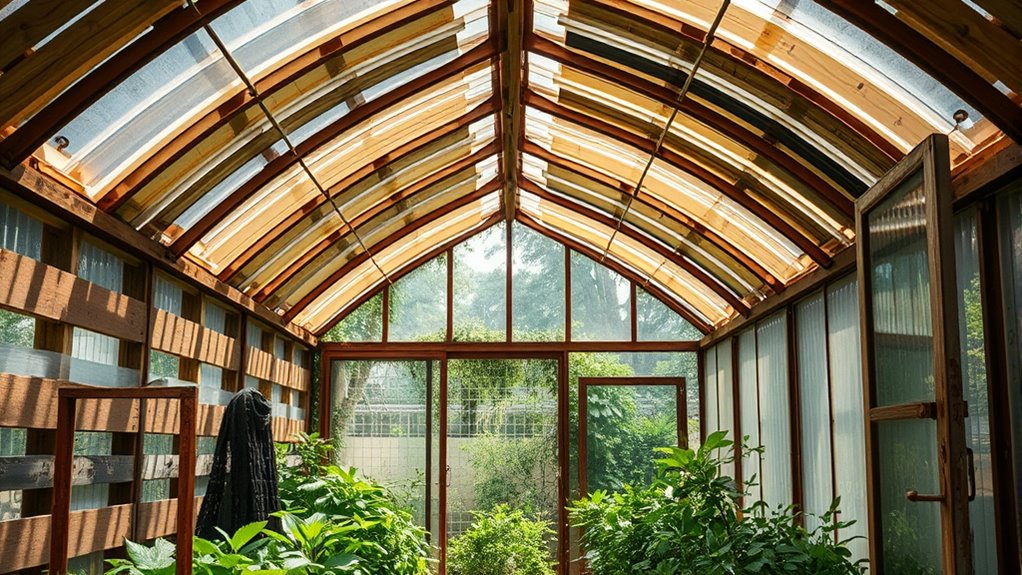
Building a greenhouse from salvaged materials is an eco-friendly and cost-effective way to create a nurturing environment for plants. When you choose to incorporate recycling construction practices, you not only save money but also reduce waste and minimize your environmental impact. Using reclaimed wood, old windows, and discarded metal parts aligns perfectly with sustainable design principles, allowing you to build a functional greenhouse that’s both durable and environmentally conscious. You’ll find that repurposing materials adds character and uniqueness to your structure, turning what would be waste into a valuable resource.
Starting with recycling construction, you might gather materials from demolition sites, thrift stores, or salvage yards. Old doors and windows, for instance, can serve as walls or ventilation panels, providing natural light and airflow. Reclaimed wood can be used for framing or shelving, offering sturdy support while giving your greenhouse a rustic charm. By sourcing materials locally, you also cut down on transportation emissions, further supporting sustainability. This approach encourages resourcefulness and promotes a circular economy, where materials are reused rather than discarded.
Sustainable design in your greenhouse isn’t just about the materials you use; it’s also about how you plan and construct the space. Think about maximizing natural light to reduce reliance on artificial heating and lighting. Incorporate passive solar principles, such as positioning your greenhouse to capture the sun’s warmth efficiently. Use recycled insulation materials if needed, and consider rainwater harvesting systems to irrigate your plants. These strategies help you create a self-sufficient environment, lowering your overall ecological footprint. Additionally, understanding predictive modeling in educational data mining can inspire innovative ways to optimize resource use and environmental controls within your greenhouse.
As you assemble your greenhouse, pay attention to the longevity and weather resistance of your salvaged components. Seal gaps and cracks to improve insulation and prevent drafts, ensuring your plants stay warm during cooler months. Reinforce structural elements with durable, recycled fasteners or brackets, which you can often find in salvage stores. This not only extends the lifespan of your greenhouse but also aligns with sustainable design by making the most of existing resources. The process of repurposing materials also allows you to customize your space uniquely, reflecting your personal style while remaining environmentally responsible.
Building a greenhouse with salvaged materials requires planning, patience, and creativity, but the rewards are worth it. You’ll end up with a sustainable, cost-effective structure that supports healthy plant growth while reducing your ecological footprint. By prioritizing recycling construction and sustainable design principles, you turn waste into a valuable resource, demonstrating that environmentally conscious choices can be both practical and inspiring. Your greenhouse becomes a testament to how thoughtful reuse can foster a greener, more sustainable future.
Frequently Asked Questions
How Do Salvaged Materials Impact Greenhouse Insulation?
Salvaged materials can positively impact your greenhouse’s insulation by enhancing thermal performance and moisture control. When you choose well-preserved, insulating salvaged items like old windows, you create better temperature regulation, keeping heat in during winter and out in summer. Additionally, using moisture-resistant salvaged materials helps prevent mold and humidity issues, ensuring a healthier environment. Properly selecting and installing these materials boosts energy efficiency and maintains consistent conditions for your plants.
Are Salvaged Materials Structurally Reliable for Greenhouse Framing?
You might wonder if salvaged materials are reliable for greenhouse framing, and the answer depends on their material durability and structural integrity. Generally, carefully selected salvaged wood, metal, or plastic can be quite sturdy if inspected thoroughly for rot, rust, or damage. Proper treatment and reinforcement guarantee these materials hold up well under environmental stresses, making them a viable, eco-friendly option for greenhouse frames.
What Are the Best Sources for Quality Reclaimed Building Materials?
You should explore salvage yards, architectural reuse shops, and online marketplaces for quality reclaimed building materials. Look for vintage windows that can provide natural light and insulation, and choose reclaimed wood for framing and shelving. Always inspect the materials for structural integrity and signs of rot or damage. By sourcing from reputable suppliers, you guarantee your greenhouse is both durable and eco-friendly, making the most of these sustainable, charming materials.
How Can I Ensure Salvaged Materials Meet Safety Standards?
Like forging a sword from quality steel, you must guarantee salvaged materials are safe. You can do this by conducting material testing and seeking safety certifications when possible. Inspect for signs of damage, mold, or pests, and verify the origin of the materials. If necessary, consult a professional to assess structural integrity. This process guarantees your greenhouse is both sturdy and safe, much like a well-crafted masterpiece.
Are There Any Legal Restrictions on Using Salvaged Materials?
Yes, you need to check building permits and zoning regulations before using salvaged materials. Local authorities might have restrictions on certain materials or structures, especially if they affect safety or property values. You should contact your city or county planning department to confirm what’s permitted. Guaranteeing compliance helps prevent legal issues and ensures your greenhouse meets all safety standards for your area.
Conclusion
By choosing salvaged materials, you not only save money but also give new life to forgotten items. This thoughtful approach transforms what might seem like discard into a thriving sanctuary for your plants. As you build with care and creativity, you’ll find that sustainability becomes a quiet, rewarding journey. Embrace the charm of repurposing, and watch your greenhouse flourish in ways you never imagined—proof that beauty and purpose often come from the most unexpected places.