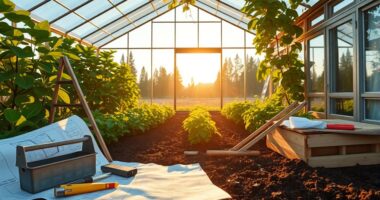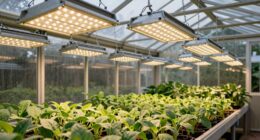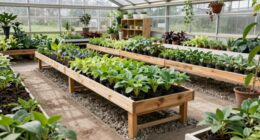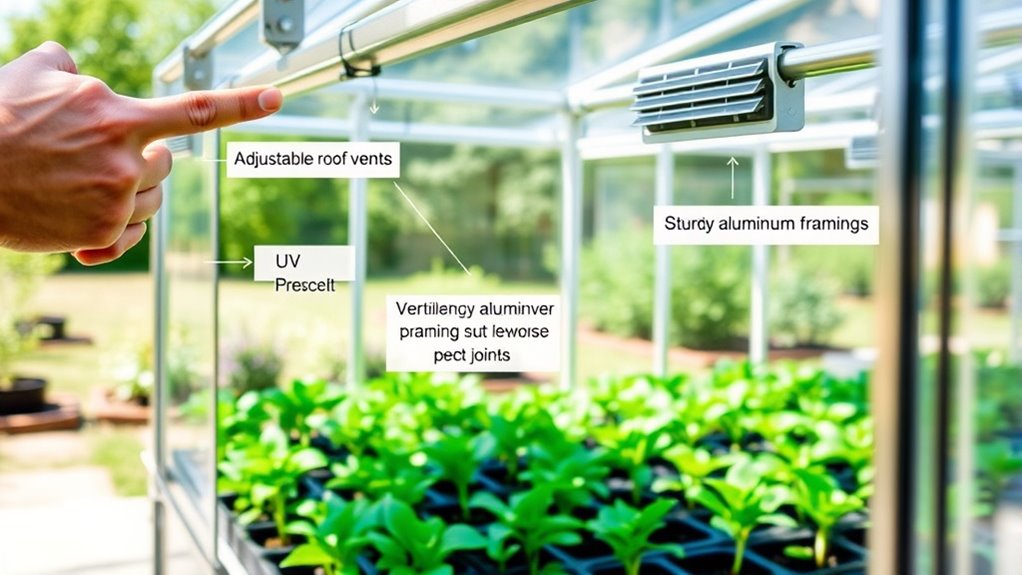

When selecting a greenhouse kit, consider your available space and choose a design that fits, like compact, lean-to, or freestanding options. Prioritize durable materials such as aluminum or steel frames and impact-resistant glazing like polycarbonate or glass. Look for features like adjustable vents, ample shelving, and easy-to-maintain systems to support plant care. Make certain the kit suits your climate with proper insulation or ventilation. Keep in mind assembly quality and durability for long-term success—so you can set up a thriving garden.
Key Takeaways
- Assess available space and choose a design that fits your yard or patio needs.
- Select durable materials like aluminum frames and impact-resistant polycarbonate or glass glazing.
- Ensure the greenhouse has adjustable vents, ample shelving, and irrigation features for plant care.
- Consider climate-specific features like insulation or ventilation for year-round plant health.
- Opt for a well-reviewed, sturdy kit with clear assembly instructions for long-term durability.
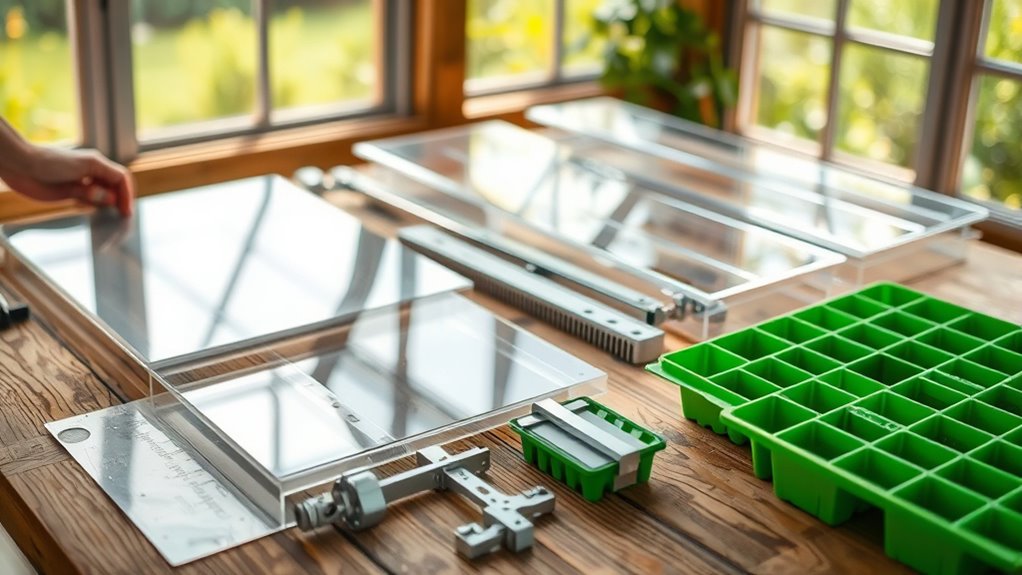
Are you ready to expand your gardening space but unsure where to start? Choosing the right greenhouse kit can feel overwhelming, but focusing on key factors makes the process much easier. When selecting a kit, it’s essential to consider how it supports plant care and the overall greenhouse design. Your goal is to find a structure that not only fits your space but also promotes healthy plant growth and simplifies maintenance.
First, assess your space and what you plan to grow. Think about the size and shape of your yard or patio, and how much room you have for a greenhouse. If you’re limited on space, a compact or lean-to design might be perfect. For larger areas, a freestanding greenhouse offers more room for a variety of plants. Once you know the space, consider the greenhouse design itself. Look for a kit that provides good airflow, proper ventilation, and easy access for watering and tending to your plants. A well-designed greenhouse ensures your plants stay healthy by preventing issues like mold or overheating.
Next, examine the materials used in the kit. Most kits feature either aluminum, wood, or steel frames. Aluminum is lightweight, durable, and resistant to rust, making it a popular choice for longevity. Wooden frames offer a natural look and good insulation but require more maintenance. Steel frames are very strong and sturdy, suitable for larger or more permanent structures. The choice of glazing is equally important—polycarbonate panels are lightweight, impact-resistant, and provide good insulation, while glass panels offer excellent light transmission but can be heavier and more fragile.
Plant care is at the heart of choosing a greenhouse kit, so pay attention to features that facilitate this. Look for kits with adjustable vents or windows to control temperature and humidity. Shelving or bench space should be ample and adjustable to accommodate different plant sizes and growth stages. Some kits come with built-in watering systems or options for installing irrigation, which makes plant care even easier.
Additionally, considering climate adaptability can help ensure your greenhouse performs well in your specific environment, providing better insulation or ventilation as needed. Remember, a kit that is designed with your local weather patterns in mind will help protect your plants year-round.
Lastly, consider ease of assembly and durability. A kit with clear instructions and quality components will save you time and frustration. Check reviews or ask for recommendations to ensure the manufacturer’s reputation for sturdy, long-lasting greenhouses. Remember, investing in a well-designed greenhouse kit tailored to your space and plant care needs simplifies gardening and increases your chances of a thriving, productive garden. With the right choice, you’ll enjoy lush plants and a rewarding gardening experience for years to come.
Frequently Asked Questions
Can I Customize a Greenhouse Kit to Fit My Specific Space?
Yes, you can customize a greenhouse kit to fit your specific space. Look for one with a modular design, so you can add or remove sections as needed. Check the material options to make certain they match your climate and preferences, like glass or polycarbonate panels. By choosing a kit with flexible design features and customizable materials, you’ll create a greenhouse that perfectly suits your space and gardening needs.
What Is the Typical Lifespan of a Greenhouse Kit?
A greenhouse kit typically lasts between 10 to 20 years, depending on durability expectations and material longevity. If you choose high-quality materials like sturdy aluminum or treated wood, you’ll enjoy a longer lifespan. Proper maintenance, such as cleaning and inspecting for damage, also extends your greenhouse’s life. Keep in mind that weather conditions can impact durability, so investing in durable, weather-resistant materials guarantees your greenhouse remains functional for years to come.
Are Greenhouse Kits Suitable for All Climate Zones?
Think of a greenhouse kit as a chameleon—adaptable to your climate. It’s suitable for most zones with proper features. Focus on climate adaptability and material durability; sturdy frames and weather-resistant materials ensure your greenhouse withstands harsh conditions. Whether you’re in a temperate valley or a colder region, selecting a kit designed for your specific climate helps you grow year-round without worry.
How Much Maintenance Do Greenhouse Kits Require?
Greenhouse kits generally require moderate maintenance. You’ll need to monitor watering frequency regularly, ensuring plants get enough moisture without overwatering. Pest management is also essential; inspect your plants often and take quick action if you spot pests. Cleaning the glass or plastic panels keeps sunlight penetrating properly. Overall, staying attentive to watering and pests will keep your greenhouse in top shape, helping your plants thrive with less effort over time.
Do Greenhouse Kits Include All Necessary Installation Tools?
Surprisingly, most greenhouse kits don’t come with all the installation tools you’d think you’d need. Instead, they often rely on assembly instructions to guide you through. While some include basic tools, many require you to gather your own. Don’t forget to check the warranty coverage—if anything breaks during assembly, it’s good to know if repairs or replacements are covered. Prepare yourself for a DIY adventure, not a plug-and-play experience.
Conclusion
Choosing the right greenhouse kit is like planting the seed for your gardening success. By considering your space, budget, and specific needs, you’ll find a setup that fits perfectly—just like a glove. Remember to check the materials and features to make certain of durability and ease of use. With the right kit, you’ll nurture your plants all year round, transforming your gardening dreams into a lush reality. Happy growing!