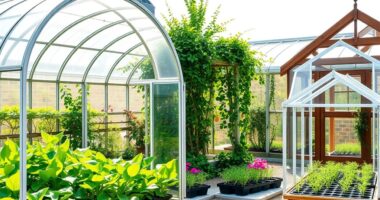
Choosing between a walk-in and lean-to greenhouse depends on your space, climate, and gardening goals. Walk-ins are standalone structures that offer more room, better climate control, and support larger plants, but they need more space and can be costlier. Lean-tos attach to walls, saving space and are ideal for small gardens, though they may face temperature regulation challenges. Understanding these differences will help you pick the best option—if you want to learn more, continue exploring your options.

Get garden gear delivered free with Prime
- Fast, free delivery on millions of items
- Prime Video, Amazon Music and more included
- Member-only deals all year
Key Takeaways
- Walk-in greenhouses offer larger space and better climate control, suitable for extensive gardening projects.
- Lean-to greenhouses save space and are ideal for small gardens or limited yard areas.
- Walk-ins require more materials and energy, increasing setup and maintenance costs.
- Lean-tos depend on an attached structure, which may limit climate regulation and durability.
- Choice depends on available space, gardening goals, and desired environmental control.
As an affiliate, we earn on qualifying purchases.
What Are the Differences Between Walk-In and Lean-To Greenhouses?

Have you ever wondered how walk-in and lean-to greenhouses differ? The main difference lies in design and placement, influencing climate control and material durability. Walk-in greenhouses are standalone structures, allowing you to move inside easily, which helps with better climate regulation. They typically use durable materials like aluminum or sturdy wood to withstand weather and frequent use. Lean-to greenhouses, on the other hand, are attached to an existing wall, saving space but relying heavily on that structure for support. This design can affect climate control, as it’s harder to regulate temperatures evenly. Material choices for lean-tos also need to be durable, especially since they’re exposed to weather on at least one side. Both types require sturdy materials to ensure longevity, but their differences in design impact how well they maintain the ideal environment. Additionally, material durability plays a crucial role in resisting weather-related wear and tear over time. It’s also important to consider how the design affects climate regulation and overall efficiency. Proper structural integrity is essential to ensure the greenhouse remains stable and functional in various weather conditions. Moreover, understanding the construction materials can help in selecting the best option for your specific environment and needs. Selecting the right greenhouse design can significantly enhance your gardening success and energy efficiency.
Pros and Cons of Walk-In Greenhouses for Gardeners

Considering a walk-in greenhouse for your garden? One major advantage is its spaciousness, making plant propagation easier and more efficient. You can comfortably tend to multiple plants at once, improving your overall workflow. The controlled environment helps extend your growing season and provides better pest management, reducing the risk of infestations. Additionally, a walk-in greenhouse allows for customizable ventilation systems to maintain optimal humidity levels. Proper ventilation is crucial to prevent humidity-related issues such as mold and pests, which can be problematic if not properly managed. Proper air circulation can also help prevent the buildup of heat and humidity, maintaining a healthier environment for your plants. Maintaining proper temperature control is essential for optimal plant growth and health. It’s also worth noting that environmental impact considerations can influence the decision to choose a walk-in greenhouse, as energy efficiency and eco-friendly materials become increasingly important. However, a walk-in greenhouse requires more space and can be more expensive to set up and maintain. Its size may also lead to higher heating costs, especially in colder months. Additionally, if not properly ventilated, humidity levels can become problematic, encouraging mold or pests. While it offers excellent control over growing conditions, it’s important to weigh these pros against the space and budget constraints to determine if it’s the right fit for your gardening needs.
Are Lean-To Greenhouses Suitable for Small Spaces?

Lean-to greenhouses are often praised for their space-saving design, making them an excellent choice if you’re working with limited yard or garden area. Their structure attaches to an existing wall, maximizing available space without requiring a large footprint. This design is perfect for small gardens, allowing you to incorporate vertical gardening techniques to optimize vertical space and increase planting capacity. Additionally, lean-tos can benefit from solar heating, as they often share a wall that can absorb sunlight and help maintain consistent temperatures. This energy efficiency makes them practical for small-scale gardening. Proper placement and orientation can further enhance the greenhouse’s thermal performance and overall effectiveness. When selecting a greenhouse, considering regulatory and environmental considerations can help ensure compliance and sustainability. Overall, if you’re limited on space but want a functional greenhouse, lean-to models offer a compact, efficient, and adaptable solution.
How to Choose the Best Greenhouse for Your Gardening Goals

Choosing the right greenhouse depends on your specific gardening goals and available space. If you want to grow plants year-round or experiment with indoor gardening, consider a walk-in greenhouse for ample space and easy access. For those interested in hydroponic systems, a greenhouse that accommodates these setups allows you to optimize space and control environmental conditions. Think about the scale of your gardening projects—smaller lean-to greenhouses suit limited areas and can still support indoor gardening initiatives. If you plan to expand or need space for large plants, a walk-in model offers flexibility. Assess your climate, budget, and desired plant varieties to select a greenhouse that aligns with your goals, whether it’s for hobby gardening, sustainable food production, or advanced hydroponic systems. Additionally, outdoor living and design options like incorporating natural elements can enhance your greenhouse environment and overall gardening experience.
Tips to Maximize Your Greenhouse Investment
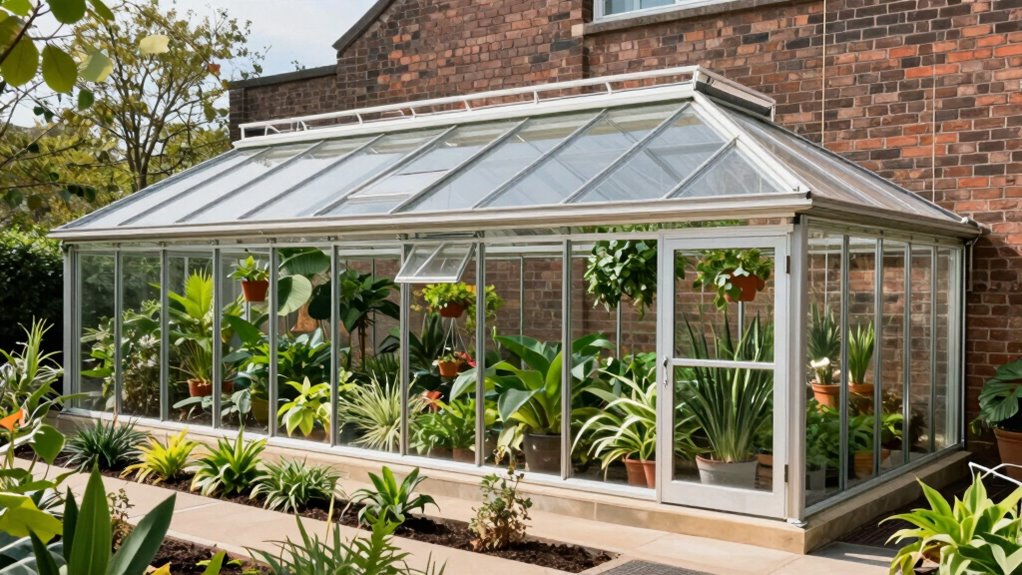
Maximizing your greenhouse investment begins with careful planning and regular maintenance. Use solar heating to reduce energy costs and keep temperatures stable year-round. Proper insulation and strategic placement optimize solar gain, making your greenhouse more efficient. Installing automated vents helps regulate humidity and temperature automatically, preventing overheating and ensuring healthy plant growth. Keep vents clean and functional, adjusting settings seasonally if needed. Regularly monitor your greenhouse’s structure for damage or wear, addressing issues promptly to avoid costly repairs later. Invest in quality materials that last, and consider adding shading or supplemental heating when necessary. Additionally, incorporating natural elements can enhance the overall environment and support sustainable practices within your greenhouse. For example, integrating renewable energy solutions can further decrease operational costs and reduce your carbon footprint. Using indoor plant care techniques can also improve plant health and productivity in your greenhouse. These steps not only improve plant conditions but also extend your greenhouse’s lifespan, giving you the best return on your investment. Incorporating energy-efficient systems can further optimize your greenhouse’s overall performance and sustainability. Exploring solar-powered ventilation can also help maintain ideal internal conditions more efficiently.
Frequently Asked Questions
How Do Insulation Options Differ Between Walk-In and Lean-To Greenhouses?
Insulation options differ between walk-in and lean-to greenhouses mainly in materials and installation. You’ll find that insulation materials like foam panels, bubble wrap, or polycarbonate are common for both, but lean-tos often use existing walls for better insulation, aiding temperature regulation. Walk-ins usually require more thorough insulation across all surfaces. Your choice impacts how effectively your greenhouse maintains a stable temperature, especially in colder months, ensuring healthier plant growth.
What Are the Maintenance Requirements for Each Greenhouse Type?
Think of your greenhouse as a garden’s guardian; it requires regular care to thrive. With walk-in greenhouses, you’ll need more frequent inspections for plant growth and pest control, as their spacious design invites more pests. Lean-to greenhouses demand less maintenance but still need routine cleaning, ventilation checks, and pest management. Both types benefit from monitoring for mold and ensuring proper ventilation to keep your plants healthy and pest-free.
Can Walk-In Greenhouses Be Portable or Relocated Easily?
Yes, walk-in greenhouses can be portable, but they face some relocation challenges. As portable structures, they’re designed to be moved, but their size and weight can make relocation complex and labor-intensive. You’ll need proper planning, equipment, and possibly reinforcement to guarantee they stay stable during moves. While not as easy to relocate as smaller structures, with the right approach, you can indeed reposition your walk-in greenhouse when needed.
How Does Climate Affect the Choice Between Walk-In and Lean-To Designs?
Climate plays a vital role in choosing between walk-in and lean-to greenhouses. If you face extreme temperatures or high humidity, you’ll need a design with better climate adaptability. Walk-in greenhouses often offer more control over ventilation strategies, making them ideal for diverse climates. Lean-to greenhouses work well in milder conditions and benefit from the existing structure’s shading or insulation. Your choice should prioritize how well the greenhouse manages your local climate.
Are There Specific Zoning or Building Codes for Installing Greenhouses?
You might think greenhouses are just fun backyard projects, but zoning restrictions and building permits are serious business. You’ll need to check local codes before installation because some areas have strict rules on structures, setbacks, and even height limits. Ignoring these regulations can lead to fines or having to dismantle your dream greenhouse. So, while it’s tempting to jump right in, a quick permit check saves you headaches later.
Conclusion
Choosing between a walk-in and lean-to greenhouse depends on your space, budget, and gardening goals. Don’t worry if space feels tight—lean-tos are perfect for small areas, and they still boost your plant success. Remember, investing in the right greenhouse can transform your gardening experience. So, pick what fits your lifestyle, and get ready to enjoy fresh, thriving plants year-round. Your green thumb will thank you!
Halloween Picks
halloween
As an affiliate, we earn on qualifying purchases.