
TL;DR

Get garden gear delivered free with Prime
- Fast, free delivery on millions of items
- Prime Video, Amazon Music and more included
- Member-only deals all year
Fall planting does not have one nationwide cutoff: the key is whether plants have time to establish roots before challenging weather or frozen ground arrives. Country Living’s gardening report offers about six weeks before the ground freezes as a general guide, while noting that climate, soil and plant type can change the answer.
Fall planting time varies by location, and a first frost alone does not mean the window has closed, according to a gardening report from Country Living. The report advises aiming for roughly six weeks before the ground freezes so trees, shrubs and perennials have time to establish roots, while stressing that local soil, weather and plant type can change the timing.
The six-week figure is a rule of thumb, not a firm deadline. The report says gardeners should look for a stretch of favorable growing conditions, typically when daytime temperatures remain in the 40s to 60s. Frozen or waterlogged ground can make planting unsuitable even where the calendar suggests there is time.
Its rough zone-based guide places planting in Zones 3–4 around mid-October and in Zones 5–6 around late October. In Zone 7 and warmer, planting may continue into early December or later if conditions allow. These are broad estimates, not local forecasts or guarantees.
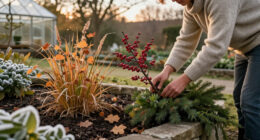
A frost does not automatically rule out planting, the report says. Horticulturalist Stacey Hirvela, marketing manager for Proven Winners Color Choice Shrubs, said a plant that has lost its leaves after a hard frost may be dormant or nearly dormant and can still be planted. The report cautions that soil condition and the plant’s winter tolerance remain relevant.
Local Conditions Set the Planting Window
The guidance matters because planting by a fixed date can mislead gardeners in regions where winters arrive at different times. A plant put in the ground too close to a freeze may have less opportunity to grow roots; in milder areas, the usable window may remain open well beyond autumn. The practical decision depends on conditions at the planting site, not just the season’s name.
Warm-climate gardeners face a different constraint. Hirvela told Country Living that rain and soggy soil can complicate winter planting. In the South, heat is often the larger challenge: the report says plants generally need a six-week cushion before temperatures reach 90 degrees. That can make winter or early-spring planting workable, provided soil is not waterlogged.
Products Worth Considering

14 Pcs Polycarbonate Greenhouse Panels, 6' x 2' x 0.24'' Twin-Wall Panels, Polycarbonate Sheet for All Weather Outdoor Garden and Greenhouse

RITOLLO 14-Pack 6 mm Twin-Wall Polycarbonate Greenhouse Panels, 6 ft x 2 ft

Husqvarna 460 Rancher Gas Chainsaw, 24-Inch Bar
As an affiliate, we earn on qualifying purchases.
Frost, Zones and Plant Choice
The report distinguishes between an air frost and frozen ground. Autumn frost may cause foliage to drop, but that does not necessarily prevent planting. The more relevant question for many trees, shrubs and perennials is whether roots can establish before the soil freezes or difficult weather arrives. USDA hardiness zones offer a broad climate reference, but they do not account for every local weather pattern or garden’s drainage.
Plant choice also affects the decision. Hirvela recommends against fall planting of some broadleaf evergreens, including rhododendron, holly and boxwood. She also advises caution with plants being grown at the edge of their hardiness range and those prone to winter damage locally, such as bigleaf hydrangea or butterfly bush. The report does not say these plants cannot be planted in fall everywhere; its warning is tied to their vulnerability and regional conditions.
““Basically what you want to try to accomplish with fall/winter planting is giving the plant the longest possible time to grow roots before challenging weather hits.””
— Stacey Hirvela, as quoted by Country Living
No Single Date Fits Every Garden
The zone dates and six-week cushion are general guidance, not a guarantee that a particular plant will establish successfully. The source does not provide a forecast for individual locations or specify how gardeners should assess every soil type. Local freeze timing, drainage, upcoming temperatures and the plant’s specific hardiness can all affect the decision.
It is also not possible to give a universal answer for plants that are vulnerable to winter damage: the report’s examples depend on local climate and growing conditions. Gardeners should check plant-specific instructions and local advice before treating the broad zone chart as a cutoff.
Check Soil Before You Plant
Before planting, gardeners can compare their local forecast and expected ground-freeze timing with the six-week rule, then check whether the soil is workable rather than frozen or waterlogged. They should also consider whether the plant is suited to their climate and whether it is among the types the report flags as risky for fall planting.
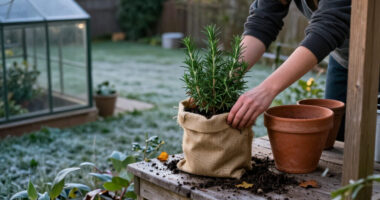
If a plant has already been purchased, Hirvela’s advice, as reported by Country Living, is to put it in the ground before winter when conditions permit rather than leave it in its container. The source gives no fixed next date for planting; the next decision point is the gardener’s local weather and soil conditions.
Key Questions
Can I plant after the first frost?
Often, yes. Country Living’s report says an autumn frost by itself is not necessarily a barrier, though frozen or waterlogged soil and the plant’s winter tolerance still matter.
How many weeks before the ground freezes should I plant?
The report suggests aiming for about six weeks so trees, shrubs and perennials have time to establish roots. It describes this as a general rule, not a firm deadline.
What are the report’s rough planting dates by zone?
It lists mid-October for Zones 3–4 and late October for Zones 5–6. In Zone 7 and warmer, planting may continue into early December or later when soil and weather allow.
Which plants may be poor choices for fall planting?
Hirvela recommends against fall planting of some broadleaf evergreens, including rhododendron, holly and boxwood. The report also urges caution with plants vulnerable to local winter damage, such as bigleaf hydrangea or butterfly bush.
Source: countryliving.com