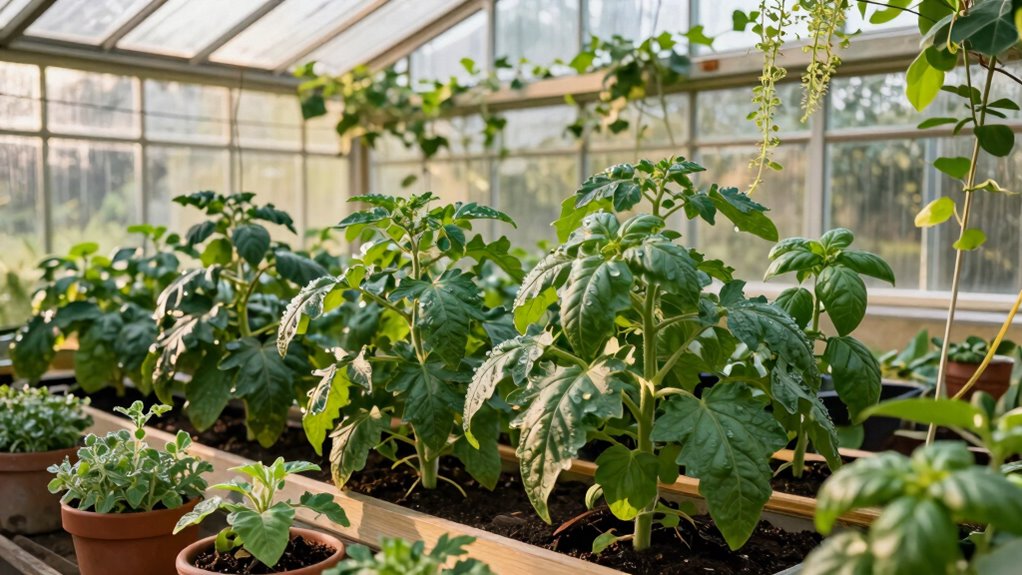

To make fall easier, focus on late-summer greenhouse strategies like selecting crops that thrive in cooler temps, such as leafy greens and hardy herbs. Keep pests in check with physical barriers, beneficial insects, and good sanitation. Prepare your seedlings early and transplant when conditions are right. Combining these steps creates a healthy, resilient environment that simplifies fall changes. If you want to discover more tips, you’ll find helpful insights coming up next.

Get garden gear delivered free with Prime
- Fast, free delivery on millions of items
- Prime Video, Amazon Music and more included
- Member-only deals all year
Key Takeaways
- Start planting hardy crops like kale, spinach, and carrots to ensure quick maturity and resilience in cooler fall weather.
- Implement integrated pest management with physical barriers and beneficial insects to prevent infestations early.
- Prepare seedlings indoors and transplant them carefully, aligning with pest control measures for a smooth transition.
- Maintain cleanliness and sanitation to reduce pest habitats and minimize outbreak risks during seasonal change.
- Use biological controls and physical barriers as primary defenses to protect crops without relying on chemicals.
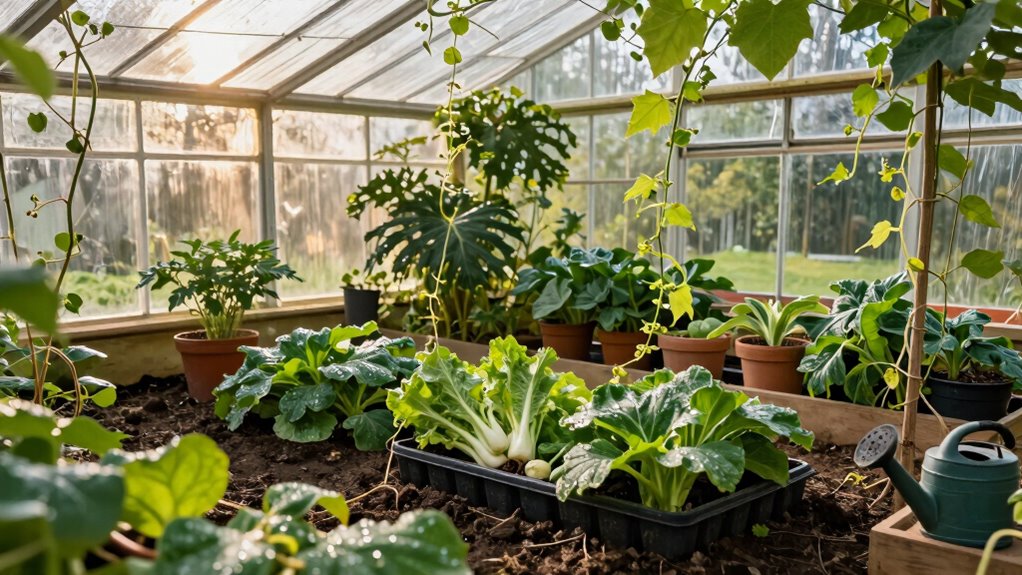
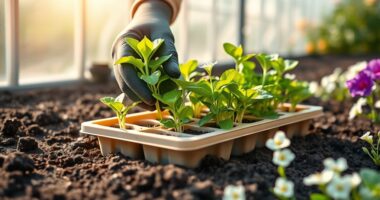
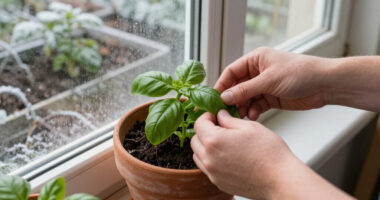
As fall approaches, now is the perfect time to refine your greenhouse strategy to guarantee a successful season. One key step is focusing on plant selection. You want to choose crops that thrive in cooler temperatures and shorter days. Leafy greens like lettuce, spinach, and kale are excellent options because they mature quickly and tolerate the shifting weather. Root vegetables such as carrots and radishes also perform well in fall conditions, providing a steady harvest without demanding extensive resources. Consider adding some hardy herbs like parsley and cilantro, which can continue growing into colder months. By selecting the right plants now, you set yourself up for a more manageable and productive fall growing season. Proper plant selection is essential for optimizing your greenhouse’s productivity during seasonal transitions.
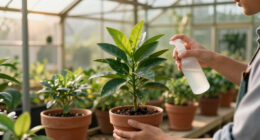
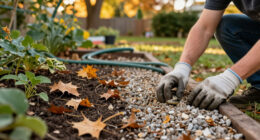
In addition to choosing the right plants, you need to prioritize pest management to prevent issues that can derail your efforts. As temperatures cool, pests might become less active, but some can still pose a threat. Focus on establishing a clean environment inside your greenhouse by removing plant debris and regularly inspecting your crops. Use physical barriers like row covers or insect screens to keep pests out without relying solely on chemical controls. Introducing beneficial insects, such as ladybugs or predatory mites, can also help naturally keep pest populations in check. Keep an eye out for common fall pests like aphids, whiteflies, and spider mites, and address any infestations early before they spread. Proper pest management not only protects your plants but also reduces the need for chemical interventions, making your greenhouse safer and more sustainable. Implementing integrated pest management techniques can further enhance your efforts. Additionally, understanding the seasonal pest activity patterns can help you anticipate and prevent outbreaks more effectively. Developing a pest monitoring routine allows you to catch problems early and act swiftly, preventing major damage. Staying informed about pest behavior and their life cycles is crucial for timely interventions and maintaining a healthy crop environment.
Timing your plant selection and pest management efforts is crucial in the late summer as you transition into fall. Start by evaluating your current crop inventory and preparing new seedlings indoors or in a protected environment. This way, you can transplant them into your greenhouse once conditions are right, avoiding unnecessary stress on your plants. Simultaneously, implement pest control strategies to minimize damage as pests become more active in cooler weather. Good sanitation, physical barriers, and biological controls are your best tools during this period. The goal is to build a resilient environment that encourages healthy growth and minimizes pest problems, easing your workload during the busy fall months.
greenhouse row covers for pest control
As an affiliate, we earn on qualifying purchases.
As an affiliate, we earn on qualifying purchases.
Frequently Asked Questions
How Early Should I Start Greenhouse Preparations for Fall?
You should start greenhouse preparations about 4 to 6 weeks before fall to guarantee your garden design and greenhouse lighting are ready. This gives you enough time to set up proper lighting, adjust temperature controls, and organize your plants for a smooth changeover. Early preparation helps you extend your growing season, optimize plant health, and enjoy a successful fall harvest. Don’t wait too long, or you might miss ideal growing conditions.
What Are the Best Plants to Grow in a Late-Summer Greenhouse?
You should focus on growing shade-tolerant greens like lettuce, spinach, and kale, which thrive in late summer’s lower light levels. Additionally, tropical fruits like bananas, pineapples, and passionfruit can do well if your greenhouse maintains consistent warmth and humidity. These plants help maximize your greenhouse space, extend your growing season, and prepare for fall, making your gardening efforts more productive and enjoyable during this changeover period.
How Can I Prevent Pests in My Fall Greenhouse?
Imagine your greenhouse as a fortress, where natural pest control acts like vigilant guards. To prevent pests, you should embrace companion planting, pairing plants that repel pests with your crops. Regularly inspect plants for signs of trouble, and encourage beneficial insects like ladybugs. Keep the environment clean and healthy, reducing hiding spots for pests. This proactive approach creates a resilient, pest-free haven, helping your fall greenhouse thrive effortlessly.
What Temperature Range Is Ideal for Fall Greenhouse Crops?
You should aim for a temperature range of 55-75°F for fall greenhouse crops. Effective temperature management guarantees healthy growth and minimizes stress on your plants. Choose crops that thrive in cooler weather, like leafy greens, root vegetables, and brassicas, to maximize success. Keep an eye on daytime and nighttime temperatures, adjusting ventilation or heating as needed to maintain consistent conditions and prevent temperature swings that could harm your crops.
How Do I Extend My Growing Season Using a Greenhouse?
Imagine you’re growing tomatoes in September, but frost threatens your harvest. To extend your growing season, you can use season extension techniques like adding thermal curtains or supplemental heating. Focus on crop selection—choose hardy vegetables like kale or spinach—and adjust your greenhouse environment to protect plants from cold. This approach allows you to enjoy fresh produce longer and maximize your greenhouse’s productivity well into fall.
Conclusion
By embracing this late-summer greenhouse strategy, you’re planting seeds of ease for a smooth fall shift. Think of it as setting the stage for a bountiful harvest, where your efforts bloom into a season of abundance without the rush. With patience and care, you’ll watch your garden flourish, turning the late summer into a gentle prelude to autumn’s grand performance. So, get ready to nurture your green sanctuary and reap the rewards all season long.
Fall Picks
fall essentials
As an affiliate, we earn on qualifying purchases.