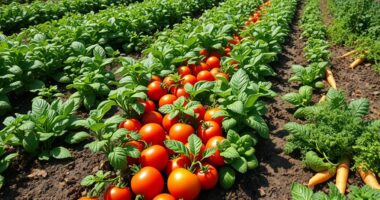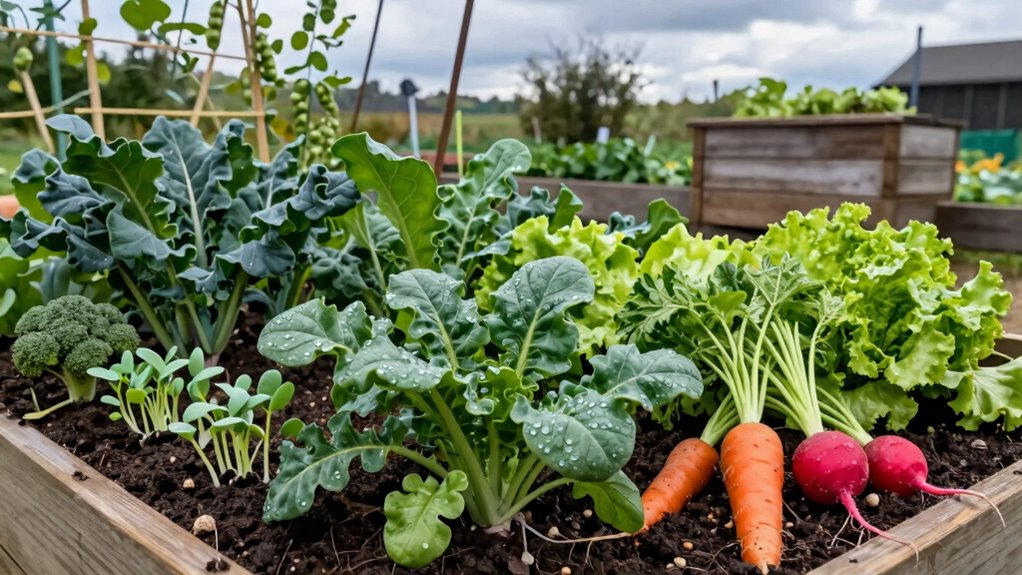

During the shoulder season, you should focus on planting quick-growing crops like leafy greens, radishes, carrots, and brassicas. These crops thrive in cooler temperatures, helping you make the most of your space by extending your harvest window. Companion planting can boost productivity and improve soil health, preparing your garden for future crops. Keep exploring to discover more strategies for maximizing your garden’s potential during this productive period.
Key Takeaways
- Prioritize fast-growing leafy greens like spinach and lettuce to maximize space and harvest quickly.
- Incorporate root vegetables such as radishes and carrots for efficient use of soil depth.
- Use companion planting to optimize space and enhance plant health during cooler months.
- Prepare soil with organic matter and cover crops to support quick germination and growth.
- Select crops suited for cooler weather to extend the growing season and make full use of available space.
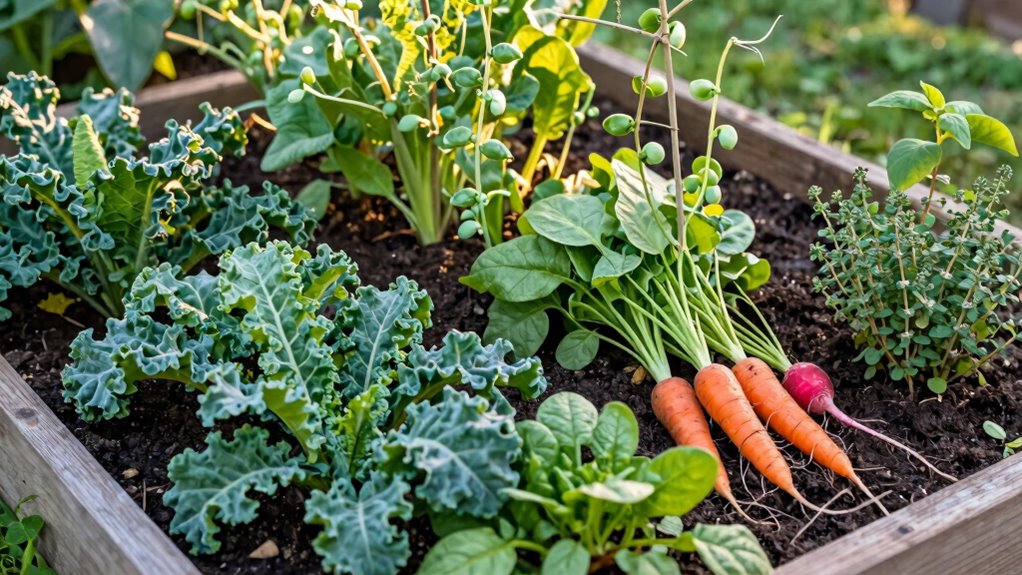
As the weather shifts between main planting seasons, the shoulder season offers a unique opportunity to make the most of your garden space. During this time, you can plant crops that thrive in cooler temperatures and take advantage of the extra time to prepare your soil for future planting. One effective approach is companion planting, which involves pairing plants that benefit each other, helping you maximize your garden’s productivity while minimizing pests and diseases. For example, planting fast-growing greens like spinach or radishes alongside root crops such as carrots can make efficient use of space. These combinations not only boost plant health but also improve soil conditions, as some companions can fix nitrogen or repel pests, creating a healthier environment for subsequent crops.
Maximize your garden during shoulder season with companion planting and early crop choices for healthier, more productive soil.
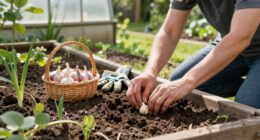
Soil preparation is essential during the shoulder season because the soil may be compacted or depleted from previous plantings. Before sowing new crops, take the time to loosen the soil and enrich it with organic matter like compost or aged manure. This boosts fertility and guarantees your plants have access to necessary nutrients. Cover cropping is another smart strategy—you can sow legumes like clover or field peas, which fix nitrogen in the soil, or plant cover crops that add organic matter and prevent erosion. These practices set a solid foundation for your garden, allowing you to get a head start on the next planting cycle. Additionally, understanding soil health and how to improve it can significantly influence your garden’s productivity during the shoulder season. Incorporating soil testing can help you determine specific nutrient needs and tailor your amendments for optimal growth. Proper soil management is crucial to maintaining a thriving garden environment, especially when working with less-than-ideal conditions.
During this period, you can also focus on growing crops that tolerate cooler weather, such as leafy greens, brassicas, or root vegetables. These crops grow quickly and can be harvested before the heat of summer or the frost of winter arrives. By carefully selecting what to grow, you make efficient use of space and extend your harvest window. Keep in mind that soil conditions need to be ideal; so, regular soil testing and amendments will help you maintain a healthy growing environment. This preparation guarantees your shoulder season crops will flourish and set the stage for a successful main planting season. Moreover, planning your planting schedule around season extenders can significantly prolong your growing period and increase your overall harvest.
As an affiliate, we earn on qualifying purchases.
Frequently Asked Questions
How Do I Prepare My Soil for Shoulder Season Planting?
To prepare your soil for shoulder season planting, start with soil testing to identify nutrient deficiencies and pH levels. Based on the results, amend your soil accordingly. Then, select a suitable cover crop like clover or vetch to improve soil fertility and structure. Plant the cover crop a few weeks before your main crops to maximize benefits. This approach boosts soil health, ensuring a productive shoulder season.
What Are the Best Pest Control Methods During Shoulder Season?
During the shoulder season, you can control pests effectively by practicing crop rotation and composting techniques. Rotate plant families to disrupt pest life cycles, reducing infestations naturally. Incorporate composted organic matter into your soil to boost plant health and resilience, making them less vulnerable to pests. Keep your garden clean, remove debris, and use natural deterrents like neem oil or beneficial insects to maintain healthy plants during this changeover period.
Can I Grow Herbs Alongside Vegetables in Shoulder Season?
Yes, you can grow herbs alongside vegetables during the shoulder season, turning your garden into a symphony of flavors. Practice companion planting to boost growth and deter pests, and use crop rotation to keep the soil healthy. Mixing herbs like basil or thyme with vegetables such as lettuce or carrots creates a thriving, diverse garden, making efficient use of space while supporting each other’s growth.
How Do I Extend the Harvest Period in Shoulder Season?
To extend your harvest period during the shoulder season, focus on season extension techniques like row covers, cold frames, or hoop tunnels. Select crops suited for cooler weather, such as kale, spinach, or Brussels sprouts, to maximize your harvest. By combining strategic crop selection with season extension methods, you can prolong your growing season, ensuring fresh produce even as temperatures fluctuate. This approach boosts your garden’s productivity during shoulder seasons.
Are There Specific Watering Needs for Shoulder Season Crops?
Like a gentle rain nourishing the earth, your shoulder season crops need consistent watering. You should adjust your irrigation scheduling based on weather conditions, ensuring they get enough moisture without overwatering. Water conservation is key, so consider drip irrigation or soaker hoses to deliver water directly to roots. Keep the soil moist but not waterlogged, and monitor regularly to prevent stress and promote healthy growth.
Conclusion
As you plan your shoulder season garden, remember that the right choices can reveal hidden potential in your space. But what if the unexpected happens—can your crops adapt, thrive, and surprise you? The secret lies in selecting resilient plants and staying flexible. With a little foresight and daring experimentation, you’ll discover that this intermediate period isn’t just a pause; it’s the gateway to a bountiful, unpredictable harvest. Are you ready to see what surprises await?