To increase day length in winter, you can use supplemental lighting that mimics natural sunlight, such as full-spectrum bulbs or dawn simulators. Place these lights strategically to avoid glare and aim for bright exposure in the morning to set your circadian rhythm. Managing light pollution and adjusting evening lighting helps prevent sleep disruption. Properly timed artificial light can boost your mood and energy levels, and there’s more to learn about optimizing your light environment for winter well-being.
Key Takeaways
- Use full-spectrum or daylight-mimicking bulbs to simulate longer daylight hours indoors during winter.
- Position artificial lights to maximize exposure in the morning, aligning with natural circadian cues.
- Implement dawn simulators or light boxes to gradually extend light exposure at the start of the day.
- Maintain a consistent schedule to reinforce natural light patterns and support circadian rhythm.
- Limit evening light exposure and blue light from screens to prevent disrupting sleep-wake cycles during extended photoperiods.
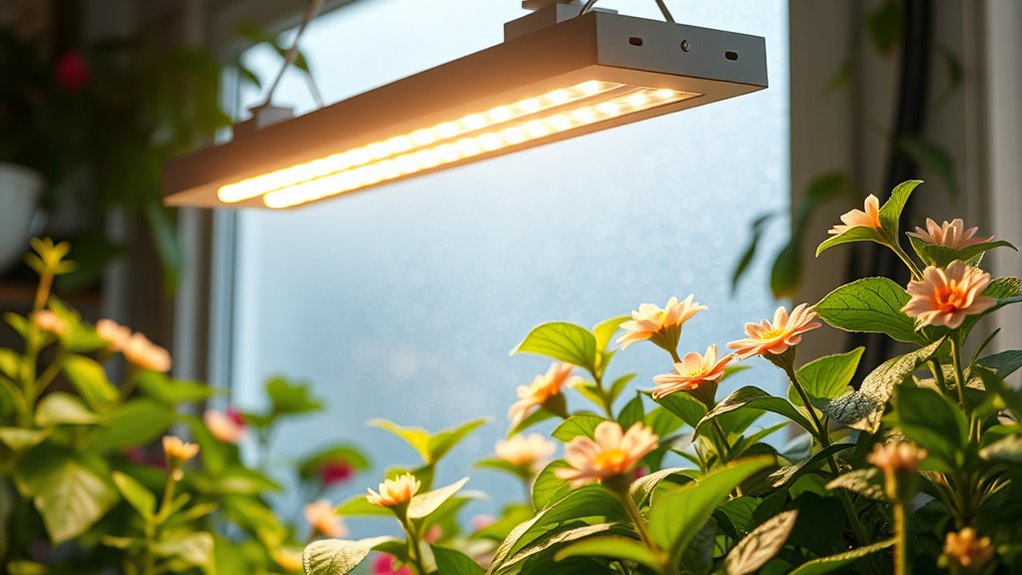
During the darker months of winter, natural daylight hours can feel insufficient, leaving you feeling sluggish and less energized. To combat this, many people turn to supplemental lighting to extend the photoperiod, effectively increasing the amount of light exposure during the day. Photoperiod extension involves using artificial light sources to simulate longer daylight hours, helping to regulate your circadian rhythm and improve your overall mood and alertness. This approach is especially beneficial if you work indoors or live in areas where daylight is limited.
When you implement supplemental light, it’s important to consider the effects of light pollution, which can interfere with your efforts. Light pollution effects are often overlooked, but they can impact your biological clock if your exposure to excessive or poorly timed artificial light disrupts your natural sleep-wake cycle. To maximize the benefits of photoperiod extension, aim for a consistent schedule that mimics natural daylight patterns. Use full-spectrum or daylight-mimicking bulbs, since they produce light that closely resembles sunlight, helping your body respond more naturally to the added illumination.
You should position your light source carefully—ideally, it should be placed at an angle that reduces glare and eye strain while providing enough brightness to signal daytime to your brain. Morning exposure to bright light is particularly effective, as it helps set your circadian rhythm for the day ahead. If you work late or wake up after sunrise, consider using a light box or a dawn simulator to gradually introduce light into your environment, creating a sense of dawn and helping your body recognize the start of a new day.
In addition, understanding the role of light pollution effects can help you better manage your exposure and optimize your circadian health. Managing light pollution effects involves controlling your exposure to artificial light in the evening. Reducing blue light from screens and dimming lights before bedtime can prevent interference with melatonin production, ensuring you get quality sleep despite the extended daylight hours during the day. This balance is essential because extended photoperiods should support your circadian health rather than disrupt it.
In essence, by carefully integrating supplemental light to achieve photoperiod extension and being mindful of light pollution effects, you can mitigate winter’s impact on your energy levels and mood. This strategy not only helps you feel more alert during the day but also promotes better sleep at night, keeping your biological clock aligned with the changing seasons.
Frequently Asked Questions
Can Supplemental Lighting Replace Natural Sunlight Entirely?
Supplemental lighting can’t fully replace natural sunlight, especially for seasonal affective disorder. Artificial sunlight provides necessary light, but it often lacks the full spectrum and intensity of natural daylight, which are essential for regulating your body’s internal clock. While it helps improve mood and energy during winter, you should still aim to get some outdoor sunlight whenever possible for maximum health benefits.
What Are the Energy Costs Associated With Supplemental Winter Lighting?
Think of supplemental winter lighting as a necessary investment, not a luxury—its energy costs can add up quickly. You’ll see increased energy consumption and higher electricity bills, especially if you run lights for extended hours. Conducting a cost analysis helps you understand the expense and find efficient solutions. While it does boost daylight, be mindful of the ongoing energy costs and explore energy-saving options to keep expenses manageable.
How Does Supplemental Light Impact Plant Growth and Flowering?
Supplemental light boosts your plant’s growth and flowering by enhancing photosynthesis efficiency, allowing plants to produce more energy. It also triggers flowering induction, encouraging plants to bloom out of season. You’ll notice faster growth, healthier foliage, and more abundant flowers. Just guarantee you provide the right light spectrum and duration to optimize these effects, and you’ll see a significant improvement in your plants’ overall development during winter months.
Are There Specific Light Spectrums That Work Best for Winter Days?
You should choose a light spectrum that promotes plant response by including both blue and red wavelengths. Blue light encourages vegetative growth, while red light stimulates flowering and fruiting. Using a full-spectrum grow light mimics natural sunlight, helping plants adapt better during winter days. This targeted spectrum guarantees maximum growth, flowering, and overall health, even when outdoor light is limited, making your indoor plants thrive despite shorter days.
What Safety Precautions Should Be Taken When Installing Grow Lights?
When installing grow lights, prioritize electrical safety by making certain all wiring is properly insulated and grounded. Use surge protectors and avoid overloading circuits. Consider mounting options carefully; securely attach lights to prevent accidents and guarantee ideal light distribution. Keep cords away from water and heat sources. Regularly inspect connections for wear. Following these precautions minimizes risks, keeps your setup safe, and promotes healthy plant growth during winter months.
Conclusion
By adding supplemental light during winter, you can effectively extend your day length and improve your mood and productivity. Studies show that plants and humans both respond positively to increased light exposure, with some research indicating a 20% boost in energy levels when days are lengthened. So, don’t underestimate the power of a simple grow light—it’s a small change with a big impact on your winter well-being. Brighten your days and enjoy the longer, more vibrant winter months.