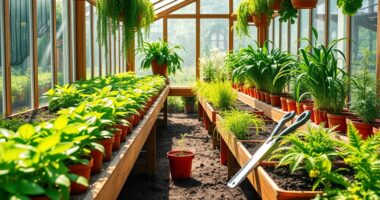
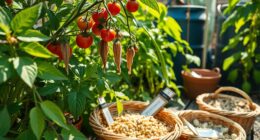
Starting herbs indoors in late winter is a great way to enjoy fresh, flavorful greens all year. Choose containers with good drainage, opt for bright southern windows, and supplement with grow lights if needed. Keep the environment warm and maintain a regular watering schedule, fertilizing every few weeks. This setup guarantees your herbs thrive before outdoor gardening begins. Keep exploring for tips to create the perfect indoor herb garden and enjoy bountiful, homegrown flavors.
Key Takeaways
- Choose deep, well-draining containers with drainage holes for healthy root development.
- Place herbs on south-facing windows or use grow lights to ensure 12-16 hours of proper light daily.
- Maintain consistent indoor temperatures between 65-75°F and avoid drafts for optimal growth.
- Water herbs only when the topsoil feels dry, and fertilize regularly with diluted liquid fertilizer.
- Develop a mini indoor garden on windowsills or shelves to enjoy fresh herbs throughout late winter.

As late winter approaches, starting herbs indoors is a smart way to guarantee fresh greens on your table year-round. You don’t have to wait for the weather to warm up or rely on store-bought herbs that may lack flavor. Instead, you can cultivate your own flavorful, aromatic herbs right in your home. The key is choosing the right herb container ideas and ensuring proper indoor herb lighting. With the right setup, you’ll enjoy fresh basil, parsley, cilantro, and more, even when outdoor garden beds are still dormant.
When selecting containers, think about size, drainage, and material. You want herb containers that are deep enough to support healthy root growth, with drainage holes to prevent waterlogging. Clay pots are great for breathability, but plastic containers are lightweight and easier to handle. Self-watering pots can also simplify watering routines, making it easier to maintain consistent moisture. Consider grouping herbs with similar water needs together, and use containers that fit your space—whether on a sunny windowsill, a kitchen counter, or a dedicated indoor garden shelf.
Indoor herb lighting is essential for successful growth. Natural sunlight is best, so place your herbs on south-facing windows where they’ll get at least 4-6 hours of direct light daily. If sunlight is limited, supplement with grow lights designed specifically for herbs and vegetables. LED grow lights are energy-efficient and provide the full spectrum of light needed for healthy growth. Make sure the lights are positioned about 6-12 inches above the plants, and keep them on for 12-16 hours a day to mimic natural sunlight. Proper lighting encourages lush, flavorful foliage and prevents legginess.
You should also consider the overall environment—aim for a consistent temperature between 65-75°F and avoid drafts or temperature fluctuations. Regular watering is essential but avoid overwatering; check the top inch of soil and water only when it feels dry. Use quality potting soil that drains well, and fertilize every few weeks with a diluted liquid fertilizer to support steady growth. Incorporating grow light technology can further enhance your indoor herb garden’s success.
Starting herbs indoors isn’t complicated, but it does require attention to light, container choice, and watering routines. With thoughtful herb container ideas and adequate indoor herb lighting, you’ll create a thriving mini-garden that supplies fresh herbs all winter long. This way, you enjoy the flavors and health benefits of homegrown herbs whenever you desire, making your late winter meals extra vibrant and flavorful.
Frequently Asked Questions
Which Herbs Are Best Suited for Indoor Winter Growing?
You should choose herbs like basil, parsley, mint, chives, and cilantro for indoor winter growing. Select herb containers with good drainage to prevent overwatering and guarantee healthy roots. These indoor herb species thrive in bright, indirect light and moderate temperatures. By carefully choosing your containers and providing proper light, you’ll enjoy fresh herbs all winter long, making your indoor gardening both rewarding and practical.
How Often Should I Water My Indoor Herbs?
Think of your herbs as little heartbeats that need consistent care. You should water your indoor herbs when the soil moisture feels just right—not too dry, not too soggy. Check their soil daily and establish a watering schedule based on their needs, usually once or twice a week. This rhythm guarantees healthy growth, keeping your herbs vibrant and flavorful, like a steady pulse of life indoors.
What Type of Lighting Is Optimal for Indoor Herbs?
You should use artificial lighting with full-spectrum grow lights that mimic natural sunlight for your indoor herbs. Aim for at least 12-16 hours of light daily, adjusting based on plant response. Guarantee the light is positioned about 2-4 inches above the herbs to prevent stretching. Consistent light duration and proper intensity help your herbs thrive indoors, promoting healthy growth and vibrant foliage during late winter.
How Do I Prevent Pests Indoors While Growing Herbs?
Think of pests as unwelcome guests trying to crash your herb party. To prevent them, you need a shield of pest prevention strategies like keeping your space clean, avoiding overwatering, and inspecting plants regularly. Use organic pest control methods such as neem oil or insecticidal soap to gently deter intruders without harming your herbs. Stay vigilant, and your indoor garden will thrive pest-free, giving you fresh herbs all season.
When Can I Transplant Indoor Herbs Outdoors?
You can transplant your indoor herb seedlings outdoors once they’ve developed a strong root system and the outdoor planting schedule aligns with the last frost date in your area, typically after late winter or early spring. Gradually harden off your seedlings by exposing them to outdoor conditions over a week. This process guarantees a successful seedling transplant, giving your herbs the best start in their new outdoor environment.
Conclusion
Getting your herbs started indoors now gently prepares you for the quiet promise of late winter. As these little green friends grow, they’ll quietly brighten your days and whisper of spring’s return. By nurturing them today, you’re planting more than herbs—you’re cultivating hope and patience. Soon, their fresh flavors will be ready to elevate your meals and lift your spirits, reminding you that even in the quietest moments, new beginnings are just around the corner.