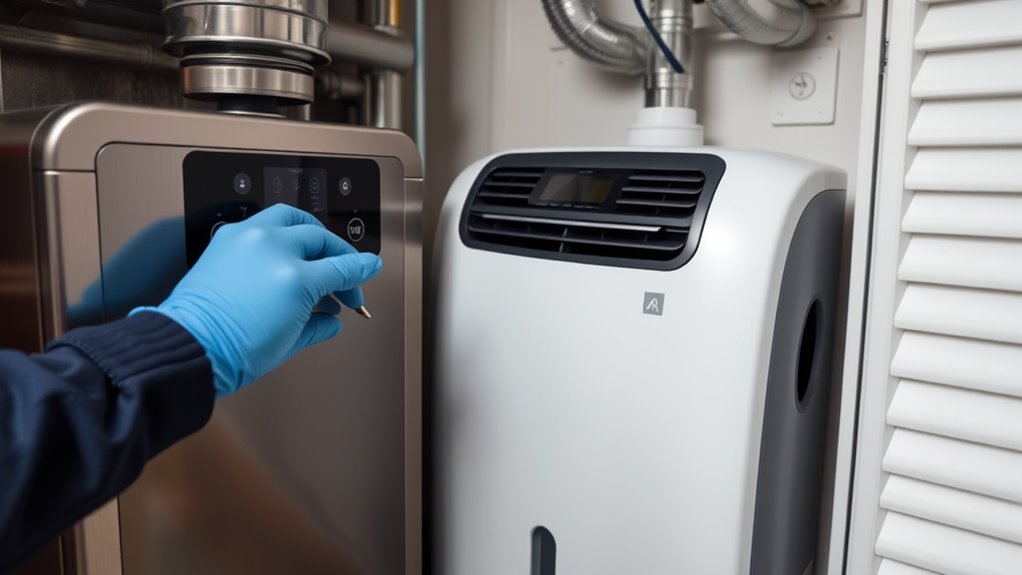

To keep your dehumidifier and heating system working efficiently, perform regular maintenance like cleaning filters every few months, checking coils and vents for dust, and emptying the water reservoir often. Schedule annual professional inspections for your heating system and replace filters regularly to improve air quality. Monitor humidity levels to prevent issues, and address any odd noises or heating inconsistencies promptly. Staying on top of these tasks will help your systems run smoothly—learn more to maximize their performance.
Key Takeaways
- Regularly clean filters, coils, and vents to maintain optimal airflow and prevent system inefficiency.
- Schedule annual professional inspections for comprehensive system assessments and repairs.
- Monitor indoor humidity levels with a hygrometer, keeping it between 30-50% for comfort and system efficiency.
- Promptly address unusual noises, system inefficiencies, or uneven heating to avoid costly repairs.
- Keep exterior surfaces free of dust and debris to ensure proper operation and extend equipment lifespan.
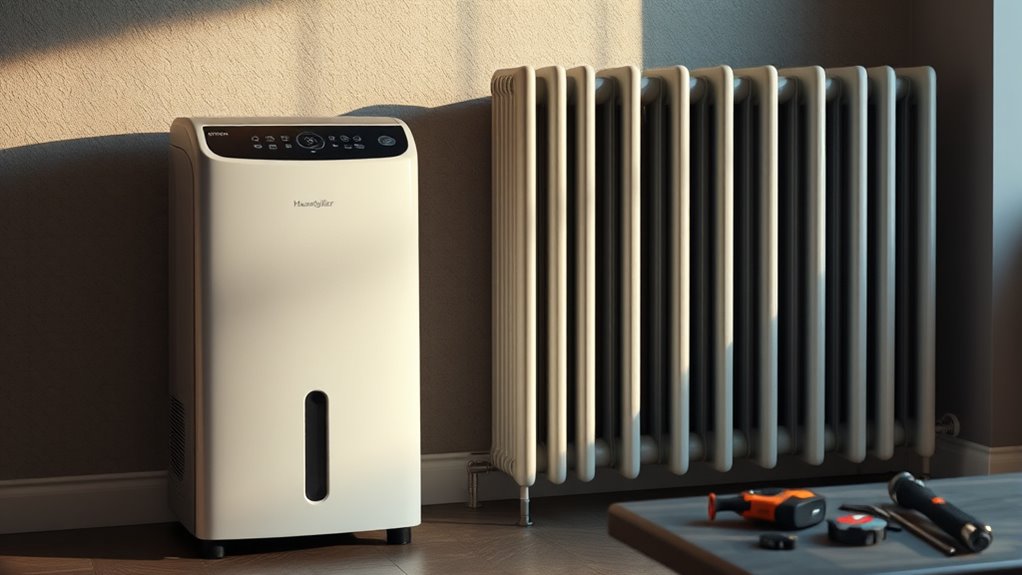
Keeping your dehumidifier and heating system in good shape is essential for a comfortable and healthy home. Proper system maintenance ensures that humidity control remains effective, preventing excess moisture that can lead to mold growth, musty odors, and damage to your property. Regularly inspecting and cleaning your dehumidifier helps it run efficiently, reducing the risk of breakdowns and extending its lifespan. When you keep the system clean and well-maintained, you’re better equipped to manage indoor humidity levels, which directly impacts your comfort and health.
Maintaining your dehumidifier and heating system ensures a healthier, more comfortable home.
To maintain your dehumidifier effectively, start by checking the filters and emptying the water reservoir frequently. Dirty filters restrict airflow and reduce the unit’s ability to control humidity properly. When filters are clogged, your dehumidifier has to work harder, increasing energy consumption and wear. Make sure to follow the manufacturer’s instructions for cleaning or replacing filters regularly, typically every few months. Also, inspect the coils and vents for dust buildup, as these can impede airflow and decrease humidity control efficiency. Keeping the exterior free of dust and debris is equally important to ensure ideal operation. Additionally, understanding system efficiency can help you optimize your maintenance routines for better performance.
Your heating system also benefits from routine system maintenance. Scheduling annual inspections with a professional technician helps identify potential issues before they become major problems. During these visits, they’ll check the blower, filters, and thermostat to confirm everything functions correctly. Replacing filters every one to three months improves air quality and system efficiency. A well-maintained heating system ensures even heat distribution, reducing cold spots and preventing excessive energy use. When your heating system runs smoothly, it complements your dehumidifier’s efforts, maintaining a stable indoor environment.
In addition to scheduled maintenance, be proactive about monitoring your systems. If you notice unusual noises, inconsistent heating, or excessive humidity, address these problems promptly. Small issues can escalate if ignored, leading to costly repairs and compromised indoor air quality. Using a hygrometer helps you keep an eye on humidity levels, aiming for the perfect range of 30-50%. When humidity control is precise, your heating system operates more efficiently because it doesn’t have to compensate for excess moisture or dryness.
Frequently Asked Questions
How Often Should I Replace the Filters in My Dehumidifier and Heating System?
You should replace your filters every 1 to 3 months, depending on usage and air quality. Follow your maintenance schedule to guarantee peak performance. Regular filter replacement prevents dust buildup and improves efficiency. Check your filters monthly, especially during high-use seasons. If you notice reduced airflow or increased energy bills, it’s time for a replacement. Staying consistent with filter maintenance keeps your dehumidifier and heating system running smoothly.
Can I Use the Same Maintenance Routine for Different Brands?
You can’t use the same maintenance routine for different brands because brand compatibility varies. Each brand may have specific filter types, replacement schedules, and maintenance procedures. To guarantee maintenance consistency and peak performance, always follow the manufacturer’s guidelines. Check your user manual or contact customer support for brand-specific advice. This way, you avoid damage and keep your system running smoothly, regardless of the brand you’re using.
What Are Signs My System Needs Professional Repairs?
You’ll know your system needs professional repairs if you notice persistent system noise, unusual odors, or inconsistent performance. These signs indicate underlying issues that require expert attention. Don’t ignore strange sounds, strange smells, or a sudden drop in efficiency. Addressing these problems early prevents costly damage and guarantees your system runs smoothly. Keep an eye out for these warning signs to maintain your system’s health and avoid bigger headaches down the line.
Is It Safe to Bypass Certain Maintenance Steps?
You shouldn’t bypass maintenance steps because doing so risks DIY hazards and can void your warranty. Skipping essential upkeep might cause your system to malfunction or become unsafe, leading to costly repairs later. Always follow the manufacturer’s instructions or hire a professional to handle maintenance. This way, you guarantee your system operates safely, efficiently, and remains covered under warranty, saving you money and potential hazards down the line.
How Can I Improve Energy Efficiency During Upkeep?
Did you know that proper maintenance can reduce energy costs by up to 15%? To improve energy efficiency during upkeep, follow energy saving tips like regularly cleaning filters and sealing leaks. Create a maintenance schedule to keep your system running at its best, and avoid overworking your equipment. These steps ensure your dehumidifier and heating system operate efficiently, saving you money and extending their lifespan.
Conclusion
By giving your dehumidifier and heating system the care they deserve, you’re tending to the heartbeats of your home. Regular upkeep keeps these systems running smoothly, like a well-oiled machine, ready to warm and dry your space when you need it most. Think of it as nurturing a trusted friend—you’ll enjoy cozy, comfort-filled days, knowing you’ve protected your sanctuary from the inside out. Stay vigilant, and your home will thank you with lasting warmth and freshness.