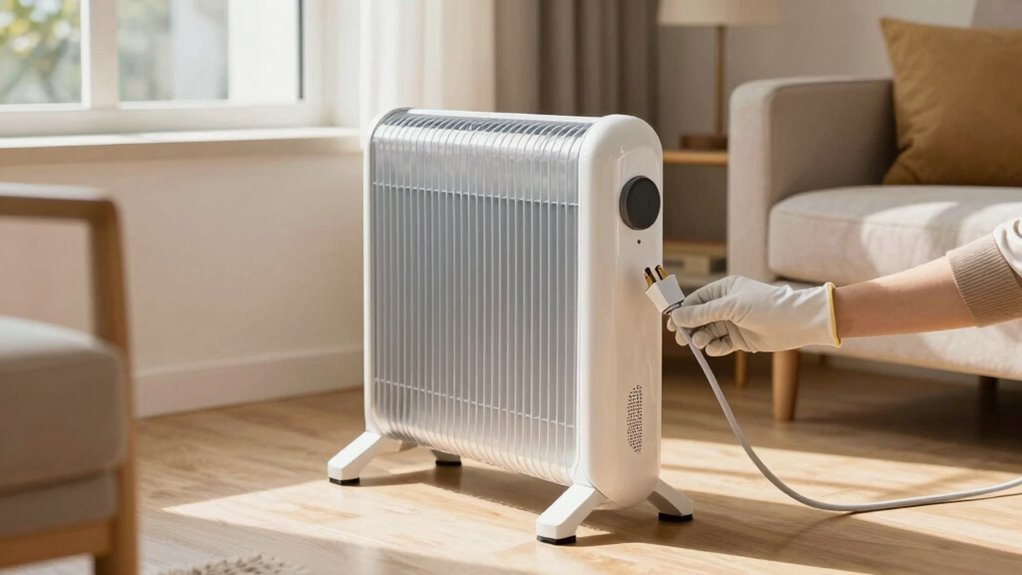

Before winter hits, you should never skip a thorough heater safety check. Inspect your ventilation and exhaust systems for blockages or leaks, and test for gas leaks using soap bubbles or professional tools. Check electrical components and wiring for damage, and guarantee your thermostat is calibrated correctly. Regular cleaning of filters, burners, and vents is essential for safe operation. If you’re unsure about any steps, professional inspection can prevent hazards and keep your home warm and safe all season. Keep going to learn more.

Get garden gear delivered free with Prime
- Fast, free delivery on millions of items
- Prime Video, Amazon Music and more included
- Member-only deals all year
Key Takeaways
- Inspect and clean ventilation and exhaust systems to prevent blockages and gas leaks.
- Test electrical components and ensure all wiring and connections are secure.
- Check for gas leaks using soap solution and address any odors immediately.
- Replace or clean filters regularly to maintain efficiency and reduce fire hazards.
- Verify functioning carbon monoxide detectors and schedule professional inspections annually.
As an affiliate, we earn on qualifying purchases.
Why Regular Heater Safety Checks Are Crucial Before Winter
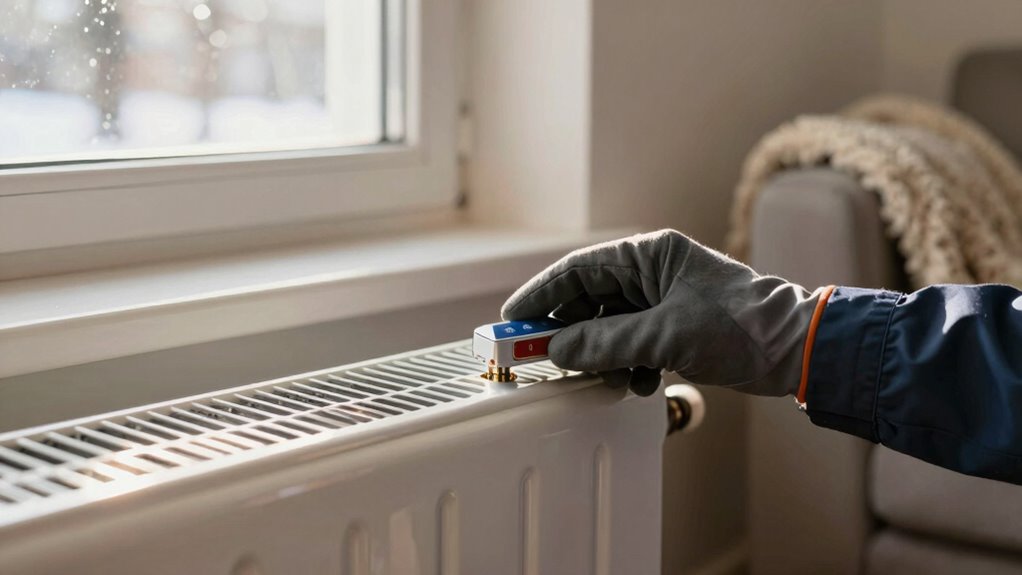
Have you ever wondered what could go wrong if you skip your heater safety check before winter? Without regular inspections, your heater might run inefficiently, wasting fuel and raising your energy bills. Poorly maintained heaters often consume more fuel to produce the same warmth, decreasing fuel efficiency. Additionally, neglected equipment can produce excessive noise levels, disrupting your comfort and alerting you to potential problems. A safety check guarantees all components are in top shape, helping your heater operate smoothly and quietly. Skipping this step increases the risk of breakdowns, carbon monoxide leaks, or fire hazards. By performing regular safety checks, you keep your heater running efficiently, reduce noise disturbances, and ensure a safe, warm winter ahead. Proper maintenance practices also help identify issues early, preventing costly repairs later on. Regularly checking your heater’s performance can help catch small problems before they become major, costly repairs. Recognizing common heater hazards and addressing them promptly is essential for maintaining a safe home environment during colder months. Moreover, understanding the signs of malfunction can assist homeowners in taking timely action to prevent emergencies. Regular inspections also support the long-term durability of your heating system, ensuring it remains reliable season after season.
How to Inspect Your Heater’s Ventilation and Exhaust System
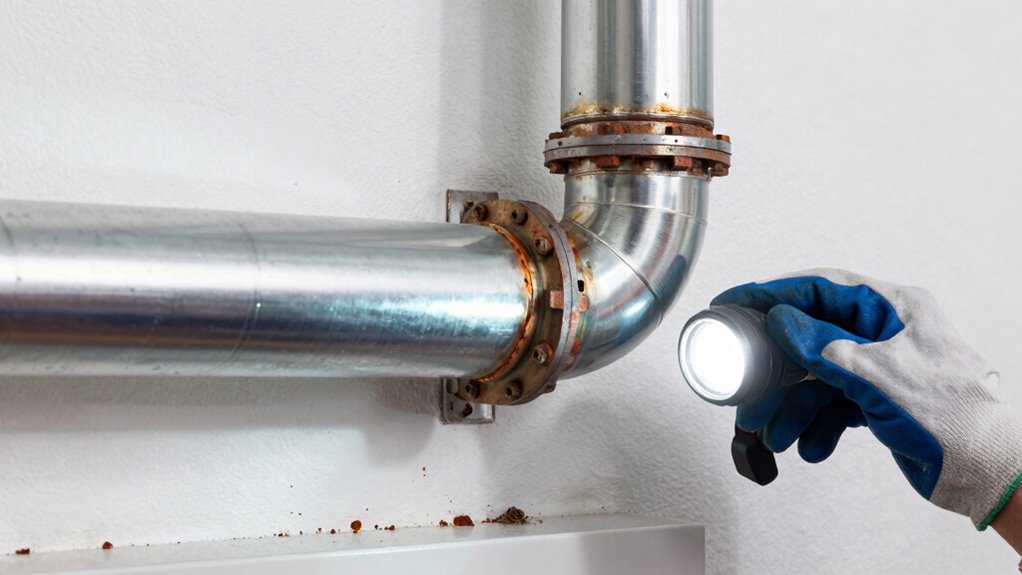
Start by checking that all ventilation pathways are clear of debris and obstructions. Next, inspect the exhaust vent cap to verify it’s securely attached and free of blockages. Keeping these components in good condition helps your heater operate safely and efficiently. Additionally, ensure the ventilation system is properly maintained to prevent potential hazards. Regular cabling inspections can also help identify issues before they become serious problems. Remember that air flow plays a crucial role in maintaining safe operation and should be checked periodically. Monitoring system security can further protect your home from unexpected hazards related to heater malfunctions. Being aware of ventilation hazards can help you address issues proactively before they lead to safety concerns.
Check Ventilation Pathways
Ensuring your heater’s ventilation pathways are clear is essential for safe operation. Poor ventilation can reduce ventilation efficiency and cause dangerous buildup of carbon monoxide. Start by inspecting the pathways for any obstructions, such as debris, dust, or bird nests. Check for signs of corrosion or damage that could block airflow or create leaks. Make sure vents are free from dirt and debris that could cause airflow restrictions. If your system has removable covers or screens, clean them thoroughly. Confirm that the pathways are unobstructed all the way to the exterior. Proper airflow is vital for safe and efficient heater operation, so don’t skip this step before turning on your heating system for the season. Additionally, understanding the importance of natural surroundings can help you recognize the impact of environmental factors on your ventilation system’s condition. Being aware of historical safety practices can further aid in maintaining a secure heating environment and preventing hazards. Regular maintenance and awareness of ventilation system components ensure longevity and safety in your heating setup. Recognizing the influence of cryptid mysteries on local folklore might seem unrelated, but it highlights how environmental factors and local history can shape perceptions and awareness of safety hazards.
Inspect Exhaust Vent Cap
Wondering how to make sure your heater’s exhaust vent cap is working properly? Start with a thorough cap inspection. First, look for any signs of damage, rust, or corrosion on the exhaust vent and cap. Verify the cap is securely attached and not loose or missing. Check that it’s free of debris, such as leaves or nests, which can block airflow. Proper ventilation is essential for safe operation, so confirm there are no obstructions preventing exhaust gases from escaping. Ensure the vent cap is directing fumes away from your home and isn’t tilted or broken. Regular cap inspection helps prevent dangerous buildup of carbon monoxide and guarantees your heater functions efficiently. Additionally, understanding ventilation and exhaust system is crucial for maintaining safety and efficiency. Be aware that device and network security vulnerabilities can sometimes be exploited if these systems are not properly maintained. Keep your exhaust vent cap in top shape to safeguard your household this winter. Regular maintenance also includes checking the exhaust airflow, which is vital for safe heater operation. Ensuring proper system maintenance can help identify potential issues early and prevent costly repairs. Maintaining a comprehensive safety check is also recommended to ensure all components work harmoniously for safe heater operation.
How to Detect and Fix Gas Leaks Safely
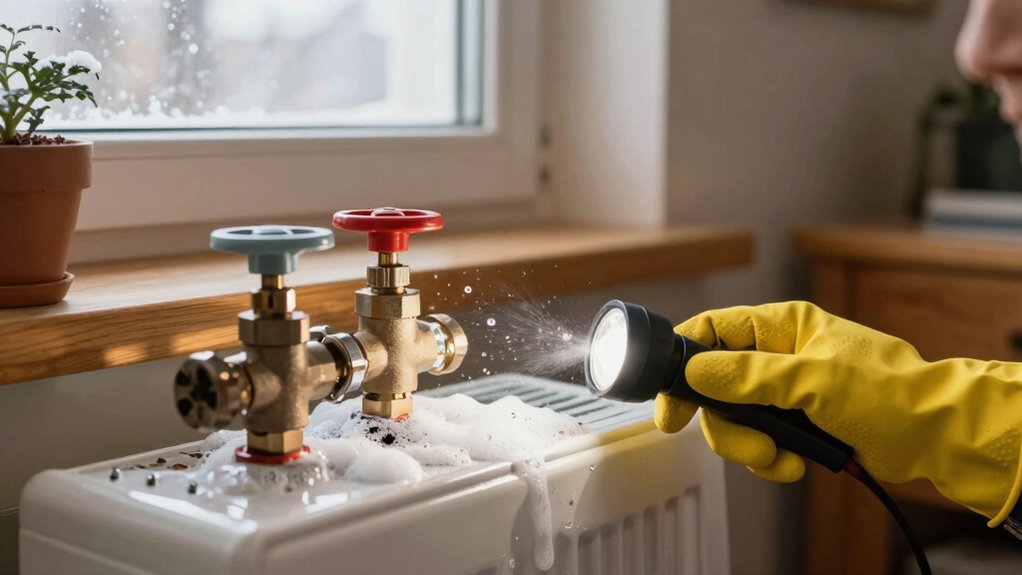
Detecting gas leaks quickly is crucial for safety, as even small leaks can pose serious health and fire risks. Start by using a reliable gas detector to identify leaks early. If you suspect a leak, put on safety gloves to protect your skin from potential exposure. Do not attempt to find or fix the leak with open flames or electrical switches—these can ignite the gas. Instead, turn off the gas supply immediately and ventilate the area. Once the area is safe, carefully inspect connections, hoses, and fittings for signs of damage or loose fittings. If you find a leak or are uncertain, contact a professional technician to repair it safely. Never ignore even minor leaks—they can escalate quickly. To prevent hazards, regularly check your cabling and wiring for signs of heat buildup or damage, especially during colder months. Additionally, being aware of your mythology-inspired safety tools can help you stay prepared in emergency situations. Remember that proper installation and calibration of gas detectors are essential for accurate leak detection.
Testing Your Thermostat and Electrical Components for Safety
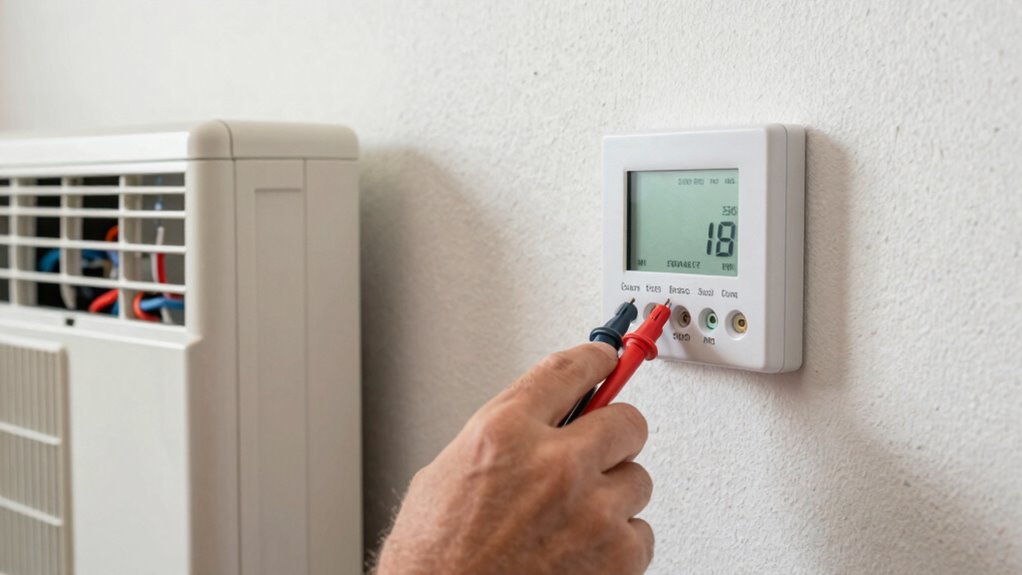
Testing your thermostat and electrical components is a crucial step in guaranteeing your heater operates safely and efficiently. Start by verifying the thermostat calibration to ensure it accurately reads and controls temperature settings. Faulty calibration can lead to overheating or insufficient heating. Next, inspect the electrical wiring for any signs of damage, wear, or loose connections, which could cause shorts or sparks. Use a multimeter to test electrical continuity and safety. Additionally, regularly checking for signs of wear on electrical components can help prevent unexpected failures. Properly assessing these factors aligns with comprehensive personality assessment principles, ensuring reliable operation. Always turn off power before inspecting or working on electrical parts to prevent shocks.
How to Clean and Maintain Your Heater for Safe Use
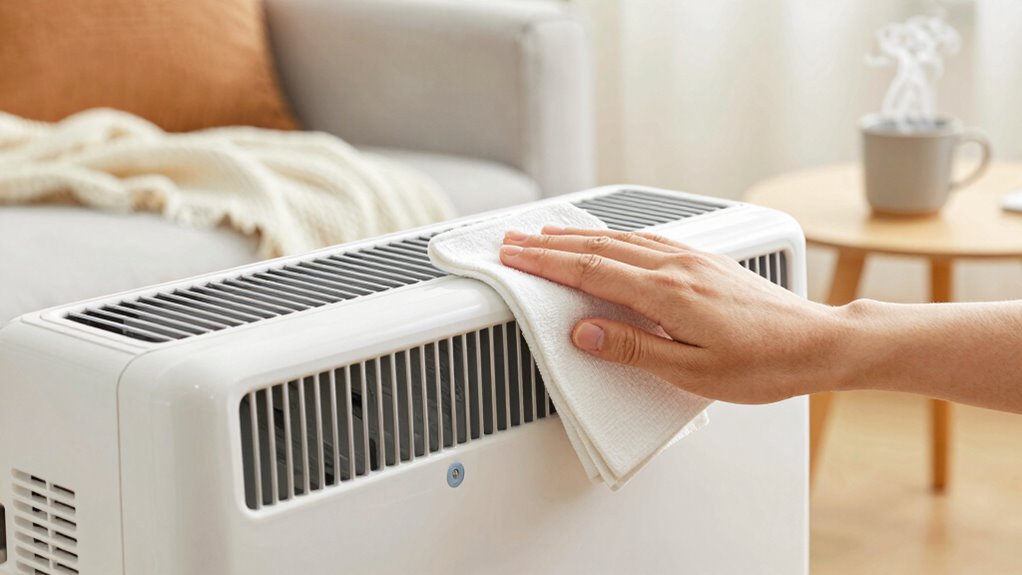
To keep your heater running safely, you need to regularly clean its components and look for signs of damage. Make certain to remove dust and debris from vents and filters, and inspect connections for leaks. Staying on top of these tasks helps prevent accidents and ensures efficient operation.
Regularly Clean Heater Components
Regularly cleaning your heater components is essential to guarantee safe and efficient operation. Dust, dirt, and debris can clog essential parts, reducing performance and risking fire hazards. Focus on cleaning areas like the burner, vents, and filters. When cleaning, check the condition of insulation materials around the heater, making sure they aren’t damaged or degraded, which could affect safety. Also, inspect the fuel lines and connections to prevent leaks or blockages.
To keep your heater working smoothly, remember to:
- Remove dust from burners and vents
- Replace or clean filters regularly
- Check insulation materials for wear or fraying
Staying proactive with these maintenance steps helps ensure safe, reliable heating during winter.
Check for Gas Leaks
Ever wondered how to guarantee your heater remains safe from dangerous gas leaks? Start by checking for any gas odor around your unit—this is the most obvious sign of a leak. Use your nose to detect any strong, unusual smells, and don’t ignore them. Next, perform leak detection by applying a soap and water solution to all connections and fittings; bubbles will form if there’s a leak. Regularly inspect gas lines for cracks or corrosion, and verify fittings are tight. If you notice any signs of a gas odor or suspect a leak, shut off your heater immediately and contact a professional. Detecting leaks early helps prevent dangerous situations and assures your heater operates safely throughout winter.
When to Call a Professional for Heater Inspection
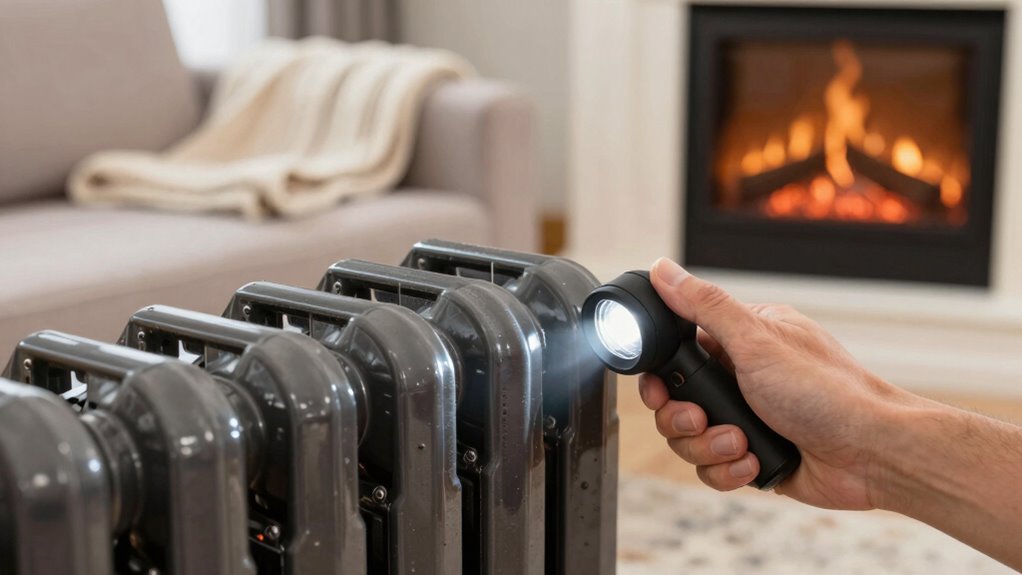
Knowing when to call a professional for heater inspection can prevent potential hazards and costly repairs. If you notice signs like strange noises, uneven heating, or persistent odors, it’s time to get expert help. Regular inspections are vital for emergency preparedness, ensuring your system runs safely all winter. You should also call a professional if you notice carbon monoxide detection alerts or suspect leaks.
Consider calling a pro when:
- Your heater is making unusual sounds or isn’t turning on
- You experience inconsistent heating or cold spots
- You want to verify proper carbon monoxide detection and safety measures
Addressing these issues promptly keeps your home safe and your heater functioning efficiently. Don’t skip professional inspections—they’re essential to peace of mind during winter.
Tips to Keep Your Home Safe and Warm All Winter
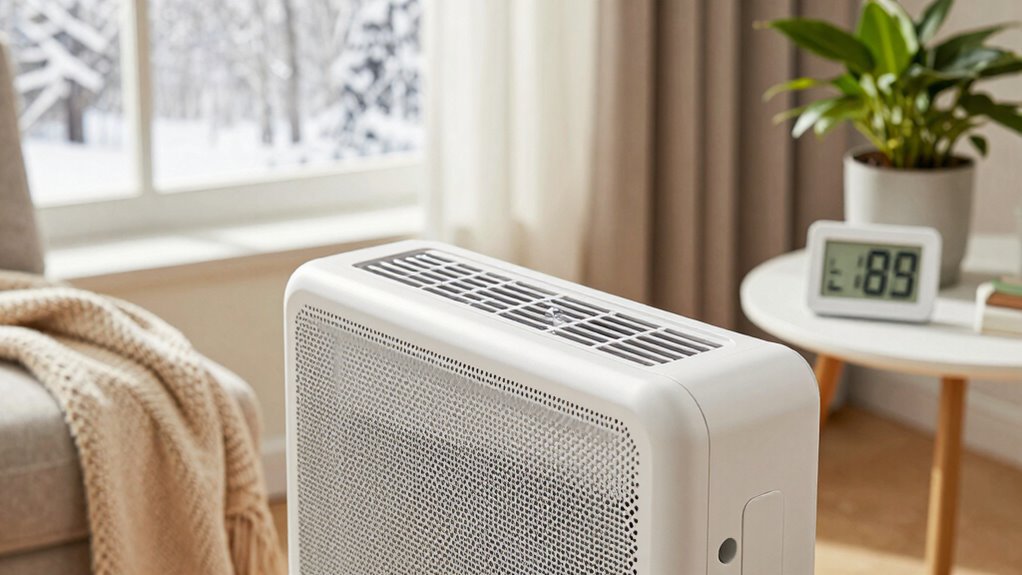
To keep your home safe and warm all winter, taking proactive steps that protect your heating system and prevent hazards is vital. Regular maintenance, like cleaning filters and checking vents, boosts energy efficiency and improves indoor air quality. Confirm your carbon monoxide detectors are functional and clear any obstructions around heaters. Proper insulation helps retain heat, reducing energy waste. Use the table below to identify key tips:
| Tip | Benefit | Focus Area |
|---|---|---|
| Regular system maintenance | Prevents breakdowns | Safety & Efficiency |
| Seal drafts around windows | Keeps heat in, lowers bills | Energy efficiency |
| Install air purifiers | Improves indoor air quality | Indoor air quality |
| Schedule professional checkups | Ensures safety & efficiency | Overall safety |
Frequently Asked Questions
How Often Should I Schedule a Professional Heater Inspection Annually?
You should schedule a professional heater inspection annually before winter. Regular inspections boost energy efficiency by ensuring your system runs smoothly, which can considerably reduce your heating costs. Plus, catching issues early helps prevent unexpected breakdowns and costly repairs later. By staying proactive with yearly check-ups, you maximize your heater’s lifespan, save money, and keep your home safe and warm all winter long.
What Are Common Signs My Heater Needs Repair Before Winter?
Don’t ignore the warning signs that your heater needs help. If your heater filter is dirty or clogged, it can cause poor airflow and reduced efficiency. Watch out for thermostat issues, like inconsistent heating or failure to respond. Unusual noises or strange smells also signal trouble. If you notice these signs, it’s time to call in a professional—delaying repairs can turn a small problem into a costly fix.
Can I Perform Safety Checks on My Heater Myself?
Yes, you can perform basic safety checks on your heater yourself. Start by inspecting the heater thermostat to verify it’s functioning properly, and check for any visible damage or dust buildup. Test safety equipment like carbon monoxide detectors to confirm they’re working. Remember, if you notice strange smells, unusual noises, or if your safety equipment isn’t functioning, contact a professional. Always prioritize safety and don’t skip essential checks before winter.
What Safety Precautions Should I Take During Heater Maintenance?
Imagine you’re in a sci-fi movie, cautiously working on your heater. Always unplug it before maintenance to avoid electrical hazards. Wear gloves and safety glasses, and guarantee proper ventilation checks to prevent carbon monoxide buildup. Keep flammable materials away, and work in a well-lit area. If you’re unsure, it’s safer to call a professional. Your safety comes first, so take these precautions seriously during heater maintenance.
How Do I Choose a Qualified Professional for Heater Inspection?
To choose a qualified professional for heater inspection, start by checking their credentials and guarantee they have proper professional certification. Look for reviews or references to verify their reputation and experience with heater inspections. Ask if they’re familiar with your specific heater model and if they follow safety standards. A certified technician will perform a thorough heater inspection, ensuring your system runs safely and efficiently for the winter.
Conclusion
Remember, an ounce of prevention is worth a pound of cure. Regularly checking your heater before winter can guarantee mishaps and keep your home warm and safe. Don’t skip these safety steps—inspect vents, detect leaks, test components, and maintain your heater properly. When in doubt, call a professional. Staying proactive ensures you stay cozy and safe all season long. After all, it’s better to be safe than sorry this winter!
Halloween Picks
halloween
As an affiliate, we earn on qualifying purchases.