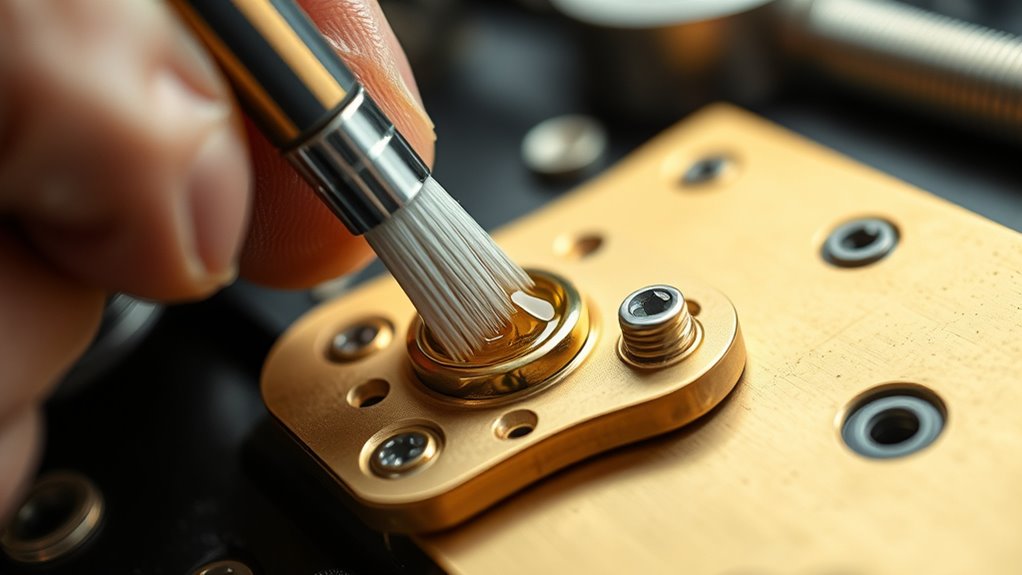

To lubricate and adjust vent hinges, start by cleaning the hinges thoroughly to remove dirt and old grease. Use a lubricant suitable for your hinge material—silicone spray for plastic or lithium grease for metal—applying a thin layer to pivot points before opening and closing the vent several times. Regularly inspect for squeaks or stiffness, and adjust as needed to guarantee smooth operation. Continuing with proper maintenance can help you attain ideal hinge performance and longevity.
Key Takeaways
- Clean hinges thoroughly to remove dirt and old lubricant before applying new lubricant.
- Use the appropriate lubricant based on hinge material: silicone spray for plastic, lithium grease for metal.
- Apply lubricant sparingly to pivot points, then open and close the vent to distribute evenly.
- Adjust hinge tension or alignment if the vent is stiff or doesn’t close properly.
- Regularly inspect and lubricate hinges every few months to ensure smooth operation and prevent wear.

Ever wondered why vent hinges sometimes stick or squeak? One common reason is that the hinge material compatibility isn’t ideal, or the lubrication frequency has fallen behind. Vent hinges come in various materials—metal, plastic, or a combination—and choosing the right lubricant depends heavily on these materials. If you use a lubricant incompatible with the hinge material, you risk damaging the surface, causing it to become sticky or corrode over time. For example, silicone-based lubricants work well with plastic hinges because they don’t cause deterioration, while lithium grease is better suited for metal hinges to provide long-lasting, smooth operation.
Maintaining proper hinge functionality requires understanding how often you should lubricate. The lubrication frequency varies based on usage, environment, and hinge material. In high-traffic or outdoor settings, hinges tend to accumulate dirt, dust, and moisture faster, so you might need to lubricate them every few months. Conversely, hinges in protected indoor areas may only need lubrication once or twice a year. Regular checks help you catch issues early—if hinges start squeaking or feeling stiff, it’s time to apply fresh lubrication. Neglecting this can lead to wear and tear, potentially damaging the hinge or causing it to seize altogether.
Regularly lubricate hinges based on usage and environment to prevent squeaks and damage.
Choosing the right lubricant is as important as applying it at the right time. For hinges made of metal, a light machine oil or lithium grease provides excellent protection and smooth movement. Plastic hinges, on the other hand, benefit from silicone spray or a dry lubricant that won’t degrade the material. Before applying any lubricant, clean the hinge thoroughly to remove dirt, dust, and old grease, which can impede proper operation. Applying too much lubricant can attract more debris, so a light coat is sufficient—aim for a thin, even layer that penetrates into the moving parts. Additionally, understanding the material compatibility of the lubricant ensures you select the most effective and safe option for your hinges.
To get the best results, focus on applying lubricant to the pivot points and moving joints, rather than the entire hinge surface. After applying, open and close the vent a few times to distribute the lubricant evenly. This helps ensure smooth, squeak-free operation without over-lubrication. Remember, consistent maintenance is key to prolonging the lifespan of your vent hinges. Regularly inspecting and lubricating them according to the hinge material compatibility and lubrication frequency guidelines will keep your vents operating smoothly and quietly for years to come.
Frequently Asked Questions
How Often Should Vent Hinges Be Lubricated for Optimal Performance?
You should lubricate vent hinges every 6 to 12 months to prevent hinge corrosion and avoid lubricant drying out. Regular lubrication ensures smooth operation and extends hinge life. If you notice stiffness or squeaking, it’s a sign to re-lubricate sooner. Use a suitable lubricant and wipe away excess to prevent dirt buildup. Routine maintenance keeps your vents functioning properly and prevents costly repairs caused by corrosion or worn hinges.
What Types of Lubricants Are Best for Different Vent Hinge Materials?
You might think all lubricants work for vent hinge materials, but that’s not true. For metal hinges, use lightweight oils like WD-40 or silicone sprays to prevent rust and guarantee smooth movement. Plastic hinges benefit from dry lubricants or silicone sprays that won’t damage the material. Always choose the right types of lubricants based on your vent hinge materials to avoid deterioration and keep everything functioning perfectly.
Can Improper Adjustment Cause Vent Hinge Damage Over Time?
Improper adjustment can definitely cause vent hinge damage over time. If you don’t use the correct adjustment techniques for your hinge material, you might put unnecessary stress on the hinge, leading to wear or breakage. Make sure to follow manufacturer guidelines and adjust the hinges gently. Proper adjustment preserves hinge integrity, prevents damage, and extends the lifespan of your vent hinges.
Are There Specific Tools Recommended for Adjusting Vent Hinge Mechanisms?
You should use a screwdriver or Allen wrench for adjusting vent hinge mechanisms, as these tools help you achieve precise hinge alignment. Focus on proper adjustment techniques, such as loosening and tightening bolts gradually, to avoid misalignment or damage. Always check the hinge movement after each adjustment to ensure smooth operation. Using the correct tools and careful techniques prolongs hinge life and prevents damage caused by improper adjustment.
How Can I Tell if My Vent Hinges Need Lubrication or Adjustment?
Did you know that hinge corrosion causes over 30% of vent failures? You can tell your hinges need lubrication or adjustment if they squeak, stick, or feel loose. Check for rust or stiffness—these signs mean it’s time to lubricate or consider hinge replacement. Regular maintenance prevents damage and prolongs hinge life. So, keep an eye on your vents to avoid costly repairs and ensure smooth operation.
Conclusion
Regularly lubricating and adjusting your vent hinge mechanisms keeps them operating smoothly and extends their lifespan. Did you know that properly maintained hinges can last up to 50% longer? By taking a few minutes to care for your vents now, you prevent costly repairs later and guarantee ideal airflow. Don’t overlook this small task—it makes a big difference in your system’s performance and durability. Stay proactive, and your vents will serve you reliably for years to come.