
To maintain your shade cloth and shading systems, regularly inspect for tears, loose fittings, and dirt buildup. Clean the fabric gently with soap and water to preserve it UV-protected and pest-resistant. Secure loose edges and tighten fittings after storms or high winds, and trim nearby vegetation to prevent damage. Proper tension and high-quality materials help extend lifespan. Keep an eye out for signs of wear to ensure your shade system stays effective, and you’ll discover even more helpful tips further on.
Key Takeaways
- Regularly inspect for tears, loose edges, and tension issues to maintain fabric integrity and effectiveness.
- Clean shade cloth with gentle soap and rinse thoroughly to remove dirt, dust, and debris that can degrade UV protection.
- Repair small tears promptly and secure loose fittings after storms to prevent further damage.
- Trim nearby vegetation and remove debris to protect fabric from physical damage and mold growth.
- Use high-quality materials and consider UV protectant sprays to extend the lifespan and durability of shading systems.
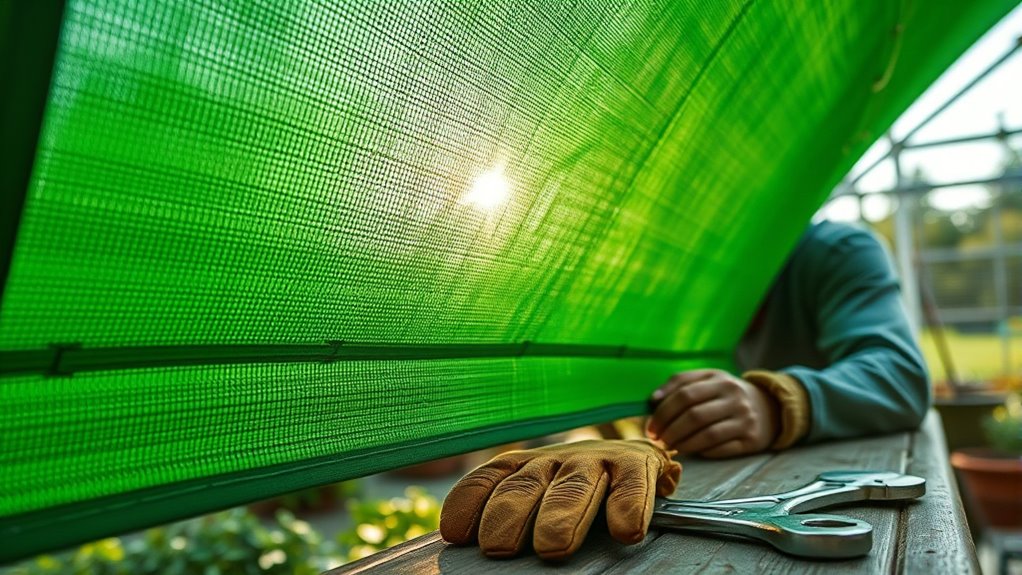
Maintaining your shade cloth guarantees it continues to provide effective protection and lasts longer. Regular upkeep ensures that it maintains its UV protection capabilities, shielding you from harsh sunlight while also helping to control pests. Over time, dirt, debris, and weather exposure can degrade the fabric, reducing its effectiveness. By routinely inspecting your shade cloth, you can catch issues early and prevent unnecessary wear and tear. Cleaning the fabric with a gentle soap solution and rinsing thoroughly removes dirt and dust that may block UV rays, ensuring your shade cloth continues to offer *ideal* UV protection. This not only prolongs its lifespan but also maintains the comfort and safety of your outdoor space.
Pest control is another key benefit of well-maintained shade cloth. Many fabrics are designed with mesh or specialized materials that serve as barriers against insects and small pests. If the fabric develops tears or holes, pests can find their way through, compromising your outdoor environment. Regularly check for signs of damage, and repair small tears promptly to preserve the barrier’s integrity. Keeping your shade cloth in good condition prevents pests from invading your space, reducing the need for chemical pest control methods and creating a safer environment for you and your family.
Weather can take a toll on your shade system, making it essential to secure loose edges, tighten fittings, and remove any accumulated debris after storms or heavy winds. Proper installation and ongoing maintenance help preserve the fabric’s strength against UV damage. UV rays can weaken the fibers over time, causing fading, brittleness, and eventual deterioration. To mitigate this, consider applying a UV protectant spray specifically designed for outdoor fabrics. Doing so creates an extra layer of defense, extending the life of your shade cloth and maintaining its protective qualities.
Additionally, routine maintenance includes trimming nearby branches or vegetation that may scratch or tear the fabric, especially during storms or windy days. Keeping your shade cloth free of debris and ensuring proper tension prevents sagging, which can trap water and promote mold growth, further degrading the material. When you stay proactive with maintenance, you maximize the UV protection and pest control benefits your shade cloth provides, making it a worthwhile investment for years to come. Moreover, choosing high-quality shade fabrics can significantly enhance durability and longevity, providing better resistance against weather and pests. Ultimately, consistent care not only preserves the appearance of your shade system but also ensures it continues to serve its purpose effectively, shielding you from the sun and pests alike.
Frequently Asked Questions
How Do I Prevent Shade Cloth From Sagging Over Time?
To prevent shade cloth from sagging, regularly check and adjust the tension using tension adjustments on your support framework. Guarantee the support framework is sturdy and properly installed, as a weak or loose structure can cause sagging. Tighten the shade cloth gradually, avoiding overstretching, and inspect it periodically. Proper tension and a strong support framework keep your shade cloth taut and functional over time, reducing sagging issues.
What Are the Best Cleaning Products for Shade Cloth?
Think of your shade cloth as a trusted sail, catching the wind of sunlight. For cleaning, use gentle cleaning agents like mild soap or specialized fabric cleaners, avoiding harsh chemicals that could damage the fabric. Regular maintenance tips include rinsing with water and avoiding abrasive scrubbing. This keeps your shade system in top shape, ensuring it provides shade and protection for years to come.
How Can I Repair Small Tears in Shade Fabric?
To repair small tears in your shade fabric, start by cleaning the area thoroughly. Then, use fabric reinforcement patches specifically designed for outdoor fabrics. Apply a tear repair kit for a strong, durable fix—these kits often include adhesive and patches that blend seamlessly. verify you follow the kit’s instructions carefully, pressing firmly to secure the patch and allow it to cure properly for long-lasting repair.
What Is the Typical Lifespan of Different Shade Cloth Materials?
The lifespan of shade cloth materials varies based on UV resistance and fabric color. Typically, UV-resistant fabrics last 10 to 15 years, while less resistant ones may need replacement after 5 to 10 years. Darker colors often fade slower and maintain UV protection longer, extending their lifespan. Keep an eye on fabric condition and color fading to guarantee maximum shading, and replace when you notice significant wear or reduced effectiveness.
How Do Weather Conditions Affect Shade System Durability?
Weather conditions substantially impact your shade system’s durability; for example, high UV exposure can cause up to 30% faster degradation of shade cloth. Wind resistance is essential, as strong gusts can tear or loosen the fabric. UV degradation weakens the material over time, while persistent wind stress accelerates wear. To prolong your shade system’s life, make certain it’s rated for your local weather, especially in windy or sunny environments.
Conclusion
Don’t let worries about upkeep hold you back—regularly inspecting and cleaning your shade cloth is easier than you think. With just a little effort, you’ll keep your shading system in top shape, providing cool relief and protecting your space. Plus, the benefits far outweigh the effort; a well-maintained shade cloth lasts longer and performs better. So, stay consistent, and enjoy the shade and comfort it brings, worry-free!