
To effectively test and manage pH and EC in media, regularly calibrate your pH meter with buffer solutions and guarantee your EC meter is properly calibrated using standard solutions. Rinse electrodes thoroughly between measurements and store them correctly to maintain accuracy. Adjust pH with suitable acids or bases, and control EC by adding or diluting nutrient solutions as needed. Continuing will help you master techniques to keep your media at ideal levels for healthy plant growth.
Key Takeaways
- Regularly calibrate pH meters using certified buffer solutions to ensure measurement accuracy.
- Test media pH and EC frequently to detect deviations and make timely adjustments.
- Adjust pH with appropriate acids or bases and modify EC by adding or diluting nutrient solutions.
- Rinse electrodes thoroughly between measurements and store them properly to maintain device longevity.
- Maintain optimal pH and EC levels to promote healthy nutrient uptake and optimal plant growth.
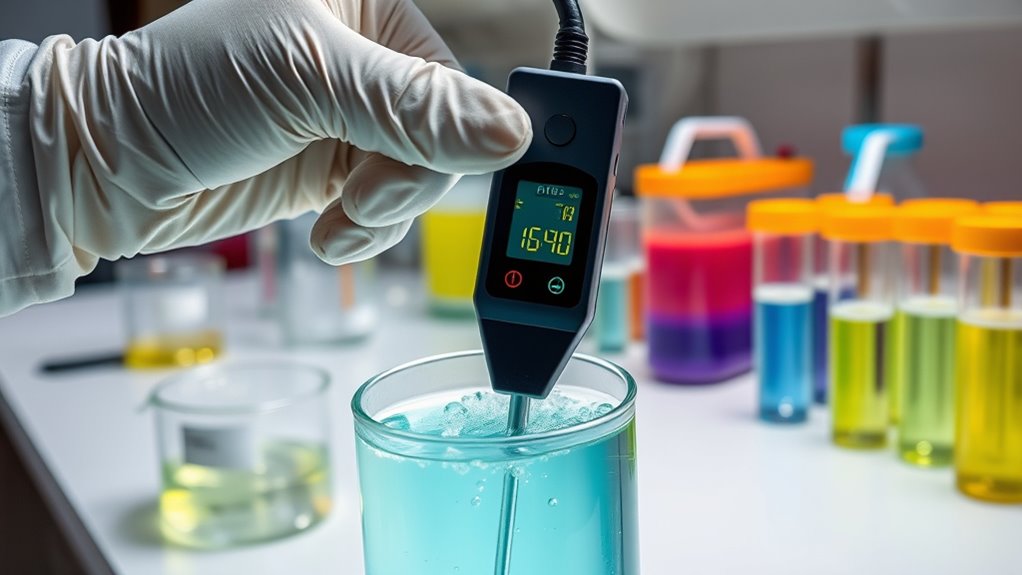
Maintaining proper pH and electrical conductivity (EC) levels in media is essential for ideal plant growth and health. When your media’s pH drifts outside the optimal range, nutrient availability diminishes, and plants can become stressed or stunted. Similarly, if EC levels are too high or too low, nutrient uptake becomes inefficient, leading to poor growth or nutrient deficiencies. To guarantee accurate readings, it’s crucial to regularly test your media and adjust as needed using proper techniques.
Regularly test and adjust media pH and EC for optimal plant health.
One key aspect of accurate testing involves the use of buffer solutions. Buffer solutions are specially formulated liquids with a known and stable pH, which help you verify the calibration of your pH meters. Before measuring your media’s pH, you should calibrate your device with these buffer solutions. This process involves immersing the electrode in the buffer, allowing the meter to stabilize, and then adjusting the calibration settings to match the buffer’s known pH value. Proper calibration procedures ensure your pH readings are precise, reducing errors caused by electrode drift or contamination. It’s a good practice to calibrate your pH meter at least once a week, especially if you’re working with multiple media samples or different nutrient solutions.
When testing EC, you’ll typically use a conductivity meter designed for soil or hydroponic media. Make sure the meter is clean and properly calibrated according to the manufacturer’s instructions. Calibration for EC meters usually involves using standard solutions with a known electrical conductivity. By regularly calibrating your meter with these standards, you can confidently monitor your media’s salt levels and nutrient concentrations. Accurate EC measurement allows you to fine-tune your fertilization schedule, ensuring your plants receive ideal nutrients without risking salt buildup that can damage roots.
Consistent testing and calibration routines are essential in managing pH and EC effectively. Always rinse your electrodes thoroughly between measurements to prevent cross-contamination, and store them properly in storage solutions recommended by the manufacturer. When adjusting pH, use appropriate acids or bases to bring the media into the desired range, and modify EC levels by adding or diluting nutrient solutions as needed. Remember, small adjustments made regularly are more effective than large, infrequent changes. Maintaining proper pH and EC levels isn’t just about measuring; it’s about understanding your media’s needs and responding promptly with calibrated tools and tested solutions. This proactive approach helps create an ideal environment for your plants to thrive. Additionally, understanding how high-quality projectors can influence your media testing setup can optimize your workspace for better accuracy and efficiency.
Frequently Asked Questions
How Often Should Ph and EC Be Tested in Media?
You should test pH and EC in your media weekly or more often if you notice watering frequency changes or signs of imbalance. Regular testing helps you maintain proper nutrient levels and avoid problems. Always sterilize your media before testing to prevent contamination. Consistent monitoring ensures your plants stay healthy, and adjusting pH and EC as needed keeps your growing environment ideal.
What Tools Are Best for Measuring Ph and EC Accurately?
Think of yourself as a scientist in a lab; digital meters are your trusty tools for measuring pH and EC accurately. You should opt for reliable, calibrated probes, ensuring precision through regular calibration checks. These digital meters typically feature easy-to-read displays and fast response times, making your testing efficient. By choosing the right tools and maintaining them properly, you’ll get consistent, accurate readings essential for media management.
How Do Temperature Fluctuations Affect Ph and EC Readings?
Temperature fluctuations can markedly impact your pH and EC readings by causing instability. To guarantee accuracy, maintain temperature stability during testing and use calibration techniques that account for temperature variations. Regularly calibrate your instruments with solutions at the same temperature as your media, and consider using temperature compensation features on your meters. This approach helps you get precise, reliable measurements despite environmental changes.
Can Ph and EC Levels Influence Plant Nutrient Uptake?
Yes, pH and EC levels directly impact your plant’s nutrient absorption. When pH is too high or low, media buffering can prevent nutrients from dissolving properly, reducing availability. Similarly, EC indicates the media’s ability to conduct electricity, reflecting nutrient concentration. If levels are off, your plants struggle to absorb essential nutrients, leading to poor growth. Regularly monitor and adjust pH and EC to optimize nutrient uptake and support healthy plant development.
Are There Safe Methods to Adjust Ph and EC Levels?
Perfectly pH-balanced media promotes plant prosperity, so yes, safe methods for pH adjustment and EC calibration exist. You can use gentle, natural solutions like diluted acids or bases for pH tweaks, avoiding harsh chemicals. Regularly calibrate your EC meter with standard solutions, ensuring accuracy. Patience and proper procedures prevent problems, providing a balanced environment for thriving plants. Always prioritize precision to prevent potential plant problems.
Conclusion
So, next time you’re playing the pH and EC guessing game, remember: ignoring these numbers is like ignoring your plants’ dinner date. Keep a close eye, manage wisely, and you’ll avoid turning your media into a science experiment gone wrong. Because nothing says “green thumb” like a media meltdown, right? Stay sharp, test often, and let your plants thrive—not just survive. After all, who wants a soggy, salty mess on their watch?