
To create an accessible garden for all gardeners, focus on designing wide, level, and obstacle-free pathways with smooth surfaces that accommodate wheelchairs and mobility aids. Add comfortable seating areas and shade structures at regular intervals for resting and sun protection. Incorporate ergonomic tools that reduce strain, making gardening activities easier for everyone. Thoughtful space planning promotes inclusivity, ensuring everyone can enjoy and participate fully. Continue exploring to discover more ways to create an inclusive gardening space.
Key Takeaways
- Design wide, level, obstacle-free pathways with smooth surfaces for easy navigation by all gardeners.
- Install accessible seating and shade structures at regular intervals for resting and sun protection.
- Use ergonomic tools to minimize strain and promote inclusive gardening activities.
- Ensure planting beds and maintenance areas are reachable for gardeners with mobility challenges.
- Incorporate inclusive design elements that foster a welcoming, comfortable environment for everyone.

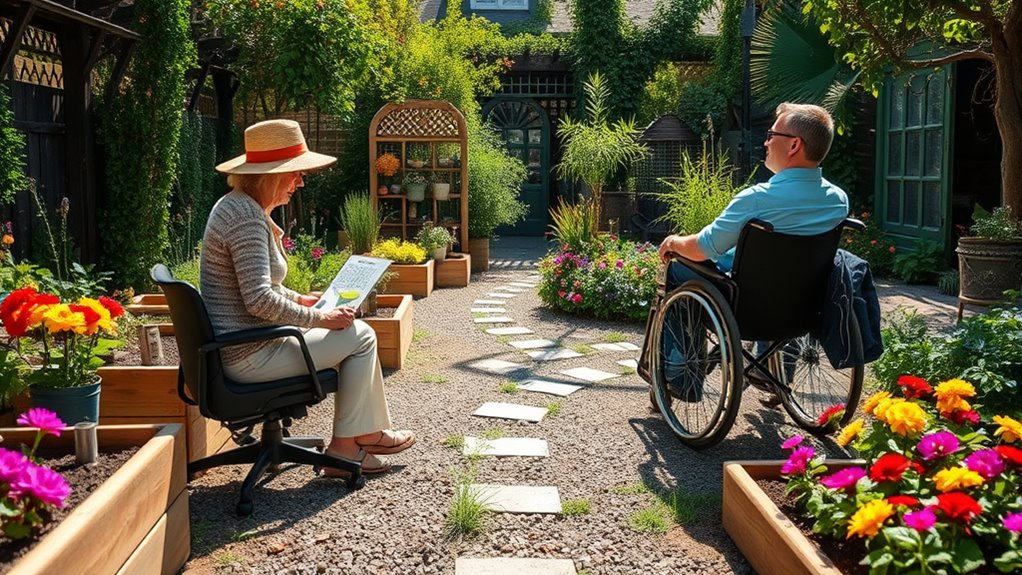
Creating a pathway that is wide and firm further enhances accessibility. Use smooth, level surfaces that allow easy navigation with wheelchairs, walkers, or other mobility aids. Make sure pathways are free of obstacles like rocks, roots, or uneven patches, which can pose tripping hazards. Incorporate seating areas or benches at regular intervals, giving you a place to rest and enjoy your surroundings comfortably. Shade structures or pergolas can also provide relief from the sun, making outdoor gardening more comfortable during warmer months. Incorporating ergonomic tools further reduces strain and increases efficiency, making gardening more accessible and enjoyable for everyone.
Incorporating these features not only makes gardening feasible for people with mobility challenges but also encourages a more relaxing and enjoyable experience for everyone. It’s about designing your outdoor space thoughtfully, so planting, maintenance, and harvesting become accessible activities rather than strenuous chores. With raised beds, ergonomic tools, thoughtful pathways, and comfortable seating, you guarantee that your garden is a welcoming space where everyone, regardless of physical ability, can connect with nature and reap its many rewards. This approach fosters inclusivity, promotes well-being, and transforms your garden into a truly shared sanctuary.
Frequently Asked Questions
How Can I Make Garden Tools Easier to Handle?
You can make garden tools easier to handle by choosing lightweight tools with ergonomic handles. These handles are designed to fit comfortably in your hand, reducing strain and improving grip. Opt for tools made from durable, lightweight materials so you don’t tire quickly. Additionally, look for tools with cushioned or textured grips, which help prevent slipping and make gardening safer and more comfortable for everyone, regardless of strength or dexterity.
What Plants Are Best for Low-Maintenance Accessible Gardens?
You should choose low-maintenance, wildlife-friendly plants like native grasses, coneflowers, and sedums for your accessible garden. Opt for garden bed design that keeps plants within easy reach, reducing strain. These plants require minimal care, attract pollinators, and thrive in various conditions. Incorporating these into your accessible garden creates a welcoming space, supports local wildlife, and guarantees easy maintenance, making gardening enjoyable for everyone.
How Can I Ensure Safety for Visually Impaired Gardeners?
To guarantee safety for visually impaired gardeners, you should add braille labeling and tactile markers on plant labels, pathways, and tools. These features help them navigate confidently and identify plants easily. Keep pathways clear of obstacles, use contrasting colors for edges, and install handrails where needed. Regularly check and maintain these safety features to create an inclusive, secure gardening environment that empowers all gardeners to enjoy their space confidently.
Are There Specific Materials Suitable for Accessible Pathways?
Think of your garden pathways like a well-lit, textured trail guiding everyone safely. For accessible pathways, choose materials like textured concrete, rubber pavers, or raised beds with tactile surfaces. These materials provide grip and clear boundaries, helping visually impaired gardeners navigate confidently. Using contrasting colors and tactile cues guarantees safety and independence, turning your garden into an inclusive space where all can enjoy and work comfortably.
How Can I Incorporate Technology to Assist Gardeners With Disabilities?
You can incorporate technology by adding assistive gardening devices like ergonomic tools and voice-controlled tools to help gardeners with disabilities. Use voice commands to operate watering systems, lights, or garden machines, making tasks easier and safer. Installing raised beds with accessible controls also helps. By integrating these technologies, you create a more inclusive garden environment that empowers every gardener to enjoy and tend their garden comfortably.
Conclusion
By embracing accessible design, you plant seeds of inclusion that grow into a vibrant, welcoming garden for all. Every step you take is like watering the roots of understanding, nurturing diversity and connection. As you tend to your space, the barriers dissolve like wilted leaves, making way for unity to bloom. Remember, your garden is a symbol—an enduring reminder that everyone deserves to flourish in the beauty of nature’s embrace.