To turn greenhouse challenges into better systems, focus on enriching your soil with compost, cover crops, and beneficial microbes to boost plant health and resilience. Promote biodiversity by planting diverse species, which helps naturally control pests and strengthens the ecosystem. Use integrated pest management techniques and monitor conditions regularly to adjust practices early. Patience and strategic adjustments lead to a sustainable, thriving setup—if you look deeper, you’ll discover even more ways to improve your greenhouse.

Get garden gear delivered free with Prime
- Fast, free delivery on millions of items
- Prime Video, Amazon Music and more included
- Member-only deals all year
Key Takeaways
- Implement soil enrichment practices like composting and cover cropping to boost soil health and plant resilience.
- Promote biodiversity by diversifying plantings to naturally manage pests and strengthen the ecosystem.
- Use integrated pest management techniques, focusing on early detection and natural predators to reduce chemical reliance.
- Regularly monitor soil nutrients and pest activity to adapt strategies proactively.
- Foster sustainability by turning challenges into opportunities for long-term improvements and resilient greenhouse systems.
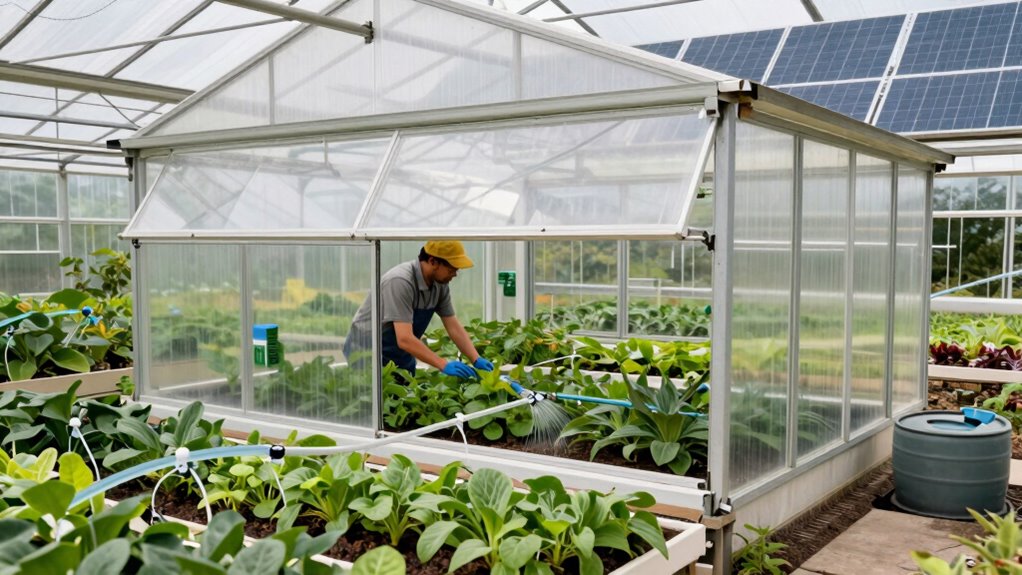
Greenhouses present unique challenges, from temperature fluctuations to pest control, but savvy gardeners see these obstacles as opportunities to improve their systems. When the environment inside your greenhouse isn’t perfect, you push yourself to develop smarter strategies. Soil enrichment becomes key, as it directly impacts plant health and resilience. Instead of simply adding fertilizers, you focus on improving soil structure, increasing organic matter, and encouraging beneficial microorganisms. This not only provides plants with essential nutrients but also enhances their natural defenses, making them less susceptible to pests and diseases. You might incorporate compost, worm castings, or cover crops to boost soil vitality, ensuring your plants have a robust foundation to grow strong and healthy. Recognizing the importance of biodiversity within your greenhouse ecosystem can further strengthen plant resilience and pest control. Promoting soil health through diverse plantings can also create a more balanced and self-sustaining environment. Additionally, understanding how soil microbial activity influences nutrient availability allows you to optimize conditions for healthy growth.
Pest management, in particular, can be a tricky aspect of greenhouse gardening. Rather than relying solely on chemical treatments, you learn to adopt integrated pest management (IPM) techniques. This involves identifying pests early, understanding their life cycles, and employing targeted interventions. You might introduce natural predators like ladybugs or use physical barriers such as insect screens to keep pests out. By doing so, you minimize chemical use, which benefits both your plants and the environment. These methods take dedication, but over time, they result in a more balanced ecosystem within your greenhouse. You observe how healthy soil and effective pest management work hand-in-hand; healthy soil supports strong plants that are better equipped to resist pests, reducing the need for interventions. Additionally, understanding the microbial activity in your soil can help you further optimize plant health and pest resistance. Monitoring soil microbial diversity can reveal insights into the overall vitality of your soil ecosystem.
As you confront these challenges, you also realize the importance of monitoring and adjusting your practices. Regular soil testing helps you understand nutrient levels and pH, guiding your soil enrichment efforts more precisely. Likewise, keeping a pest log allows you to spot patterns and respond proactively. Instead of viewing these hurdles as setbacks, you see them as opportunities to refine your approach and gain greater control over your greenhouse environment. Over time, these proactive strategies create a resilient system that requires less intervention and yields healthier plants. Your success hinges on turning problems into solutions—by enriching your soil wisely and managing pests thoughtfully, you build a more sustainable, productive greenhouse. The process may demand patience, but the reward is a thriving, vibrant garden that thrives regardless of the challenges you encounter.
Products Worth Considering

Husqvarna Power Axe 350i 18-Inch Cordless Chainsaw Kit

EAGLE PEAK 8 × 6 ft Walk-In Pop-Up Greenhouse, Green and White

Yardenaler 6 x 10 ft Wooden Walk-In Greenhouse with 6 mm Polycarbonate Panels
As an affiliate, we earn on qualifying purchases.
Frequently Asked Questions
What Are Common Signs of Greenhouse System Inefficiencies?
You’ll notice signs of inefficiency in your greenhouse, like uneven watering or pest outbreaks that persist despite your efforts. Poor pest control often leads to damage, while inconsistent watering systems can cause plant stress or disease. Watch for drooping or yellowing plants, mold, or pests—these are clear signals you need to reevaluate your system. Addressing these issues promptly helps you optimize plant health and maintain a thriving greenhouse environment.
How Do Gardeners Choose the Best Materials for Upgrades?
You should choose materials that support healthy plant nutrition and effective pest management, ensuring they’re durable and suited for your greenhouse conditions. Don’t worry about complexity; start with evaluating your specific needs and climate. Select materials that promote ideal light, ventilation, and durability. By prioritizing these factors, you’ll create a resilient system that enhances plant growth and simplifies maintenance, turning challenges into opportunities for a thriving greenhouse.
What Is the Average Cost of Greenhouse Improvements?
The average cost of greenhouse improvements varies between $1,000 and $10,000, depending on the scale and upgrades you choose. You might spend extra for pest control systems or to prevent plant disease through better ventilation or climate control. Investing in quality materials helps you maintain healthy plants, reduce pests, and prevent diseases, ultimately saving money and effort on future fixes. Tailoring your upgrades guarantees your greenhouse remains productive and resilient.
How Long Does It Take to See Results After System Upgrades?
You’ll typically see improvements in plant health and water management within a few weeks after system upgrades. As you optimize airflow, lighting, and irrigation, your plants respond quickly, showing stronger growth and fewer issues. Keep an eye on water use and plant vigor, as these are good indicators that your new systems are working effectively. Patience is key, but with consistent care, results become quite noticeable in just a short time.
Are There Eco-Friendly Options for Greenhouse System Enhancements?
Yes, you can make your greenhouse greener than a rainforest. Eco-friendly options like sustainable practices and renewable energy sources are readily available. You might install solar panels to power fans or use rainwater harvesting systems to irrigate plants. These upgrades reduce your environmental footprint, save costs long-term, and create a healthier environment for your plants. Embracing eco-conscious solutions transforms your greenhouse into a sustainable haven for growth and innovation.
Conclusion
Just like a gardener tending their plants through storms and sunshine, you learn to nurture resilience within your greenhouse. Each challenge, like a storm passing, clears the way for growth—new systems blooming from the soil of experience. As you adapt and innovate, your greenhouse becomes a sanctuary of balance and strength. Remember, every obstacle is an opportunity—a seed of transformation waiting to sprout into a thriving, resilient system that flourishes with care and patience.