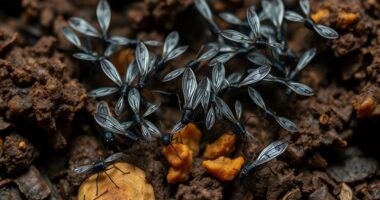
Using companion planting helps you naturally deter pests by creating a balanced garden ecosystem. Planting beneficial flowers like marigolds, calendula, or dill attracts helpful insects such as ladybugs and predatory beetles that hunt pests. Incorporating repellent plants like basil, onions, or garlic also masks scents or emits odors that pests dislike. Additionally, establishing habitats with plants like yarrow or fennel supports helpful insects and boosts your pest control strategies. Keep exploring to discover more effective companion planting techniques.
Key Takeaways
- Plant pest-repelling herbs like basil, garlic, and onions around crops to mask scents and deter pests naturally.
- Incorporate flowers such as marigolds and calendula to repel pests and attract beneficial insects that prey on pests.
- Use physical barriers like row covers or repellent plants to create a layered defense system against pests.
- Select beneficial plants like fennel and yarrow to provide shelter and food for helpful insects that control pests.
- Foster biodiversity by mixing companion plants to establish a self-sustaining ecosystem that naturally reduces pest populations.

Companion planting is a natural and effective way to keep pests at bay in your garden. By carefully selecting which plants grow together, you can create a balanced ecosystem that naturally discourages unwanted insects. This approach leverages natural pest control methods, reducing or eliminating the need for chemical pesticides. When you plant certain species alongside your vegetables and flowers, you’re not just fostering healthy growth—you’re also attracting beneficial insects that help keep pest populations in check. These helpful insects, like ladybugs and predatory beetles, thrive in a well-planned garden that offers a beneficial insect habitat. By providing the right environment, you encourage these natural allies to settle in and do their job, reducing pest damage without your constant intervention.
Companion planting attracts beneficial insects to naturally control pests in your garden.
To maximize natural pest control, you want to include plants that attract beneficial insects. For example, planting flowers like marigolds, calendula, or dill near your vegetables draws in pollinators and beneficial predators. These insects hunt down pests such as aphids, mites, and caterpillars, keeping their numbers manageable. Incorporating these plants into your garden doesn’t just improve pest control; it also enhances biodiversity, which is key to a resilient garden ecosystem. As beneficial insects become established, they patrol your garden, searching out pests and preventing outbreaks before they become serious problems. This natural method promotes healthier plants, minimizes chemical use, and creates a more sustainable gardening environment.
In addition to attracting helpful insects, companion planting can also serve as a physical barrier against pests. Certain plants act as repellents, masking the scent of your main crops or emitting odors that pests find unpleasant. For instance, basil can deter mosquitoes and flies, while onions and garlic repel many common garden pests. Strategically planting these around your vegetables creates a protective perimeter that confuses pests and discourages them from settling in. By combining repellent plants with those that attract beneficial insects, you develop a layered defense system that naturally reduces pest pressure.
Choosing the right companion plants is essential for establishing a thriving beneficial insect habitat. You want a mix that offers food, shelter, and breeding sites for helpful insects. For example, planting yarrow or fennel nearby provides nectar for adult predatory insects, encouraging them to stay and hunt pests. Over time, this creates a self-sustaining cycle where beneficial insects keep pest populations in check, reducing your need for interventions. When you foster a diverse, inviting environment, your garden becomes a resilient ecosystem that naturally manages pests, leading to healthier plants and a more enjoyable gardening experience.
Frequently Asked Questions
Can Companion Planting Replace Chemical Pest Control Entirely?
Companion planting can’t fully replace chemical pest control, but it can substantially reduce your need for pesticides. By creating natural pest barriers through plant diversity, you make your garden less attractive to pests. Incorporating a variety of plants encourages beneficial insects and disrupts pest cycles. While it’s a powerful organic method, some severe infestations may still require targeted chemical treatments, so combining strategies offers the best overall protection.
How Long Does It Take for Companion Planting to Show Pest Deterrence?
Think of your garden as a symphony gradually tuning up. Usually, you’ll see the effects of companion planting within 2 to 4 weeks, as the plants grow and start to send out their natural pest-repellent signals. The growth timeline varies with plant types and conditions, but once established, the effectiveness duration can last for the entire growing season, providing ongoing pest protection without chemical intervention.
Are There Specific Companion Plants for Organic Gardening?
Yes, there are specific companion plants for organic gardening. You should focus on plant compatibility and pest repellent plants, like marigolds, basil, and nasturtiums, which naturally deter pests. Incorporate these into your garden to promote healthy growth and minimize chemicals. By selecting the right combinations, you’ll improve pest control naturally while supporting your plants’ overall health and productivity.
Can Companion Planting Attract Beneficial Insects?
Imagine your garden as a lively dance floor where beneficial insects are the graceful dancers. By planting flowers like marigolds and daisies alongside vegetables, you attract pollinator insects, turning your garden into a buzzing, vibrant habitat. These companion plants serve as staging grounds, enhancing habitat attraction and encouraging beneficial insects to stay and protect your crops naturally. This dance of pollinator attraction boosts your garden’s health effortlessly.
Is Companion Planting Effective in Large-Scale Commercial Farms?
Yes, companion planting can be effective on large-scale commercial farms, but you need to take into account its economic feasibility. It requires careful planning and implementation of crop rotation strategies to maximize benefits. While it can reduce pesticide use and improve crop health, integrating companion planting into extensive operations demands resources and expertise. When done properly, it offers a sustainable way to manage pests and boost yields efficiently.
Conclusion
By choosing the right companion plants, you can naturally keep pests at bay and protect your garden. Imagine reducing pest damage by up to 50% just by planting marigolds alongside tomatoes—think of your harvest doubling without chemical sprays. With a little planning, you create a thriving, healthier garden that fights pests on its own. So, give companion planting a try and enjoy a more bountiful, pest-free harvest this season.