
To effectively manage pests in your backyard greenhouse, adopt the pros’ IPM approach by combining regular monitoring, cultural practices like crop rotation, and physical barriers such as screens and traps. Use biological controls like beneficial insects and attract them with companion plants, while avoiding harsh chemicals. Keep your space clean and manage humidity to prevent pests. Tracking your results and adjusting tactics guarantees success. Keep exploring to discover more effective tips for a healthy, pest-free greenhouse.

Get garden gear delivered free — and shop member deals
- Fast, free delivery on millions of items
- Access to Prime Big Deal Days deals on October 6–7
- Prime Video, Amazon Music and more included
Key Takeaways
- Implement regular crop rotation, sanitation, and monitoring to prevent pest buildup and detect issues early.
- Use physical barriers like row covers and sticky traps to block pests and monitor populations effectively.
- Introduce beneficial insects and plant companion species to naturally suppress pests.
- Employ data-driven tools and remote monitoring for precise, ongoing pest management adjustments.
- Focus on integrated practices combining cultural, biological, and physical controls for sustainable pest management.
beneficial insect packs for pest control
As an affiliate, we earn on qualifying purchases.
As an affiliate, we earn on qualifying purchases.
The Basics of Effective IPM for Backyard Greenhouses
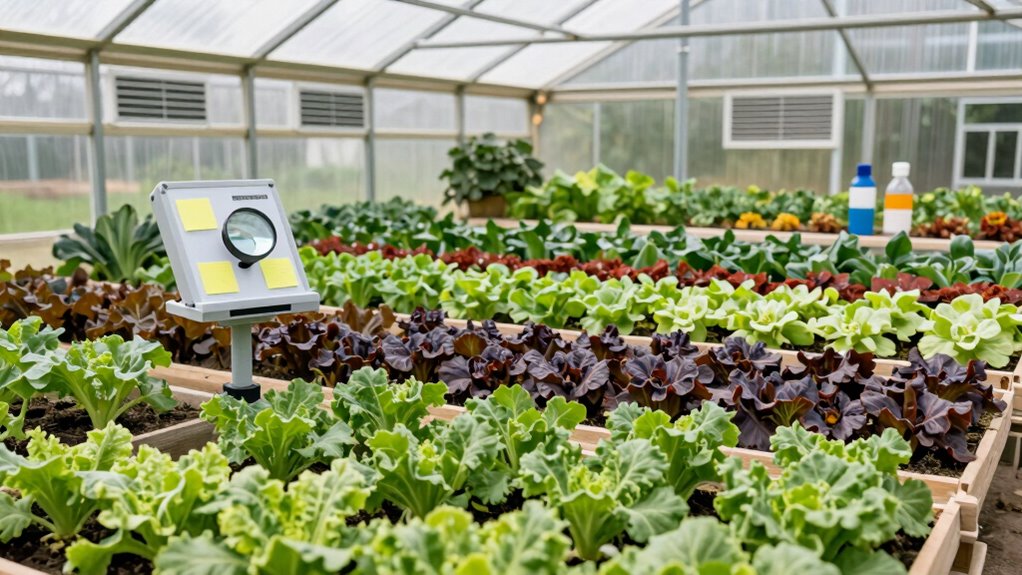
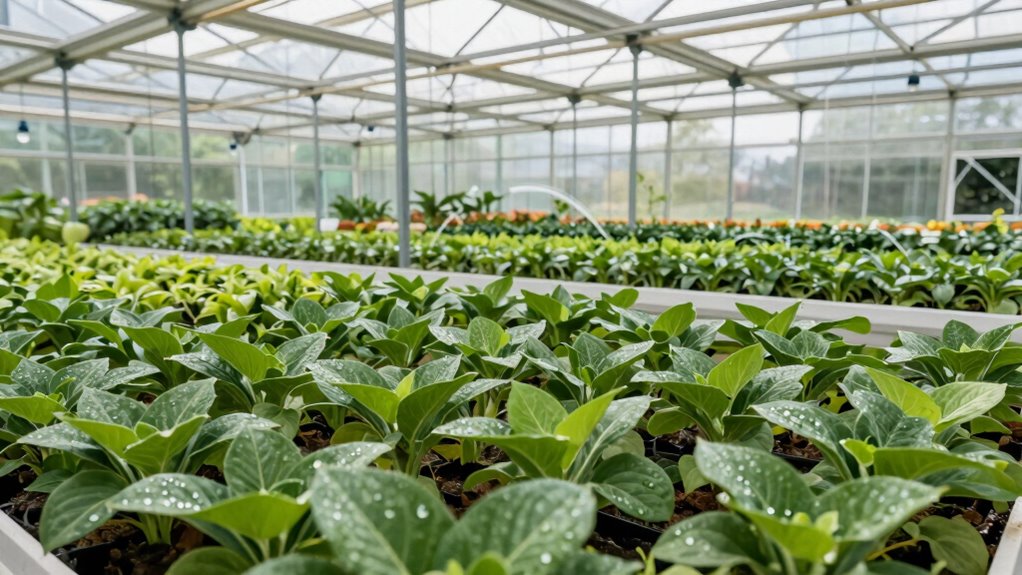
Understanding the basics of effective Integrated Pest Management (IPM) is essential for maintaining a healthy backyard greenhouse. One key strategy is crop rotation, which helps prevent pest buildup by changing plant types each season, disrupting pest life cycles. Proper pest identification is equally important; recognizing pests early allows you to choose targeted, eco-friendly control methods. When you know which pests are present, you can avoid unnecessary treatments and focus on specific issues. Incorporating digital concepts into your IPM plan can enhance monitoring and record-keeping, leading to more informed decisions. Using data analysis can help identify pest trends over time, making your management efforts more effective. Additionally, implementing remote monitoring tools can provide continuous oversight of pest activity and environmental conditions. Integrating essential oils such as peppermint or tea tree oil into your pest control strategies can offer natural, environmentally friendly alternatives to chemical treatments. Regular environmental monitoring is also vital for early detection and prevention of pest outbreaks, allowing for timely interventions. Combining crop rotation with accurate pest identification minimizes chemical use, promotes healthy plant growth, and keeps pest populations in check. By mastering these fundamentals, you create a resilient greenhouse environment that naturally resists pests and reduces the risk of infestations.
How to Monitor and Identify Pests in Your Greenhouse
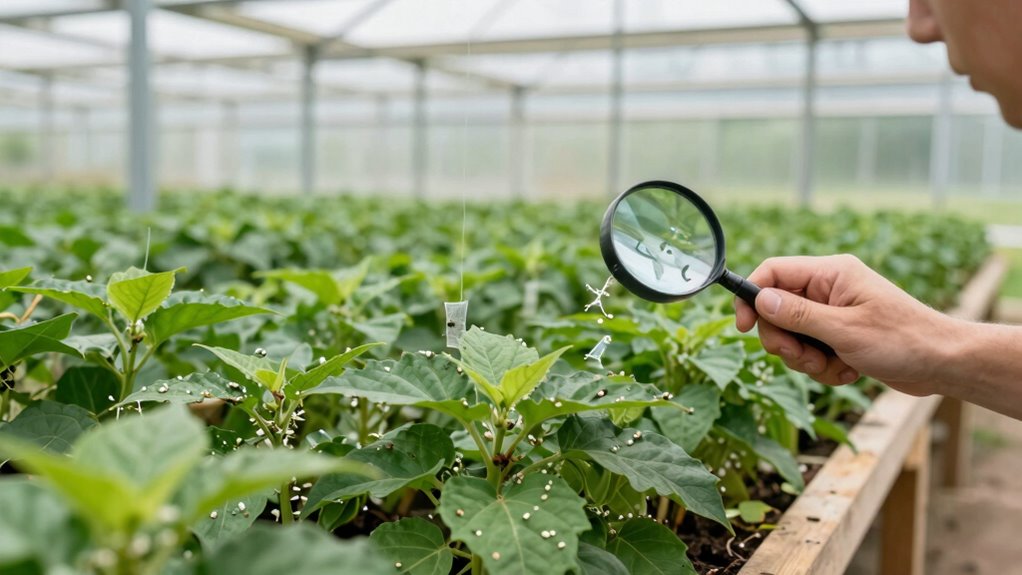
Monitoring and identifying pests in your greenhouse is a essential step in effective pest management. Regular inspections help you catch problems early before they spread. Use monitoring techniques like examining plants closely for signs of pests, such as chewed leaves, webbing, or discoloration. Look under leaves, along stems, and around the soil surface, as pests often hide in these areas. Keep a detailed record of pest sightings, noting their location and any damage. Proper pest identification is imperative; correctly recognizing pests ensures you choose the most effective control methods. Use magnifying glasses if needed to identify pests accurately. Consistent monitoring not only helps you spot pests quickly but also prevents infestations from becoming severe, saving you time, effort, and resources.
Prevent Pests With Good Cultural Practices
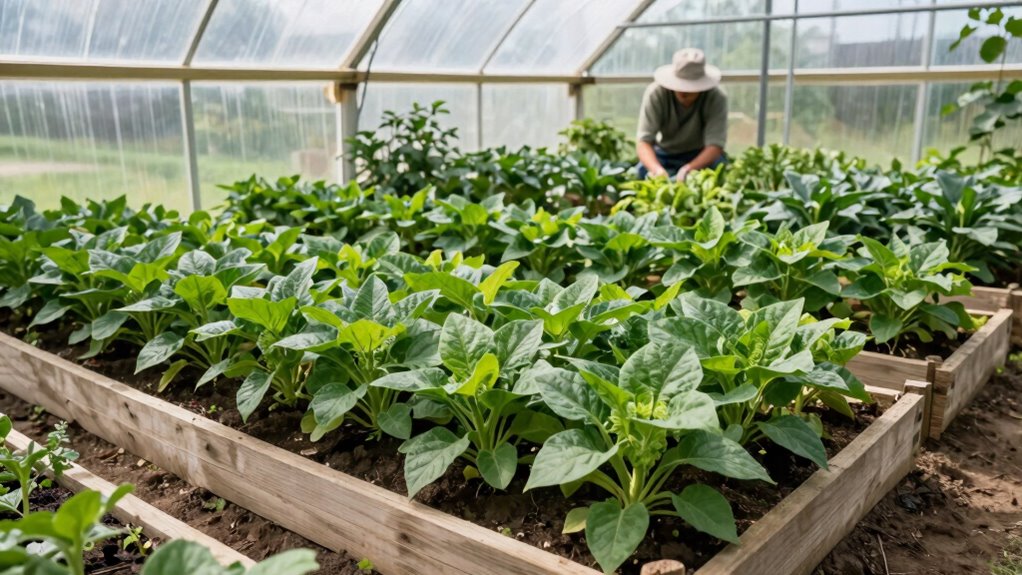
You can reduce pest problems by keeping your greenhouse clean and free of debris. Rotating crops regularly prevents pests from settling in, while managing water levels helps avoid creating ideal conditions for pests and diseases. Implementing these good cultural practices creates a healthier environment for your plants and minimizes pest issues. Additionally, fostering a healthy ecosystem within your greenhouse can naturally suppress pest populations and promote plant resilience. Maintaining proper water management practices is essential, as excessive moisture can lead to mold and attract pests that thrive in damp conditions.
Maintain Proper Sanitation
Have you ever considered how much sanitation can influence pest control in your backyard greenhouse? Consistent sanitation routines are essential for pest prevention. By regularly removing debris, dead leaves, and plant waste, you eliminate hiding spots and breeding grounds for pests. Clean tools and containers prevent cross-contamination, reducing the risk of pest infestations. Make sure to disinfect surfaces and equipment often to keep the environment inhospitable for pests. Proper sanitation also involves managing humidity and airflow, which discourages mold and pests that thrive in damp conditions. Staying vigilant with your sanitation routines helps break pest life cycles early, making your integrated pest management (IPM) efforts more effective. Ultimately, good cultural practices like sanitation are your first line of defense against pests in your greenhouse.
Rotate Crops Regularly
Ever wondered how changing your crops can help keep pests at bay? Rotating crops is a key cultural practice to improve soil health and increase crop diversity, which disrupts pest life cycles. When you plant the same crop repeatedly, pests and diseases build up, making infestations more likely. By rotating, you reduce pest populations naturally and improve soil nutrients. Incorporating crop rotation benefits into your planning can also help anticipate plant growth patterns and pest vulnerabilities.
You should consider:
- Switching crop families each season
- Using cover crops for soil restoration
- Avoiding planting the same crop in the same spot year after year
- Incorporating diverse plantings to create a less attractive environment for pests
This strategy not only keeps pests in check but also promotes healthier soil, leading to stronger plants and better yields.
Manage Water Effectively
Proper water management is essential for preventing pests in your backyard greenhouse, as excess moisture creates ideal conditions for many pests and diseases to thrive. Start by using rain collection systems to capture and reuse natural rainfall, reducing the risk of overwatering. Implement water-efficient irrigation techniques, such as drip or soaker hoses, to deliver moisture directly to plant roots without wetting foliage. Avoid watering late in the day to prevent prolonged leaf dampness that attracts pests. Regularly check soil moisture levels to guarantee plants aren’t sitting in soggy conditions. Keeping water levels consistent and avoiding excess moisture minimizes pest-friendly environments and reduces disease risks, helping your greenhouse stay healthy and pest-free. Additionally, understanding Silly tantrums that occur during pest inspections can help you better recognize early signs of pest issues and take swift action. Being aware of environmental conditions that favor pests can further improve your overall pest management strategy.
Applying Biological Controls for Natural Pest Management

Applying biological controls involves introducing natural enemies like beneficial insects to keep pest populations in check without relying on chemicals. You can do this through natural predator release, which involves releasing beneficial insects directly onto your plants. Creating beneficial insect gardens nearby encourages these helpful bugs to thrive and remain active in your greenhouse. To maximize effectiveness, consider these points:
- Select species specific to your pest problem
- Maintain habitat diversity for beneficial insects
- Avoid broad-spectrum pesticides that harm helpful bugs
- Regularly monitor pest and beneficial insect populations
- Incorporating bioluminescent organisms can help you observe pest activity more easily at night, enhancing your monitoring efforts. Additionally, using innovative planter designs can provide ideal habitats for beneficial insects, supporting a balanced ecosystem within your greenhouse. Maintaining a healthy environment is essential for the longevity and effectiveness of biological controls, especially when integrating natural pest management techniques. Ensuring proper environmental conditions fosters the health and activity of beneficial insects, making your biological control efforts more successful.
Targeted Pest Treatments Without Using Chemicals
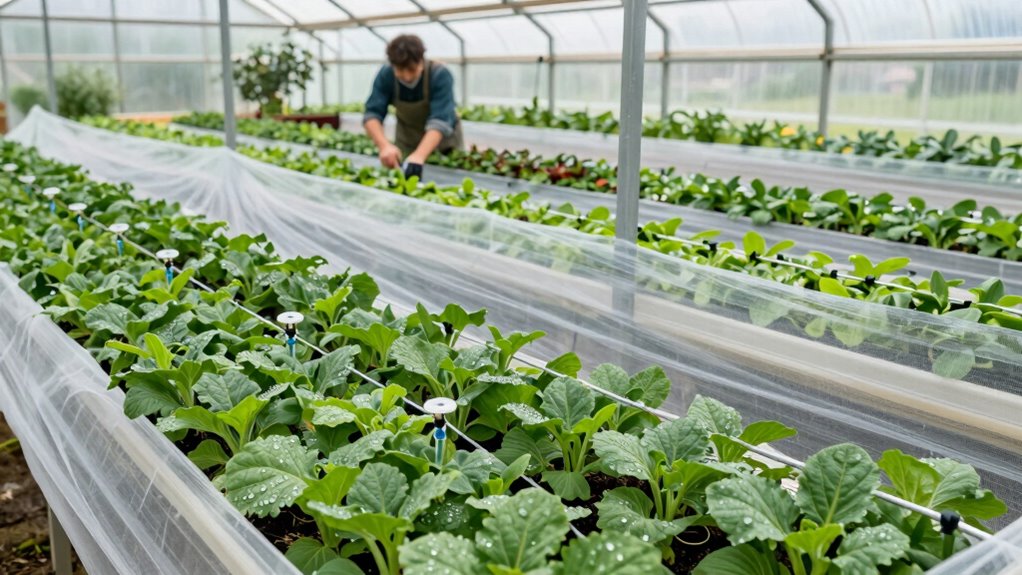
You can target pests effectively without chemicals by using biological control methods like beneficial insects. Physical barriers and traps also help catch or block pests before they cause damage. Creating a safe and stylish environment encourages healthy plant growth and reduces stress on the plants, making natural pest control more effective. Additionally, maintaining optimal plant health through proper nutrition and watering can strengthen plants’ natural defenses against pests. Incorporating sustainable textile care practices, such as reducing pollution and using eco-friendly materials, can further support a healthy greenhouse environment. Implementing proper pest identification ensures that the right control methods are used, preventing unnecessary interventions. Keeping abreast of regulatory compliance related to pest control methods ensures that your practices meet industry standards and protect your greenhouse’s integrity. Combining these strategies keeps your greenhouse healthy and pest-free naturally.
Biological Pest Control Methods
Have you ever considered natural predators as a way to manage pests in your backyard greenhouse? Biological pest control uses beneficial insects or organisms to target specific pests, reducing the need for chemicals. You can introduce predators like ladybugs for aphids or parasitic wasps for whiteflies. To maximize effectiveness:
- Choose pest-resistant plants to naturally deter pests
- Use organic pest deterrents alongside beneficial insects
- Monitor pest populations regularly
- Avoid disrupting beneficial insects with broad-spectrum insecticides
This method promotes a balanced ecosystem, minimizes chemical use, and encourages a healthier environment. Incorporating biological controls aligns with ergonomics and wellness principles, ensuring your greenhouse remains productive without harmful chemicals. Additionally, understanding holistic SEO strategies can help you better optimize your gardening content online for a broader audience. Being aware of market trends and insights can also help you anticipate pest outbreaks and adjust your biological strategies accordingly. Properly implemented, it offers a sustainable, targeted approach to pest control, supporting integrated pest management practices that enhance overall plant health.
Physical Barriers and Traps
Physical barriers and traps are effective ways to target pests directly without relying on chemicals. Physical barriers, like row covers or insect screens, prevent pests from reaching your plants, reducing infestations before they start. You can install these barriers around vulnerable areas to block entry points. Trap mechanisms, such as sticky traps or pheromone traps, lure pests away from plants and capture them. Place traps strategically near infested zones or along pathways pests use to move through your greenhouse. These methods allow you to monitor pest populations and reduce their numbers without harmful chemicals. Implementing physical barriers and traps offers a proactive approach that enhances your integrated pest management (IPM) strategy, keeping your greenhouse healthier and pest-free naturally.
Keep Your Greenhouse Clean to Reduce Pests
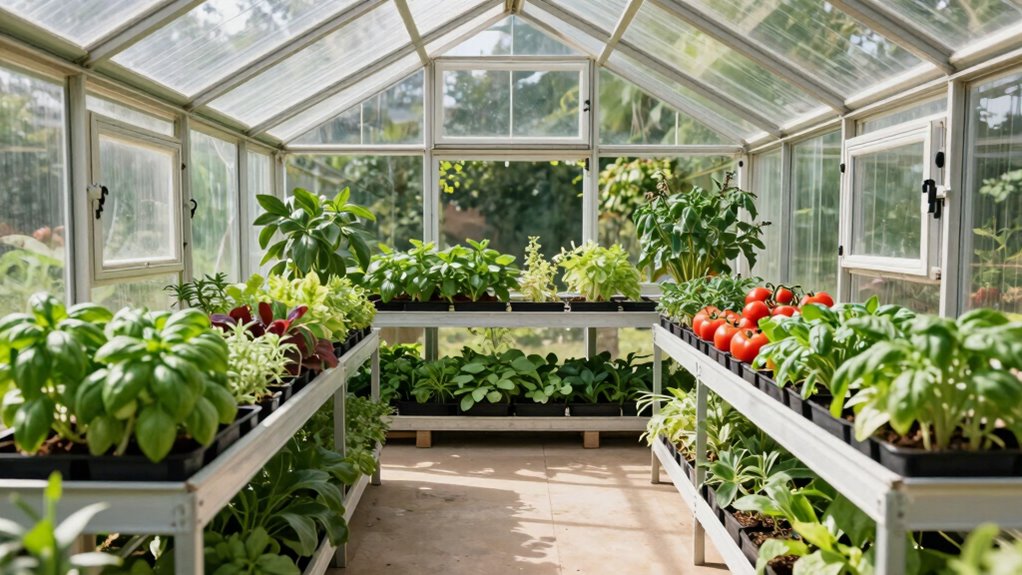
Why is maintaining cleanliness essential for pest control in your greenhouse? Good greenhouse hygiene minimizes hiding spots and breeding grounds for pests, making pest proofing techniques more effective. A clean environment discourages pests from settling in and reduces the chance of infestations. Regularly removing dead leaves, fallen debris, and weeds prevents pests from thriving. Keep tools, pots, and trays sanitized to avoid spreading pests. Also, guarantee proper drainage to prevent water accumulation that attracts insects.
- Remove plant debris promptly
- Sterilize tools and containers regularly
- Maintain dry, well-ventilated conditions
- Inspect plants frequently for early signs of pests
Sticking to these practices helps keep pests at bay and promotes healthier plant growth through diligent greenhouse hygiene.
Attract Beneficial Insects and Use Companion Plants
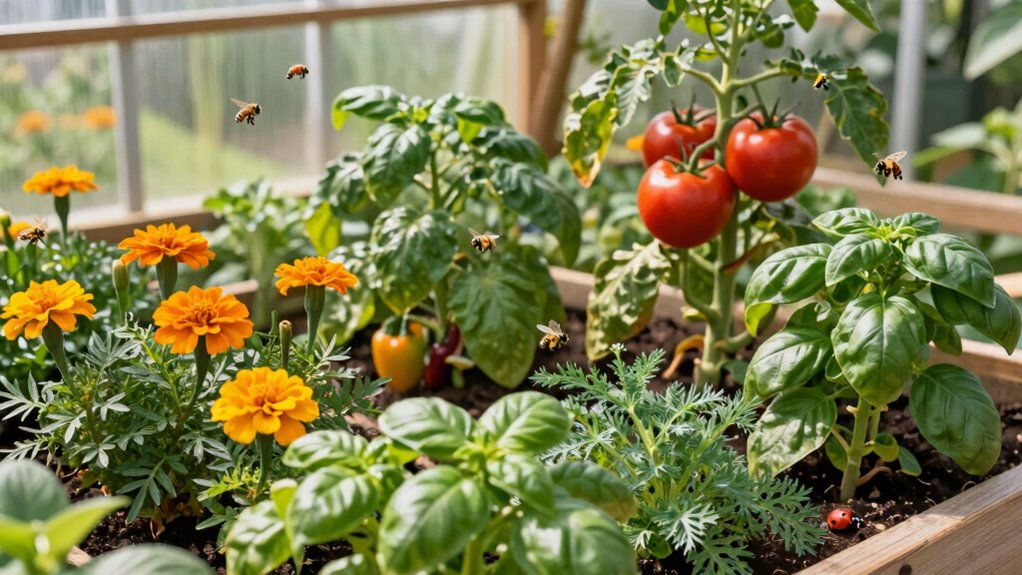
Attracting beneficial insects and using companion plants are effective natural strategies to control pests in your greenhouse. Beneficial insects, like ladybugs and predatory mites, prey on common pests, reducing the need for chemical controls. To attract them, plant nectar-rich flowers or herbs such as dill or fennel nearby. Companion planting involves pairing plants that naturally repel pests or attract beneficial insects, creating a balanced ecosystem. For example, planting marigolds with tomatoes deters nematodes and attracts pollinators. These practices promote a healthy environment where beneficial insects thrive and keep pest populations in check. Incorporating companion plants and fostering beneficial insects not only reduces chemical use but also enhances your greenhouse’s overall health naturally.
Track Your Pest Control Success and Adjust Your Plan
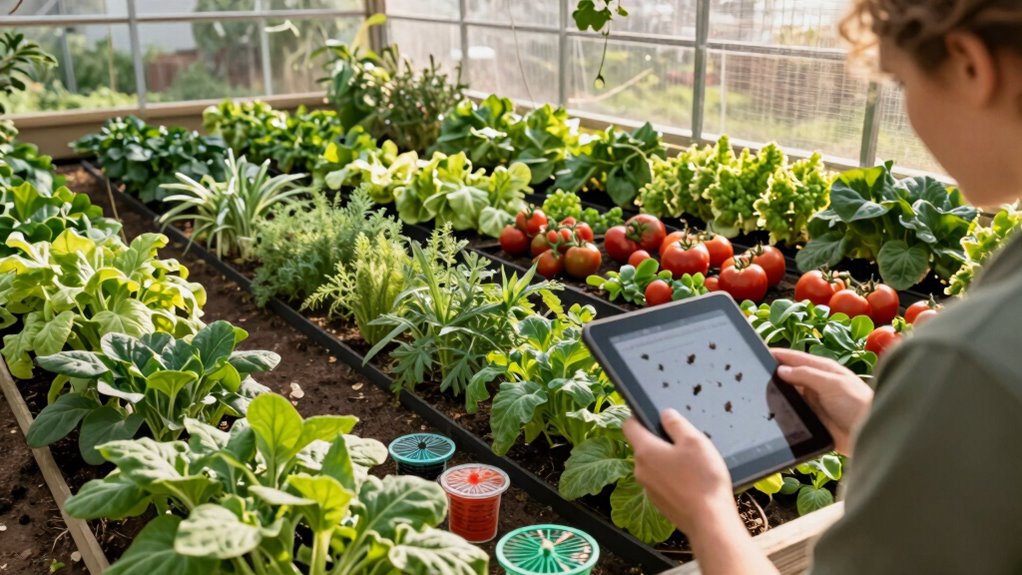
Monitoring your pest management efforts is key to ensuring your strategies are effective. Regularly track pest activity by observing trap placement and noting pest types and numbers. Understanding the pest lifecycle helps you identify the right timing for interventions, preventing outbreaks before they escalate. Adjust your plan based on what you observe:
- Relocate traps to high-activity areas
- Increase trap density if pests persist
- Target specific pests during vulnerable lifecycle stages
- Remove or replace ineffective traps
Consistent monitoring allows you to fine-tune your approach, reducing pest populations sustainably. By paying close attention to trap results, you can adapt your tactics in real-time, making your IPM plan more efficient and responsive. This proactive approach minimizes chemical use and keeps your greenhouse healthier.
How to Adapt IPM Tactics for Small Greenhouses
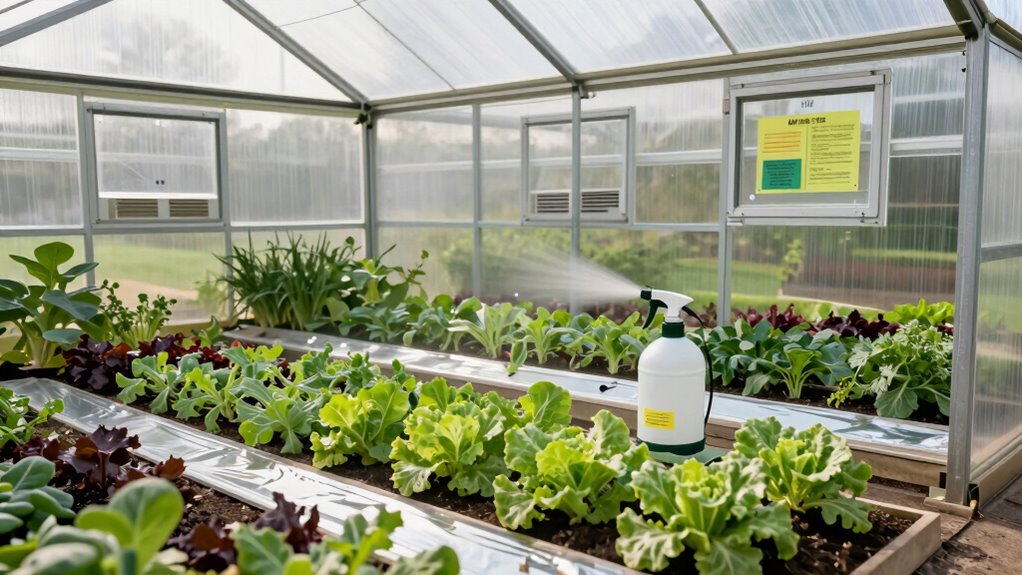
Adapting IPM tactics for small greenhouses requires tailoring your approach to the limited space and unique conditions you face. Start by improving greenhouse insulation to maintain stable temperatures and reduce stress on plants, making pests less likely to thrive. Use pest-resistant plants whenever possible, selecting varieties less susceptible to common pests. Keep your greenhouse tight by sealing gaps and vents to prevent pest entry. Regularly inspect plants for early signs of infestation, and employ targeted biological controls like beneficial insects. Maintain cleanliness, removing debris and weeds that harbor pests. Since space is limited, focus on integrated strategies that combine physical barriers, resistant plants, and biological controls for maximum effectiveness. This approach guarantees you efficiently manage pests while optimizing your small greenhouse environment.
Frequently Asked Questions
How Do I Prioritize Pest Management Actions in My Greenhouse?
To prioritize pest management actions, first identify the most damaging pests affecting your greenhouse crops. Use crop rotation to disrupt pest life cycles and prevent buildup. Introduce beneficial insects to naturally reduce pest populations. Regularly monitor pest levels and act swiftly on high-priority threats. Combining these strategies helps you maintain a healthy greenhouse environment while minimizing chemical use, ensuring a balanced and productive system.
What Are Early Signs of Pest Infestations in a Greenhouse?
You’ll notice early pest signs like discolored or chewed leaves, sticky residues, or tiny holes. Regular pest monitoring helps catch issues early, enabling you to act before infestations spread. Incorporate companion planting, which naturally repels pests, and keep a close eye on your plants. These practices help you identify early signs quickly, making pest management more effective and reducing the need for chemical treatments.
How Can I Prevent Pest Resistance to Biological Controls?
To prevent pest resistance to biological controls, you should regularly use pest monitoring to identify issues early. Incorporate natural predators, but rotate them and avoid relying on a single species. This approach keeps pests from developing resistance. Also, combine biological controls with cultural practices and selective chemical treatments when necessary, creating a diverse pest management system that reduces the chances of pests adapting to your controls.
What Are Common Mistakes to Avoid in IPM for Small Greenhouses?
Avoid common IPM mistakes by not neglecting pest monitoring; it’s like having a security camera for your greenhouse. Don’t rely solely on chemical controls—embrace companion planting to deter pests naturally. Overlooking diverse strategies can lead to resistance or outbreaks. Regularly check plants, identify pests early, and adjust tactics accordingly. This proactive approach keeps your greenhouse healthy and thriving, preventing small issues from becoming big problems.
How Do I Balance Pest Control With Plant Health and Growth?
To balance pest control with plant health, you should use integrated pest management techniques like companion planting and natural repellents. Companion planting attracts beneficial insects and deters pests naturally, reducing the need for chemicals. Apply natural repellents carefully, focusing on affected areas, to keep pests at bay without harming your plants. Regular monitoring and early intervention help maintain healthy growth while managing pests effectively.
Conclusion
Think of your greenhouse as a fortress where each pest is a tiny invader. By implementing these IPM strategies—like a vigilant knight—you’ll keep your plants thriving and healthy. Remember, every successful pest management plan is like a well-tended garden of Eden, balanced and resilient. With patience and practice, you’ll become the master gardener, nurturing a lush, pest-free paradise where nature’s harmony reigns supreme.
Fall yard work Picks
leaf blowers
As an affiliate, we earn on qualifying purchases.