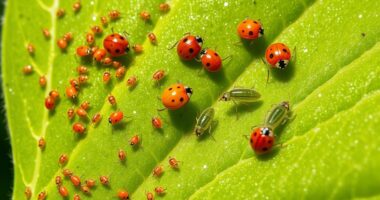
Using row covers inside greenhouses is an excellent way to keep pests like aphids, whiteflies, and mites out of your crops without chemicals. These covers act as a physical barrier while still allowing sunlight, air, and moisture to reach your plants. Properly installed, they reduce pest problems early and help protect young plants during vulnerable stages. If you want to discover more about optimizing pest exclusion inside greenhouses, keep exploring the options available to you.
Key Takeaways
- Row covers act as a physical barrier, preventing pests like aphids and whiteflies from reaching plants inside greenhouses.
- They allow essential sunlight, air, and moisture to pass through while blocking pests.
- Proper installation ensures a tight fit, maximizing pest exclusion and reducing the need for chemical controls.
- Using row covers during vulnerable growth stages protects seedlings and young plants from pest damage.
- They extend growing seasons by providing early-season pest protection and maintaining optimal environmental conditions.
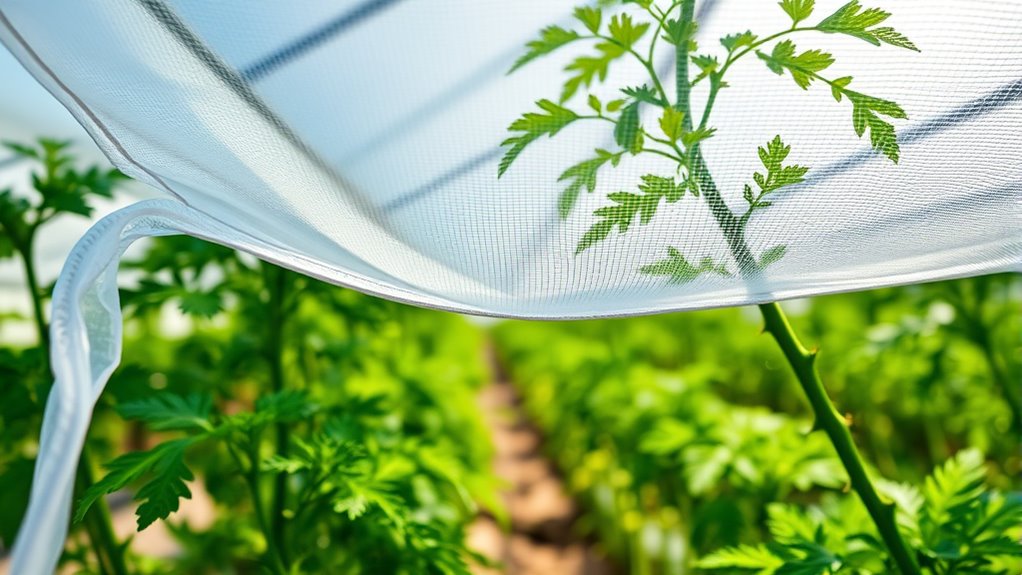
Greenhouses can create ideal conditions for pests to thrive, but using row covers inside your greenhouse offers an effective way to keep these unwanted visitors out. Pest prevention is a key aspect of maintaining healthy crops, and row covers serve as a physical barrier that prevents insects, mites, and other pests from reaching your plants. By blocking pests at the source, you reduce the need for chemical interventions and promote a healthier growing environment. This method enhances crop protection by intercepting pests before they can cause damage, leading to stronger plants and higher yields.
Using row covers inside greenhouses blocks pests, promoting healthier crops and reducing reliance on chemicals.
When you install row covers inside your greenhouse, you create a protective shield that allows sunlight, air, and moisture to pass through while blocking pests. This selective barrier is particularly useful against common greenhouse pests like aphids, whiteflies, thrips, and spider mites, which can quickly infest crops and compromise their growth. Since pests often enter greenhouses through openings or contaminated tools, adding row covers acts as an extra line of defense, minimizing the risk of infestations. It’s a proactive approach that emphasizes pest prevention rather than reactive pest control, saving you time and resources in the long run.
Using row covers inside your greenhouse also offers excellent crop protection during vulnerable growth stages. Young seedlings and delicate plants are especially susceptible to pest damage, which can stunt growth or cause outright crop failure. Covering these plants from the outset helps to keep pests away and maintain *ideal* conditions for healthy development. Additionally, row covers can help reduce the spread of diseases transmitted by insect vectors, further safeguarding your crops. When you implement this strategy, you’re not only preventing pest problems but also creating a more controlled environment that supports consistent, healthy growth. Proper installation is essential to maximize their effectiveness and ensure a secure fit.
Another advantage of using row covers inside your greenhouse is the ability to extend your growing season. By providing an extra layer of protection, you can keep pests at bay during early spring or late fall, when pest activity tends to be high. This means you can start planting earlier or continue harvesting longer, increasing your overall productivity. Properly secured covers also help regulate temperature and humidity levels, contributing to crop health and resilience. As a gardener or grower, you’ll find that integrating row covers into your pest prevention and crop protection strategies results in fewer pest-related setbacks and more reliable harvests.
Frequently Asked Questions
Can Row Covers Inside Greenhouses Affect Plant Humidity Levels?
Yes, row covers inside greenhouses can affect humidity levels. They often cause a humidity increase by trapping moisture, which can lead to higher humidity around your plants. This can be beneficial for disease prevention, as consistent humidity helps prevent some fungal issues. However, you should monitor humidity carefully, as excessive moisture may promote mold or mildew. Proper ventilation and airflow help balance humidity and keep your plants healthy.
How Do Row Covers Impact Airflow and Ventilation in Greenhouses?
Row covers inside greenhouses can restrict airflow, reducing natural ventilation and potentially leading to higher humidity. You need to implement effective ventilation strategies, like exhaust fans or side vents, to compensate for airflow restriction caused by the covers. Proper ventilation helps prevent problems like mold and pests, maintaining a healthy environment. Regularly monitor humidity and airflow to make certain your plants stay healthy while benefiting from pest exclusion.
Are There Specific Materials Best Suited for Indoor Row Covers?
Material choices matter most for indoor row covers. You’ll want durable fabrics that withstand wear while being lightweight enough to allow light transmission. Look for materials like spunbonded polypropylene or polyester blends, which offer excellent durability and high light transmission, ensuring plants get enough sunlight. These materials are resilient, resistant to tearing, and keep pests out, making them perfect for maintaining a healthy, protected indoor environment.
How Often Should Indoor Row Covers Be Cleaned or Replaced?
You should clean your indoor row covers monthly to prevent pests and disease buildup, especially during active growing seasons. Check their material durability regularly; if you notice tears or fraying, it’s time to replace them. A consistent cleaning schedule helps maintain their effectiveness, while replacing covers when they show significant wear ensures your plants stay protected. Proper maintenance maximizes the lifespan of your covers and keeps your greenhouse environment healthy.
Can Row Covers Inside Greenhouses Be Reused for Multiple Seasons?
Think of your row covers like a trusty shield—yes, you can reuse them for multiple seasons. Their reusability lifespan depends on seasonal durability, which varies based on material quality and care. With proper cleaning and storage, you can extend their life, making them a sustainable choice. Keep an eye on signs of wear—tears or thinning—and replace when needed, so your plants stay protected and your investment lasts longer.
Conclusion
By using row covers inside your greenhouse, you become a vigilant guardian, shielding your plants like an invisible fortress. These covers are your silent protectors, whispering a promise of pest-free growth and vibrant harvests. With each careful placement, you weave a delicate web of defense, turning your greenhouse into a sanctuary of health and vigor. Embrace this simple tool, and watch your garden flourish like a well-tuned symphony, free from unwelcome pests.