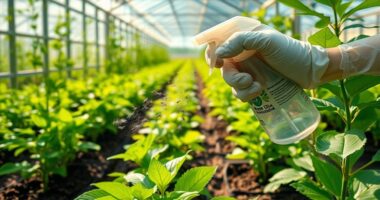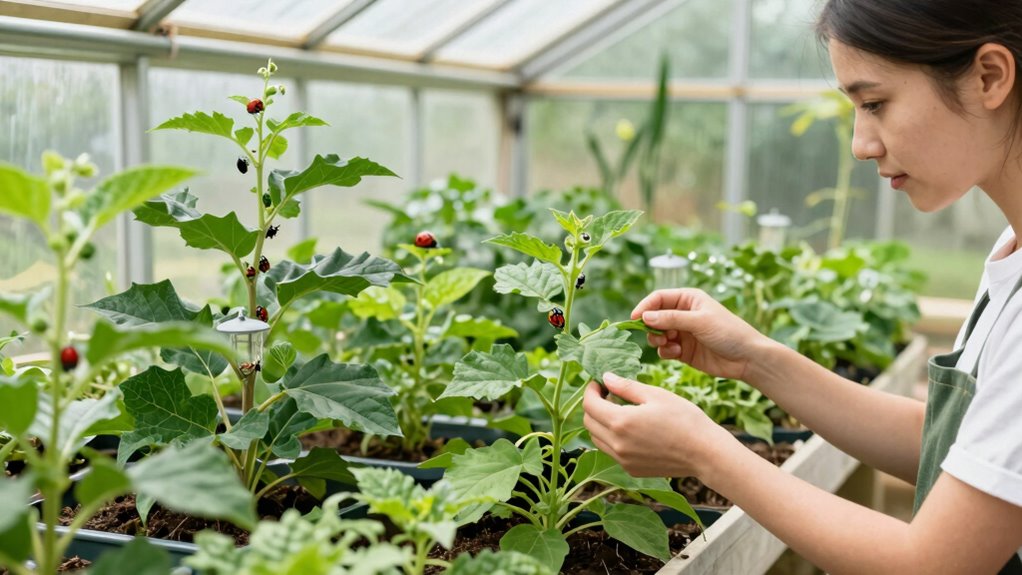

To think about greenhouse IPM at home, focus on a balanced approach that combines prevention, observation, and natural controls. Regularly inspect your plants for pests or damage, and act early to prevent infestations. Use beneficial insects like ladybugs or predatory mites to keep pests in check naturally. Prioritize creating an environment that promotes ecosystem balance and biodiversity. Keep these principles in mind to maintain healthy plants while minimizing chemical use—discover more tips to perfect your approach.

Get garden gear delivered free with Prime
- Fast, free delivery on millions of items
- Prime Video, Amazon Music and more included
- Member-only deals all year
Key Takeaways
- Prioritize regular pest monitoring to catch issues early and reduce unnecessary interventions.
- Use biological control agents like ladybugs or predatory mites to manage pests sustainably.
- Maintain a healthy greenhouse environment to promote plant resilience and natural pest suppression.
- Focus on prevention through biodiversity, proper sanitation, and ecological balance.
- Target pest management efforts based on ecological understanding, avoiding over-reliance on chemicals.

Managing pests in a home greenhouse can feel overwhelming, but understanding integrated pest management (IPM) simplifies the process. At its core, IPM is about combining various strategies to keep pest populations under control while minimizing chemical use. It’s a thoughtful approach that emphasizes prevention, observation, and targeted action, making it perfect for home growers who want healthy plants without the risks of overusing pesticides.
IPM simplifies pest control through prevention, observation, and targeted strategies, minimizing chemical use for healthier home-grown plants.
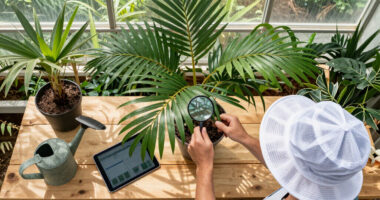
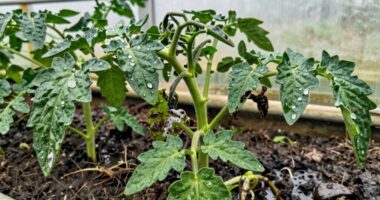
One of the most critical components of IPM is pest monitoring. You need to regularly check your plants for signs of pests or damage. This means inspecting leaves, stems, and soil for insects, eggs, or other symptoms. Pest monitoring helps you catch infestations early, which is essential because it allows you to address problems before they spiral out of control. It also helps you determine whether action is necessary, preventing unnecessary interventions and saving you time and resources.
Biological control is another key piece of IPM. Instead of relying solely on chemical pesticides, you introduce natural enemies of pests into your greenhouse environment. These could be beneficial insects like ladybugs, lacewings, or predatory mites, all of which prey on common greenhouse pests such as aphids, spider mites, or whiteflies. By encouraging or releasing these beneficial organisms, you create a natural balance that keeps pests in check. This approach is safer for your plants, yourself, and the environment, and it often provides a sustainable long-term solution.
To effectively implement biological control, you need to understand which pests are common in your plants and select the appropriate beneficial insects or microbes. It’s also important to maintain the right conditions—such as humidity and temperature—that support both your plants and your natural enemies. Regular pest monitoring informs when and how to introduce these beneficial organisms, ensuring they’re most effective. Additionally, understanding the ecology of pests and beneficial organisms can help you develop more effective management strategies. Incorporating biodiversity into your greenhouse environment can also enhance biological control, as diverse ecosystems tend to support a wider range of beneficial organisms that naturally suppress pest populations. Creating a balanced environment through ecological principles promotes a healthier, more resilient greenhouse setting that naturally deters pests. Recognizing the importance of pest ecology allows you to anticipate and prevent potential outbreaks before they become severe. Moreover, fostering a healthy balance within your greenhouse ecosystem encourages natural pest suppression and reduces the need for interventions.
In essence, thinking about greenhouse IPM at home means adopting a mindset of observation, prevention, and targeted intervention. Pest monitoring keeps you informed, while biological control offers a safe, effective way to manage pests naturally. Together, these strategies help you maintain a thriving greenhouse without the stress or risks associated with conventional chemical methods.
beneficial insects for greenhouse pest control
As an affiliate, we earn on qualifying purchases.
As an affiliate, we earn on qualifying purchases.
Frequently Asked Questions
Can Greenhouse IPM Techniques Be Applied Outdoors?
Yes, greenhouse IPM techniques can be applied outdoors, but you’ll need to adapt them. You can introduce natural predators like ladybugs and lacewings to control pests and establish pest barriers, such as row covers or physical traps, to prevent infestations. Keep in mind that outdoor conditions are less controlled, so you’ll need to monitor and adjust your strategies regularly to guarantee they stay effective and protect your plants.
What Are the Costs Associated With Greenhouse IPM?
Think of greenhouse IPM costs like planting a garden: you need to invest in tools, supplies, and monitoring to keep pests at bay. A thorough cost analysis helps you understand expenses for biological controls, pheromone traps, and monitoring equipment. By managing these expenses actively, you keep pest control effective without overspending. This expense management guarantees your greenhouse stays healthy and productive while keeping costs predictable and manageable.
How Often Should I Monitor for Pests?
You should conduct pest inspections regularly, ideally once a week, to maintain effective monitoring frequency. Keep a close eye on your plants for signs of pests or damage, especially in hidden spots. Consistent monitoring helps you catch issues early, reducing the need for chemical controls. By staying vigilant and performing pest inspections on a weekly schedule, you create a proactive approach that keeps your greenhouse healthy and pest-free.
Are Organic Options Effective for Greenhouse IPM?
Imagine a vibrant greenhouse where organic options act like vigilant guardians, silently controlling pests. Organic efficacy varies but can be quite effective when combined with good practices. You’ll want to select targeted solutions, like neem oil or beneficial insects, that disrupt pest life cycles without harming your plants. Organic pest control offers a sustainable, eco-friendly way to keep pests at bay, ensuring healthy, thriving plants with minimal chemical use.
What Are Common Mistakes Beginners Make With IPM?
You often make the mistake of not pest identifying correctly, which leads to ineffective treatments. Also, you might overlook monitoring frequency, causing you to miss early signs of infestation. Regularly check your plants and learn to identify pests accurately. By doing so, you can catch problems early, use targeted control methods, and prevent minor issues from escalating. Proper pest identification and consistent monitoring are key to successful IPM at home.
Conclusion
Think of greenhouse IPM at home as tending a delicate garden of your own making. Each pest is a tiny storm, and your vigilant care, like a steadfast lighthouse, guides your plants safely through. With patience and strategy, you become the guardian of your green sanctuary, where harmony blooms and balance reigns. Remember, your mindful actions are the seeds that nurture a thriving, resilient haven—your personal oasis of growth and sustainability.
Fall Picks
fall essentials
As an affiliate, we earn on qualifying purchases.