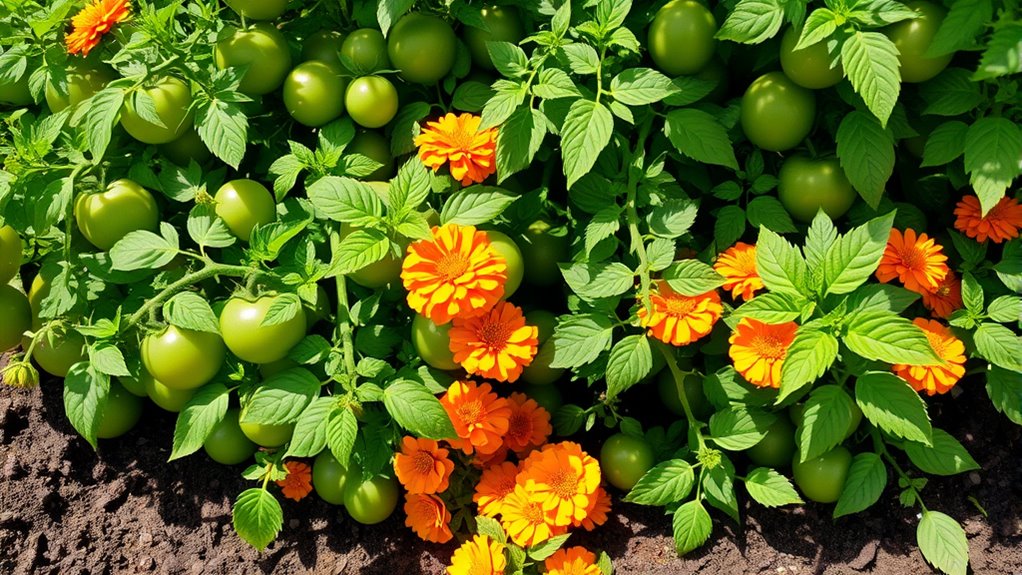

Using companion plants can boost your garden’s growth naturally by deterring pests, enriching soil, and supporting healthy roots. Planting marigolds near vegetables can keep nematodes and aphids away, while legumes like beans fix nitrogen in the soil, benefiting nearby crops. Mixing deep- and shallow-rooted plants improves soil structure and water retention. Planning your plantings at the right times also maximizes benefits. Keep exploring to discover more ways to optimize your garden’s success through companion planting.
Key Takeaways
- Pair plants like marigolds and basil with vegetables to naturally repel pests and promote healthier growth.
- Use nitrogen-fixing plants such as beans and peas to enrich soil and boost overall plant development.
- Combine deep-rooted and shallow-rooted plants to improve soil structure and optimize water and nutrient access.
- Plan planting schedules strategically to maximize pest prevention and continuous crop productivity.
- Select compatible plant combinations that support soil health, microbial activity, and long-term garden sustainability.
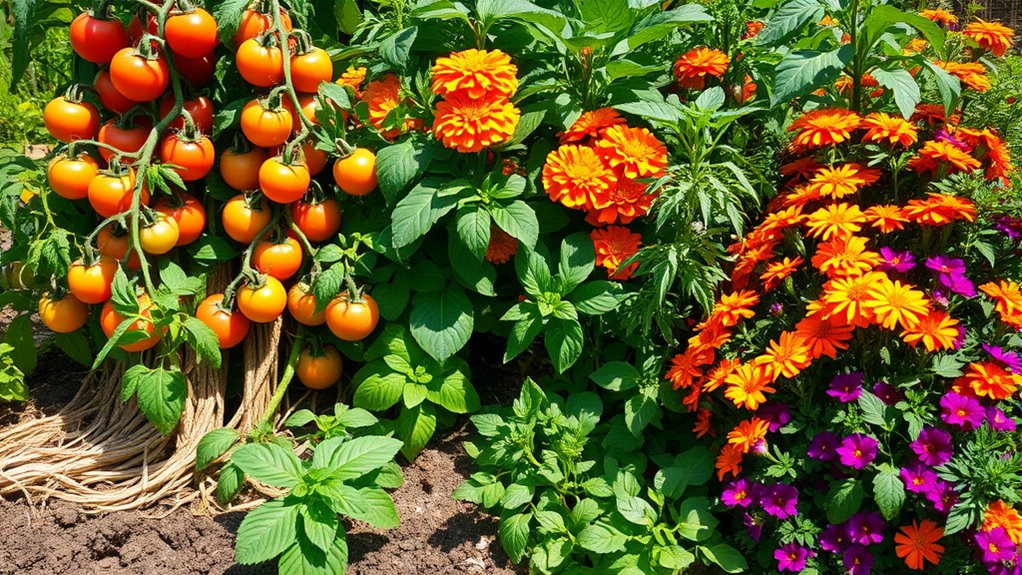
Companion planting is a simple yet effective strategy to boost your garden’s health and productivity. When you choose the right plants to grow together, you can naturally ward off pests and improve soil quality, leading to healthier, more vigorous plants. For pest prevention, pairing certain plants can create a natural barrier that confuses or deters unwanted pests. For example, planting marigolds alongside vegetables like tomatoes or peppers can repel nematodes and aphids. Similarly, basil planted near tomatoes not only enhances flavor but also helps keep whiteflies and tomato hornworms at bay. These beneficial combinations reduce your reliance on chemical pesticides, making your garden safer and more sustainable.
In addition to pest prevention, companion plants can enrich your soil, providing essential nutrients that support robust growth. Certain plants, known as nitrogen fixers, have the ability to convert atmospheric nitrogen into a form that plants can absorb, naturally fertilizing the soil. Legumes like beans and peas are excellent companions for many crops because they improve soil enrichment without extra effort on your part. When these legumes grow alongside other vegetables, they create a more fertile environment, reducing the need for synthetic fertilizers. This symbiotic relationship also encourages overall soil health, which benefits your entire garden over time by improving soil structure and microbial activity.
You can further optimize your garden by selecting plants that have complementary root systems. Deep-rooted plants like carrots or parsnips can loosen compacted soil, making nutrients more accessible to shallow-rooted plants like lettuce or spinach. This natural soil management encourages better water retention and aeration, leading to healthier growth for all your plants. When planning your garden, think about the timing and succession of your companion plants. Some combinations work best when planted simultaneously, while others benefit from staggered planting schedules, ensuring continuous soil enrichment and pest prevention throughout the season. Additionally, understanding the principles of soil health can help you select the most beneficial plant combinations for long-term success.
Frequently Asked Questions
Can Companion Planting Reduce the Need for Watering?
Yes, companion planting can reduce your watering needs. By choosing plants that improve moisture retention around their roots, you help conserve water and maintain soil humidity. For example, ground covers or taller plants shade the soil, reducing evaporation. This water conservation benefit means you won’t have to water as often, saving time and resources. With thoughtful plant combinations, you create a healthier garden that needs less irrigation.
Are There Any Companion Plants That Deter Pests Naturally?
Yes, many pest repelling herbs act as natural deterrent plants. You can plant basil, marigolds, and lavender nearby to ward off insects like mosquitoes, aphids, and beetles. These companion plants emit scents that pests dislike, making them effective natural deterrents. Incorporating these pest repelling herbs into your garden not only protects your crops but also reduces your reliance on chemical pesticides.
How Do I Choose the Best Companion Plants for My Garden?
You can’t just throw plants together like a wild jungle; you need strategic plant pairing strategies. Start by understanding which plants thrive side by side, considering their growth habits and needs. Use garden layout techniques to position tall plants behind shorter ones, maximizing space and pest control. Choose companion plants that naturally repel pests or improve flavor, and always think about how each plant’s requirements align for a thriving, balanced garden.
Can Companion Planting Improve the Flavor of Vegetables?
Yes, companion planting can improve the flavor of vegetables through flavor enhancement. When you choose plants that have good plant synergy, they support each other’s growth and health, which often results in tastier produce. For example, herbs like basil near tomatoes can boost flavor, while marigolds repel pests that might compromise taste. By understanding these relationships, you can naturally enhance your vegetables’ flavor and enjoy a more flavorful harvest.
Are There Plants That Should Not Be Grown Together?
You should avoid planting tomatoes near potatoes because of plant incompatibility and potential disease transfer. For example, in a community garden, neighbors noticed their tomatoes underperformed when grown close to potatoes, likely due to toxic plant pairs. These combinations can hinder growth or cause harm. Always research plant incompatibility and toxic plant pairs to guarantee your garden thrives without unintended negative interactions.
Conclusion
By choosing the right companion plants, you gently nurture your garden’s harmony, allowing each plant to support and uplift the others. This subtle dance of growth creates a more resilient and thriving space, where pests are kept at bay and nutrients are shared softly like whispered secrets. Embrace these natural partnerships, and watch your garden flourish with a quiet strength. With a little care and patience, your plants will thrive together in beautiful, balanced unity.